Nagano Food: A Guide to What to Eat in Nagano, Japan
Key takeaways
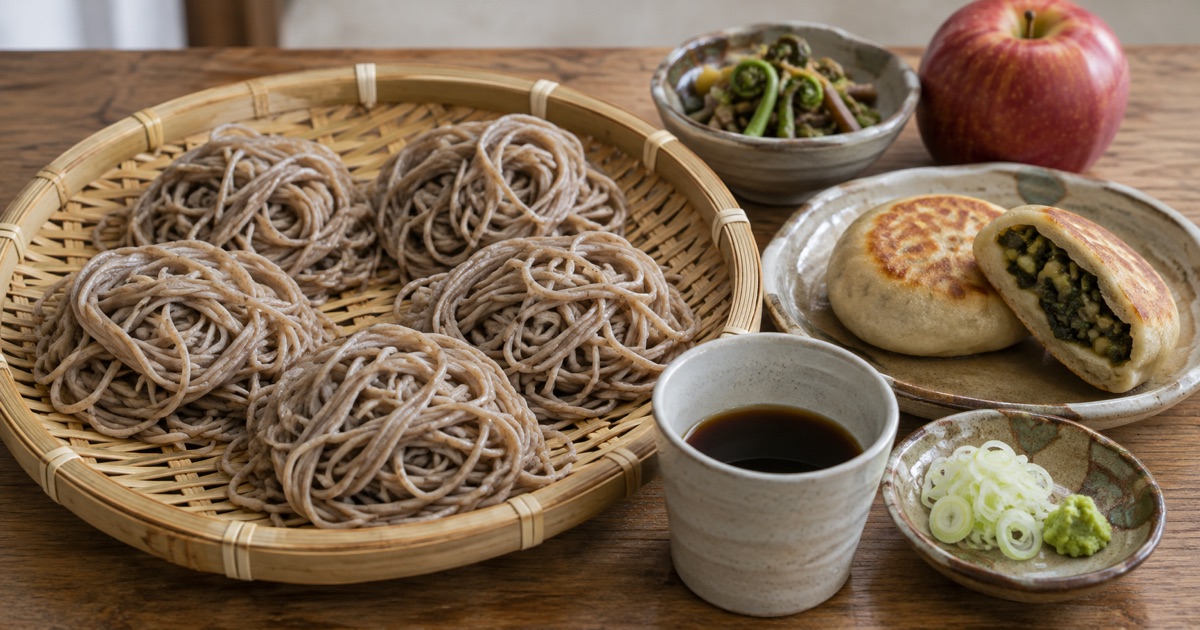
- Nagano's signature dish is soba (蕎麦), buckwheat noodles grown in the region's cool mountain climate.
- Oyaki (おやき), filled dumplings made from wheat or buckwheat dough, are a classic Nagano snack food.
- Shinshu salmon, Shinshu beef, apples, and mountain vegetables (sansai) are other foods tied closely to Nagano.
What Food Is Nagano Known For?
Nagano is best known for soba (蕎麦) noodles made from locally grown buckwheat, along with oyaki (おやき) dumplings, Shinshu miso, mountain vegetables called sansai, and fresh apples. These foods reflect Nagano's mountainous, landlocked geography, where cool temperatures, clean water, and a short growing season shaped a cuisine built around preserved and hearty ingredients.
Located in the Japanese Alps, Nagano Prefecture (長野県) has long been associated with mountain life rather than coastal seafood culture. This history explains why so many of its signature foods—buckwheat, fermented soybeans, pickled vegetables, and preserved fish—were developed to survive long winters at altitude.
Why Nagano's Food Culture Is Different
Much of Nagano sits at relatively high elevation, including areas around Matsumoto (松本) and the Nagano city (長野市) basin. The climate here suits buckwheat, which grows well in poorer, cooler soil where rice cultivation is harder. This is the main reason soba became a dietary staple rather than just a regional specialty. Similarly, the mountain environment encouraged fermentation and preservation techniques, which is why miso production has deep roots in the region.
Soba: Nagano's Signature Noodle
Soba noodles made from Nagano-grown buckwheat are often considered some of the best in Japan, and trying them is one of the most common reasons visitors seek out Nagano food specifically.
How Nagano Soba Is Usually Served
Soba in Nagano is commonly served cold on a bamboo tray (zaru soba) with a dipping sauce called tsuyu, often accompanied by chopped scallions and wasabi. In colder months, hot soba in broth is also widely available. A regional variation known as togakushi soba, associated with the Togakushi (戸隠) area near Nagano city, is traditionally presented in small bundles rather than a single large portion.
How to eat it: Dip the noodles briefly into the tsuyu rather than soaking them fully, as the sauce is often concentrated. Many locals finish the meal by drinking the soba-yu, the hot noodle-cooking water, mixed into the remaining dipping sauce.
Common mistake: Visitors sometimes pour the entire dipping sauce over the noodles like a soup. This is not the traditional method and can make the dish overly salty.

We are working to carry Japanese craft and everyday culture beyond Japan, by building Japan Towns with local partners.
Read the Japan Town plan →Oyaki: Nagano's Traditional Dumpling
Oyaki (おやき) are filled dumplings made from a wheat or buckwheat-based dough, typically stuffed with ingredients such as pickled vegetables, pumpkin, eggplant, or red bean paste for sweeter versions. They are traditionally baked or pan-fried, then sometimes steamed, giving them a slightly chewy, dense texture.
Oyaki developed as a practical food in mountain villages where rice was historically less available than wheat and buckwheat. They remain a popular snack across Nagano, sold at markets, roadside stops, and train stations.
How to eat it: Oyaki are eaten by hand, usually while warm, and are sized for a single snack rather than a full meal.
Shinshu Specialties: Beef, Salmon and Miso
"Shinshu" (信州) is the historical name for the Nagano region and still appears frequently on food labels and menus. Shinshu beef refers to regionally raised wagyu-style beef, while Shinshu salmon is a farmed freshwater trout variety developed in the prefecture, often served as sashimi or grilled.
Shinshu miso is one of Japan's most widely produced miso styles, known for a lighter color and balanced saltiness compared to darker regional miso varieties. It's used in miso soup throughout Japan, not just locally, so travelers may recognize the name even before visiting Nagano.
Mountain Vegetables (Sansai)
Sansai (山菜), or wild mountain vegetables, include items like bamboo shoots, fern-like warabi, and various edible greens foraged in spring. They are typically simmered, pickled, or served as tempura, and appear often in set meals (teishoku) during the spring season.
Apples and Other Nagano Produce
Nagano is one of Japan's leading apple-producing regions, along with areas like Aomori further north. Apples are grown extensively in the prefecture's valleys, and travelers visiting in autumn may see orchards, roadside stands, and apple-based products such as juice, jam, and baked goods. Nagano is also known for high-altitude vegetable farming, including lettuce and cabbage grown in cooler highland areas during summer.
How to Try Nagano Food as a First-Time Visitor
Getting to Nagano
Nagano city is reachable from Tokyo in roughly 80 to 100 minutes by Hokuriku Shinkansen (北陸新幹線), making it accessible as a day trip or short stay. Matsumoto, another key food and culture hub in the prefecture, is typically reached by limited express train from Shinjuku Station in Tokyo, with a journey of around 2.5 hours. Always check current timetables before traveling, as schedules can change.
What to Bring and Know Before You Go
- Cash: Smaller soba shops, roadside oyaki stalls, and rural markets may not accept credit cards, so carry some cash.
- Seasonal timing: Sansai and certain seasonal dishes are best in spring, while apple season runs through autumn. Winter is associated with hearty hot soba and miso-based dishes.
- Dietary notes: Buckwheat (soba) is a known allergen, and many dishes also contain wheat, soy, or egg. If you have allergies, communicate clearly with staff, since fully bilingual allergen menus are not guaranteed everywhere.
- Dress for altitude: Many food-growing areas are at higher elevation, so temperatures can be cooler than expected, especially in shoulder seasons.
Common Mistakes to Avoid
Visitors sometimes assume all soba in Japan tastes the same, but Nagano's buckwheat-forward style, often with a higher buckwheat-to-wheat ratio, has a different texture and flavor than soba found elsewhere. Another common mistake is treating oyaki as a dessert only; while sweet versions exist, most traditional oyaki are savory.
For general nutrition information on noodles, soy-based products, and vegetables mentioned here, you can refer to Japan's official nutrition data through the MEXT Food Composition Database, and for broader travel planning, the Japan National Tourism Organization offers up-to-date regional information.
Final Thoughts
Nagano's food culture is shaped directly by its mountains: buckwheat instead of rice, fermented miso instead of fresh seafood, and foraged greens instead of tropical produce. For first-time visitors, trying soba and oyaki offers the clearest, most accessible introduction to what makes Nagano's food identity distinct within Japan.
FAQ
- Q. What is Nagano's most famous food?
- A. Soba noodles are generally considered Nagano's most famous food, thanks to the region's cool climate and clean water, which suit buckwheat cultivation. Oyaki dumplings are a close second as a everyday local snack.
- Q. Is Nagano food safe for people with allergies?
- A. Soba contains buckwheat, a known allergen, and dishes may also include wheat, soy (from miso or soy sauce), and eggs. Always check ingredients directly with staff, since English menus may not list every allergen.
- Q. Can I find Nagano food outside the Nagano region?
- A. Some Nagano products, like miso and apples, are sold nationwide in Japanese supermarkets, but regional specialties like fresh oyaki and certain soba styles are best enjoyed locally.
Cite or share this article
Copy the link below. If you quote this article, please link to this page as the source.