Chiba Food Guide: Coastal Seafood, Peanuts & Local Ramen
Key takeaways
- Chiba cuisine highlights fresh Pacific seafood, regional ramens, and agricultural staples like locally grown peanuts.
- Coastal specialties include namerou, sangayaki, and spiny lobster, while the interior offers rich soy sauce-based flavors.
- Ordering is simple once you recognize key terms like tataki, tantanmen, and peanut paste on Japanese menus.
Chiba food is defined by the abundant Pacific coastline of the Boso Peninsula (房総半島) and the fertile agricultural plains that produce some of Japan’s best vegetables and nuts. From freshly caught horse mackerel chopped with miso to fiery bowls of regional ramen and savory peanut-infused dishes, Chiba offers an exceptional culinary landscape just outside Tokyo.
Bordered by Tokyo Bay on the west and the open Pacific Ocean on the south and east, Chiba Prefecture has developed distinct foodways shaped by fishermen, farmers, and long-standing soy sauce breweries. For visitors traveling through Narita Airport or venturing down the Boso coast, understanding these local specialties ensures a rewarding dining journey.
Coastal Seafood Traditions of the Boso Peninsula
Surrounded by ocean on three sides, Chiba is a premier source of seafood for the greater Kanto region. Fishermen across ports such as Choshi (銚子) and Katsuura (勝浦) have created resourceful dishes designed to prepare fresh catches directly on boats or right at the docks.
Namerou: The Classic Fisherman's Tartare
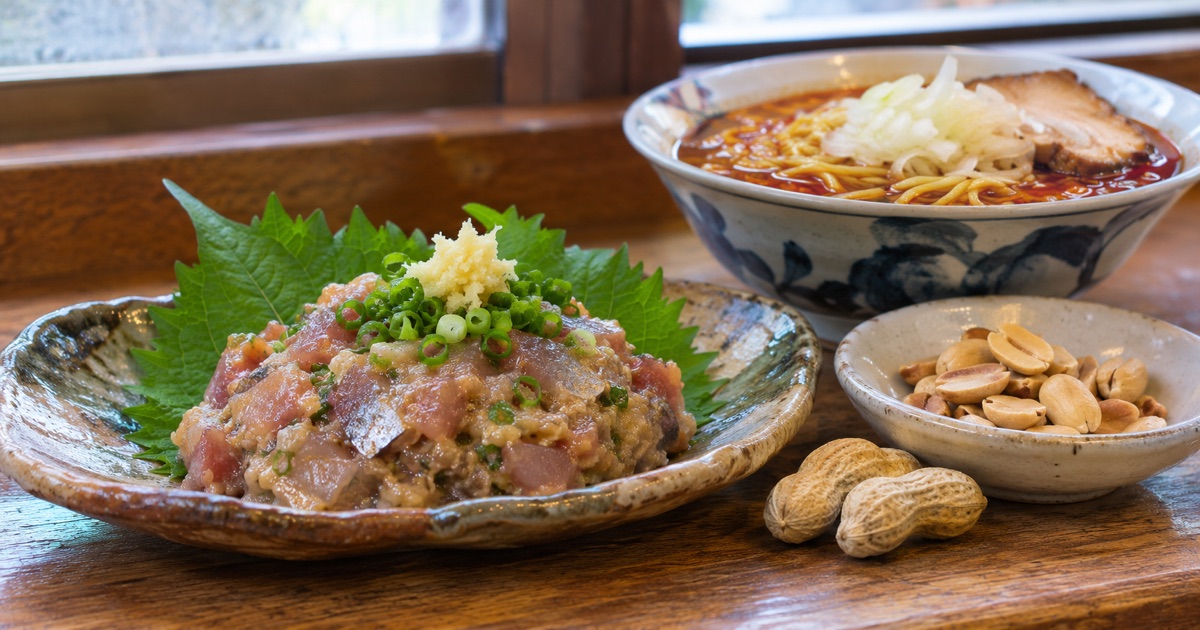
Namerou (なめろう) is arguably Chiba's most famous coastal preparation. Traditionally made by fishermen using freshly caught horse mackerel (aji / 鯵), pacific saury (sanma / 秋刀魚), or sardines (iwashi / 鰯), the raw fish fillets are finely minced on a cutting board together with:
- Fermented soybean paste (miso / 味噌)
- Green onions (negi / 葱)
- Fresh ginger (shoga / 生姜)
- Shiso leaves (ooba / 大葉)
The ingredients are pounded together with a heavy knife until the mixture reaches a sticky, cohesive paste. The name comes from the Japanese word nameru (to lick), referring to a dish so delicious one would lick the plate clean. It is served chilled as an appetizer alongside steamed rice or local sake.
Allergen note: Contains fish and soy.
Sangayaki: Grilled Seafood Patties
When fishermen had leftover namerou that could not be kept fresh at room temperature, they packed the mixture into abalone shells or wrapped it in wild camellia leaves and grilled it over open coals. This cooked version is called sangayaki (さんが焼き). Grilling caramelizes the miso and mellows the raw alliums, transforming the soft tartare into a fragrant, savory fish cake. Today, diners can enjoy sangayaki pan-fried or broiled at traditional diners (teishoku-ya) throughout coastal Chiba.
Boso Spiny Lobster and Coastal Shellfish
The rocky reefs of southern Chiba yield prized seafood delicacies, notably Boso spiny lobster (Ise-ebi / 伊勢海老) and abalone (awabi / 鮑). Fresh spiny lobster is celebrated for its sweet, translucent sashimi, while its head and shell are simmered into rich miso soups that extract deep marine flavors. Along coastal roads, casual seafood barbecue eateries allow patrons to grill turban shells (sazae / 栄螺) and hard clams directly over tabletop burners, seasoned simply with a splash of local soy sauce.
Chiba's Distinct Regional Ramen Styles
While Tokyo is renowned for diverse noodle trends, Chiba harbors several hyper-regional ramen styles developed to satisfy specific working-class communities.
Katsuura Tantanmen
Originating in the fishing port of Katsuura, Katsuura tantanmen (勝浦タンタンメン) was invented as a hot meal to warm divers and fishermen returning from cold waters. Unlike typical sesame-heavy Sichuan-style dan dan noodles, Chiba's version features:
- A clear soy sauce-based broth
- A generous layer of bright red chili oil (rayu / ラー油) floating on top
- Finely minced pork
- Large chunks of tender, slow-simmered onions
The sweetness of the melted onions balances the sharp heat of the chili oil. When ordering, it is customary to stir the bowl gently to integrate the broth, though diners should take care not to inhale sharply while sipping, as the chili fumes can cause sudden coughing.
Takeoka Ramen
Originating on the inner coast along Tokyo Bay in Futtsu (富津), Takeoka ramen (竹岡ラーメン) is a minimalist, deeply savory noodle dish. The broth is uniquely made without boiling pork bones or kelp for hours; instead, cooks use the concentrated soy sauce liquid used to braise pork belly (chashu), simply diluted with hot water from boiling the noodles.
Served with dry instant-style noodles and covered with chopped raw white onions rather than green scallions, Takeoka ramen has a dark, salty profile that pairs naturally with thick cuts of braised meat.
We are working to carry Japanese craft and everyday culture beyond Japan, by building Japan Towns with local partners.
Read the Japan Town plan →Chiba Peanuts: From Savory Cooking to Sweets
Chiba produces the majority of domestic peanuts (rakkasei / 落花生) in Japan. The volcanic, well-draining soil of northern and central Chiba provides optimal growing conditions. Unlike typical roasted snack nuts, Chiba incorporates peanuts into everyday cookery in surprising ways.
Common Chiba Peanut Preparations:
┌─────────────────┬────────────────────────────┬─────────────────────────────┐
│ Preparation     │ Japanese Name              │ Flavor Profile              │
├─────────────────┼────────────────────────────┼─────────────────────────────┤
│ Boiled Peanuts  │ Yude-rakkasei (ゆで落花生) │ Soft, earthy, slightly salty│
│ Peanut Miso     │ Miso-pii (味噌ピー)        │ Sweet, savory, crunchy glaze│
│ Peanut Paste    │ Peanut paste (ペースト)    │ Rich, nutty, used in sauces │
└─────────────────┴────────────────────────────┴─────────────────────────────┘
Boiled Peanuts (Yude-Rakkasei)
During harvest season in autumn, locals boil raw, freshly dug green peanuts in heavily salted water for roughly 40 to 60 minutes. The result, known as yude-rakkasei (ゆで落花生), has a tender texture similar to edamame or cooked beans, with a subtle sweetness. Large varieties like Oodachi (おおまさり) are prized specifically for boiling due to their oversized pods.
Miso-Pii (Peanut Miso)
A beloved home-style side dish, miso-pii consists of roasted peanuts tossed in a thick, sticky glaze of red miso, sugar, and mirin. Served cold or at room temperature, it functions both as a tea snack and as a savory accompaniment to hot white rice.
Allergen warning: Travelers with severe peanut allergies should check labels carefully throughout Chiba, as ground peanuts are occasionally added to curry sauces, dressings, and confectionery.
The Birthplace of Japanese Dairy and Soy Sauce Heritage
Chiba also holds an unexpected place in Japan's culinary history as a foundational center for dairy and seasoning.
Chiba Dairy Traditions
The Chikura area in southern Chiba was home to the Tokugawa Shogunate's pastureland in the 18th century, considered the birthplace of Japanese dairy farming. A historical specialty revived in modern times is chichisenbei or so (蘇), an ancient dairy food made by slowly simmering milk for hours until it reduces into a dense, fudge-like cake with a mild, cheese-like sweetness. Modern soft-serve ice cream (sofutokuriimu) made from fresh Chiba milk remains a staple at highway rest stops (Michi-no-Eki / 道の駅) across the peninsula.
Noda and Choshi Soy Sauce
The historic towns of Noda (野田) and Choshi developed into major soy sauce brewing hubs during the Edo period due to convenient river transport toward Tokyo. Chiba soy sauces range from light, delicate seasonings that preserve the bright color of fresh fish to rich, dark koikuchi varieties ideal for braising root vegetables and seasoning ramen broths. Detailed standards on Japanese agricultural goods can be explored through the Ministry of Agriculture, Forestry and Fisheries.
How to Eat and Order Chiba Specialties: Practical Tips
Navigating local dining spots across Chiba is straightforward with basic practical preparation.
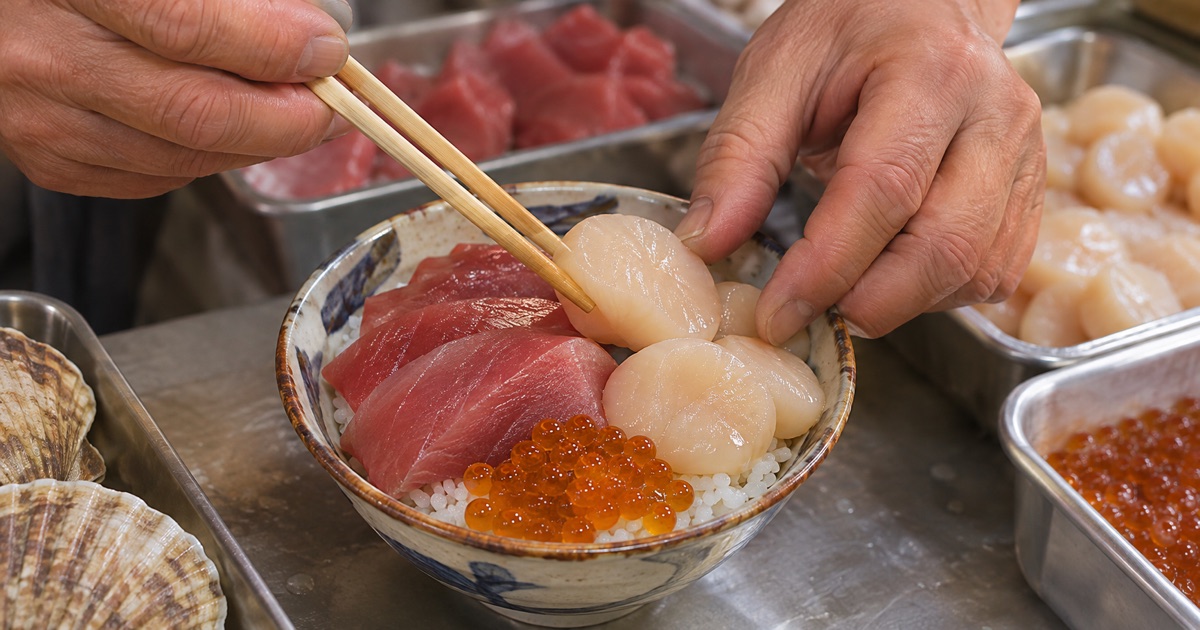
- Locating Authentic Seafood Diners: Look for establishments displaying signs for kaisendon (海鮮丼, seafood rice bowls) or ryoushi-ryouri (漁師料理, fisherman-style cuisine). Many of the freshest meals are found near working fishing ports or within local agricultural stations (Michi-no-Eki).
- Transportation Logistics: Central hubs like Chiba Station or Narita are roughly 40 to 60 minutes from Tokyo Station via the JR Sobu Line (Rapid) or Keiyo Line. Deeper southern destinations on the Boso Peninsula, like Tateyama or Katsuura, require approximately 90 to 120 minutes via JR Limited Express trains (Wakashio or Sazanami). Timetables vary, so verify schedules using transit apps before heading out. General travel advice is available via the Japan National Tourism Organization.
- Ordering Tools: Outside major resort hotels, English menus may be limited. Preparing a translation application on your mobile device to scan physical menus is recommended.
- Payment Essentials: While train stations accept IC transport cards, many harbor-front fish shacks and rural noodle shops accept only cash (Japanese Yen). Always carry sufficient physical currency when exploring coastal towns.
- Dietary Inquiries: If you must avoid peanuts or seafood, carry a written card in Japanese:
- "Peanut allergy": 落花生(ピーナッツ)アレルギーがあります。
- "Cannot eat raw fish": 生魚が食べられません。
Chiba’s food culture offers a direct link between working land and sea, making it a distinct regional tasting experience within easy reach of Tokyo.
FAQ
- Q. What is the most famous food specialty in Chiba?
- A. Chiba is best known for its fresh coastal seafood like namerou, rich peanut dishes, and distinct local ramens such as Katsuura tantanmen.
- Q. Is Chiba food suitable for people with nut allergies?
- A. Travelers with severe peanut allergies must exercise caution, as Chiba is Japan's top peanut producer and uses peanuts in sweets, sauces, and savory broths.
- Q. How far is Chiba from central Tokyo for a food-focused day trip?
- A. Major food hubs along the coast or central Chiba take roughly 40 to 90 minutes from Tokyo Station via JR rapid or limited express trains.
Cite or share this article
Copy the link below. If you quote this article, please link to this page as the source.