Naha Food Street Guide: What to Eat in Okinawa
Key takeaways
- Naha's dining streets offer distinct Okinawan staples like Okinawa soba, chanpuru stir-fries, and rafute pork.
- Most street stalls and casual izakaya are cash-preferred, so carry small yen notes and coins when dining out.
- Okinawan cuisine features unique ingredients like bitter melon, island tofu, and local seaweed, with distinct allergen profiles.
The primary destination for exploring a Naha food street is the vibrant corridor along Kokusai-dori (国際通り) and its intersecting covered market arcades in downtown Naha, Okinawa. Visitors wandering these pedestrian-friendly streets will encounter an array of distinct Okinawan culinary specialties, ranging from hearty noodle bowls to fresh subtropical seafood and casual street snacks.
Okinawa's food culture developed through centuries of maritime trade with China, Southeast Asia, and mainland Japan, resulting in a regional culinary tradition known as Ryukyuan cuisine. Exploring Naha's street dining spots offers the most accessible way to experience these unique flavors.
Navigating Naha's Dining Streets
Naha's street food and casual dining cluster around a few key walkable zones accessible via the Okinawa Urban Monorail, known locally as Yui Rail (ゆいレール).
The central spine of the city is Kokusai-dori (国際通り, "International Street"), which stretches roughly 1.6 kilometers between Prefectural Government Station (Kencho-mae / 県庁前) and Makishi Station (牧志駅). While the main avenue features numerous sit-down eateries, the side streets and covered arcades branching south—such as Heiwa-dori (平和通り) and the market alleys around the public fish market—host smaller stalls, walk-up windows, and open-air food hubs.
To plan travel and access detailed regional maps, check the Japan National Tourism Organization before your trip.
Practical Tips for First-Time Visitors
- Getting there: The monorail connects Naha Airport directly to downtown in roughly 15 to 20 minutes. Disembark at Kencho-mae, Miebashi, or Makishi stations to access the dining streets.
- Payment: While chain shops and large izakaya accept credit cards or IC transportation cards, many small stalls and market vendors operate strictly with cash. Carry Japanese yen in smaller denominations (1,000 yen notes and 100/500 yen coins).
- Trash disposal: Public trash bins are rare along Japanese streets. When buying food from walk-up counters, it is customary to consume your snack near the stall and return the skewer, wrapper, or cup to the vendor's designated bin.
- Operating times: Street market stalls often open from late morning to early evening, while casual food alley stalls and drinking quarters come alive from late afternoon until late at night. Hours change frequently depending on season and weather, so always confirm local details in advance.
Essential Dishes to Eat on a Naha Food Street
Okinawan cuisine relies heavily on pork, dashi broths, tofu, and seasonal subtropical vegetables. When browsing menus in Naha, look for these staple preparations.
Okinawa Soba (沖縄そば)
Despite its name, Okinawa soba does not contain buckwheat. The noodles are made entirely from wheat flour, giving them a thick, chewy texture similar to udon or ramen noodles.
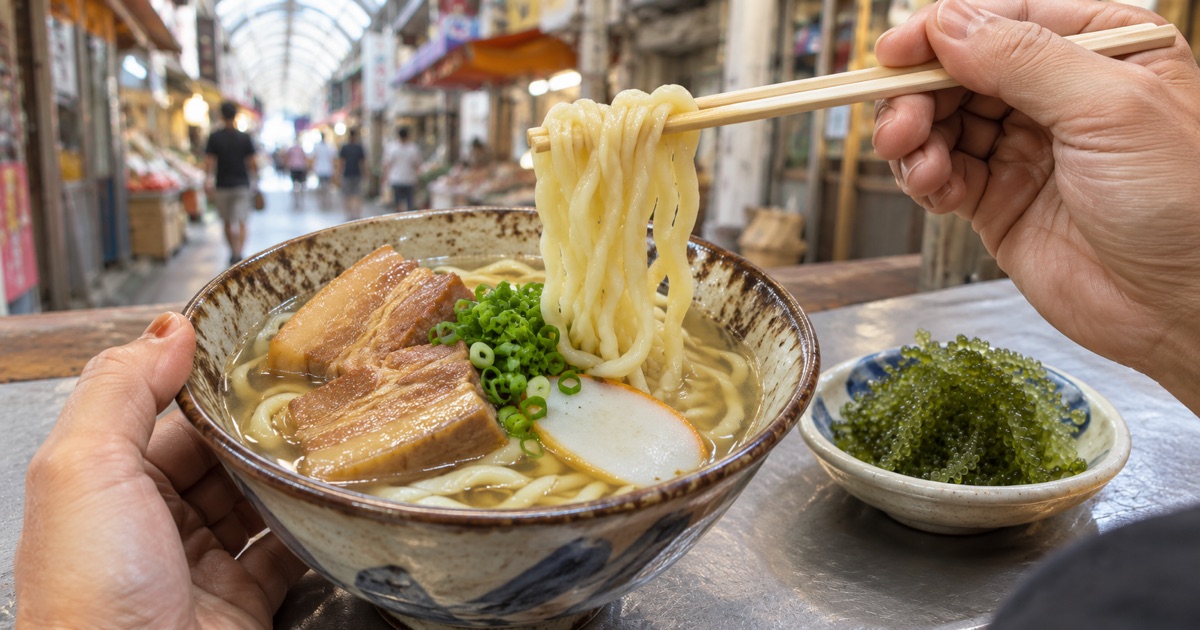
The dish is served in a golden broth made by simmering pork bones and bonito flakes (katsuobushi). Standard toppings include slices of tender stewed pork belly, fish cake (kamaboko), finely chopped scallions, and pickled red ginger (beni shoga). On the table, you will almost always find a bottle of koregusu (コーレーグス)—island chili peppers steeped in local awamori rice liquor. Add just a few drops at a time to add warmth and fragrance to the broth.
Chanpuru (チャンプルー)
The Okinawan word chanpuru means "something mixed together." It refers to a family of stir-fried dishes cooked quickly over high heat:
- Goya Chanpuru (ゴーヤーチャンプルー): The most iconic variety, featuring bitter melon (goya), firm island tofu (shima-dofu), egg, and thin strips of pork belly or luncheon meat.
- Tofu Chanpuru (豆腐チャンプルー): Focuses on Okinawa's dense, flavorful tofu, which holds its shape during stir-frying better than mainland tofu styles.
- Somin Chanpuru (素麺チャンプルー): Thin somen wheat noodles stir-fried with scallions, canned tuna or pork, and dashi seasoning.
Rafute (ラフテー)
Rafute is a classic Ryukyuan dish of skin-on pork belly slowly braised for hours with soy sauce, awamori, and black sugar (kokuto). The fat renders down until the meat becomes tender enough to cut with chopsticks. It has a rich, savory-sweet profile and is often served as an izakaya small plate alongside steamed rice.
Umibudo (海ぶどう)
Known in English as "sea grapes" or "green caviar," umibudo is a type of coastal seaweed consisting of tiny, translucent green spheres on delicate stems. Eaten raw at room temperature, it bursts in the mouth with a briny, refreshing pop. It is typically served with a light dipping sauce of citrus soy sauce (ponzu) or sanbaizu vinegar. Never refrigerate umibudo before eating, as cold temperatures cause the delicate pearls to wilt and lose their texture.
Jimami Dofu (ジーマーミ豆腐)
Jimami dofu is not actually soy tofu; it is a chilled, gelatinous cake made from peanut milk and sweet potato starch. It features a sticky, custard-like texture and a mild nutty sweetness, served topped with grated ginger and a sweet, thickened soy glaze.
Sata Andagi (サーターアンダギー)
These deep-fried Okinawan dough drops resemble dense, spherical cake donuts. Crisp on the outside and crumbly on the inside, they are flavored with white sugar, brown sugar, or purple sweet potato (beni-imo). Because they keep well at room temperature, they are widely sold at market stalls as portable walking snacks.

We are working to carry Japanese craft and everyday culture beyond Japan, by building Japan Towns with local partners.
Read the Japan Town plan →How to Order and Eat at Street-Style Izakaya
Casual dining halls and outdoor food alleys across Naha function similarly to mainland Japanese izakaya (casual pub-style eateries), but with a distinctly laid-back island atmosphere.
- Seating and Otoshi: When seated at an izakaya or seated stall, you will often receive an otoshi (お通し)—a small starter dish served alongside your first drink order. This functions as a standard seating charge, typically ranging from roughly 300 to 500 yen per person.
- Sharing Plates: Street dishes and tavern foods are intended to be shared. Order a mix of raw items (like sea grapes), a stir-fry (such as chanpuru), and a braised pork plate to share among your group.
- Ordering Drinks: Local draught beer, particularly island-brewed lager, is the default pairing for hot stir-fries. For a traditional pairing, try awamori (泡盛), an indigenous distilled rice spirit. Awamori can be ordered mizuwari (cut with cold water and ice), rokku (on the rocks), or mixed with soda or local citrus juices like shikuwasa (シークヮーサー).
- Finishing the Meal: While mainland diners often finish an evening with a bowl of ramen, Naha locals historically choose Okinawa soba or even a simple steak plate to end a night of dining.
Ingredient Notes and Dietary Considerations
Okinawan street cuisine uses unique agricultural products developed to withstand the island's subtropical climate. For official breakdowns of raw ingredients, consult the Ministry of Agriculture, Forestry and Fisheries.
Common Allergens
- Peanuts: Jimami dofu is made directly from peanuts. Those with peanut allergies must strictly avoid this dish and clarify ingredients when ordering unfamiliar desserts or regional dressings.
- Wheat and Gluten: Okinawa soba is 100% wheat flour. Soy sauce containing wheat is also present in virtually all marinades, rafute braising liquids, and stir-fry sauces.
- Pork: Pork fat and bone broths form the backbone of Ryukyuan cooking. Diners who do not eat pork should note that even vegetable chanpuru dishes are traditionally seasoned with pork-based dashi or cooked in lard.
- Soy: Tofu, miso, and soy sauce are central components across almost all savory street dishes.
By approaching Naha's street food hubs with basic dining etiquette and an appetite for local ingredients, travelers can easily experience the distinct food culture of Okinawa.
FAQ
- Q. What is the main food street area in Naha?
- A. The most famous hub runs along and just off Kokusai-dori (国際通り), particularly the covered arcade market alleys and side streets packed with casual food stalls and izakaya.
- Q. How does Okinawa soba differ from mainland Japanese soba?
- A. Unlike mainland soba made with buckwheat, Okinawa soba uses 100% wheat flour noodles served in a rich pork and bonito broth, typically topped with tender stewed pork.
- Q. Do food stalls and izakaya in Naha accommodate food allergies?
- A. Common allergens like wheat, soy, pork, and sesame appear in most broths and sauces; travelers with severe allergies should carry an allergy card written in Japanese.
Cite or share this article
Copy the link below. If you quote this article, please link to this page as the source.