Arashiyama Food Recommendations: What to Eat in Western Kyoto
Key takeaways
- Arashiyama specialties center on Kyoto tofu, yuba (tofu skin), matcha sweets, and traditional seasonal dango.
- Most sit-down dining spots close before dusk, making lunch the primary dining window for visitors in the area.
- Local street food etiquette requires eating near the stall or disposing of trash in shop bins, not walking while eating.
The best Arashiyama food recommendations focus on classic Kyoto specialties, led by silky boiled tofu (yudofu), delicate soy milk skin (yuba), and stone-ground green tea (matcha) desserts. Visitors exploring this scenic district on Kyoto's western edge should prioritize lunchtime dining to sample these plant-focused, centuries-old culinary traditions.
Arashiyama (嵐山) has flourished as an aristocratic and spiritual retreat since the Heian period. Because of its deep ties to Zen Buddhist temples, the surrounding neighborhood developed world-renowned mastery over vegetarian cuisine and soybean processing. Today, dining here ranges from serene multi-course meals overlooking moss gardens to portable sweets sold alongside the Katsura River (桂川).
Signature Dishes of Arashiyama
Yudofu (Simmered Tofu)
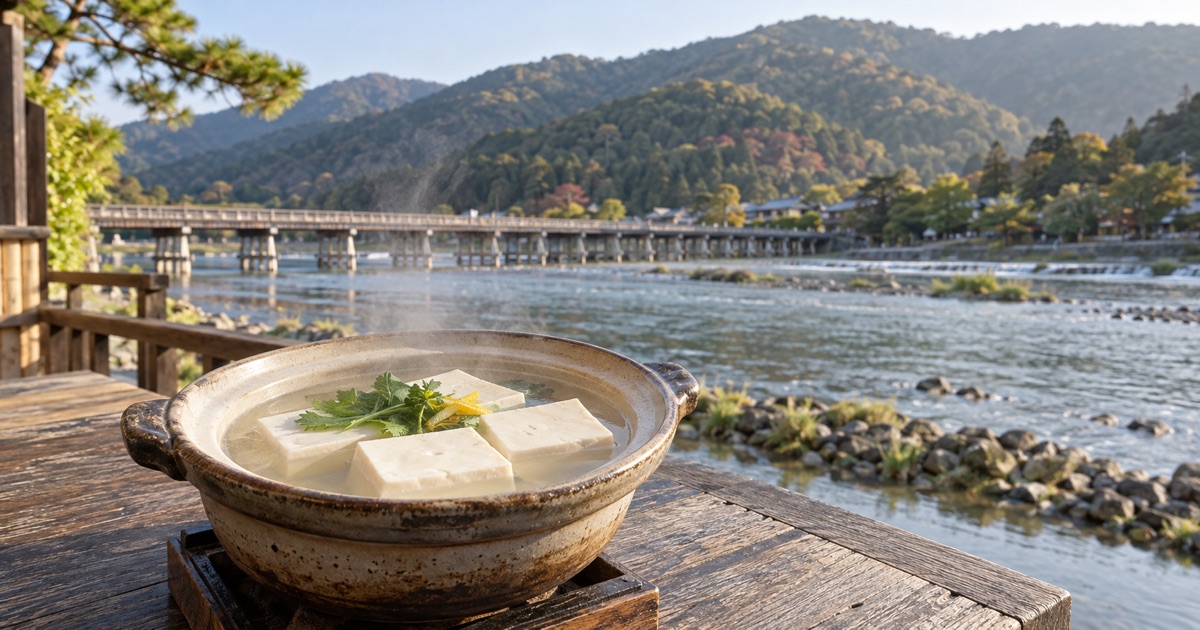
Yudofu (湯豆腐) is the quintessential Arashiyama dining experience. Cooks prepare this dish by simmering blocks of fresh silken (kinugoshi) or firm (momen) tofu in a shallow ceramic pot (donabe) filled with hot water and a single strip of dried kelp (kombu). The broth stays gentle so it does not overpower the natural sweetness of the local spring water and soybeans.
Diners lift each steaming cube with a slotted ladle and transfer it directly to a personal dipping bowl. From there, the tofu is seasoned with a light soy-based sauce (tsuyu) and customized with aromatics like grated ginger, thinly sliced scallions, and toasted sesame seeds. Many traditional set menus accompany yudofu with seasonal vegetable tempura, pickles, and steamed white rice. For general nutritional reference on soy products, consult the MEXT Food Composition Database.
Allergen note: Tofu is made directly from soybeans. The dipping sauce typically contains wheat and soy, along with fish flakes (katsuobushi).
Yuba (Soy Milk Skin)
Yuba (湯葉) is formed by gently heating fresh soy milk until a delicate, protein-rich film forms across the surface. Artisans skim this film by hand using bamboo sticks. In Arashiyama, yuba is served in several distinct textures:
- Nama-yuba (Raw/Fresh): Served fresh and folded in small chilled dishes, eaten with a dab of real wasabi and soy sauce, much like sashimi.
- Kumiage-yuba (Gathered Tofu Skin): Ladled warm straight from the soy milk vat, yielding a creamy, custard-like consistency.
- Fried or Rolled Yuba: Dried, rolled into tight scrolls, and simmered in seasoned dashi stock so it absorbs deep savory flavors.
Shojin Ryori (Zen Temple Cuisine)
Originating in Buddhist monasteries, shojin ryori (精進料理) strictly excludes meat, fish, onions, garlic, and root vegetables harvested by killing the plant. Dishes focus on harmony among five core colors (green, yellow, red, black, white) and five basic flavors. Visitors in Arashiyama can order seasonal lunch trays featuring simmered mountain vegetables (sansai), sesame tofu (goma-dofu), and vinegared salads.
While completely vegetarian in spirit, diners with strict dietary requirements should always clarify whether a given restaurant uses standard bonito flakes in their soup bases, as commercial variations sometimes deviate from strict monastic rules.
Popular Street Foods and Sweets
The main avenue extending south from the bamboo groves toward the Togetsukyo Bridge (渡月橋) features an abundance of casual counter-service treats.
Mitarashi Dango and Yaki Dango
Skewered rice dumplings (dango) are grilled over hot coals until lightly charred on the outside and chewy on the inside. The most recognizable variety is mitarashi dango (みたらし団子), coated in a glossy, sweet-and-savory glaze made from sugar, soy sauce, and starch. Vendors also offer kusa dango, infused with wild mugwort (yomogi) and topped with sweetened red bean paste (anko).
Matcha Sweets and Parfaits
Kyoto’s proximity to the historic tea fields of Uji means Arashiyama vendors offer exceptional green tea confections. High-grade stone-ground matcha appears in:
- Soft-serve ice cream (matcha sofuto kuriimu), often paired with hojicha (roasted green tea) twists.
- Multi-layered parfaits containing matcha jelly, puffed rice, sweet dango, and bean paste.
- Warm, whisked thin tea (usucha) served with traditional pressed dry sugar candies (rakugan).
Tofu and Soy Milk Soft-Serve
For a milder sweetness, soy milk soft-serve provides an airy, dairy-free alternative to standard ice cream. Some shops invert the cone briefly to demonstrate the ice cream's remarkably dense, velvety texture, which retains its shape without immediate melting.

We are working to carry Japanese craft and everyday culture beyond Japan, by building Japan Towns with local partners.
Read the Japan Town plan →How to Navigate Dining in Arashiyama
1. Timing Your Meals
The vast majority of tourists arrive between 10:00 and 15:00. Sit-down tofu restaurants frequently fill up immediately around 11:30. Many traditional eateries in Arashiyama close once lunch service concludes—often between 15:00 and 17:00—meaning walk-in dinner options in the immediate area become quite limited.
- Morning (09:00–11:00): Best for tea shops and early morning bakery stalls.
- Midday (11:30–14:00): Peak lunch hours. Expect waits of roughly 30 to 60 minutes at walk-in restaurants during autumn foliage and spring cherry blossom seasons.
- Evening (After 17:00): Most souvenir shops and casual diners pull down their shutters. Plan evening dinners closer to central Kyoto (around Karasuma or Gion).
2. Street Food Etiquette (Tabearuki)
In Japan, walking down crowded sidewalks while eating or drinking (aruki-gui) is widely considered bad manners. It risks dropping sauces or bumping into other visitors' clothing.
- Consume street treats directly beside the stall where purchased, or step inside the shop's designated standing area.
- Public trash cans are scarce across Arashiyama. Always return wooden skewers, wrappers, and paper cups directly to the stall where you bought them.
- Carrying a small plastic bag in your daypack to hold personal rubbish until you return to your hotel is strongly recommended.
3. Payment Methods
While major restaurants and souvenir hubs accept contactless IC cards (such as Suica and Pasmo) or credit cards, smaller roadside dango stands and historic teahouses may accept Japanese yen cash only. Keep small denominations (¥1,000 notes and ¥100 coins) ready for quick transactions.
Access and Getting There
Arashiyama sits in western Kyoto and can be reached via several train lines depending on your departure point:
- JR Sagano Line (San-in Main Line): Runs from Kyoto Station (京都駅) to Saga-Arashiyama Station (嵯峨嵐山駅) in roughly 15 to 20 minutes. This route is fully covered by national rail passes.
- Keifuku Electric Railroad (Randen): A retro tram line departing from Shijo-Omiya Station, arriving right at Arashiyama Station (嵐山駅) in the heart of the shopping street.
- Hankyu Railway: Convenient for travelers coming directly from Osaka (Umeda) or central Kyoto (Karasuma). Arrives at Hankyu Arashiyama Station, south of the Togetsukyo Bridge.
Travel times, train frequencies, and operating conditions can vary throughout the year. For broad regional transport planning and regional travel guidelines, refer to the Japan National Tourism Organization. Always verify real-time schedules on official transit websites before your trip.
FAQ
- Q. What is the most famous food to eat in Arashiyama?
- A. Tofu dishes, particularly yudofu (simmered hot tofu) and yuba (fresh tofu skin), are the signature foods of the Arashiyama district.
- Q. Can I walk and eat snacks along the streets in Arashiyama?
- A. Walking while eating (tabearuki) is discouraged; visitors should stand near the vendor's stall or finish food in designated seating areas.
- Q. Are there vegetarian options widely available in Arashiyama?
- A. Many traditional tofu and temple-style meals are plant-based, but diners should confirm whether the broth uses bonito fish stock (katsuobushi).
Cite or share this article
Copy the link below. If you quote this article, please link to this page as the source.