What to Eat in Arashiyama: A First-Timer's Food Guide
Key takeaways
- Yudofu (simmered tofu) is the signature dish of Arashiyama, tied to the area's temple and tofu-making history.
- Yatsuhashi, matcha soft serve and matcha-flavored sweets are widely sold near Tenryu-ji and the Bamboo Grove.
- Many classic restaurants close in the mid-afternoon, so plan lunch between late morning and early afternoon to avoid gaps.
What to Eat in Arashiyama
The most famous thing to eat in Arashiyama (嵐山) is yudofu (湯豆腐), simmered tofu served in a simple hot broth, a dish closely tied to the area's temples and long tofu-making tradition. Beyond yudofu, visitors should also try matcha-based sweets, yatsuhashi (八つ橋), and savory snacks sold along the streets near the Bamboo Grove and Togetsukyo Bridge.
Arashiyama, on the western edge of Kyoto, is known for its scenic river, bamboo forest and historic temples, but it also has a distinct food culture shaped by its temple district and tofu shops. This guide covers what to look for, how dishes are typically served, and a few practical tips so first-time visitors can plan meals around sightseeing without wasted time.
Yudofu: The Signature Dish
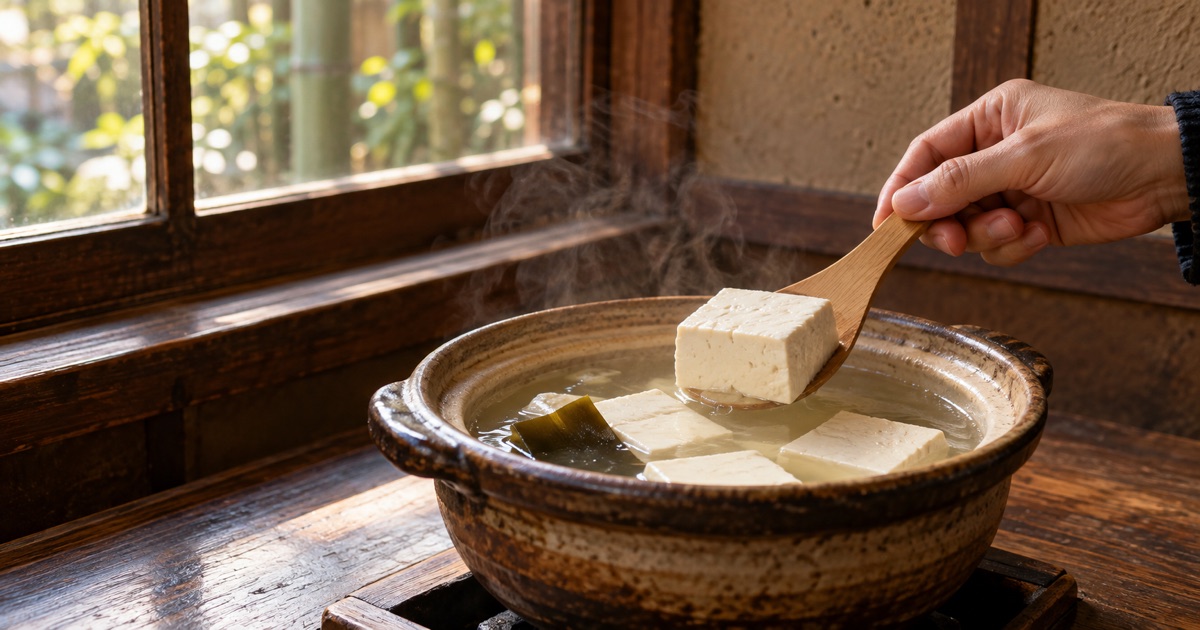
Yudofu is blocks of tofu gently simmered in a pot of kombu-based broth, then dipped in a light sauce such as ponzu, often with condiments like green onion, grated ginger or bonito flakes on the side. It is a mild, delicate dish rather than a heavily seasoned one, which suits its origins as temple cuisine (shojin ryori, 精進料理) historically eaten by Buddhist monks who avoided meat and fish.
Because Arashiyama has several temples, including Tenryu-ji (天龍寺), yudofu restaurants cluster around the temple approach roads. Meals are commonly served as a set course, with rice, pickles and small side dishes accompanying the tofu pot. Expect to sit at a table or on tatami flooring, and in some restaurants, to pay a bit more for a set with a view of a garden.
A common mistake is expecting yudofu to be strongly flavored like a stew; it is intentionally subtle, so the quality of the tofu and broth matters more than spicing. Soy is the main allergen to be aware of, and dashi broths may contain fish, so those avoiding fish-based stock should ask before ordering.
Tofu-Skin and Other Tofu Dishes
Alongside yudofu, many restaurants in the area serve yuba (湯葉), the thin skin that forms on the surface of heated soy milk. Yuba can be eaten fresh, draped over rice or dipped in soy sauce, or fried and added to other dishes. It has a soft, slightly chewy texture that's quite different from firm tofu, and it's often sold as a regional specialty product in shops near the station, so it can be a compact souvenir as well as something to eat on the spot.
Street Snacks Near the Bamboo Grove
The streets leading toward the Bamboo Grove (竹林の道) and Togetsukyo Bridge (渡月橋) are lined with small stands and shops selling snacks meant to be eaten while walking. Common options include:
- Matcha soft-serve ice cream, a popular treat given Kyoto's association with green tea
- Grilled rice crackers (senbei, 煎餅) in savory or sweet versions
- Skewered dango (団子), chewy rice dumplings glazed with a sweet soy sauce
- Croquettes or other fried snacks sold from small storefront counters
These are good for a quick bite between sightseeing stops, but it is considered polite to finish eating before entering quieter areas such as temple grounds or the Bamboo Grove path itself, rather than walking through while eating.

Matcha and Yatsuhashi: Local Sweets
Kyoto's reputation for high-quality matcha (抹茶) is on full display in Arashiyama, where matcha appears in soft serve, parfaits, cakes and traditional sweets. Matcha has a grassy, slightly bitter flavor balanced with sweetness in most desserts, and it pairs well with the area's quiet, scenic atmosphere.
Yatsuhashi is a traditional Kyoto confection made from rice flour, sugar and cinnamon, available in two main forms: a firm, baked cracker-like version, and a soft, raw version (nama yatsuhashi, 生八つ橋) often folded around a sweet filling such as red bean paste. Yatsuhashi is one of Kyoto's most recognizable souvenir sweets, and many shops offer small sample pieces so visitors can try the flavor before buying a box to take home.
A Simple Half-Day Eating Plan
For visitors spending a few hours in Arashiyama, a practical approach is to treat food as a series of short stops rather than one long sit-down meal, unless yudofu is the main goal:
- Start with a light snack near the station if arriving hungry, such as a rice cracker or small fried item.
- Visit Tenryu-ji and the Bamboo Grove in the late morning, when it's typically a little quieter.
- Have yudofu or a tofu-based set meal for lunch, ideally before early afternoon, since some traditional restaurants stop serving lunch in the mid-afternoon and may have limited evening hours.
- Finish with a matcha sweet or yatsuhashi sample near Togetsukyo Bridge before heading back toward the station.
This keeps the heavier meal in the middle of the visit and leaves lighter snacking for the walking portions, which suits the hilly, pedestrian-heavy layout of the area.
Practical Tips for First-Time Visitors
- Getting there: Arashiyama is reachable by train from central Kyoto in roughly 15–25 minutes depending on the line and starting station; travel times can vary, so check current train schedules before heading out.
- Cash and cards: Smaller tofu shops and street stalls may be cash-only or have limited card acceptance, so carrying some cash is a safe habit.
- Seasonal crowds: Cherry blossom season in spring and foliage season in autumn bring large crowds, and restaurant wait times can be longer, so building in extra time is wise.
- Opening hours change: Hours, menus and prices at food shops and restaurants can change without much notice, so it's best to confirm details locally or via official information on the day of your visit rather than relying solely on older guides.
- Allergens: Tofu and yuba dishes are soy-based; broths may include fish-derived dashi. Those with soy or fish allergies, or anyone avoiding animal products entirely, should ask staff directly, as English menus may not list every ingredient.
For general planning and updates on travel conditions around Kyoto, the Japan National Tourism Organization is a reliable starting point. Readers interested in the nutritional makeup of tofu, yuba or matcha can also refer to the official MEXT Food Composition Database for detailed data.
Arashiyama's food scene rewards visitors who pace their eating around the walking route rather than searching for one big meal. A simple combination of a proper yudofu lunch, a few street snacks, and a matcha sweet covers the area's culinary highlights without needing to rush.
FAQ
- Q. Is Arashiyama good for vegetarians?
- A. Yes, yudofu and other tofu-based meals are naturally vegetarian-friendly, though some set meals may include dashi made with fish, so ask if a fully vegetarian option is needed.
- Q. Do I need a reservation for yudofu restaurants?
- A. It depends on the place and season; cherry blossom and autumn foliage periods get busy, so arriving early or asking locally about wait times is wise.
- Q. Can I eat while walking around the Bamboo Grove?
- A. Street food is common near the station and main approach roads, but it's courteous to finish eating before entering quieter temple grounds or the Bamboo Grove path itself.
Cite or share this article
Copy the link below. If you quote this article, please link to this page as the source.