Hakodate Food Guide: What to Eat in Hokkaido's Port City
Key takeaways
- Hakodate is celebrated for exceptionally fresh seafood, particularly morning squid (ika) and mixed seafood rice bowls (kaisendon).
- Hakodate shio ramen features a clear, delicate broth seasoned with salt and local kelp, distinct from other Hokkaido ramen styles.
- Navigating morning markets and local dining requires cash awareness, basic etiquette, and vigilance regarding seafood allergies.
Hakodate food is defined by cold-water seafood pulled directly from the Tsugaru Strait and a centuries-old culinary tradition rooted in clear, ingredient-focused broths. As Hokkaido's southern gateway, the port city offers travelers fresh squid sashimi (ika sashi), brimming seafood rice bowls (kaisendon), and light, salt-based shio ramen.
Understanding Hakodate’s food landscape helps first-time visitors navigate morning markets, casual counter restaurants, and seaside stalls without language barriers.
Signature Hakodate Seafood Specialties
The intersection of the Sea of Japan and the Pacific Ocean makes the waters off Hakodate (函館) rich fishing grounds. Seafood is the core of the local diet, prepared with minimal processing to highlight natural sweetness and texture.
Live Squid (Katsu-ika) and Squid Sashimi (Ika Sashi)
Squid (ika) is the official culinary symbol of Hakodate. The city catches two primary species depending on the season: Japanese flying squid (surume-ika) from early summer through autumn, and spear squid (yari-ika) through the winter and spring.
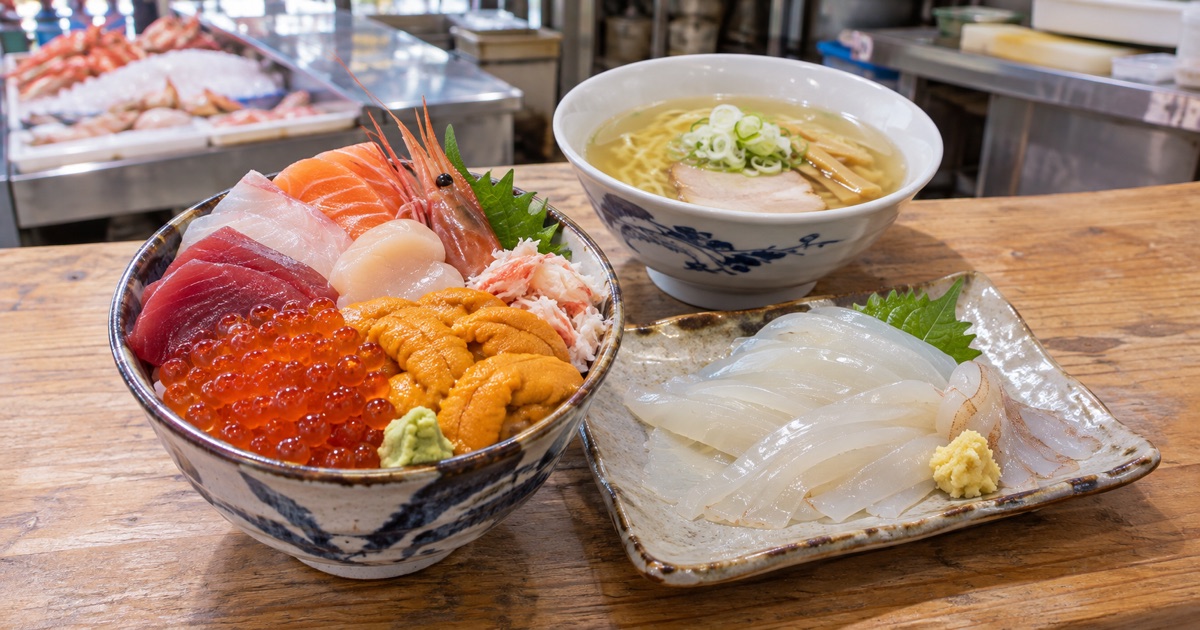
In Hakodate, squid is traditionally eaten within hours of harvest. High-grade squid sashimi is translucent rather than opaque white, with a firm, snappy bite. Diners often season it with a touch of grated ginger and soy sauce rather than wasabi, as ginger complements the mild sweetness of the meat. Some dining venues prepare squid caught directly from holding tanks, serving the sliced mantle alongside the legs (geso), which may still move slightly due to muscle reflex.
Hakodate Seafood Rice Bowls (Kaisendon)
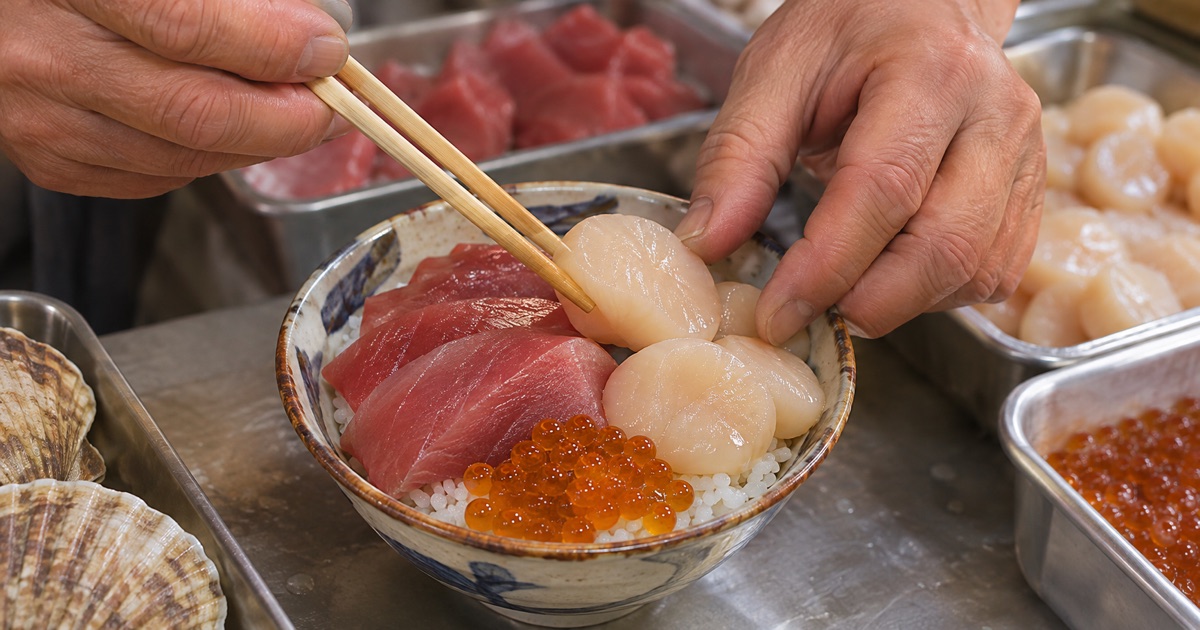
A quintessential Hakodate breakfast or lunch is kaisendon (海鮮丼), a bowl of steamed white rice covered with raw seafood. While popular across Hokkaido, Hakodate’s versions center on seasonal selections from local fleets.
Common toppings include:
- Sea urchin (uni): Sweet, creamy, and briny, often served without chemical preservatives like alum.
- Salmon roe (ikura): Cured in soy sauce or salt, providing savory bursts of umami.
- Scallops (hotate): Plump, tender, and subtly sweet bivalves from southern Hokkaido bays.
- Crab (kani): Flaked meat or whole legs of snow crab (zuwaigani) or horsehair crab (kegani).
Diners can order pre-set combinations or build custom bowls by choosing two to five specific toppings. Pouring soy sauce directly over the entire bowl can overwhelm delicate items; instead, mix a small amount of wasabi into a side dish of soy sauce, lightly dip individual pieces of seafood, and return them to the rice.
Hakodate Shio Ramen: The Regional Noodle Style
While Sapporo is renowned for rich miso ramen and Asahikawa for robust shoyu (soy sauce) ramen, Hakodate is the home of Hokkaido's shio (salt) ramen (塩ラーメン).
Broth and Noodle Characteristics
Hakodate shio ramen features an exceptionally pale, clear broth. Chefs gently simmer pork bones, chicken carcasses, and aromatic vegetables at low heat to prevent cloudiness, finishing the base with local kelp (dashi konbu) harvested along the Hakodate coastline. The seasoning tare (sauce base) relies primarily on mineral-rich salt rather than heavy sauces.
The noodles are typically straight or gently waved, medium-thin, and cooked to a firm chew. Traditional toppings remain simple:
- Sliced braised pork (chashu)
- Fermented bamboo shoots (menma)
- Finely sliced green onions (negi)
- A slice of swirled fish cake (narutomaki)
- Occasionally a sheet of dried seaweed (nori) or a tender boiled egg
The resulting bowl is savory, light on the stomach, and aromatic, making it a popular choice for both lunch and late-night dining.
We are working to carry Japanese craft and everyday culture beyond Japan, by building Japan Towns with local partners.
Read the Japan Town plan →Regional Comfort Foods and Local Ingredients
Beyond raw seafood and ramen, Hakodate has several distinct localized staples shaped by its history as an international trade hub and its proximity to agricultural plains.
Hakodate Gagome Kelp (Gagome Konbu)
The coastal waters surrounding southern Hokkaido are prime harvesting grounds for gagome konbu (がごめ昆布), a variety of kelp characterized by a textured, bumpy surface. When shredded and rehydrated in water or soy sauce, it releases high amounts of viscous soluble fiber, producing a thick, sticky consistency.
Locals mix finely chopped gagome kelp with diced raw squid, grated mountain yam (tororo), or steamed rice. It is also processed into dashi broths, dried snack strips, and noodle seasonings. For official nutrient breakdowns of edible seaweeds, consult the MEXT Food Composition Database.
Sanpei-jiru (Salmon and Kelp Soup)
Sanpei-jiru (三平汁) is a traditional winter soup developed by northern coastal communities. The dish pairs salted fish—most commonly salmon or local cod—with hearty root vegetables such as daikon radish, carrots, and potatoes in a broth seasoned solely with kelp dashi and the salt drawn from the fish itself. It offers a warm, rustic contrast to raw market dining during Hokkaido's sub-zero winter months.
Practical Dining Advice for Visitors
Eating in Hakodate is accessible for international travelers, but keeping a few logistical habits in mind ensures smooth visits to morning stalls and counter shops.
Visiting the Morning Markets
Hakodate’s morning market district sits directly adjacent to JR Hakodate Station (函館駅).
- Timing: Activity peaks early. Most retail stalls and breakfast eateries begin service between 6:00 AM and 7:00 AM, tapering off by early afternoon (roughly 1:00 PM to 2:00 PM). Arriving before 9:00 AM provides the freshest selection and shorter lines.
- Payment: While modern indoor food halls increasingly accept credit cards and IC transit cards, smaller market vendors, outdoor stalls, and older ramen counters operate on cash only. Keep 1,000-yen notes and 100-yen coins accessible.
- Market Etiquette: Never touch raw seafood or produce displayed on ice unless invited by the vendor. Stalls offering cooked-to-order snacks expect customers to consume their food near the stall rather than walking through crowded market alleys with open skewers or broth cups. Use the disposal bins provided directly at the stall.
Allergen and Dietary Awareness
Seafood forms the foundation of the local restaurant trade, which presents considerations for specific dietary needs:
- Shellfish and Cephalopods: Squid, octopus, shrimp, crab, and scallops share prep spaces, cutting boards, and frying oil across nearly all general dining establishments. Those with severe seafood allergies should exercise extreme caution.
- Soy and Gluten: Soy sauce (shoyu) and wheat are present in ramen broths, noodle dough, kaisendon marinades, and pickled sides.
- Vegetarian and Vegan Options: Traditional Hakodate cuisine relies heavily on fish stocks (dashi) even in vegetable dishes, soups, and ramen broths. Dedicated plant-based meals are rare in traditional seafood markets; travelers should plan ahead when seeking specialty vegan-friendly kitchens.
For broader travel planning, safety updates, and regional transportation connections across Hokkaido, refer to official guides from the Japan National Tourism Organization. Operating schedules, seasonal availability, and menu prices fluctuate throughout the year, so verify specific details directly with local operators during your trip.
FAQ
- Q. What is the most famous food to eat in Hakodate?
- A. Hakodate is most famous for fresh squid (ika), often eaten as transparent sashimi, along with kaisendon (seafood bowls) and clear shio (salt) ramen.
- Q. How does Hakodate ramen differ from Sapporo or Asahikawa ramen?
- A. Hakodate specializes in shio ramen, using a clear chicken and pork broth seasoned simply with salt and local kelp, rather than heavy miso or rich soy sauce.
- Q. What allergens are common in Hakodate cuisine?
- A. Shellfish, mollusks (squid and octopus), fish roe, soy, and wheat are very common across local markets, seafood stalls, and ramen shops.
Cite or share this article
Copy the link below. If you quote this article, please link to this page as the source.