Sapporo Food Guide: What to Eat in Hokkaido's Capital
Key takeaways
- Sapporo is famous for hearty regional specialties like miso ramen, aromatic soup curry, and grilled jingisukan mutton.
- Coastal access and Hokkaido dairy farming make local seafood bowls and soft-serve ice cream essential culinary staples.
- Ordering in Sapporo often involves customising spice levels, broth richness, and toppings using English-friendly ticket machines.
Sapporo food is defined by rich, warming dishes and exceptionally fresh regional produce shaped by Hokkaido's cool northern climate. Visitors exploring the prefecture's capital can expect iconic staples such as thick miso ramen, aromatic soup curry, grilled mutton, and cold-water seafood bowls.
Because Hokkaido functions as Japan's agricultural heartland, the local food scene benefits directly from expansive dairy farms, vegetable fields, and nutrient-dense coastal waters. Understanding the primary dishes, key ingredients, and ordering customs will help any first-time visitor navigate food halls, casual eateries, and dining districts across the city with ease.
What is Sapporo Miso Ramen?
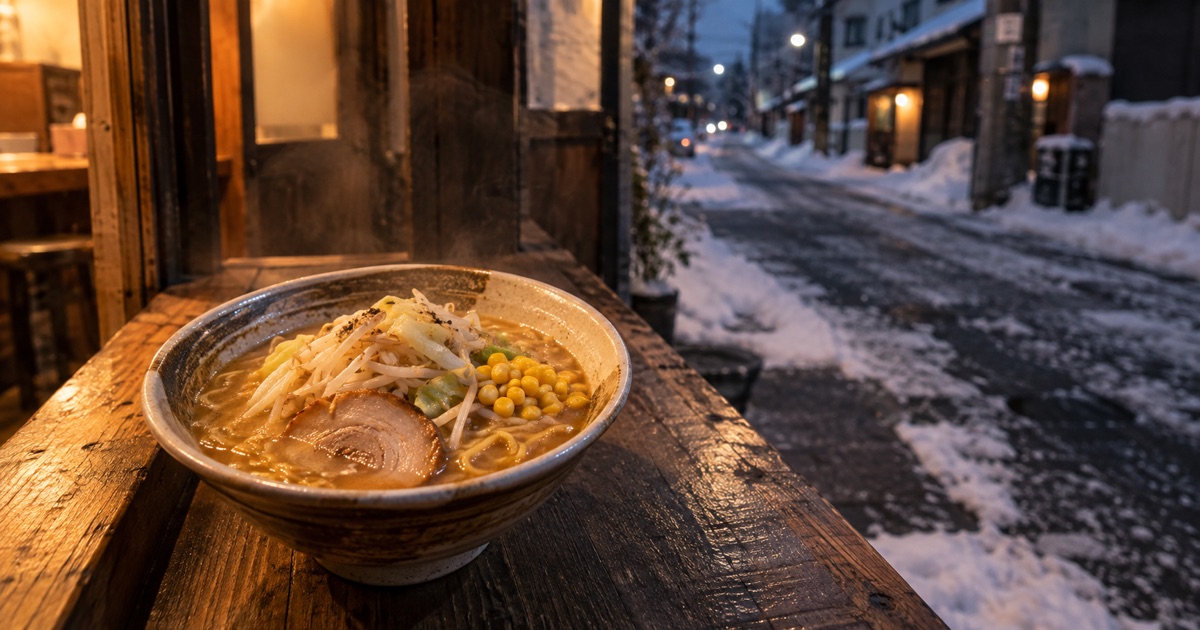
Sapporo miso ramen (札幌味噌ラーメン) is the city's most globally recognised culinary export, created in the mid-20th century to provide a hearty, warming meal during freezing winter months.
The dish combines a rich, robust stock—typically simmered from pork bones (tonkotsu), chicken, and dried seafood—with aged red or yellow miso paste. To retain heat until the last bite, chefs briefly stir-fry minced pork, garlic, onions, bean sprouts, and cabbage in a smoking-hot wok before pouring in the broth, finishing the bowl with a thin layer of protective lard on the surface.
The noodles used in Sapporo miso ramen are distinct from other regional styles:
- Texture and Shape: Thick, curly, and yellow, with a firm, chewy bite (chijire-men, 縮れ麺).
- Aging: The dough contains high moisture and egg, then undergoes a short aging process to help it grip the rich soup.
- Toppings: Classic additions include tender sliced chashu pork, seasoned bamboo shoots (menma), finely chopped scallions, and a dollop of local butter paired with sweet corn.
Allergen Note: This dish almost always contains wheat (gluten), soy, pork, and sesame. Butter and corn additions introduce dairy, while noodle preparations frequently use egg. For detailed breakdowns of food components, refer to official nutrient resources such as the MEXT Food Composition Database.
What is Sapporo Soup Curry?
Sapporo soup curry (スープカレー) is a homegrown specialty that emerged in the 1970s, drawing inspiration from Indian spice blending, medicinal herbal broths, and Indonesian culinary traditions. Unlike standard Japanese curry, which relies on a thick, flour-based roux poured over rice, soup curry features a light, fragrant, and heavily spiced broth served in a deep bowl alongside a separate plate of steamed rice.
The broth begins with a complex base of stewed chicken bones, pork bones, or vegetables infused with aromatics like turmeric, cumin, cardamom, coriander, and basil. Each bowl comes loaded with chunky, flash-fried or roasted Hokkaido root vegetables, such as pumpkin (kabocha), potatoes, carrots, lotus root, and green peppers. A whole braised chicken leg that slides easily off the bone is the most traditional protein option, though braised pork belly and seafood are also widely available.
How to Eat Soup Curry
First-time visitors often wonder whether to pour the soup over the rice or dump the rice into the soup bowl. The standard method is straightforward:
- Scoop a bite-sized portion of steamed rice onto your spoon.
- Dip the spoon into the broth so the rice absorbs the spiced liquid.
- Eat the submerged spoonful directly.
- Cut pieces of meat and tender vegetables with your spoon or chopsticks, alternating between the soup toppings and the rice.
Most soup curry shops use a step-by-step ordering system. You first choose your soup base (such as classic, coconut, or tomato), select your main protein and vegetable set, and then choose a spice level on a scale typically ranging from 0 (mild) to 10 or beyond (extremely fiery).
We are working to carry Japanese craft and everyday culture beyond Japan, by building Japan Towns with local partners.
Read the Japan Town plan →What is Jingisukan (Grilled Mutton)?
Jingisukan (ジンギスカン), named after the historic Mongolian leader Genghis Khan, is a beloved Hokkaido communal barbecue dish focused on mutton or lamb. Because sheep farming developed significantly in Hokkaido compared to the rest of Japan, mutton remains a unique regional comfort food rarely eaten in central Honshu.
The dish is prepared on a convex, domed metal grill shaped like a warrior’s helmet, which features raised ridges running downward from the centre:
- Cooking the Meat: Fresh lamb cutlets or thinly sliced marinated mutton are placed directly on the elevated dome of the grill.
- Cooking the Vegetables: Sliced onions, bean sprouts, cabbage, and pumpkin are placed along the lower rim of the pan. As the meat cooks, juices and rendered fat run down the ridges, flavouring and caramelising the vegetables below.
- Dipping Sauce: Cooked meat and vegetables are dipped into a savoury, slightly sweet soy-based sauce infused with grated apple, onion, garlic, and ginger before eating.
Many casual eateries provide paper aprons and plastic bags to protect your coat and bag, as the domed grills generate significant smoke and grease splatter.
How to Enjoy Fresh Hokkaido Seafood in Sapporo
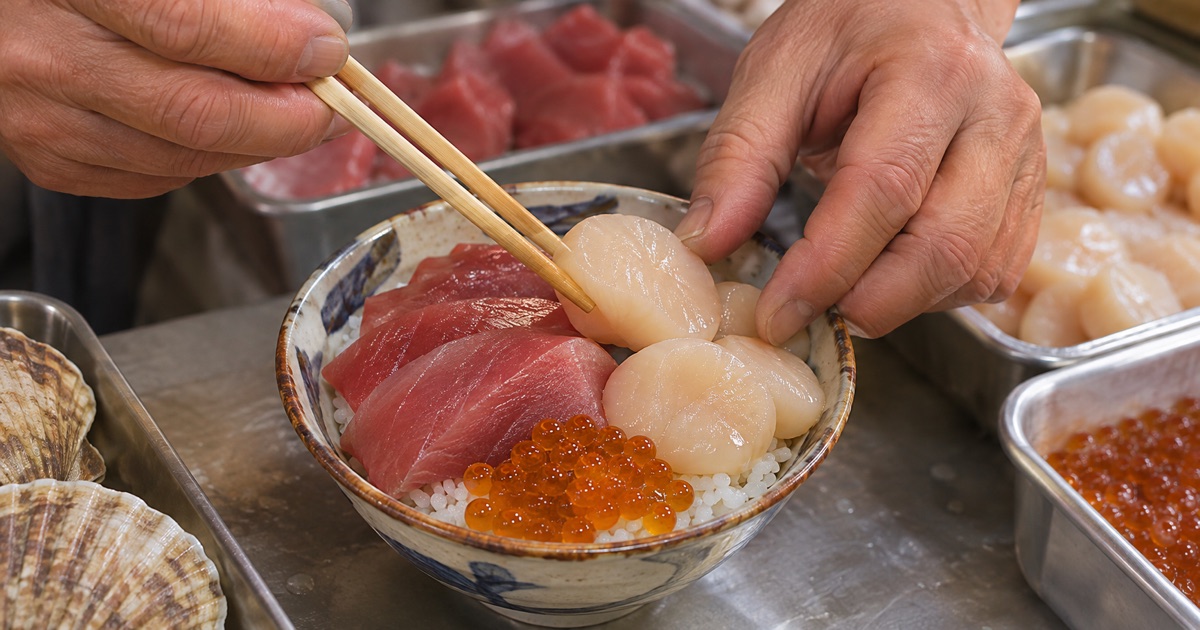
Although Sapporo is an inland city, its proximity to major ports like Otaru (小樽) and Ishikari (石狩)—combined with rapid transport links across Hokkaido—makes it a prime hub for raw seafood (kaisendon, 海鮮丼). The surrounding cold currents yield seafood with high fat content and delicate natural sweetness.
Key varieties to look for include:
- Uni (Sea Urchin, ウニ): Renowned for its rich, custard-like texture and sweet brine, especially when served without chemical preservatives.
- Ikura (Salmon Roe, イクラ): Large, jewel-like orange eggs cured in soy sauce and sake that pop in the mouth.
- Crab (Kani, カニ): Seasonal varieties include King crab (tarabagani), delicate Snow crab (zuwaigani), and sweet Horsehair crab (kegani).
- Hotate (Scallops, ホタテ): Thick, firm bivalves harvested from the northern seas, served raw as sashimi or butter-seared on the grill.
Morning markets and casual dining halls around the city centre serve these ingredients layered over beds of warm, vinegared sushi rice. For broad insights into regional produce, check resources provided by the Japan National Tourism Organization.
What Makes Sapporo Dairy and Sweets Special?
Hokkaido produces more than half of Japan’s total milk supply, benefiting from vast pastures, cool weather, and high-welfare dairy farming. As a result, Sapporo is celebrated for dairy products that possess a distinctive creamy texture and rich, fresh taste without cloying sweetness.
Soft-Serve Ice Cream (Sofuto Kuriimu)
Hokkaido soft-serve (sofuto kuriimu, ソフトクリーム) is available throughout transport terminals, shopping streets, and sweet shops. Unlike conventional Western soft-serve, local variations rely on high-fat, unadulterated fresh milk, resulting in an exceptionally smooth texture and clean finish. Classic milk flavours dominate, alongside seasonal infusions like melon or roasted green tea.
The Shime-Parfait Culture
A distinct nightlife tradition in Sapporo is shime-parfait (シメパフェ), or the "nightcap parfait." While people in many Japanese cities conclude an evening of drinks with a bowl of hot ramen, Sapporo locals frequently visit late-night dessert parlours for elaborate ice cream parfaits. These towering desserts layer artisanal gelato, fresh seasonal fruits, fruit purées, sponge cakes, and liqueur infusions, providing a refreshing alternative to heavy late-night meals.
Practical Dining Tips for Visitors in Sapporo
Navigating restaurants in Sapporo is straightforward once you understand common local dining mechanics:
- Ticket Machines (Shokkenki, 食券機): Many casual ramen shops and lunch spots use automated ticket machines at the entrance. Insert cash (or tap an IC transit card where supported), press the button corresponding to your dish, and hand the printed paper slip to the counter staff. Many machines feature English labels, though photographic guides above the buttons are also common.
- Spice and Broth Adjustments: When ordering soup curry or ramen, staff may ask for your preference on noodle firmness (katame for firm), oil content, or chili levels. If you do not speak Japanese, pointing to the numerical spice scale on the English menu works seamlessly.
- Payment Methods: While modern shopping complexes accept major international credit cards and contactless payments, independent food stalls and smaller family-run counters often remain strictly cash-only. Always carry Japanese yen in small denominations.
- Hours and Availability: Popular seafood counters and ramen shops frequently close as soon as their daily stock runs out. If you plan to visit a specific spot, aiming for an early lunch or dinner window helps avoid missing out. Always check official shop websites or notice boards for the most recent operating schedules.
FAQ
- Q. What is the most famous Sapporo food to try first?
- A. Sapporo miso ramen is widely considered the signature dish, featuring rich pork broth, fermented soybean paste, and thick wavy noodles.
- Q. How does Sapporo soup curry differ from standard Japanese curry?
- A. Soup curry features a light, herbal, spiced broth served with large pieces of tender vegetables and meat, rather than a thick roux.
- Q. Are there dietary considerations or common allergens in Sapporo food?
- A. Common allergens include crustaceans and molluscs in seafood, wheat and soy in ramen broths, and dairy in local desserts.
Cite or share this article
Copy the link below. If you quote this article, please link to this page as the source.