Hamamatsu Food Guide: What to Eat in Shizuoka
Key takeaways
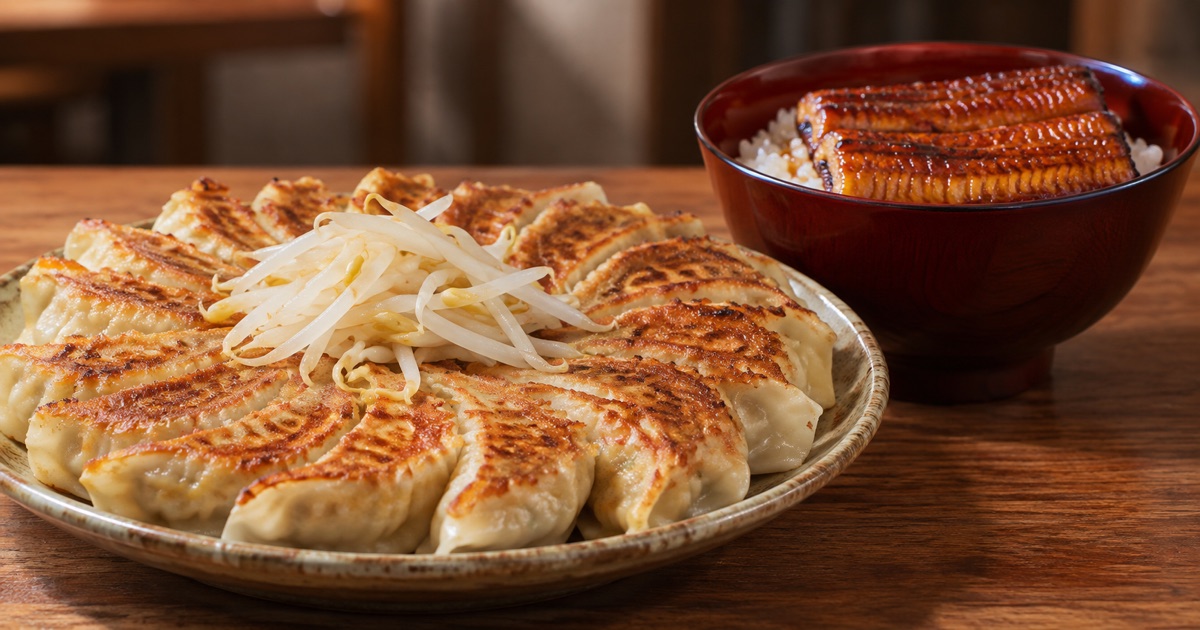
- Hamamatsu is famous across Japan for its pan-fried gyoza served with bean sprouts and grilled freshwater eel (unagi).
- The city sits along Lake Hamana in western Shizuoka Prefecture, accessible by Tokaido Shinkansen bullet train.
- Local specialties feature distinct eating styles, including custom gyoza dipping sauces and multi-step unagi bowls.
Hamamatsu food centers on two iconic regional specialties: crisp, cabbage-packed gyoza served with bean sprouts, and rich freshwater eel (unagi) harvested from nearby Lake Hamana (Hamanako / 浜名湖). Located on the Tokaido Shinkansen line in western Shizuoka Prefecture, this coastal manufacturing and agricultural hub offers a rich food culture defined by local produce, freshwater fisheries, and distinct regional dining customs.
Understanding what makes these regional dishes unique, how to order them, and how to eat them properly will help you navigate menus comfortably as a first-time visitor.
Hamamatsu Gyoza: The City's Signature Dumpling
Hamamatsu consistently competes with Utsunomiya City in Tochigi Prefecture for the title of Japan's top gyoza-consuming city. The local style of pan-fried dumpling (yaki-gyoza / 焼き餃子) developed in the post-World War II era and has several defining characteristics that distinguish it from standard Japanese gyoza.
Key Characteristics
- Cabbage-Heavy Filling: Unlike northern varieties that lean heavily on ground pork and garlic, Hamamatsu gyoza fillings use a high proportion of finely minced local cabbage and sweet onions, balanced with modest amounts of pork. This produces a naturally sweet, lighter dumpling that is easy to eat in large quantities.
- Circular Pan-Frying: Chefs arrange the dumplings in a radiating circular wheel inside a round frying pan. When flipped onto a plate, the dumplings form an intact, golden-brown circle with a crisp bottom crust and steamed tops.
- Boiled Bean Sprouts (Moyashi): The center of the dumpling wheel is almost always filled with a mound of lightly boiled, unseasoned bean sprouts (moyashi / もやし). Originally added to fill the empty space left by circular pan arrangements, the crisp, plain sprouts serve as a refreshing palate cleanser between bites of savoury dumplings.
How to Eat Hamamatsu Gyoza
- Prepare the dipping sauce: On your table or counter, you will typically find small cruets of soy sauce (shoyu / 醤油), rice vinegar (su / 酢), and chili oil (rayu / ラー油). Pour a baseline mixture of roughly equal parts soy sauce and vinegar into the small condiment dish, adding a few drops of chili oil to taste. Some local establishments offer house-blended bottled sauces.
- Combine textures: Pick up a dumpling with your chopsticks, dip the crisp bottom lightly into your sauce, and take a bite.
- Alternate with sprouts: Eat a pinch of the plain bean sprouts directly after your dumpling, either plain or dipped lightly into the sauce, to reset your palate.
Lake Hamana Unagi: Grilled Freshwater Eel
Lake Hamana, located directly west of central Hamamatsu, is celebrated as the birthplace of commercial Japanese eel aquaculture, with farming practices dating back more than a century. Brackish water conditions provide an ideal habitat for cultivating tender, nutrient-dense freshwater eel (unagi / 鰻).
The Culinary Boundary: Kanto vs. Kansai Style
Because Hamamatsu sits near the traditional cultural divide between eastern Japan (Kanto) and western Japan (Kansai), local unagi preparation methods vary.
- Kanto Style (Eastern): The eel is cut open along the back, skewered, plain-grilled (shirayaki / 白焼き), steamed to render out excess fat and tenderize the meat, and then brushed with a sweet soy-based glaze (tare / タレ) before a final charcoal grilling. This style produces a melt-in-the-mouth texture.
- Kansai Style (Western): The eel is sliced along the belly and grilled directly over binchotan charcoal without steaming. This yields a crispier, firmer skin with an intensely aromatic char.
Both styles exist across the Hamamatsu region. For official agricultural details on Japanese freshwater aquaculture, refer to the Ministry of Agriculture, Forestry and Fisheries.
Common Ways Unagi Is Served
- Unaju (鰻重): Grilled eel fillets glazed in sweet tare sauce and served over steamed white rice in a traditional lacquered rectangular box (jubako). This is the most common full-meal presentation.
- Unadon (鰻丼): A similar preparation served in a round ceramic bowl, often slightly smaller in portion.
- Shirayaki (白焼き): Eel grilled entirely plain without sweet sauce. It is typically served with grated wasabi, rock salt, or high-grade soy sauce, highlighting the natural flavour and oil of the fish.
- Hitsumabushi (ひつまぶし): Grilled eel chopped into thin ribbons over rice in a wooden tub, eaten across multiple courses: first plain, second with seasonings like wasabi and nori, and third with hot dashi broth poured over the bowl like ochazuke.
We are working to carry Japanese craft and everyday culture beyond Japan, by building Japan Towns with local partners.
Read the Japan Town plan →Other Local Food Specialties
While gyoza and unagi dominate local menus, Hamamatsu and the surrounding Enshu region offer several other culinary specialties worth seeking out.
Shizuoka Oden (静岡おでん)
Available in casual eateries and casual drinking establishments (izakaya / 居酒屋), Shizuoka-style oden features skewered ingredients simmered in a dark, rich broth made from beef sinew and dark soy sauce. Skewers include beef tendon, daikon radish, boiled eggs, and black fish cakes (kuro-hanpen / 黒はんぺん), which are made from ground whole sardines and mackerel. Before eating, patrons dust the skewers with dried fish powder (dashi-ko) and green laver seaweed (aonori).
Mikkabi Mikan (三日町みかん)
The Mikkabi district along the northern shore of Lake Hamana produces some of Japan's most famous sweet mandarin oranges (mikan / 温州みかん). During autumn and winter, fresh fruit fills local markets. Throughout the year, you will encounter mikan-infused juices, jellies, and confections across train station kiosks.
Enshu Green Tea
Shizuoka Prefecture produces a significant share of Japan's green tea. Hamamatsu's surrounding hills grow deeply steamed green tea (fukamushi-cha / 深蒸し煎茶), which yields a vibrant emerald colour, lower astringency, and a naturally sweet, rounded flavour. It is served hot or iced at casual eateries throughout the city.
Essential Practical Advice for First-Time Visitors
How to Get There
Hamamatsu Station (浜松駅) is an easy stop on the Tokaido Shinkansen line between Tokyo, Nagoya, and Kyoto/Osaka.
- From Tokyo Station: Roughly 75 to 90 minutes via direct Hikari (ひかり) or Kodama (こだま) bullet trains.
- From Nagoya Station: Roughly 30 to 45 minutes on the Shinkansen.
- From Shin-Osaka Station: Roughly 85 to 100 minutes on Hikari trains.
For general rail passes and national transit planning advice, consult the Japan National Tourism Organization.
Ordering and Navigating Without Japanese
- Gyoza Counts: Gyoza menus generally sell dumplings in set counts (e.g., 8, 12, 16, or 20 pieces). If you want the iconic full circle presentation, establishments typically require an order of at least 12 to 16 pieces, depending on dumpling size. A standard single portion for one person is usually around 8 to 10 dumplings if ordered alongside a bowl of rice and miso soup (teishoku / 定食 set).
- Ticket Vending Machines: Casual gyoza shops often use automated ticket vending machines (kenbaiki / 券売機) at the entrance. Look for buttons labelled with numbers indicating piece counts, or ask staff for an English menu (eigo menyu / 英語メニュー).
- Price Expectations: A generous set of gyoza with rice and soup generally ranges between roughly 800 yen and 1,500 yen. High-grade unagi meals are premium dining experiences, typically ranging from around 3,000 yen to 6,000 yen or more depending on market eel prices and portion size. Prices change over time; always confirm posted menu rates at the door.
- Operating Hours and Breaks: Many traditional unagi and gyoza venues observe afternoon closures between lunch service (often roughly 11:00 to 14:00) and dinner service (often roughly 17:00 onwards). Popular unagi shops may close early if their daily stock of fresh eel runs out. Check official business websites before making dedicated detours.
Common Allergen and Dietary Considerations
- Gluten/Wheat: Standard gyoza wrappers are made of wheat flour. Nearly all unagi glazes and oden broths contain traditional soy sauce made with wheat.
- Pork: Hamamatsu gyoza universally incorporates pork fat and ground pork; purely vegetarian versions are uncommon in standard local shops.
- Seafood/Fish: Shizuoka oden, unagi sauces, and side soups almost universally use bonito, sardine, or mackerel bases.
FAQ
- Q. What is the most famous food in Hamamatsu?
- A. Hamamatsu is most renowned for Hamamatsu gyoza (pan-fried pork-and-cabbage dumplings served in a circular arrangement with boiled bean sprouts) and Lake Hamana unagi (freshwater eel grilled over charcoal with a sweet soy glaze).
- Q. How do you get to Hamamatsu to try the local food?
- A. Hamamatsu Station (浜松駅) is directly connected via the JR Tokaido Shinkansen line, taking roughly 75 to 90 minutes from Tokyo and around 30 minutes from Nagoya on Hikari or Kodama bullet trains.
- Q. Are there common allergens in Hamamatsu regional specialties?
- A. Yes. Gyoza contains wheat (flour wrappers), soy sauce, and sesame oil. Unagi tare sauce contains soy sauce and mirin (wheat and soybeans). Always inform staff if you have food allergies.
Cite or share this article
Copy the link below. If you quote this article, please link to this page as the source.