Kawaguchiko Food Specialty: Hoto
Key takeaways
- Hoto (ほうとう) is the signature regional dish: flat wheat noodles simmered in miso soup with pumpkin and vegetables.
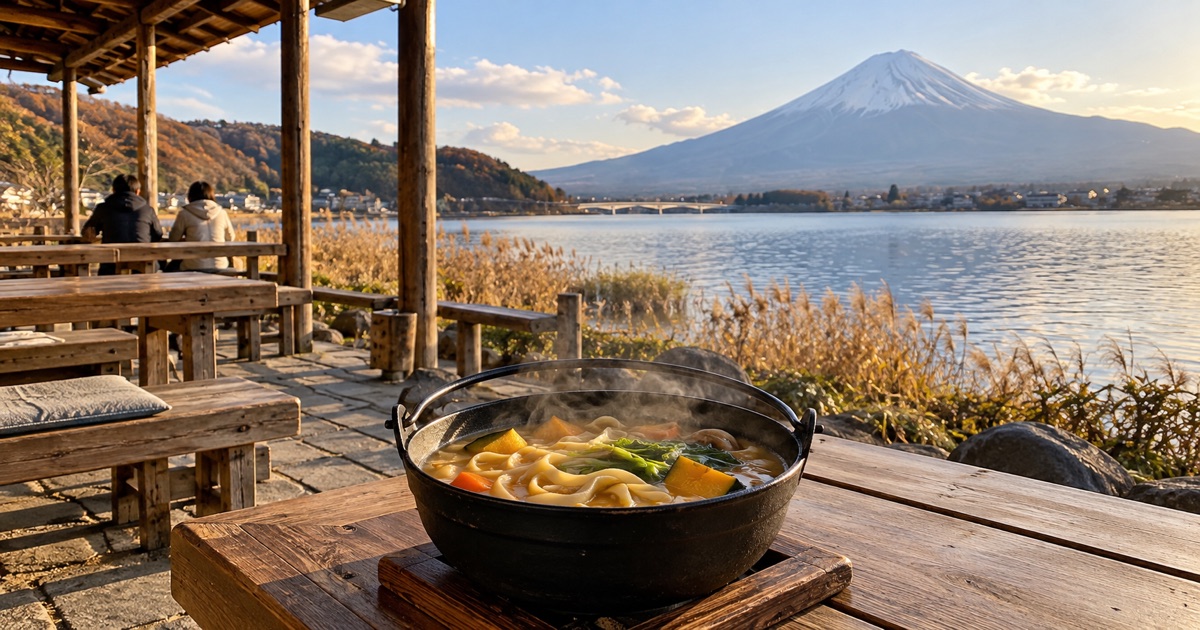
- Many hoto restaurants around Kawaguchiko serve it in a large iron pot, often as a single generous portion meant to be shared.
- Local specialties also include Yamanashi wine, grapes, and Koshu-area beef, reflecting the prefecture's farming and winemaking traditions.
Kawaguchiko's best-known food specialty is hoto, a hearty dish of flat wheat noodles simmered in a miso-based broth with pumpkin and seasonal vegetables. Beyond this signature noodle dish, the area is also known for local beef, Yamanashi wine and grapes, and mountain-style cooking.
あわせて読む:Kawaguchiko Food Guide: What and How to Eat Around Mt. Fuji/What to Eat in Kawaguchiko: A Guide to Mt. Fuji's Best Food/Miyajima Food Specialty Guide: What to Eat on Hiroshima's Island
What Is Kawaguchiko's Food Specialty?
Kawaguchiko's best-known food specialty is hoto (ほうとう), a hearty noodle dish made with wide, flat wheat noodles simmered directly in a miso-based broth with pumpkin (kabocha) and seasonal vegetables. It is the signature comfort food of the wider Yamanashi region, including the Fuji Five Lakes (Fujigoko) area where Kawaguchiko sits, and is widely considered a must-try when visiting Mt. Fuji.
Beyond hoto, the area is also known for Yamanashi's wine and grapes, local beef, and simple mountain-style cooking that reflects the cooler climate and farming traditions around Mt. Fuji.
Hoto: The Signature Dish of the Fuji Area
What Hoto Is and Why It's Different
Hoto noodles are thicker, flatter, and chewier than standard udon. The key difference is in the cooking method: rather than boiling the noodles separately and adding them to a finished soup, hoto noodles are cooked directly in the miso broth from the start. This releases starch into the liquid, giving the soup a naturally thick, almost stew-like consistency.
The dish typically includes:
- Pumpkin (kabocha), which partly dissolves into the broth and sweetens it
- Root vegetables such as carrot, daikon, and potato
- Mushrooms and leafy greens
- Sometimes pork or chicken, depending on the restaurant
It is usually served bubbling hot in a heavy iron pot (often a cast-iron nabe), still cooking slightly at the table. This makes it especially popular in the colder months, though many restaurants around Kawaguchiko serve it year-round given the area's relatively cool climate even in summer.
How to Eat Hoto
Hoto is eaten straight from the pot with chopsticks and a spoon for the broth, similar to other Japanese nabe (hot pot) dishes. A few practical points for first-time visitors:
- Portions are often generous and designed to be filling; some restaurants present it as a dish that can be shared, so check the menu or ask staff if you are dining alone and want a smaller portion.
- The pot stays hot for a while after serving, so be careful of the metal rim and handle.
- Because the broth is miso-based and often simmered with dashi (which may include fish or bonito stock), it is not always suitable for vegetarians or vegans by default. Ask about broth ingredients if you have dietary restrictions.
- Common allergens to be aware of: wheat (in the noodles), soy (in the miso), and occasionally shellfish or fish-based dashi. Restaurants may not always have English allergen menus, so pointing at ingredient names or using a translation app can help.
Common Mistakes First-Time Visitors Make
- Expecting a clear, light soup like standard udon — hoto broth is thicker and heartier, closer to a stew.
- Ordering it expecting a quick meal; because it's cooked to order in a pot, it can take longer to prepare than regular noodle dishes.
- Assuming all versions are identical — some restaurants adjust the miso blend, vegetable mix, or broth richness, so flavor can vary noticeably from one place to another.
We are working to carry Japanese craft and everyday culture beyond Japan, by building Japan Towns with local partners.
Read the Japan Town plan →Other Local Specialties Around Kawaguchiko
Yamanashi Wine and Grapes
Yamanashi Prefecture, where Kawaguchiko is located, is one of Japan's major wine-producing regions, particularly known for Koshu grape wine. While the main vineyard areas are more concentrated around Kofu, grapes and grape-based products (juices, jams, sweets) are commonly sold in the Fuji Five Lakes area as regional souvenirs and snacks.
Local Beef and Hoba Miso-Style Cooking
Some restaurants in the wider Yamanashi and Mt. Fuji region serve local beef dishes, sometimes grilled with miso in a style influenced by neighboring mountain regions. This isn't unique to Kawaguchiko itself, but travelers exploring the Fuji Five Lakes area may come across it on regional menus.
Fuji Shishamo and Lake Fish
Because Kawaguchiko is one of the Fuji Five Lakes, small lake fish dishes occasionally appear on local menus, reflecting the area's freshwater fishing traditions. These are more of a local curiosity than a headline dish, but worth trying if offered.
Sweets and Snacks Featuring Mt. Fuji Themes
Many shops around Kawaguchiko sell Mt. Fuji–themed sweets, such as cookies, manju (steamed buns with sweet filling), and seasonal treats shaped or packaged with a Fuji motif. These are popular souvenir items but vary by shop and season, so availability can change.
Practical Tips for Trying Local Food in Kawaguchiko
Getting There and Timing Your Meal
Kawaguchiko is commonly reached by direct bus from Tokyo (including from Shinjuku), with the journey taking roughly 1.5 to 2 hours depending on traffic, or by train via the Fujikyuden Line to Kawaguchiko Station. Many travelers combine a day trip with lake-area sightseeing, so plan your meal around your sightseeing schedule, as hoto restaurants can be busy during lunch hours, especially on weekends and holidays.
What to Bring and Expect
- Cash: some smaller, family-run restaurants in the area may not accept credit cards, so carrying cash is a good precaution.
- Patience: because hoto is cooked to order in a pot, wait times can be longer than for standard noodle dishes.
- Layered clothing: the Kawaguchiko area is at a higher elevation than central Tokyo and can be noticeably cooler, making a hot pot of hoto especially appealing outside of midsummer.
Dietary Considerations
If you have allergies or dietary restrictions, it's worth preparing a simple note in Japanese (or using a translation app) explaining what you cannot eat, since English menus and allergen labeling are not guaranteed at every restaurant, particularly smaller or more traditional establishments.
Learn More
For background on regional specialties and food culture across Japan, the Japan National Tourism Organization offers general travel and food information for visitors. For nutritional details on specific ingredients such as miso, pumpkin, or wheat noodles, the MEXT Food Composition Database provides official reference data, and interested readers can also check this site's dedicated nutrition pages for more on how dishes like hoto fit into a balanced diet.
Because opening hours, seasonal menu changes, and availability of specific dishes can vary by restaurant and season, always check locally or via official tourism sites before visiting, especially if traveling outside peak seasons.
FAQ
- Q. What is the most famous food to eat near Kawaguchiko?
- A. Hoto, a thick udon-like noodle dish simmered in miso broth with pumpkin and seasonal vegetables, is the area's best-known specialty.
- Q. Is hoto the same as udon?
- A. No. Hoto noodles are flatter and wider, and unlike udon they are cooked directly in the simmering miso soup rather than boiled separately.
- Q. Are there vegetarian versions of hoto?
- A. Some restaurants offer vegetable-only versions, but traditional broth may contain miso with fish-derived dashi, so it's best to ask staff before ordering.
Cite or share this article
Copy the link below. If you quote this article, please link to this page as the source.