Kumamoto Food: A Guide to What to Eat in Kyushu's Heartland
Key takeaways
- Kumamoto's signature dishes are basashi (raw horse meat), karashi renkon (mustard-stuffed lotus root) and Kumamoto ramen with a garlic-oil broth.
- Most of these dishes are easy to find in central Kumamoto City, often at izakaya-style restaurants or local specialty counters, not just tourist spots.
- Basashi and karashi renkon can trigger allergen or spice concerns, so check ingredients if you have dietary restrictions.
What Is Kumamoto Food Known For?
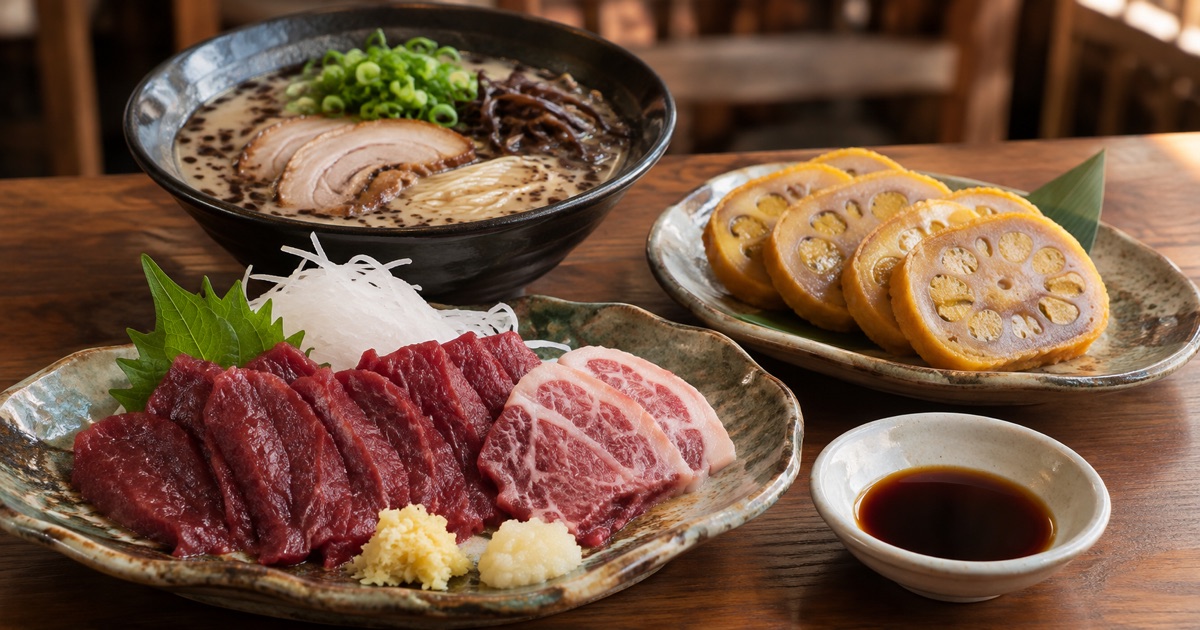
Kumamoto food is best known for basashi (raw horse meat sashimi), karashi renkon (lotus root stuffed with spicy mustard and deep-fried), and Kumamoto ramen, a rich pork-bone broth topped with black garlic oil. These three dishes form the core of the region's food identity, and all three are rooted in the history and geography of Kumamoto Prefecture (熊本県) on the island of Kyushu.
Kumamoto City sits in the center of the prefecture and is the easiest base for trying these foods, since many restaurants and food stalls across the city serve some version of all three. Visitors arriving by Shinkansen usually come into Kumamoto Station (熊本駅), roughly 35-40 minutes from Hakata Station in Fukuoka on the Kyushu Shinkansen line, though schedules and travel times can change, so check current timetables before planning a tight itinerary.
Basashi: Kumamoto's Signature Raw Horse Meat
Basashi (馬刺し) is thinly sliced raw horse meat, typically served chilled with soy sauce, grated ginger, and sometimes garlic on the side. Kumamoto is Japan's largest producer of horse meat, and eating it raw, rather than grilled or stewed, is the regional custom.
The meat is usually a deep red color, leaner than beef, and prized for its soft texture. Common cuts include regular lean basashi and a fattier, marbled version sometimes called "sakura" due to its pink-red hue. Restaurants that specialize in basashi often offer a plate with two or three different cuts so first-timers can compare textures.
How to Eat Basashi
- Dip each slice lightly in soy sauce mixed with ginger or garlic; too much sauce can overpower the delicate flavor.
- It's typically eaten as an appetizer alongside drinks, not as a main dish.
- If you have concerns about raw meat, ask staff whether a cooked horse meat dish (such as grilled basashi or stew) is available instead.
Because it's raw meat, basashi is not recommended for pregnant women, young children, or anyone advised to avoid raw animal products, and travelers with specific health conditions should use their own judgment or avoid it.
We are working to carry Japanese craft and everyday culture beyond Japan, by building Japan Towns with local partners.
Read the Japan Town plan →Karashi Renkon: Spicy Stuffed Lotus Root
Karashi renkon (からし蓮根) is lotus root stuffed with a mixture of miso and hot mustard (karashi), then coated in a turmeric-colored batter and deep-fried. It's sliced into rounds, revealing the lotus root's natural holes filled with the yellow mustard-miso paste.
This dish has a distinctive crunchy texture from the lotus root and a sharp, nose-clearing kick from the mustard, balanced by the savory miso filling. It's traditionally believed to have originated as a food to build stamina, and it remains a common side dish, bento item, and souvenir product across Kumamoto.
Things to Know Before Trying It
- The mustard can be quite strong; if you're sensitive to spice, ask whether a milder version is available.
- It's often sold as a packaged souvenir (omiyage) at Kumamoto Station and local shops, making it an easy item to bring home if properly sealed and refrigerated.
- Contains wheat (in the batter) and sometimes egg, so those with allergies should check ingredient labels, especially on packaged versions.
Kumamoto Ramen: Garlic Oil and Pork Bone Broth
Kumamoto ramen (熊本ラーメン) is a tonkotsu-style ramen made with a pork-bone broth, often enriched with chicken stock, and finished with a dark, fragrant garlic oil called mayu (マー油) drizzled on top. The mayu gives the broth a slightly smoky, nutty aroma that distinguishes it from the tonkotsu ramen found in Fukuoka or other parts of Kyushu.
The noodles are typically medium-thick and straight, and bowls are commonly topped with chashu pork, wood ear mushroom, green onion, and sometimes a clove of raw or fried garlic chips. Compared to the thinner noodles of Hakata-style ramen, Kumamoto's noodles hold up a bit longer in the hot broth, giving a slightly different bite.
Ordering Tips
- If you don't want the garlic flavor, you can ask staff to reduce or omit the mayu oil, though this changes the dish from its traditional form.
- Ramen broth contains pork and is simmered with bones for hours; there is generally no vegetarian version of the base broth.
- Shops often let you choose noodle firmness; if you're unsure, the standard ("futsu") setting is a safe default for first-timers.
Other Kumamoto Foods Worth Knowing
Taipien (太平燕)
Taipien is a clear, slightly savory soup noodle dish made with harusame (glass noodles made from starch) instead of wheat noodles, topped with stir-fried vegetables, shrimp, and sometimes a boiled egg. It has roots in Chinese-influenced cooking that developed locally in Kumamoto and is often eaten as a lighter alternative to ramen.
Dago-jiru (だご汁)
Dago-jiru is a rustic miso or soy-based soup containing flat, hand-pulled wheat dumplings along with root vegetables like carrot, daikon, and taro. It's considered home-style comfort food rather than a restaurant specialty, though some set meal restaurants include it as a side dish.
Higo Beef and Local Produce
Higo beef (肥後牛) is a regional wagyu brand raised in Kumamoto, often served as steak or in hot pot dishes. Kumamoto is also a major producer of vegetables such as tomatoes and watermelon, and seasonal produce frequently appears as side dishes in set meals (teishoku) across the prefecture.
Practical Tips for Trying Kumamoto Food
- Timing: Many restaurants serving basashi and karashi renkon open for both lunch and dinner, but hours vary by shop and can change seasonally, so check listings or official pages before visiting.
- Budget: A casual ramen meal is generally inexpensive, while a basashi-focused dinner with drinks tends to cost more, especially at specialty restaurants.
- Allergens: Common concerns include wheat (noodles, batter), soy, and egg; shellfish may appear in taipien. Always confirm with staff if you have allergies, as English menus may not list every ingredient.
- Souvenirs: Vacuum-packed karashi renkon and instant Kumamoto ramen kits are widely sold at Kumamoto Station and are easy to pack for the trip home.
For general travel planning, including transport passes and seasonal event information, the Japan National Tourism Organization website is a reliable starting point. For nutritional details on specific ingredients mentioned here, the MEXT Food Composition Database provides reference data for Japanese foods.
Kumamoto's food culture rewards travelers willing to try something unfamiliar, whether that's raw horse meat, mustard-spiced lotus root, or a bowl of garlic-scented ramen. Sampling a few of these dishes in Kumamoto City offers a concrete, memorable introduction to one of Kyushu's most distinctive regional cuisines.
FAQ
- Q. Is it safe to eat raw horse meat (basashi) in Kumamoto?
- A. Basashi is a long-standing regional specialty served at restaurants that follow Japanese food hygiene standards, but as with any raw food, those with weakened immune systems or dietary concerns should ask staff about sourcing and consider cooked alternatives.
- Q. What makes Kumamoto ramen different from other regional ramen styles?
- A. Kumamoto ramen uses a pork-bone (tonkotsu) base often combined with chicken stock, finished with a distinctive black garlic oil called mayu, giving it a deeper, slightly smoky flavor than straight tonkotsu ramen from other regions.
- Q. Can vegetarians find things to eat in Kumamoto?
- A. It takes some effort, since many signature dishes center on meat or fish-based dashi, but plain karashi renkon without meat filling, vegetable tempura, and rice-based sides are generally easier options; always confirm with staff as dashi often contains fish.
Cite or share this article
Copy the link below. If you quote this article, please link to this page as the source.