Niigata Food Guide: Rice, Seafood, and Local Dishes
Key takeaways
- Niigata food centers on premium Koshihikari rice, cold-water Sea of Japan seafood, and rich sake brewing traditions.
- Regional noodle and meat dishes include seaweed-bound hegi soba and soy-glazed thin pork cutlets called tare katsudon.
- Visitors can reach Niigata City in roughly two hours from Tokyo via the Joetsu Shinkansen bullet train line.
Niigata food is defined by premium rice, pristine melted snow water, cold-water seafood from the Sea of Japan, and hearty noodle traditions. As Japan's top rice-producing prefecture, Niigata offers visitors world-renowned staple grains alongside unique regional dishes like seaweed-bound buckwheat noodles, thin soy-glazed pork cutlets, and fermented specialties.
Located along the northwest coast of the main island of Honshu, the region benefits from heavy winter snowfall. When this snow melts from the surrounding mountains, it filters into the plains, enriching the soil and feeding pure, mineral-balanced water into rice paddies and sake breweries. Planning a trip to sample these regional dishes is straightforward, as the Joetsu Shinkansen (上越新幹線) connects Tokyo Station directly to Niigata Station in roughly two hours.
The Pillars of Niigata Cuisine
Koshihikari Rice (コシヒカリ)
Rice is the foundation of Niigata's culinary identity. The prefecture's signature cultivar is Koshihikari, widely considered the gold standard of Japanese short-grain rice.
When cooked, high-grade Niigata rice displays a glossy sheen, an elastic bite, and an aromatic, slightly sweet finish that persists even as the grain cools. In Niigata, rice is not merely a side dish; it is treated as the centerpiece of a meal. Many dining establishments serve rice cooked in traditional iron kettles (hagama) or earthenware pots (donabe) to highlight the natural sweetness and moisture of each grain.
To explore data on crop standards and agricultural production across the prefecture, refer to the Ministry of Agriculture, Forestry and Fisheries.
Fresh Seafood from the Sea of Japan
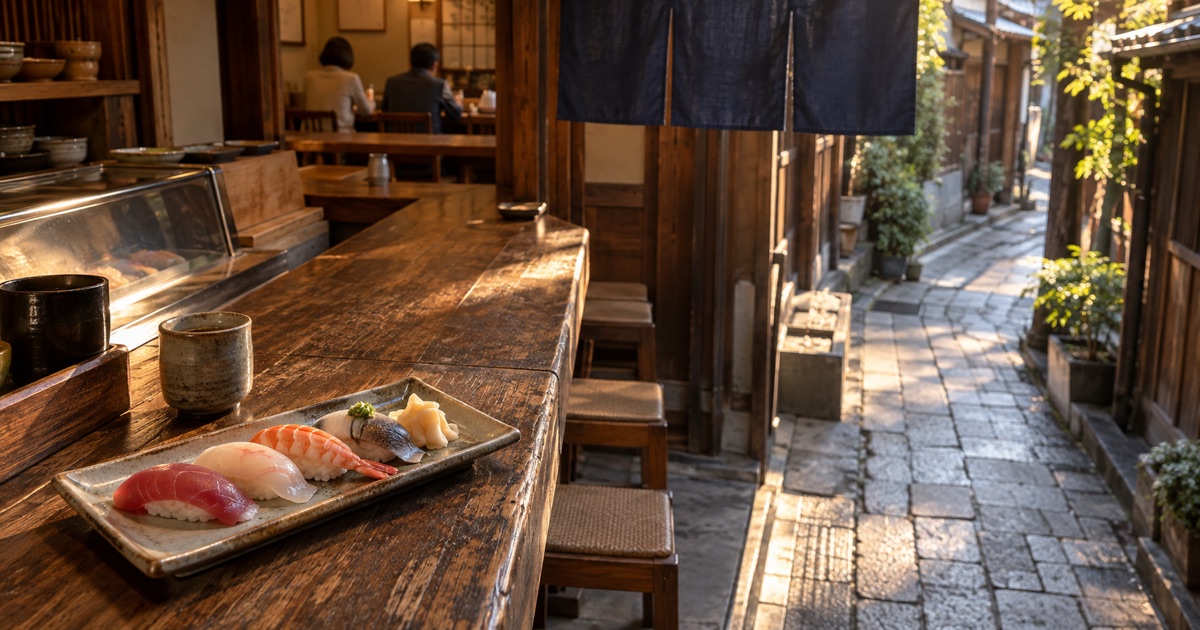
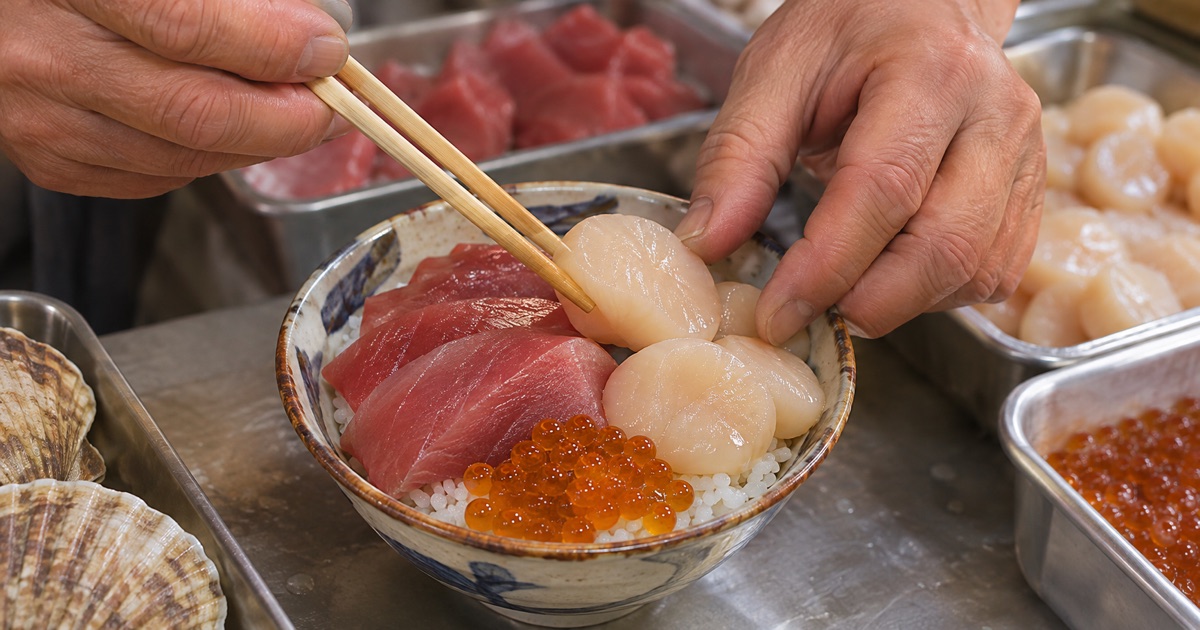
The coastal waters off Niigata are nutrient-dense due to the confluence of cold northern and warm southern currents. As a result, the region's fish market stalls and sushi counters feature seafood with higher fat contents and firm textures:
- Nanban Ebi (南蛮エビ): Deep-sea sweet shrimp, known regionally as nanban ebi because their bright red color resembles southern red chili peppers (nanban). They are served raw, prized for their melting, creamy sweetness.
- Nodoguro (のどぐろ): Also called blackthroat seaperch, this prized white-fleshed fish contains intense intramuscular fat. It is commonly served lightly salted and grilled (shioyaki) or torched over sushi rice.
- Kanburi (寒ブリ): Winter yellowtail migrating through cold offshore channels, packed with seasonal fat before the spring spawning season.
Iconic Niigata Dishes You Must Try
Hegi Soba (へぎそば)
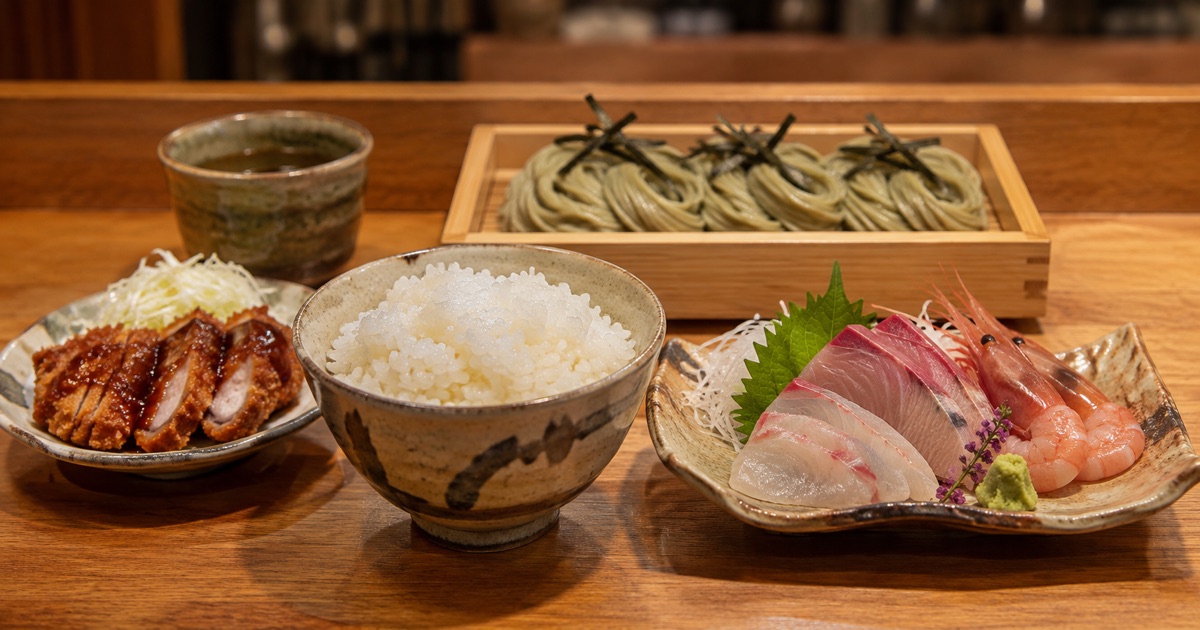
Hegi soba is a distinct style of cold buckwheat noodles originating in the Uonuma and Tokamachi areas of southern Niigata. Unlike standard soba noodles, which rely on wheat flour as a binder, authentic hegi soba incorporates funori (布海苔), a type of red seaweed.
The seaweed imparts a subtle greenish tint, a slippery texture, and a distinct snap (koshi) to the noodles. The dish is named after the hegi, a flat, rectangular cedar serving tray. The cooked noodles are washed in icy water, formed into bite-sized folded bundles called teburi, and arranged neatly on the cedar tray.
How to eat it:
- Pick up a single bundle of noodles with your chopsticks.
- Dip the bottom third of the bundle into the accompanying cold dipping broth (tsuyu), which is brewed from dried bonito flakes and soy sauce.
- Add condiments to the broth as you prefer. While grated wasabi is standard across Japan, traditional Niigata hegi soba is often eaten with Japanese yellow mustard (karashi) and finely sliced green onions.
- Allergen note: Buckwheat is a major allergen in Japan. Those with buckwheat allergies must strictly avoid hegi soba.
Niigata Tare Katsudon (新潟タレカツ丼)
While standard Japanese katsudon features a thick pork cutlet simmered with beaten eggs and onions over rice, Niigata's version takes a minimalist approach.
Tare katsudon consists of thin slices of pork, coated in fine breadcrumbs (panko), fried until crisp, and submerged momentarily into a sweet and salty soy-sauce-based glaze (tare). The cutlet is transferred immediately onto a bowl of hot steamed rice without eggs or shredded cabbage. The steam softens the bottom of the crust slightly while the glaze permeates the rice beneath.
Noppe (のっぺ)
Noppe is a traditional stew and ceremonial staple prepared in Niigata households, particularly during the New Year and local festivals. The base of the dish consists of diced taro root (satoimo), which naturally thickens the light dashi broth without the need for heavy starches.
Other ingredients simmered in the pot include carrots, shiitake mushrooms, konjac, burdock root, and lotus root. In coastal regions, the stew is garnished with salted salmon chunks or cured salmon roe (ikura). It can be eaten warm in winter or chilled during the summer months.
Sasa Dango (笹団子)
Sasa dango is a historic sweet confection that dates back centuries. It consists of mugwort-flavored rice cakes (yomogi mochi) filled with sweet red bean paste (anko).
The filled cakes are wrapped in three fresh bamboo leaves (sasa) and tied tightly with rush grass strings before being steamed. The bamboo leaves give the exterior a refreshing herbal aroma while acting as a natural preservative.
How to eat it:
Untie the outer grass string, peel back the bamboo leaves from top to bottom like a banana peel, and eat the soft mochi cake directly from the leaf wrapper.
Poppo-yaki (ぽっぽ焼き)
Poppo-yaki is a beloved street food native to the northern Shitada and Kaetsu areas of Niigata. These are elongated, sponge-like cakes made from wheat flour, brown sugar, and baking powder. Cooked in long, ridged iron molds at festival stalls, they have a soft, chewy texture and a deep molasses flavor.
We are working to carry Japanese craft and everyday culture beyond Japan, by building Japan Towns with local partners.
Read the Japan Town plan →Practical Food Advice for Visitors
Navigating Menus Without Japanese
Many traditional local eateries in Niigata do not carry English-translated menus. You can navigate ordering smoothly by following these steps:
- Use photo-translation apps: Download the Japanese language pack on an offline translation application before departing Tokyo, as cellular reception can fluctuate in rural valleys.
- Look for ticket machines (shokenki): Many noodle and cutlet shops use automated vending machines at the entrance. Insert cash first (1,000-yen notes and coins are standard), press the button corresponding to your choice, and hand the printed slip to the staff behind the counter.
- Learn basic phrases: Asking for the house specialty—"Osusume wa nan desu ka?" (What do you recommend?)—is universally understood and helpful.
Transportation and Access
Niigata Prefecture is expansive. Niigata City serves as the primary gateway via the Joetsu Shinkansen from Tokyo.
- Regional culinary trips south to the snow-country rice and soba districts of Echigo-Yuzawa (越後湯沢) take roughly 70 to 90 minutes from Tokyo on the same bullet train line.
- Regional transit passes like the JR EAST PASS (Nagano, Niigata area) cover the Shinkansen and local JR train lines throughout the territory. Always verify train schedules and pass eligibility on the Japan National Tourism Organization portal before your travel date.
- Dining spots near major stations generally accept standard IC cards (Suica, Pasmo) and credit cards, but smaller regional noodle shops, rural eateries, and market stands frequently require cash in Japanese yen.
Budgeting and Operating Hours
Dining costs vary across the prefecture:
- Casual meals (Hegi Soba, Tare Katsudon): Typically range from 800 to 1,600 yen per portion.
- Seafood sets and high-grade rice platters: Typically range from 2,000 to 5,000 yen for lunch or dinner.
- Opening hours: Countryside shops often close early, between 14:00 and 17:00, or close completely once their daily stock of fresh noodles or seasonal rice sells out. Always check local business listings or official municipal travel pages for the latest schedules before traveling to rural districts.
FAQ
- Q. What food is Niigata most famous for?
- A. Niigata is famous for Koshihikari rice, fresh seafood from the Sea of Japan, sake, hegi soba noodles, and tare katsudon.
- Q. How long does it take to travel from Tokyo to Niigata for food?
- A. The Joetsu Shinkansen bullet train connects Tokyo Station to Niigata Station in roughly two hours, with schedules varying by service.
- Q. Are there common allergens in traditional Niigata dishes?
- A. Yes, major local foods often contain buckwheat (hegi soba), soy and wheat (soy-sauce glazes and tare), and shellfish or crustacean seafood.
Cite or share this article
Copy the link below. If you quote this article, please link to this page as the source.