What to Eat in Sapporo: Essential Dishes and Food Guide
Key takeaways
- Sapporo's core specialties include miso ramen, soup curry, Genghis Khan grilled lamb, fresh crab, and dairy desserts.
- Ordering in food alleys or markets is easy even without Japanese by learning a few key dining terms and ordering habits.
- Specialty dishes feature common allergens like shellfish, wheat, and soy, so confirming ingredients beforehand is wise.
When deciding what to eat in Sapporo, prioritize the city's signature dishes: rich miso ramen, aromatic soup curry, Genghis Khan grilled lamb, fresh local crab, and rich dairy sweets. Hokkaido's capital is one of Japan's most celebrated culinary destinations, drawing on the island's fertile farmland, cold coastal waters, and distinct food culture.
Visitors planning a trip will find a food scene shaped by cold winters and bountiful agriculture. This guide details the foundational dishes of Sapporo, how to order and eat them without speaking Japanese, and what to watch out for regarding dining etiquette and dietary allergens.
Signature Dishes Defining Sapporo Food Culture
Sapporo Miso Ramen (札幌味噌ラーメン)
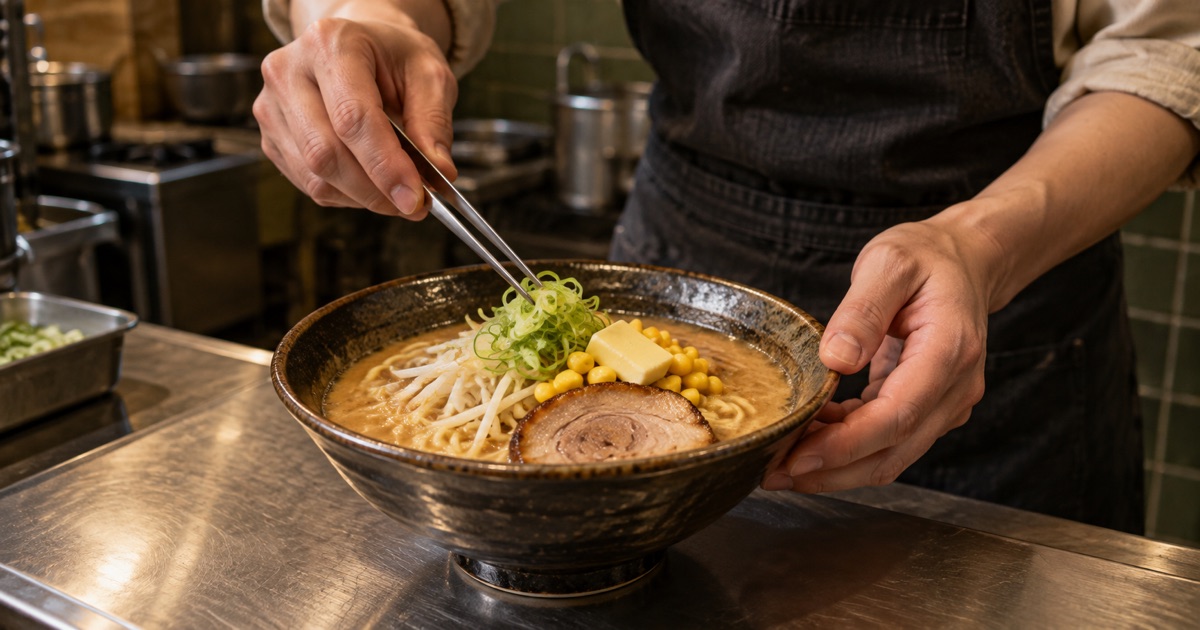
Sapporo miso ramen is a regional noodle soup made with stir-fried vegetables, lard-infused broth, and fermented soybean paste. While ramen exists across Japan, Sapporo is the birthplace of the rich miso variation.
The dish typically utilizes thick, yellow, wavy noodles (chijire-men, 縮れ麺) engineered to hold onto the heavy soup. Broths are traditionally built on pork bone (tonkotsu, 豚骨) or chicken stock, blended with locally produced red or white miso. A distinguishing feature is the layer of aromatic lard floated across the surface; this keeps the soup piping hot down to the last bite during sub-zero northern winters. Common toppings include wok-charred bean sprouts, sliced pork (chashu, チャーシュー), bamboo shoots (menma, メンマ), sweet corn, and a pat of rich Hokkaido butter.
Soup Curry (スープカレー)
Soup curry is a distinct Sapporo invention consisting of a thin, heavily spiced medicinal-style curry broth served alongside a separate bowl of rice. Unlike standard Japanese curry, which is thick and roux-based, soup curry is watery and infused with whole and ground spices such as cardamom, cumin, turmeric, and clove.
A standard bowl comes loaded with large, tender cuts of meat (commonly a bone-in chicken leg) and flash-fried seasonal vegetables such as kabocha pumpkin, lotus root, bell peppers, carrots, and potatoes. Diners usually customize their bowl through a four-step ordering process:
- Choose a broth base (such as tomato, coconut, or shrimp).
- Choose your main protein (chicken, pork belly, seafood, or vegetable-only).
- Select a spice level on a numeric scale (typically ranging from 1 to 10).
- Select your rice portion size (often measured in grams, from roughly 100 grams to 300 grams or 3.5 ounces to 10.5 ounces).
Genghis Khan (Jingisukan / ジンギスカン)
Genghis Khan is a specialty grilled mutton or lamb dish cooked at the table on a convex, helmet-shaped metal grill. It is named after the Mongolian conqueror, referencing a domestic myth about wartime soldier rations.
The domed grill is designed with ridges that channel rendered fat down to the perimeter. Thick slices of onion, cabbage, and bean sprouts are piled around the rim of the grill pan, while thin strips of lamb or mutton cook on the elevated center. As the meat sears, its flavorful fat drips down, seasoning the roasting vegetables below. Diners dip the cooked meat directly into a savory dipping sauce flavored with soy sauce, grated apple, garlic, and ginger.
Fresh Hokkaido Crab (Kani / カニ)
Sapporo serves as the central receiving hub for cold-water crabs harvested throughout Hokkaido's coastal waters. Four primary varieties dominate local menus:
- Red King Crab (Tarabagani, タラバガニ): Massive legs with sweet, firm meat, usually boiled or charcoal-grilled.
- Snow Crab (Zuwaigani, ズワイガニ): Delicate, sweet, and stringy meat, popular in hot pots (kani nabe) or served chilled.
- Horsehair Crab (Kegani, 毛蟹): A smaller, spiky crab prized for its intensely rich crab butter (kani miso, カニ味噌) inside the carapace.
- Hanasaki Crab (Hanasakigani, 花咲ガニ): A spiny, deep-red crab offering a distinct, briny sweetness.
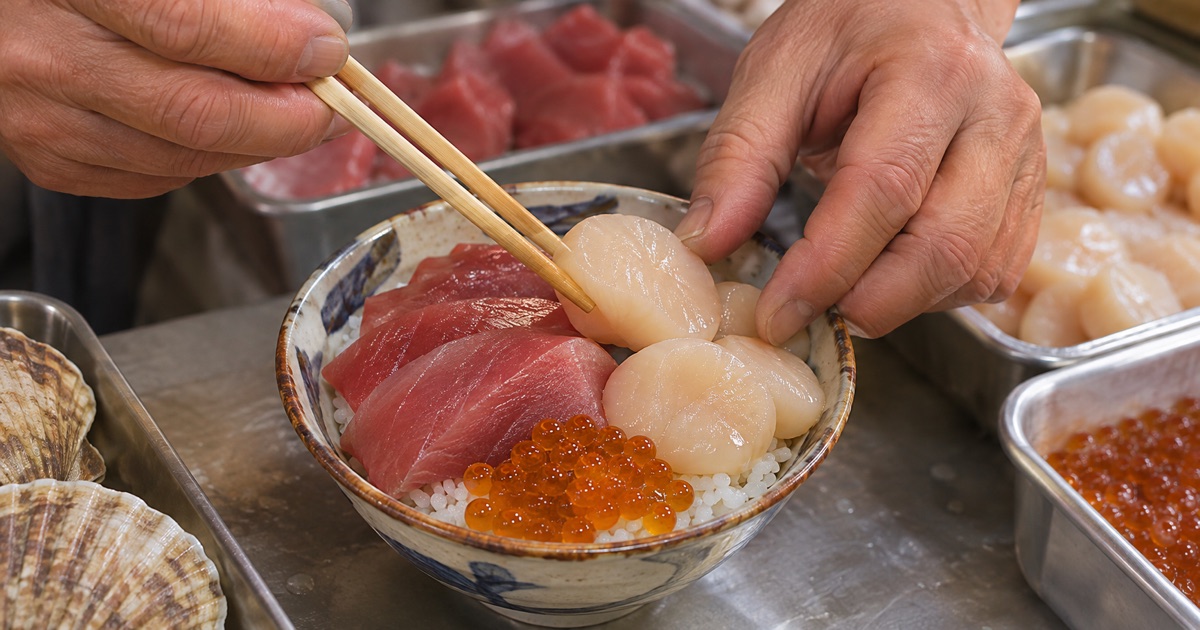
Crab can be ordered as single steamed legs at morning markets, served over sushi rice bowls (kaisendon, 海鮮丼), or enjoyed as multi-course banquet dinners.
Hokkaido Soft Serve and Dairy (Sofuto Kuriimu / ソフトクリーム)
Hokkaido produces over half of Japan's milk supply, making fresh dairy products an essential part of dining in Sapporo. Hokkaido soft serve ice cream is renowned for its high butterfat content, velvety texture, and clean milk flavor without artificial cloying sweetness. Beyond standard vanilla, shops feature flavors like melon, corn, and cheese. Fresh cheeses, butter sandwiches, and baked tarts are sold widely throughout transit stations and department store basements.
Navigating Sapporo's Key Food Neighborhoods
Sapporo's grid layout makes navigating between distinct dining clusters straightforward. Central areas are accessible on foot or via the city's three subway lines (Namboku, Tozai, and Toho lines). For regional travel details and city access, consult the Japan National Tourism Organization.
Morning Seafood Markets
Fresh seafood bowls and grilled crab legs are concentrated around market hubs like Nijo Market (二条市場), located near the center of the city, and the larger Sapporo Central Wholesale Market Curb Market (場外市場), reachable via a roughly 15-minute train ride from Sapporo Station to Soen Station (桑園駅). These markets open early in the morning and begin winding down by early afternoon. Stalls typically feature English visual menus where diners can point to customize their seafood bowl with sea urchin (uni, ウニ), salmon roe (ikura, いくら), scallop (hotate, ホタテ), and crab.
Nightlife and Specialty Dining Alleys
The Susukino (すすきの) entertainment district hosts hundreds of dining establishments. For ramen, two historic alleys are located here: Ganso Ramen Yokocho (元祖ラーメン横丁) and Shin Ramen Yokocho (新ラーメン横丁). These narrow corridors feature small counters with six to ten seats each. When ordering at counter-style ramen shops, customers often purchase a ticket from a vending machine near the door before sitting.
Genghis Khan beer halls and dedicated lamb counter restaurants are also concentrated throughout Susukino and around the historic red-brick Sapporo Beer Museum grounds in the Higashi district.
We are working to carry Japanese craft and everyday culture beyond Japan, by building Japan Towns with local partners.
Read the Japan Town plan →Step-by-Step: How to Order and Eat Iconic Sapporo Meals
Eating Sapporo Soup Curry Properly
First-time visitors often wonder whether to dump their rice into the curry or pour the curry over the rice. While there are no rigid rules, the traditional method proceeds as follows:
- Pick up a spoonful of plain rice with your soup spoon.
- Dip the spoon containing the rice directly into the fragrant curry broth until submerged.
- Allow the rice grains to absorb the liquid for a second or two, then lift and eat.
- Use your fork or chopsticks to cut pieces of tender meat and vegetables, eating them between bites of rice.
Grilling Genghis Khan at the Table
When sitting down for Genghis Khan, staff will place an oiled, heated dome grill over a gas burner or charcoal brazier (shichirin, 七輪).
- Place a piece of solid pork or sheep fat at the peak of the dome to keep the iron lubricated.
- Arrange the raw vegetables along the lower rim of the pan.
- Lay meat slices flat on the upper slope of the dome.
- Flip the meat once it releases easily from the grill; do not overcook tender lamb cuts.
- Dip the hot meat into your individual bowl of tare sauce. Once vegetables are softened and slightly charred, dip and eat them along with the meat.
Practical Dining Tips and Common Mistakes
- Bring Cash: While card payments are common in department stores and shopping complexes, many traditional ramen counters, small soup curry cafes, and fish market stalls only accept cash (Japanese Yen). Keep small bills (1,000 yen) and coins on hand.
- Ticket Vending Machines (Shokkenki, 食券機): At ramen counters, insert your money first, press the button corresponding to your dish, take the printed paper ticket, and hand it to the chef. If buttons lack English, the top-left button is almost universally the shop’s signature house recommendation.
- Handling Table Charge (Otoshi, お通し): At izakaya pubs and Genghis Khan restaurants, you may receive a small, unprompted appetizer with your first drink. This is a standard seating cover charge, usually ranging from roughly 300 to 600 yen per person.
- Avoid Over-Ordering Crab: Whole crabs yield substantial shell weight. If you are uncertain about portions, ask the staff for advice on sizes, or choose pre-portioned legs and crab bowls.
Dietary and Allergen Information
Visitors with dietary restrictions should exercise caution when navigating Hokkaido's specialty dishes:
- Shellfish and Fish: Seafood stocks (bonito, dried sardine, shrimp) form the hidden base of many soup curries and miso ramen broths. Market bowls feature raw shellfish directly.
- Gluten/Wheat: Traditional ramen noodles are made from wheat flour. Soy sauce (shoyu), containing wheat, is present in nearly all Genghis Khan dipping sauces and ramen broths.
- Meat and Animal Fat: Genuine vegetarian ramen or soup curry is rare in standard shops, as broths rely heavily on pork bones, chicken carcasses, and lard.
- Dairy: Hokkaido butter is often added by default to tourist-oriented miso ramen bowls; state bataa-nashi (バターなし, "without butter") when ordering if you are lactose intolerant.
For official details regarding Japan's food classifications and nutrient data, refer to the Ministry of Agriculture, Forestry and Fisheries.
FAQ
- Q. What is the single most famous food to eat in Sapporo?
- A. Sapporo is internationally famous for rich miso ramen, which features thick, wavy noodles, fermented soybean paste broth, and butter-corn toppings.
- Q. How does soup curry differ from standard Japanese curry?
- A. Soup curry features a light, herb-infused, broth-like curry served in a bowl, eaten by dipping spoonfuls of rice into the soup.
- Q. Are raw seafood markets in Sapporo accessible for English speakers?
- A. Yes, public markets like Nijo Market feature stall vendors accustomed to visitors, often offering visual photo menus and point-to-order displays.
Cite or share this article
Copy the link below. If you quote this article, please link to this page as the source.