Okinawa Food List: 15 Dishes and Ingredients to Try
Key takeaways
- Okinawan cuisine centers on pork, goya (bitter melon), purple sweet potato, and thick wheat noodles called Okinawa soba.
- Many dishes, like champuru stir-fries, use everyday home-cooking techniques rather than formal restaurant preparation.
- Common allergens to check for include wheat (soba, fu), pork, soy, egg, and shellfish in some seafood dishes.
What Is on an Okinawa Food List?
An Okinawa food list is dominated by pork, bitter melon (goya), purple sweet potato, and thick wheat noodles called Okinawa soba. These ingredients reflect Okinawa's distinct history as the former Ryukyu Kingdom, which had trade links with China and Southeast Asia long before becoming part of Japan, resulting in a cuisine that looks and tastes noticeably different from mainland Japanese food.
This article introduces the dishes and ingredients most visitors encounter when eating in Okinawa, how each one is typically served, and a few practical notes for travelers who don't read Japanese menus.
Why Okinawan Food Looks Different From Mainland Japan
Okinawan cooking relies less on dashi-and-soy combinations common in mainland dishes and more on pork stock, bitter vegetables, and tropical produce. Pork is used almost nose-to-tail, bitter melon and seaweed appear in daily cooking, and rice sometimes shares the plate with noodles or is served alongside American-influenced dishes from the post-war period. The result is a food culture that feels both distinctly Japanese and distinctly its own.
Noodle and Rice Dishes
Okinawa Soba (沖縄そば)
Despite the name, Okinawa soba is not made with buckwheat like mainland soba—it uses thick, wheat-based noodles similar to udon, served in a clear pork-and-bonito broth. It's typically topped with a slab of pork rib (soki) or pork belly, plus pickled red ginger (beni shoga) and sometimes fish cake. Order it at noodle shops across the islands; bowls are usually eaten quickly, with noodles slurped Japanese-style. Contains wheat and pork; broth may contain fish-based dashi.
Soki Soba (ソーキそば)
A specific version of Okinawa soba topped with soki, a soft-braised pork rib. It's considered a regional specialty on its own and is often listed separately on menus from standard Okinawa soba.
Taco Rice (タコライス)
Taco rice layers seasoned ground meat, lettuce, tomato, and cheese over a bed of white rice, echoing Mexican taco fillings without the tortilla. It originated near U.S. military bases in Okinawa and has since spread across Japan as a casual, filling meal. Hot sauce or salsa is often added at the table. Contains dairy and sometimes wheat (if a tortilla-style wrap is used).
Juushii (じゅーしぃ)
A savory Okinawan rice dish cooked with pork, vegetables, and sometimes seaweed, similar in concept to mixed rice (takikomi gohan) found on the mainland but with Okinawan seasonings. It's often eaten as a light meal or side dish rather than a centerpiece.
We are working to carry Japanese craft and everyday culture beyond Japan, by building Japan Towns with local partners.
Read the Japan Town plan →Pork Dishes
Rafute (らふてー)
Rafute is pork belly simmered slowly in awamori (Okinawan distilled liquor), soy sauce, and sugar until extremely tender. It's one of the signature dishes of Ryukyu court cuisine and is typically served in small, rich slices rather than large portions. Contains soy and alcohol in the cooking liquid, though most alcohol cooks off during simmering.
Mimiga (ミミガー)
Mimiga is thinly sliced pig's ear, usually dressed with vinegar, soy sauce, and sesame, served as a cold side dish or izakaya snack. The texture is cartilaginous and chewy rather than meaty, which surprises some first-time visitors.
Tebichi (てびち)
Tebichi refers to simmered pig's trotters, cooked until soft and often served in a light broth or alongside vegetables. It's considered a comfort food and is sometimes included in soups rather than eaten as a standalone dish.
Stir-Fries: Champuru (チャンプルー)
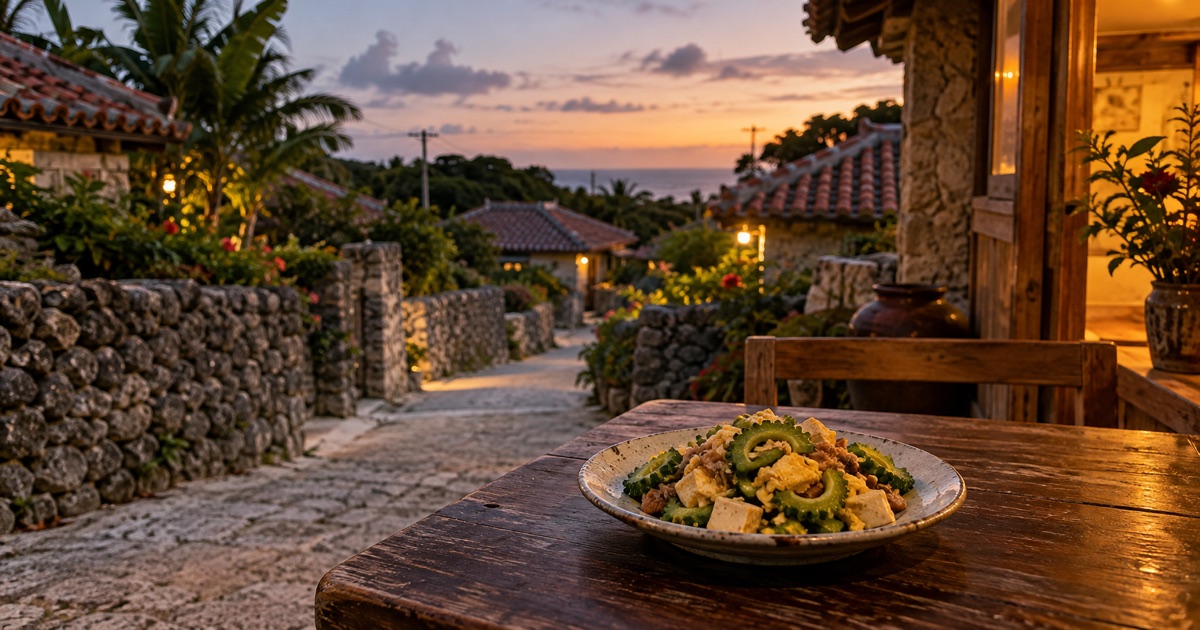
Champuru is a general term for Okinawan stir-fries, usually combining tofu, egg, pork or Spam-style canned meat, and vegetables in one pan. The word itself is thought to come from an Okinawan term meaning "something mixed," and it's less a single recipe than a cooking style.
Goya Champuru (ゴーヤーチャンプルー)
The best-known version, goya champuru combines bitter melon, tofu, egg, and thin pork or luncheon meat slices in a quick stir-fry. The bitterness of the goya is the defining characteristic of the dish, and it is not softened much in cooking, so first-timers should expect a genuinely bitter vegetable rather than a mild one. Contains egg and soy (tofu).
Fu Champuru (麩チャンプルー)
This version swaps some protein for fu, a dried wheat-gluten cake that soaks up the stir-fry's seasoning once rehydrated. It has a soft, bread-like texture once cooked. Contains wheat and egg.
Seaweed, Vegetables, and Local Ingredients
Umibudo (海ぶどう), "Sea Grapes"
Umibudo is a type of seaweed with small, round, grape-like beads that pop gently when bitten. It's usually served raw and chilled, lightly dressed with a vinegar-based sauce (ponzu is common), and works as a palate-cleansing side dish rather than a main item.
Purple Sweet Potato (紅芋, Beniimo)
Okinawa's purple sweet potato, beniimo, has a naturally vivid purple color and a mildly sweet flavor. It's used widely in both savory cooking and sweets, including tarts, soft-serve ice cream, and baked goods sold across the islands. For more on how sweet potato varieties are used across Japan, see the site's other ingredient pages.
Shikuwasa (シークヮーサー)
Shikuwasa is a small, tart Okinawan citrus fruit, often squeezed over noodles, grilled fish, or drinks rather than eaten on its own. It's also sold as a juice or soft-drink flavor in supermarkets and is worth trying as a refreshing, slightly sour contrast to richer dishes.
Drinks and Sweets
Awamori (泡盛)
Awamori is Okinawa's traditional distilled liquor, made from long-grain indica rice rather than the short-grain rice used for mainland sake, and it is typically stronger in alcohol content. It's often served on the rocks, with water, or mixed with shikuwasa juice, and older bottles are sometimes aged for extra smoothness. As with any alcohol, check age restrictions and drink responsibly.
Beni Imo Tart (紅芋タルト)
A popular Okinawan sweet made from purple sweet potato filling baked into a tart shell, often sold as a souvenir at airports and gift shops across the main island. Contains wheat, egg, and dairy depending on the recipe.
Sata Andagi (サーターアンダーギー)
Sata andagi are deep-fried dough balls, similar in concept to a dense doughnut, slightly cracked on the surface and mildly sweet. They're a common snack food and are usually eaten warm, shortly after frying. Contains wheat and egg.
Practical Notes for First-Time Visitors
Okinawan food is generally mild, so travelers sensitive to bitterness should be prepared for goya's distinct flavor rather than expecting it to be cooked out. Menus at casual eateries may not always have English translations, so it helps to recognize dish names in Japanese script before ordering. Portion sizes at noodle shops and set-meal restaurants are usually generous, and tipping is not customary anywhere in Japan.
For general information on travel logistics, seasonal considerations, and planning a trip to Okinawa, the Japan National Tourism Organization is a reliable official resource. Those interested in nutritional details of specific ingredients can also refer to the MEXT Food Composition Database for government-compiled data. As always, menu availability, prices, and seasonal specials can change, so it's worth confirming details locally once you arrive.
FAQ
- Q. What is the most famous Okinawa food?
- A. Okinawa soba and rafute (braised pork belly) are usually considered the most iconic dishes from the region.
- Q. Is Okinawan food very different from mainland Japanese food?
- A. Yes, it uses more pork, bitter melon, purple sweet potato, and thick wheat noodles, with fewer soy-and-dashi based dishes.
- Q. Is Okinawan food spicy?
- A. Most dishes are mild; heat usually comes from optional add-ons like koregusu (chili-infused awamori) added at the table.
Cite or share this article
Copy the link below. If you quote this article, please link to this page as the source.