Fukuoka Food Guide: Must-Try Dishes from Hakata and Beyond
Key takeaways
- Hakata ramen's thin, straight noodles can be ordered extra-firm (bariyaki) or with a free noodle refill called kaedama.
- Mentaiko (spicy pollock roe) is a Fukuoka specialty eaten with rice, in onigiri, or as a pasta topping.
- Yatai (open-air food stalls) cluster around central Fukuoka in the evening; cash and compact seating are the norm.
What Food Is Fukuoka Known For?
Fukuoka (福岡), on the northern coast of Kyushu, is best known for Hakata ramen (博多ラーメン), a tonkotsu pork-bone broth ramen with thin, straight noodles. The city is also famous for mentaiko (spicy marinated pollock roe), motsunabe (offal hot pot), and its lively yatai food stalls, making it one of Japan's most rewarding destinations for food-focused travel.
Fukuoka's food culture reflects its history as a port city with strong trade and fishing ties, and its cuisine blends hearty, affordable comfort food with fresh seafood from the surrounding waters. For a first-time visitor, the good news is that most of Fukuoka's signature dishes are easy to find, inexpensive, and simple to order even without reading Japanese.
Hakata Ramen: The City's Signature Bowl
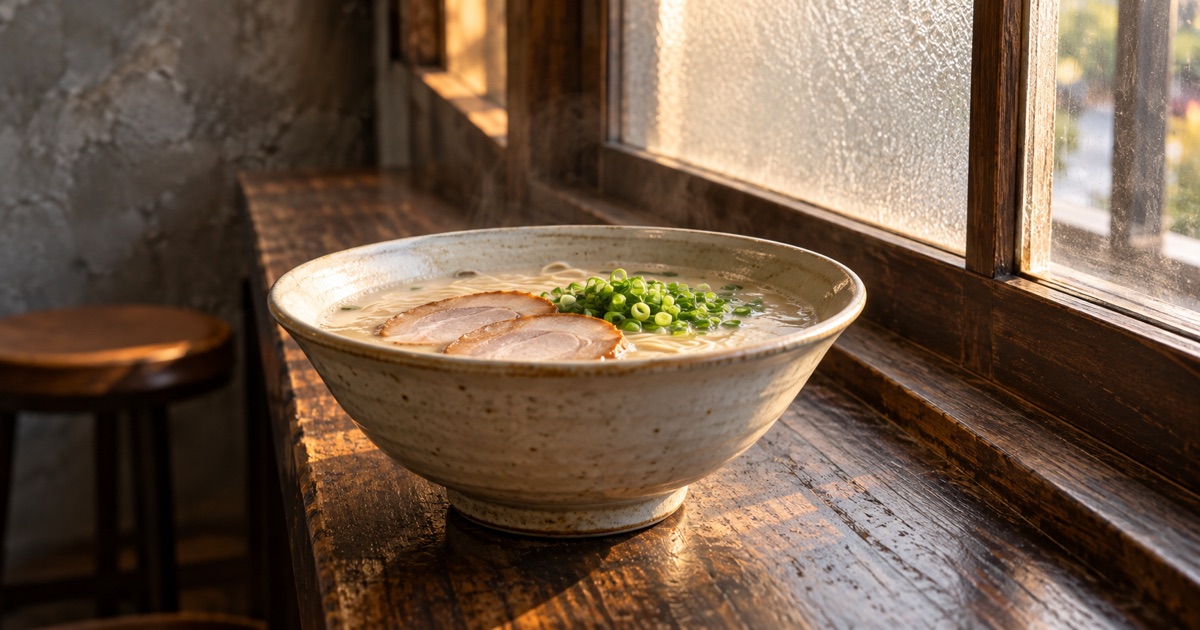
Hakata ramen is defined by three things: a cloudy, rich tonkotsu (pork bone) broth, thin and straight noodles, and a relatively simple topping set of chashu pork, pickled ginger (beni shoga), and scallions. The broth is simmered for many hours, which gives it a deep, savory flavor and a slightly thick texture.
A unique feature of Hakata ramen shops is the ability to request your noodle firmness, ranging from very soft to bariyaki (extra firm). If you are unsure, "futsu" (normal) is a safe default. Many shops also offer kaedama (替え玉), a refill of plain noodles added to your remaining broth once you finish the first serving—useful if you want more noodles without more soup. Kaedama is usually a small additional charge.
Ramen is commonly eaten quickly and is considered acceptable, even expected, to slurp. Bowls typically cost somewhere in the range of 700 to 1,000 yen, though prices vary by shop and can change over time.
Yatai: Open-Air Food Stalls
Fukuoka is one of the few Japanese cities where yatai (屋台), small mobile food stalls with counter seating, still operate in meaningful numbers. They tend to set up in the evening in central areas of the city and serve a mix of ramen, oden, yakitori, tempura, and other casual dishes.
A few practical points for visitors:
- Seating is limited, often just a counter with stools, so solo travelers or pairs have an easier time getting a seat than large groups.
- Cash is the safer assumption, as not all stalls accept cards.
- English menus are not guaranteed, though some stalls in busy areas cater to tourists.
- Stalls can be seasonal or weather-dependent, and individual stalls open and close over time, so there is no fixed, citywide schedule.
Treat yatai as a cultural experience as much as a meal: the stools are close together, conversation with neighboring diners is common, and the pace is relaxed rather than rushed.
Mentaiko: Spicy Pollock Roe
Mentaiko (明太子) is salted and chili-marinated pollock roe, and Fukuoka is widely regarded as its home region in Japan. It has a briny, savory flavor with mild to moderate spiciness depending on the preparation.
Common ways to eat mentaiko include:
- On top of plain steamed rice
- Inside an onigiri (rice ball)
- As a sauce for pasta (mentaiko pasta), a popular Japanese-Italian fusion dish
- Grilled and served as a side dish
Mentaiko is also sold as a packaged souvenir at shops and airports, making it one of the most popular food gifts (omiyage) from Fukuoka. Note that mentaiko is a fish roe product, so travelers with seafood or fish roe allergies should avoid it.
Motsunabe: Offal Hot Pot
Motsunabe (もつ鍋) is a hot pot dish made with beef or pork offal (typically intestine), simmered with cabbage, garlic chives, garlic, and either a miso-based or soy-based broth. Despite the main ingredient, the dish is usually mild in smell and texture once cooked properly, and it is considered a comforting, communal dish often shared at the table.
It is commonly ordered by groups, since the pot is meant for sharing, and many restaurants finish the meal by adding noodles or rice to the remaining broth, similar to how kaedama works with ramen. This final step, sometimes called "shime," is considered a normal and expected part of the meal rather than an extra dish.
Other Fukuoka Specialties Worth Trying
- Mizutaki (水炊き): A chicken hot pot with a clear, collagen-rich broth, usually eaten with a ponzu (citrus soy) dipping sauce.
- Gyoza: Fukuoka has its own style of pan-fried dumplings, often smaller and thinner-skinned than those found elsewhere in Japan, commonly sold at yatai and casual eateries.
- Udon: Some food historians trace the origins of udon noodles in Japan to the Fukuoka region, and local udon tends to have a softer noodle texture compared to other regions.
Allergen and Dietary Notes
Many Fukuoka specialties contain common allergens: ramen broth and noodles often contain wheat and may contain pork; mentaiko contains fish roe; motsunabe typically contains soy (via miso) and sometimes sesame. Vegetarian and vegan options are limited in traditional yatai and ramen shops, since tonkotsu broth is pork-based by definition. Travelers with dietary restrictions should plan ahead, as English-language allergen information is not always available at smaller, casual restaurants.
Getting to Fukuoka and Planning Your Food Trip
Fukuoka is accessible by Shinkansen (bullet train) from major cities such as Osaka and Tokyo, as well as by domestic and some international flights into Fukuoka Airport, which is unusually close to the city center. Travel times vary considerably depending on your starting point, so check current schedules before planning.
Because many of Fukuoka's best food experiences—yatai stalls, casual ramen counters, izakaya—are informal and cash-friendly, it's worth carrying some Japanese yen even if you plan to rely mainly on cards elsewhere in Japan. For broader trip planning, including transport passes and seasonal events, the Japan National Tourism Organization is a reliable official resource. For general nutritional information on Japanese ingredients used in these dishes, the MEXT Food Composition Database provides official reference data.
A Few Common Mistakes to Avoid
- Expecting every yatai or small ramen shop to take credit cards.
- Arriving very late expecting long opening hours everywhere; many small eateries keep limited or variable hours.
- Assuming mentaiko is always extremely spicy—many versions are quite mild.
- Skipping the kaedama noodle refill without realizing it's a normal, inexpensive way to extend a ramen meal.
Fukuoka's food scene rewards visitors who are willing to eat casually, sit at a counter, and try dishes that are easy to order even with minimal Japanese. Whether it's a bowl of tonkotsu ramen, a spoonful of mentaiko on rice, or a shared pot of motsunabe, the city's cuisine is approachable, flavorful, and deeply tied to its identity as one of Japan's great food destinations.
FAQ
- Q. What is Fukuoka's most famous food?
- A. Hakata ramen is generally considered Fukuoka's signature dish, known for its thin noodles and rich pork-bone (tonkotsu) broth.
- Q. Is Fukuoka food very spicy?
- A. Not generally. Mentaiko and some motsunabe broths have mild to moderate chili heat, but most dishes, including ramen, are not especially spicy by default.
- Q. Do I need to speak Japanese to eat at a yatai stall?
- A. No, but English menus are not guaranteed. Pointing at dishes, simple English, or translation apps usually work fine for ordering.
Cite or share this article
Copy the link below. If you quote this article, please link to this page as the source.