Toyota Food Guide: Regional Dishes in Aichi Prefecture
Key takeaways
- Toyota's cuisine features skewered gohei mochi, mountain river ayu sweetfish, and hearty dishes made with regional Hatcho miso.
- Asuka-style tea production and rural mountain farming shape eastern Toyota's distinct flavors compared to central Nagoya.
- Learn essential dining etiquette, common allergen tips, and step-by-step guidance for ordering at local ticket machines.
Toyota food centers on hearty mountain fare, rich red miso traditions, and fresh river ingredients cultivated throughout the expansive Mikawa (三河) region of Aichi Prefecture. While widely recognized across the globe as an industrial powerhouse, Toyota City encompasses sprawling forested highlands, clear rivers, and terraced farmlands that yield distinctive culinary specialties like gohei mochi (五平餅), ayu (鮎) sweetfish, and deep, fermented soybean seasonings.
Understanding this regional food culture helps visitors look past the factory gates and experience authentic central Japanese flavors.
Regional Specialties of Toyota and the Mikawa Area
Toyota City covers a vast geographic territory stretching from urban transit centers near Nagoya to the rural mountains bordering Nagano and Gifu prefectures. Consequently, its food culture is split between rich fermented traditions and rustic highland staples.
Gohei Mochi: Skewered Mountain Rice Cakes
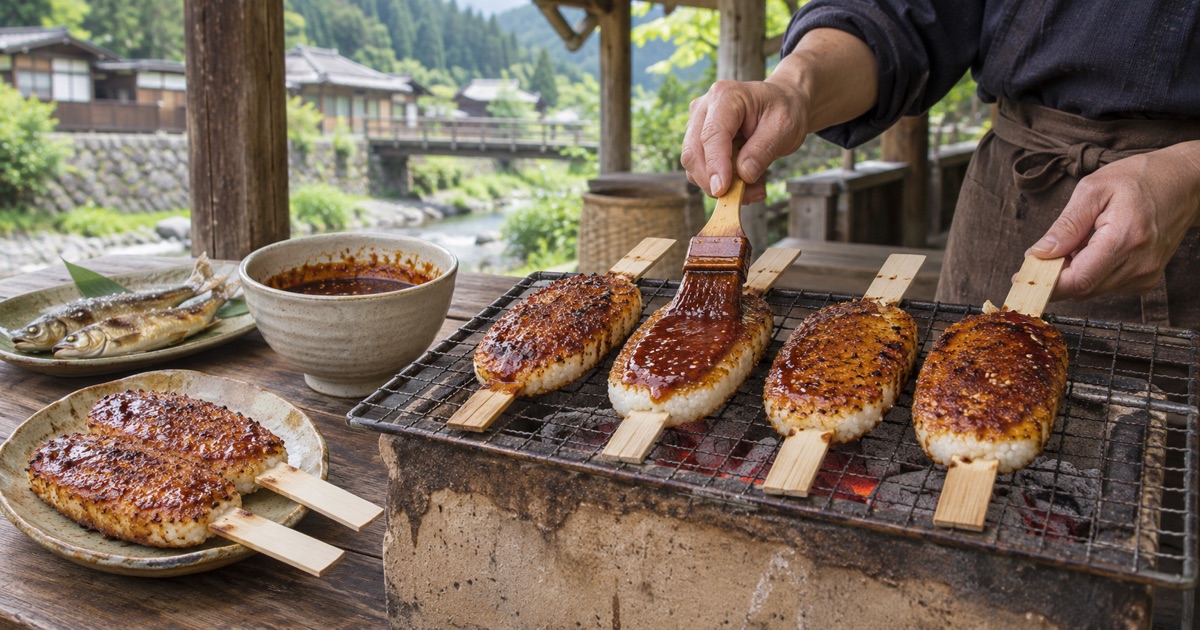
Gohei mochi is a traditional comfort food common across the forested mountain valleys of Toyota, particularly around scenic districts like Asuke (足助) and Korankei (香嵐渓). Unlike standard mochi, which is pounded into a smooth, elastic paste, gohei mochi uses partially crushed, cooked short-grain rice molded onto flat wooden skewers in oval or rounded shapes.
The skewer is brushed with a thick, aromatic glaze—typically made from red miso, ground walnuts, sesame seeds, sugar, and sweet cooking sake (mirin)—and roasted over an open flame until the sauce caramelizes and crisps around the edges.
- Texture: Crisp on the exterior, dense and chewy inside.
- Flavor Profile: Savory-sweet, nutty, and lightly smoky from roasting.
- Common Allergens: Walnuts, sesame seeds, soybeans, and wheat (found in soy sauce or blended miso).
Ayu: Fresh Sweetfish from Clear Mountain Rivers
The Tomoe River (巴川) and Yahagi River (矢作川) run through Toyota, providing clear mountain waters ideal for harvesting ayu (sweetfish). Commonly caught during the summer and early autumn, ayu is celebrated for its delicate flesh, which carries a clean, subtly sweet flavor reminiscent of watermelon or cucumber.
In riverside settings, cooks prepare shioyaki (塩焼き, salt-grilled sweetfish) by threading whole fish onto metal or bamboo skewers in a wave shape (sugata-yaki). The fish is heavily salted—especially the fins and tail to prevent burning—and cooked vertically around a pit of hot charcoal embers. Visitors typically eat the whole fish, taking care to pull the tender meat directly from the bone.
Hatcho Miso and Regional Fermentation
Neighboring Okazaki and the greater Mikawa area are home to Hatcho miso (八丁味噌), an intensely dark, savory paste made entirely from soybeans, water, and salt without the addition of rice or barley grains. Aged in cedar vats under heavy river stones for over two years, this miso anchors many meals across Toyota.
You will encounter this fermented base in several local formats:
- Miso Nikomi Udon (味噌煮込みうどん): Firm, unseasoned wheat noodles simmered in an earthenware pot with rich red miso stock, chicken, green onions, and egg.
- Miso Katsu (味噌カツ): Crisp deep-fried pork cutlets smothered in an earthy, sweet-savory red miso sauce.
- Dote-ni (どて煮): Beef tendon or pork entrails slowly simmered with konjac and Hatcho miso until melt-in-the-mouth tender.
Detailed nutritional analyses for fermented bean pastes and staple grains can be cross-referenced via the Ministry of Agriculture, Forestry and Fisheries database.
Highland Vegetables, Jinenjo, and Local Tea
The upland hills of Toyota's Asuke and Shimoyama areas produce wild mountain yam known as jinenjo (自然薯). Prized for its extreme viscosity and earthy aroma, fresh jinenjo is grated into a sticky paste (tororo), seasoned with dashi broth, and ladled generously over hot steamed barley rice.
Further into the hills, tea farmers cultivate Toyota-cha, specializing in green tea varieties that thrive in cool mountain mists. You will find this local tea served hot in teahouses, ground into matcha powder for confections, or blended into regional soba noodles.
How to Order and Eat Local Meals in Toyota
Navigating food spots across Toyota City varies depending on whether you are near central transit hubs or traveling through countryside recreation areas.
Ordering at Ticket Machines (Kenbaiky)
Many casual noodle shops and traditional diners employ automated ticket vending machines (kenbaiki) near the entrance.
- Approach the Machine: Check whether it accepts cash only or IC transportation cards (like Manaca or Suica). Many rural shops still use cash-only machines that take 1,000-yen notes and coins.
- Select Your Dish: Photos or plastic food displays often correspond to numbers on the buttons. Look for kanji characters such as 定食 (teishoku, set meal), うどん (udon), or 五平餅 (gohei mochi).
- Take the Ticket: Insert your money first, press the illuminated button, collect your printed ticket and your change.
- Hand to Staff: Walk inside and hand the small paper slip to the kitchen staff or table server. If water is not brought to your seat, locate the self-service water dispenser (ohiya) near the counter.
Dining at River Terraces (Yanaba)
During peak sweetfish season (generally summer through late autumn), rustic wooden bamboo traps known as yana are set up along riverbanks. Visitors can relax on elevated riverside platforms called yanaba to enjoy multi-course sweetfish meals.
- Order whole grilled fish, sweetfish sashimi, or ayu meshi (rice cooked with sweetfish and light soy broth).
- When eating salt-grilled fish, begin by gently peeling the crisp skin away or eating it directly with the seasoned meat.
- Watch for small, soft bones. While the head and spine of smaller fish can be eaten when grilled thoroughly, larger sweetfish have firm backbones that should be separated and left on the plate.
We are working to carry Japanese craft and everyday culture beyond Japan, by building Japan Towns with local partners.
Read the Japan Town plan →Getting Around Toyota for Food Explorations
Toyota City is easily reached from central Nagoya, but reaching the rural mountain food districts requires forward planning.
- To Toyota-shi Station (豊田市駅): From Nagoya Station, take the Meitetsu Higashiyama subway line to Fushimi, transfer to the Meitetsu Tsurumai/Toyota Line directly to Toyota-shi Station. The journey takes roughly 50 to 60 minutes and costs around 800 to 900 yen.
- To Korankei and Asuke (Food and Nature Hub): From Toyota-shi Station, board the Meitetsu Meiden bus toward Asuke (approx. 45 minutes; roughly 600 to 800 yen). Timetables fluctuate between seasons, so verify schedules through local tourist portals like the Japan National Tourism Organization.
- Payment: While train stations accept IC transit cards, local mountain buses or roadside snack stands selling gohei mochi often require exact cash in Japanese yen. Keep coins and small denominations on hand.
Practical Dining Tips and Common Pitfalls
- Peak Seasons: The autumn foliage season (particularly November in Korankei) brings extreme crowds. Popular food stands run out of skewered mochi and river fish by mid-afternoon. If visiting during foliage festivals, aim to order meals before 11:30 or after 14:00 to avoid extensive lines.
- Dietary Restrictions and Broths: Vegetarian and halal travelers must exercise caution with savory sauces. Red miso stews, glaze reductions, and noodle soups almost universally contain dashi made with dried skipjack tuna (katsuobushi) or small dried sardines (niboshi). Even vegetarian-looking dishes like jinenjo tororo are thinned with fish stock before serving.
- Soy and Nut Allergies: Gohei mochi sauces frequently blend crushed walnuts, peanuts, and sesame seeds directly into the miso paste. Always confirm ingredients beforehand if you manage a tree nut or peanut allergy by showing staff written allergy cards.
- Closing Times in Rural Areas: Unlike the 24-hour convenience stores in urban Nagoya, small countryside eateries across rural Toyota often close early—frequently around 16:00 or 17:00—or shut down completely once daily ingredient stocks run dry. Confirm operational schedules before heading into mountain valleys.
FAQ
- Q. What is the most famous food to eat in Toyota City?
- A. Gohei mochi (skewered pounded rice glazed with sweet walnut, sesame, or miso sauce) and sweetfish (ayu) are quintessential Toyota staples.
- Q. How does food in Toyota differ from Nagoya's famous dishes?
- A. While Nagoya highlights deep-fried meats and red miso, Toyota leans heavily into mountain river fish, local tea, and forested rustic fare.
- Q. Are vegetarian food options easily available in Toyota?
- A. True vegetarian options are limited because standard regional broths and sauces frequently contain bonito fish stock (katsuobushi).
Cite or share this article
Copy the link below. If you quote this article, please link to this page as the source.