What Does Saitama Need to Eat? Regional Food Guide
Key takeaways
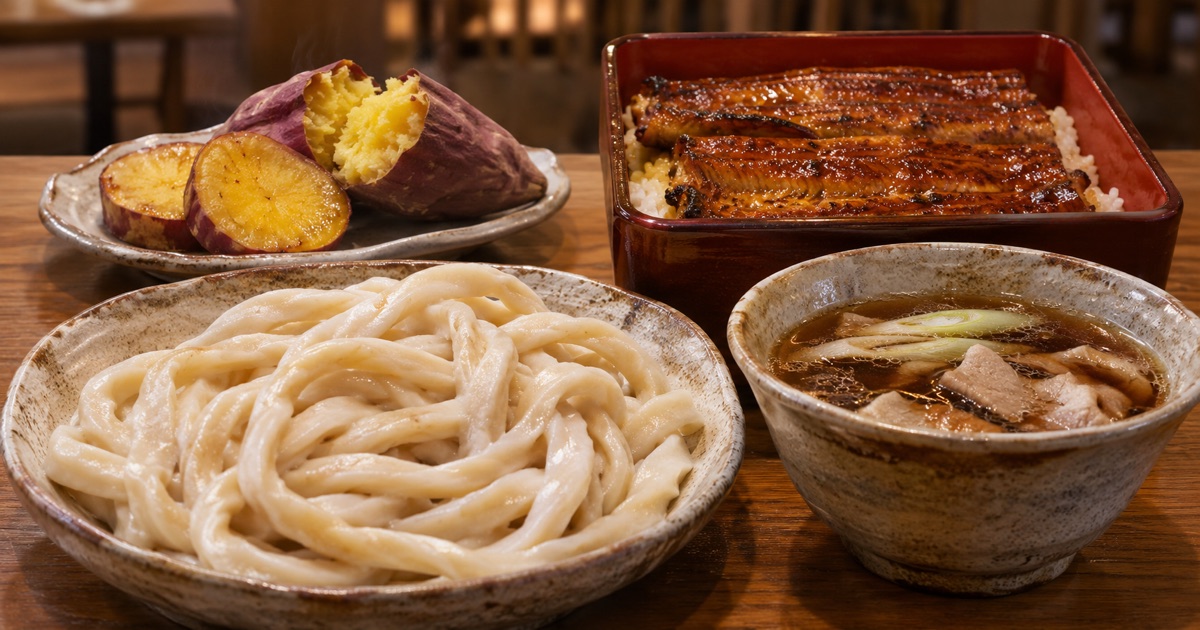
- Saitama features distinct noodle cultures, notably rustic Musashino udon served with warm dipping broth.
- River towns like Kawagoe and Urawa are celebrated for traditional grilled freshwater eel (unagi).
- Sweet potato snacks and miso-slathered yakitori offer casual, accessible street food experiences.
When planning a trip north of Tokyo, asking what a visitor to Saitama needs to eat leads directly to rich local staples: rustic wheat udon noodles, river-style freshwater eel (unagi), and regional sweet potato delicacies. Saitama Prefecture may sit right next to Japan's capital, but its fertile plains and historic riverways have created a distinct, hearty food identity that stands apart from standard Tokyo dining.
For overseas travellers looking beyond the standard sushi-and-ramen itinerary, Saitama provides an accessible culinary day trip. Most primary food hubs across the prefecture—including Kawagoe (川越), Urawa (浦和), and Chichibu (秩父)—can be reached within roughly 30 to 80 minutes from major railway hubs like Shinjuku, Ikebukuro, or Tokyo Station.
The Core Staples: What to Eat in Saitama
Understanding Saitama cuisine requires looking at its geography. Historically an agricultural heartland producing wheat, vegetables, and freshwater catches for old Edo (modern Tokyo), Saitama developed deeply satisfying dishes tailored to farmers, merchants, and river traders.
+--------------------------------------------------------------+
|                SAITAMA REGIONAL FOOD MAP                     |
+--------------------------------------------------------------+
|  NORTH & WEST (Chichibu / Kumagaya):                         |
|  - Waraji Katsudon (Large flattened pork cutlets)            |
|  - Miso Potato (Tempura potato skewers with sweet miso)      |
|                                                              |
|  CENTRAL & SOUTH (Kawagoe / Tokorozawa / Urawa):             |
|  - Musashino Udon (Thick, firm dipping noodles)              |
|  - Unagi (Charcoal-grilled freshwater eel with tare)         |
|  - Sweet Potato Confections (Chips, manju, soft serve)       |
|  - Higashimatsuyama Yakitori (Pork skewers with spicy miso)  |
+--------------------------------------------------------------+
1. Musashino Udon (武蔵野うどん)
While western Japan often champions smooth, slippery udon, Saitama's Musashino region produces some of the firmest, most rustic wheat noodles in the country.
- What it is: Musashino udon uses locally milled whole-wheat flour, giving the noodles an off-white, slightly brownish color and an intense, chewy texture (koshin).
- How it is served: It is typically served tsukemen style: cold noodles piled on a bamboo mat, paired with a hot, savory dipping broth called niku-jiru (肉汁). This broth is packed with sliced pork belly, green onions (negi), and deep-fried tofu pouch strips (aburaage).
- How to eat it: Pick up a small bundle of noodles with your chopsticks, dip them halfway or fully into the piping-hot broth, and slurp. The chewiness requires deliberate chewing compared to softer noodle styles.
2. Traditional Unagi (うなぎ / Freshwater Eel)
Both Urawa (a district in Saitama City) and the historic warehouse town of Kawagoe have centuries-old traditions of eel preparation. During the Edo period, the surrounding marshes and rivers teemed with eel, which fishermen prepared for travellers on the Nakasendo highway.
- What it is: Freshwater eel steamed, skewered, and grilled over charcoal while being basted repeatedly in a sweet, savory glaze made of soy sauce, mirin, and sugar (tare).
- How it is served: Most commonly served as Unaju (鰻重), arranged neatly over steamed rice inside a lacquered box, often accompanied by clear liver soup (kimosui) and pickled vegetables.
- How to eat it: Use chopsticks to cut through the tender fillet and lift a portion of eel and seasoned rice together. Lightly dust the surface with fragrant green Japanese pepper (sansho) to balance the richness of the fat and sweet sauce.
3. Kawagoe Sweet Potato Specialties (さつまいも料理)
Kawagoe earned the nickname "Little Edo" during historical famines when it supplied Tokyo with sweet potatoes. Today, the town's preserved warehouse district (Kurazukuri) offers sweet potato transformed into virtually every culinary format imaginable.
- Sweet Potato Chips (Satsumaimo Chips): Extraordinarily thin, vertically shaved sweet potato strips fried crisp and lightly salted. They are served in large paper cones designed for walking.
- Imo-manju: Steamed wheat buns filled with sweet potato chunks and smooth red bean paste (anko).
- Sweet Potato Soft Serve: Soft-serve ice cream blended with roasted sweet potato purée, offering a nutty, caramelized finish.
4. Higashimatsuyama "Yakitori" (東松山やきとり)
In the central city of Higashimatsuyama, ordering "yakitori" will surprise first-time visitors: it is not chicken.
- What it is: The dish actually consists of grilled pork cheek and jowl meat skewered on bamboo sticks.
- The Signature Flavor: Instead of standard salt or sweet tare, it is served with karamiso—a pungent, spicy paste made from fermented soybean paste, red chili, garlic, and sesame oil.
- How to eat it: Diners brush the spicy miso onto the skewers using a small communal or individual brush provided at the counter.
5. Chichibu Mountain Specialties: Miso Potato & Waraji Katsudon
In Saitama's mountainous western Chichibu district, local cuisine reflects colder alpine conditions and forest foraging.
- Miso Potato (みそポテト): Boiled potatoes coated in a light tempura batter, deep-fried until crisp, and drizzled with a thick, sweet miso glaze. It serves as both a comfort food snack and a drinking accompaniment.
- Waraji Katsudon (わらじカツ丼): Pork cutlet served over rice, named after traditional straw sandals (waraji) because the bowl contains two enormous, thin, flattened cutlets soaked in a sweet-savory soy glaze rather than simmered with egg.
Dietary Considerations and Allergens
When exploring regional dining in Saitama, visitors with allergies or dietary restrictions should note specific standard ingredients:
- Wheat and Gluten: Saitama's noodle culture centers heavily on wheat flour. Soy sauce (shoyu), used as the base in udon broths, eel glaze, and dipping sauces, contains fermented wheat.
- Soy: Pervasive across broths, eel glazes, tofu components, and spicy miso pastes.
- Fish and Seafood: Broth bases (dashi) for udon and dipping sauces almost universally rely on dried bonito flakes (katsuobushi) or dried sardines (niboshi). Vegetarian broths are uncommon in standard noodle shops.
- Pork: Saitama udon dipping broths frequently include simmered pork slices, and local "yakitori" in the central region is primarily pork offal and cheek meat.
For nutritional reference data regarding standard Japanese agricultural and culinary ingredients, consult the official tables on the Ministry of Agriculture, Forestry and Fisheries website.
We are working to carry Japanese craft and everyday culture beyond Japan, by building Japan Towns with local partners.
Read the Japan Town plan →Practical Guide: Planning a Saitama Food Excursion
Getting There from Tokyo
Most food destinations in Saitama require minimal advance transit planning:
1. To Kawagoe (Sweet Potato & Eel):
- Take the Tobu Tojo Line from Ikebukuro Station (roughly 30 to 35 minutes by Express).
- Alternatively, use the Seibu Shinjuku Line from Seibu-Shinjuku Station (roughly 45 to 50 minutes).
2. To Urawa (Eel) & Omiya (Regional Ramen/Udon):
- Take the JR Ueno-Tokyo Line or JR Saikyo Line from Tokyo, Shinjuku, or Ueno Stations (roughly 25 to 40 minutes).
3. To Chichibu (Miso Potato & Katsu):
- Take the Seibu Limited Express "Laview" train from Ikebukuro Station directly to Seibu-Chichibu Station (roughly 80 minutes).
Step-by-Step: Ordering at a Traditional Udon Shop
Many older Saitama udon spots operate via ticket vending machines (shokkenki) or small counter systems:
Step 1: Check the counter or ticket machine near the entrance.
Step 2: Select your noodle size (Nami = Regular, Chū = Medium, Dai = Large).
        Caution: Musashino udon regular portions are typically denser than standard udon.
Step 3: Select your dipping broth (Niku-jiru / pork broth is the regional standard).
Step 4: Pick up side items like vegetable tempura (sweet potato, eggplant, pumpkin).
Step 5: Hand your ticket to the kitchen staff and collect your tray when ready.
Step 6: Return your tray to the dish return area (Henkan-guchi / 返却口) when finished.
Essential Etiquette & Practical Tips
- Slurping is normal: Slurping cools the hot broth and aerates the flavors. Because Musashino udon is firm, do not worry if slurping is difficult; taking measured bites is acceptable.
- Cash remains essential: While major hubs accept IC cards (like Suica and Pasmo) and credit cards, historic sweet potato stands in Kawagoe and traditional countryside udon shops often accept cash only. Keep small denominations (¥1,000 notes and ¥100 coins) accessible.
- Operating Hours: Traditional unagi restaurants and rural udon shops often close as soon as their daily batch of fresh noodles, rice, or eel runs out—sometimes as early as 14:00. Always check the official website or business listing before travelling long distances exclusively for a meal. For broad regional transportation updates and maps, check with the Japan National Tourism Organization.
FAQ
- Q. What is the most famous food to eat in Saitama?
- A. Saitama is best known for Musashino udon noodles, charcoal-grilled eel (unagi), and street food like Kawagoe sweet potato snacks.
- Q. How far is Saitama from central Tokyo for a food trip?
- A. Most culinary hubs in Saitama, such as Kawagoe, Omiya, and Urawa, take roughly 30 to 50 minutes by train from central Tokyo stations.
- Q. What allergens are common in Saitama regional specialties?
- A. Wheat gluten and soy are present in nearly all noodle and sauce dishes, while unagi sauces often contain soy, wheat, and sweet cooking alcohol.
Cite or share this article
Copy the link below. If you quote this article, please link to this page as the source.