What to Eat in Fukuoka Airport: Terminal Specialties Guide
Key takeaways
- Fukuoka Airport features top regional staples: tonkotsu ramen, fluffy Hakata udon, and seasoned pollock roe (mentaiko).
- Most dining options sit inside the domestic terminal, easily reached from the international terminal via a free shuttle bus.
- Budget roughly 1,000 to 2,500 yen per meal, and prepare for common allergens like wheat, soy, pork, and seafood.
When deciding what to eat in Fukuoka Airport (福岡空港), focus on the region's three core culinary icons: rich pork-bone tonkotsu ramen (豚骨ラーメン), soft and comforting Hakata udon (博多うどん), and spicy marinated pollock roe known as mentaiko (明太子). Sampling these regional classics allows travelers to experience authentic Fukuoka food culture without leaving the terminal complex.
Fukuoka is widely celebrated across Japan as a premier food city. Fortunately for transit passengers and departing travelers, the airport functions as a vibrant culinary hub rather than a generic transit lounge. Navigating the choices requires understanding which dishes define the prefecture, where to locate them between the terminals, and how to order effectively as an international visitor.
Essential Dishes to Eat at Fukuoka Airport
Fukuoka's local food scene emphasizes hearty broths, fresh seafood from the Genkai Sea, and accessible street-food traditions. If you have limited time before boarding, prioritize the following signature dishes.
Tonkotsu Ramen (Hakata Ramen)
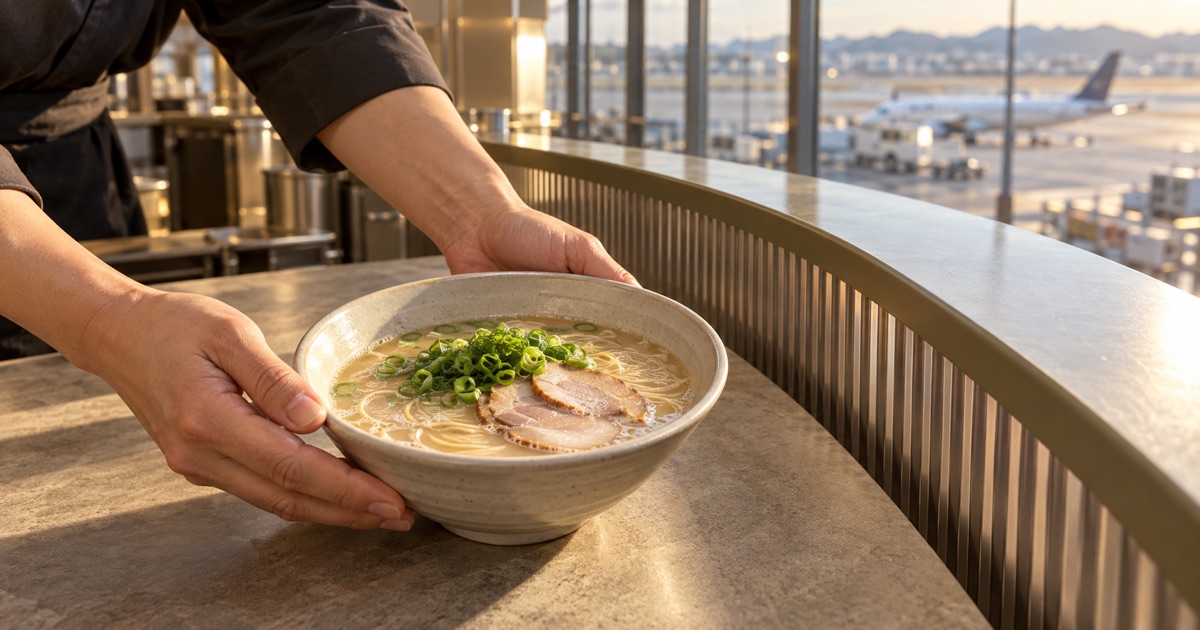
Tonkotsu ramen (豚骨ラーメン) originated in Fukuoka and remains the city’s most famous export. The dish features a milky, deeply savory broth made by boiling pork bones over high heat for many hours until the collagen dissolves.
- Noodle Texture: Hakata-style noodles are thin, straight, and pale. When ordering, diners are often asked to specify their preferred noodle firmness: standard (futsuu, 普通), firm (katame, かため), or extra firm (barikata, バリカタ).
- Toppings: A classic bowl comes garnished with tender sliced pork chashu (チャーシュー), finely chopped green onions (negi, ネギ), wood ear mushrooms (kikurage, キクラゲ), and occasionally a sprinkle of toasted sesame seeds.
- Table Condiments: Counters typically offer jars of pickled red ginger (beni shoga, 紅生姜), spicy mustard greens (karashi takana, 辛子高菜), and crushed raw garlic. Add these gradually halfway through your meal to alter the broth flavor.
- Ordering Refills: If you finish your noodles but still have broth left, you can request an extra portion of noodles by calling out for kaedama (替え玉) for a small additional fee (usually around 150 to 200 yen).
Allergen note: Tonkotsu ramen broth contains pork and soy. The noodles contain wheat.
Hakata Udon
While tourists flock to ramen, many locals argue that Hakata udon (博多うどん) is the true comfort soul food of Fukuoka. Unlike the firm, chewy udon found in the Sanuki region of Shikoku, Hakata noodles are thick, pillowy, and tender, having absorbed the delicate umami of the dashi (soup stock).
The broth is pale and golden, brewed from dried flying fish (ago, あご), kelp (kombu, 昆布), and light soy sauce. When ordering Hakata udon at the airport, two classic toppings stand out:
- Goboten (ごぼ天): Crispy strips or a circular nest of deep-fried burdock root. The earthy crunch of the burdock provides a striking contrast to the soft noodles.
- Maruten (丸天): A large, round, deep-fried fish cake that gently warms in the broth, releasing extra savory richness.
Allergen note: The noodles contain wheat. Broths and fish cakes contain soy and fish products.
Spicy Pollock Roe (Karashi Mentaiko)
Karashi mentaiko (辛子明太子) is salted pollock roe marinated in chili pepper, sake, mirin, and dashi. It is slightly spicy, deeply savory, and loaded with umami. At airport eateries, you will encounter mentaiko served in various formats:
- Mentaiko Rice Bowls (Mentaiko-don): Whole lobes of roe served atop steaming bowls of white Japanese rice, often topped with shredded nori seaweed and a raw or soft-poached egg yolk.
- Mentaiko Pasta: A popular modern Japanese (yoshoku) dish combining butter, cream, soy sauce, and roe tossed with spaghetti.
- Breads and Pastries: Bakeries across the airport bake freshly made mentaiko baguettes, featuring crusty French bread slathered with salted roe butter.
For verified details on how marine ingredients are categorized in traditional Japanese culinary culture, consult the Ministry of Agriculture, Forestry and Fisheries.
Regional Poultry Specialties: Mizutaki and Yakitori
Fukuoka has a strong poultry tradition centered on regional breeds known as jidori (地鶏).
- Mizutaki (水炊き): A clear-to-cloudy chicken hot pot cooked with cabbage, seasonal mushrooms, and minced chicken meatballs. While a full multi-course mizutaki meal takes time, airport casual dining spots frequently offer single-diner lunch sets featuring a concentrated bowl of chicken broth, rice, and citrusy ponzu sauce for dipping.
- Torikawa (鶏皮): Fukuoka-style chicken skin skewers, which are tightly wrapped around bamboo skewers, repeatedly grilled, seasoned, and rested over several days until crisp on the outside and chewy within.
Navigating the Domestic vs. International Terminals
A crucial operational reality of Fukuoka Airport is that dining facilities are distributed unevenly between buildings.
| Aspect | Domestic Terminal | International Terminal |
|---|---|---|
| Dining Variety | Extensive food courts, ramen hall, sit-down dining | Limited selection, basic cafes, quick grab-and-go |
| Subway Access | Direct underground access to Fukuoka City Subway | Requires free shuttle bus connection to Domestic |
| Location of Specialties | Houses almost all specialized noodle and hot pot spots | Focuses primarily on pre-flight sandwiches, coffee, light sets |
Moving Between Terminals
If you are departing on an international flight but want to sample authentic regional dishes, plan to arrive early and visit the domestic terminal first.
A dedicated free terminal shuttle bus runs continuously between the Domestic and International terminals. The ride takes roughly 10 to 15 minutes depending on airport apron traffic. Ensure you leave ample time to return to the international building, clear security, and pass border control.
To plan your broader regional transit logistics, refer to resources provided by the Japan National Tourism Organization.

We are working to carry Japanese craft and everyday culture beyond Japan, by building Japan Towns with local partners.
Read the Japan Town plan →Practical Tips for Dining at Fukuoka Airport
Eating at a Japanese airport terminal is straightforward, but keeping a few practical factors in mind ensures a smooth experience.
1. Using Ticket Vending Machines (Kenbaiki)
Many fast-casual noodle counters rely on automated ticket machines (kenbaiki, 券売機) located outside the entrance:
- Select your language (most machines support English, Traditional Chinese, and Korean).
- Insert cash (1,000-yen notes and coins are universally accepted) or tap an IC transit card (such as Suica, Pasmo, or the local Hayakaken).
- Select your main dish, toppings, and sides.
- Take the printed ticket and receipt, enter the shop, and hand the ticket to the counter staff.
2. Time Management and Peak Hours
Dining venues experience heavy surges during domestic transit peaks: roughly 11:30 to 13:30 for lunch, and 17:30 to 19:30 for dinner. Wait times at popular ramen counters can stretch to 20 or 30 minutes during these windows. If your flight boarding begins soon, opt for quick-service udon or grab packaged bentos and mentaiko onigiri from convenience stands.
3. Dietary Preferences and Common Allergens
Traditional Fukuoka airport cuisine relies heavily on pork, seafood, and wheat. True vegetarian or vegan options are scarce in standard terminal noodle shops, as almost all stocks incorporate bonito flakes (katsuobushi), dried fish, or pork bones. Travelers with severe celiac conditions or shellfish allergies must exercise caution and clarify ingredients directly with staff, as kitchens frequently prepare multiple noodle styles in adjacent boiling vats.
Wrapping Up Your Culinary Journey in Fukuoka
Fukuoka Airport is one of the few transit centers in the world where dining ranks among the actual highlights of visiting the region. Whether you choose a steaming bowl of cloudy tonkotsu ramen with extra-firm noodles, a comforting serving of soft Hakata udon topped with crisp burdock root, or a quick mentaiko rice bowl, you can experience the culinary depth of northern Kyushu right up to the moment your flight boards. Allow yourself an extra hour before departure to explore the domestic terminal's dining areas, check official airport floor guides for current seasonal offerings, and finish your trip with a memorable local meal.
FAQ
- Q. Can international passengers access the domestic terminal restaurants?
- A. Yes, anyone can take the free terminal shuttle bus between the international and domestic buildings, which takes roughly 10 to 15 minutes.
- Q. What regional dishes should I prioritize before flying out?
- A. Tonkotsu ramen, Hakata udon, and dishes featuring spicy mentaiko (seasoned pollock roe) are the primary iconic foods of the region.
- Q. Do food outlets at Fukuoka Airport cater to common food allergies?
- A. Many menus display allergen icons for wheat, eggs, shellfish, and pork, but cross-contamination is possible, so always confirm with staff.
Cite or share this article
Copy the link below. If you quote this article, please link to this page as the source.