What to Eat in Hakodate: A Guide to Local Food
Key takeaways
- Hakodate is famous for raw flying squid (*ika*), sea urchin, and salmon roe seafood bowls (*kaisendon*).
- The city's signature noodle dish is Hakodate *shio* (salt) ramen, known for its clear, kelp-infused broth.
- Local menus feature dairy-rich pastries and soft-serve ice cream made with regional Hokkaido milk.
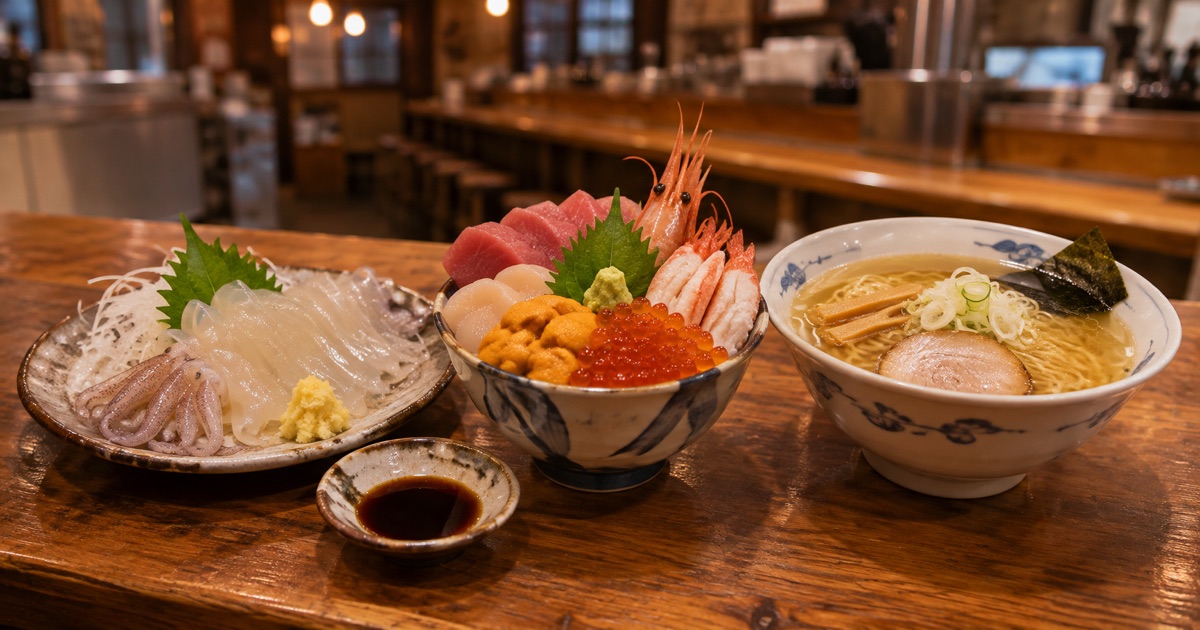
When deciding what to eat in Hakodate, your primary focus should be on fresh Japanese flying squid (surume ika), abundant seafood rice bowls (kaisendon), and the city's clear-broth salt ramen (shio ramen). This southern Hokkaido port city blends cool-water marine bounty with regional dairy and produce, creating one of northern Japan's most celebrated dining cultures.
Because Hakodate sits between the Sea of Japan and the Pacific Ocean along the Tsugaru Strait, cold, nutrient-dense ocean currents supply its morning markets with remarkable seafood year-round. This guide breaks down the core culinary specialties of Hakodate, explains how to eat them, and outlines essential dining etiquette for first-time visitors.
Hakodate's Signature Seafood Specialties
Seafood anchors the culinary identity of Hakodate. The city's fishing fleets depart and return daily, meaning local counters serve raw catches hours faster than inland dining hubs.
Fresh Squid (Ika)
Squid (ika / 烏賊) is the civic symbol of Hakodate. The local waters yield two primary varieties depending on the calendar:
- Japanese flying squid (surume ika): Caught from early summer through late autumn or early winter.
- Spear squid (yari ika): Harvested primarily from winter into early spring.
Fresh squid sashimi in Hakodate is visibly distinct from standard supermarket squid. Truly fresh ika is nearly transparent rather than opaque white, with a firm, snap-like bite (kori-kori) rather than a soft, chewy texture.
Squid is typically served sliced into thin, translucent strips resembling noodles, known as ika sashi. Many vendors serve it alongside grated ginger instead of wasabi, paired with standard soy sauce or a dipping sauce enriched with fresh squid liver (goro). To eat, take a small dab of ginger, place it onto the squid strip, dip lightly into soy sauce, and consume immediately.
Seafood Rice Bowls (Kaisendon)
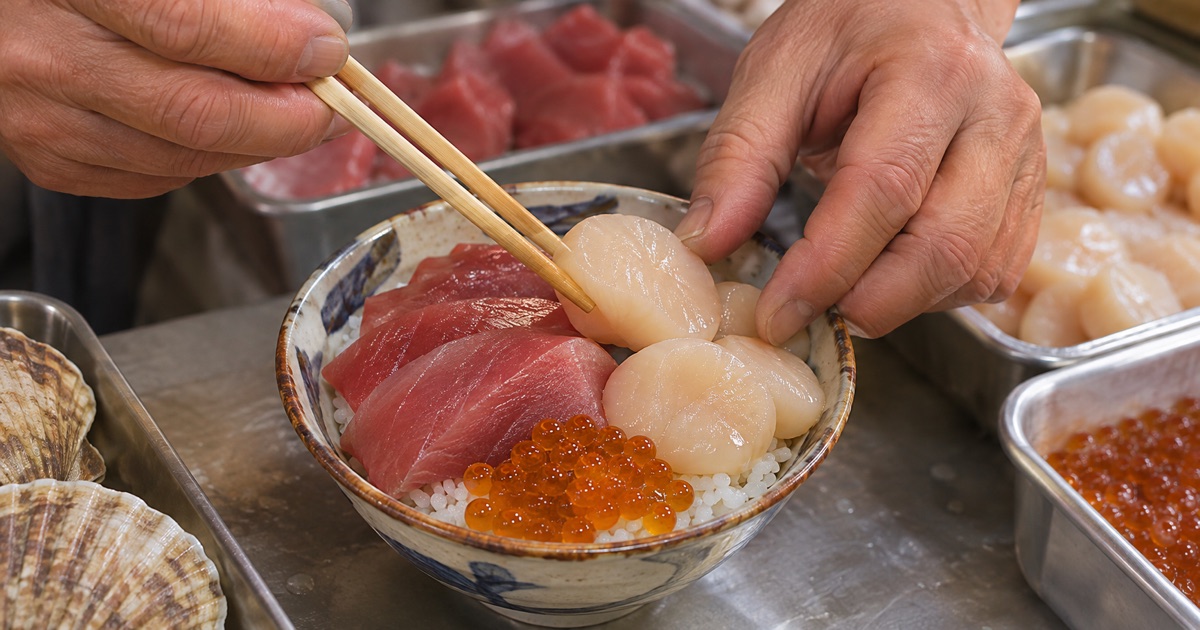
A bowl of vinegared or steamed white rice topped with an assortment of raw ocean catches, kaisendon (海鮮丼) is Hakodate's standard breakfast and lunch staple.
Common toppings include:
- Salmon roe (ikura): Cured in soy sauce or salt, releasing a rich, savory pop.
- Sea urchin (uni): Naturally sweet and custard-like, often additive-free in coastal markets.
- Scallops (hotate): Plump, tender, and naturally sweet bivalves harvested in nearby waters.
- Crab (kani): Usually snow crab (zuwaigani) or horsehair crab (kegani), shredded or served as whole leg meat.
When eating kaisendon, avoid dumping wasabi directly into the entire bowl of rice. Instead, mix a small amount of wasabi into your separate small dish of soy sauce, then drizzle a modest portion over the seafood toppings just before eating. Alternatively, dab wasabi directly onto individual bites of seafood with your chopsticks.
Hakodate Shio Ramen (Salt Ramen)
While Sapporo is renowned for rich miso ramen and Asahikawa for robust soy sauce (shoyu) broth, Hakodate is the historical home of Hokkaido's salt-based ramen (shio ramen / 塩ラーメン).
Broth and Noodle Profile
Hakodate shio ramen is defined by its clean, pale golden soup. The broth is gently simmered using a base of chicken frames, pork bones, and southern Hokkaido kelp (ma-kombu). Because it is cooked at a low simmer rather than a rapid boil, the broth remains clear rather than cloudy.
The noodles are typically medium-thin, straight or slightly wavy, with a springy bite that complements the delicate, savory broth. Standard toppings include:
- Braised pork belly or loin (chashu)
- Seasoned bamboo shoots (menma)
- Sliced green onions (negi)
- A swirl-patterned fish cake (narutomaki)
- Occasionally, an egg or a small sheet of dried nori seaweed
How to Order and Eat
In many traditional ramen shops across the city, customers purchase meal tickets at an automated vending machine (shokenki) near the entrance before sitting down.
- Insert your cash (1,000-yen notes and coins are standard; some modern machines take IC cards or credit cards).
- Press the button for shio ramen (look for the characters 塩 or 塩ラーメン).
- Hand the printed paper slip to the counter staff.
Eat ramen hot and without delay. Slurping noodles is standard practice in Japan; drawing in air while pulling noodles into your mouth cools them slightly and aerates the broth aromas.
We are working to carry Japanese craft and everyday culture beyond Japan, by building Japan Towns with local partners.
Read the Japan Town plan →Regional Specialties and Market Street Food
Beyond full sit-down seafood platters and noodle bowls, Hakodate offers distinct comfort foods shaped by regional trade and local livestock farming.
Hakodate Morning Market Dining
The morning market area, situated steps from JR Hakodate Station (函館駅), bustles with stalls and small eateries starting in the early dawn hours.
- Grilled Shellfish: Scallops grilled in their shells over charcoal burners, basted with butter and soy sauce.
- Steamed Crab Buns: Soft steamed buns stuffed with seasoned shredded crab meat.
- Seasonal Melons: Slices of orange-flesh Hokkaido cantaloupe served chilled on wooden sticks.
Keep in mind that peak hours at the morning market run between roughly 7:00 AM and 11:00 AM. Many stalls wind down their operations by early afternoon. For general trip-planning resources and seasonal transit details, consult the Japan National Tourism Organization.
Dairy and Confectionery
Hokkaido accounts for a major share of Japan's raw milk supply. Hakodate leverages this dairy access across bakeries, cafes, and roadside stands.
- Soft-Serve Ice Cream (Sofuto Kuriimu): Made with high-fat, unblended regional milk, delivering a rich texture and clean dairy flavor. Look for varieties blended with local squid ink or regional melon.
- Souffle Cheesecakes: Miniature, bite-sized baked cheesecakes that melt quickly on the tongue.
- Castella and Pastries: Influenced by Hakodate's historical status as an early international trade port opened in the 1850s, leading to deep confectionery roots.
Detailed food composition data regarding Japanese dairy, seafood, and regional agricultural items can be reviewed via the Ministry of Agriculture, Forestry and Fisheries.
Navigating Menus and Practical Dining Tips
Navigating Hakodate's dining scene as an overseas visitor is straightforward when prepared for local customs and operational habits.
Seasonal Timing
Seafood availability fluctuates with regional fishing seasons and ocean temperatures:
- Summer to Autumn: Peak season for surume ika (flying squid) and sea urchin.
- Winter: Prime season for snow crab, cod, and cold-water scallops.
- Spring: Spear squid and regional seaweeds are at their freshest.
Inclement weather or rough winter seas can occasionally prevent fishing boats from leaving port. On such days, live squid tanks at markets may be empty, with shops serving flash-frozen catches instead.
Cash and Payment Habits
While hotels and large restaurant chains accept major international credit cards and transport IC cards (such as Suica or Pasmo), many small market stalls, noodle bars, and family-run counters in Hakodate remain cash-only. Always carry sufficient yen currency in bills and coins when visiting morning markets and neighborhood side streets.
Common Allergens
Travelers with dietary restrictions should be aware of ubiquitous ingredients in Hakodate:
- Crustaceans and Mollusks: Squid, shrimp, and crab appear widely across broths, seasonings, and garnishes.
- Soy and Wheat: Soy sauce (shoyu) contains wheat; ramen noodles are wheat-based.
- Kelp/Iodine: Kombu (kelp) is the core base of Hakodate ramen stock and many dipping sauces.
- Dairy: Butter is frequently added to grilled corn, potato dishes, and ramen bowls.
If you have a seafood allergy, carry a written dietary card in Japanese stating clearly what you cannot consume (e.g., "私は甲殻類アレルギーがあります" / "I have a crustacean allergy"), as stocks and seasonings often contain hidden seafood extracts.
FAQ
- Q. What is the single most famous food to eat in Hakodate?
- A. Fresh Japanese flying squid (*surume ika*) is Hakodate's signature specialty, served translucent as sashimi immediately after harvest.
- Q. How does Hakodate ramen differ from Sapporo ramen?
- A. Hakodate ramen features a clear, light, salt-based broth (*shio* ramen), whereas Sapporo is renowned for rich, hearty miso ramen.
- Q. Are there common food allergens in Hakodate cuisine?
- A. Yes, Hakodate dishes heavily feature shellfish, crustaceans, fish roe, and wheat flour (in ramen noodles), as well as dairy in local sweets.
Cite or share this article
Copy the link below. If you quote this article, please link to this page as the source.