What to Eat in Hiroshima Station: Regional Foods Guide
Key takeaways
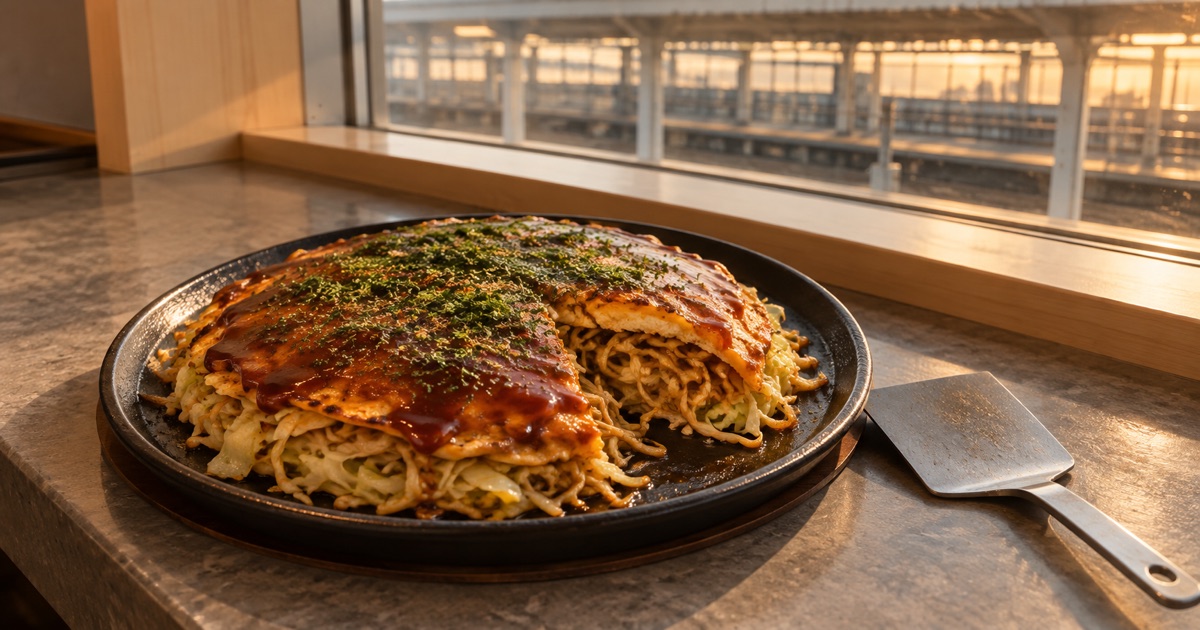
- Hiroshima-style okonomiyaki layers cabbage, batter, pork, and yakisoba noodles, differing completely from Osaka style.
- Seto Inland Sea oysters are available year-round inside the station complex, served deep-fried, grilled, or steamed.
- Bilingual ticket machines and clear floor directories make ordering food simple for non-Japanese speakers.
When deciding what to eat in Hiroshima Station (広島駅, Hiroshima-eki), travellers should prioritize Hiroshima-style okonomiyaki, locally farmed Seto Inland Sea oysters, spicy dipping tsukemen noodles, and baked momiji manju cakes. The station terminal houses expansive dining floors offering direct access to the prefecture's signature culinary traditions without leaving the building.
For first-time visitors arriving by Shinkansen bullet train, the station complex serves as a comprehensive culinary introduction to Hiroshima Prefecture. You do not need to speak Japanese to navigate the dining concourses, as most food zones use numbered menus, multilingual ticket kiosks, and realistic wax models.
Hiroshima-Style Okonomiyaki: The Iconic Layered Dish
Hiroshima okonomiyaki (広島風お好み焼き) is a savory layered pancake built on a crepe-like flour base, piled with cabbage, pork, yakisoba noodles, and fried egg. Unlike the blended batter of the Kansai region, the Hiroshima technique keeps every component distinct.
The Anatomy of the Dish
A standard portion contains several clear layers, constructed systematically across a wide, flat iron griddle (teppan, 鉄板):
- The Base Crepe: The chef spreads a small ladle of water-and-wheat batter into a paper-thin circle.
- The Cabbage Mountain: A generous heap of finely shredded green cabbage sits on the batter, seasoning with bonito powder and dried kelp flakes.
- Pork Slices: Strips of pork belly (butabara, 豚バラ) drape over the vegetable pile.
- The Flip and Steam: The chef flips the pancake over, trapping the moisture so the raw cabbage steams under the weight of the meat.
- The Carbohydrate Bed: Alongside the main stack, the cook fries a portion of Chinese wheat noodles (yakisoba) or Japanese udon noodles.
- The Egg and Assemble: The cook breaks an egg flat on the griddle, places the noodle block on top, stacks the steamed cabbage pancake over the noodles, and flips the entire structure right-side up.
- The Finish: A rich coating of dark, sweet Worcestershire-style sauce blankets the surface, followed by green laver seaweed (aonori, 青のり).
Common optional toppings include local squid crisps (ika-ten, イカ天), melted cheese, green onions (negi, ネギ), and whole oysters.
How to Eat Okonomiyaki like a Local
Most station counters provide customers with a small metal spatula called a hera (ヘラ) or kote (コテ), alongside traditional chopsticks.
If you sit directly at the counter griddle, eat straight from the hot metal surface. Use the sharp edge of the spatula to slice a bite-sized square out of the pancake. Push the spatula horizontally beneath the square, lift the slice cleanly, and carry it directly to your mouth. If you sit at a separate dining table, your meal arrives on a ceramic plate, where you can cut portions using the spatula and transfer them with chopsticks.
Be cautious of heat; the cabbage core retains high temperatures for a long time. Pouring extra sweet sauce or Japanese mayonnaise from table squeeze bottles allows you to adjust the richness to your preference.
Hiroshima Oysters: Fresh, Fried, and Grilled
Hiroshima Prefecture produces the majority of Japan's farmed Pacific oysters (Crassostrea gigas), benefiting from the calm, nutrient-dense waters of the Seto Inland Sea. Inside the station concourse, restaurants serve oysters in several classic forms throughout the year.
Kakifry: Panko-Breaded Deep-Fried Oysters
Kakifry (カキフライ) features plump oysters coated in fine wheat flour, egg wash, and Japanese panko breadcrumbs, deep-fried until crisp and golden brown. The contrast between the crunchy exterior and the soft interior makes this the most approachable style for beginners.
Diners typically dip kakifry in Japanese tartar sauce or a drizzle of brown fruit-and-vegetable sauce (tonkatsu sauce). Plates usually come accompanied by a wedge of fresh lemon and a bed of finely shredded raw cabbage to balance the oil.
Grilled and Steamed Oysters
Purists often select simple cooking styles to focus on the briny mineral profile of the shellfish:
- Yaki-gaki (焼き牡蠣): Fresh oysters grilled in the half-shell over gas flames or charcoal, seasoned with a dash of soy sauce, ponzu citrus sauce, or lemon juice.
- Mushi-gaki (蒸し牡蠣): Oysters gently steamed in their shells, locking in moisture and concentrated ocean salinity.
- Kaki Meshi (牡蠣飯): Seasoned rice simmered in dashi broth alongside fresh oysters, infusing the grains with rich maritime flavor.
We are working to carry Japanese craft and everyday culture beyond Japan, by building Japan Towns with local partners.
Read the Japan Town plan →Hiroshima Tsukemen: Chilled Spicy Dipping Noodles
Hiroshima tsukemen (広島つけ麺) consists of cold ramen-style wheat noodles served separately from a chilled, fiery dipping soup made from dashi, chili oil, sesame, and vinegar.
What to Expect on Your Plate
A standard order features a plate of firm, thoroughly chilled yellow noodles topped with:
- Boiled green cabbage leaves
- Sliced boiled pork (chashu, チャーシュー)
- Shredded long green onions
- Sliced cucumbers
The dipping broth arrives in a deep bowl, colored bright crimson with chili flakes and roasted red chili oil (rayu), finished with a thick layer of toasted white sesame seeds.
Navigating the Spice Scale
Almost every tsukemen counter inside Hiroshima Station uses an adjustable spice tier, typically ranging from zero to 20 (and occasionally higher).
- Level 1 to 3 (Mild): Delivers a hint of pepper heat suitable for diners sensitive to spice.
- Level 5 (Medium): Matches standard spicy ramen found across Japan.
- Level 10+ (Hot): Delivers an intense capsaicin burn that numbs the palate.
To eat, take a modest bundle of cold noodles and vegetables with your chopsticks, dip the bundle entirely into the cold broth for two seconds, and slurp. Avoid wearing light-colored clothing, as the thin chili broth splashes easily off cold noodles.
Souvenirs and Sweets: Momiji Manju
Momiji manju (もみじ饅頭) is a palm-sized sponge cake molded into the five-lobed shape of a Japanese maple leaf, historically associated with nearby Miyajima Island. Hiroshima Station features numerous bakeries displaying fresh production lines through observation windows.
Traditional and Modern Fillings
While the original recipe calls for smooth, sweetened red bean paste (koshian, こしあん) wrapped in a castella-like cake batter, modern shops sell a wide variety of alternatives:
- Custard Cream (カスタード): A rich vanilla cream, popular with children.
- Chocolate (チョコレート): Mild chocolate ganache or cocoa paste.
- Matcha (抹茶): Green tea-infused sweet white bean filling.
- Cheese Cream (チーズ): A mildly salty, tangy cream cheese filling.
Age-Momiji: The Deep-Fried Variation
Inside the station retail plazas, certain vendors prepare age-momiji (揚げもみじ). Staff members skewer standard momiji manju cakes on wooden sticks, dip them in tempura batter, and deep-fry them fresh on demand. The high heat creates a light outer crust while melting the interior filling. Eat them immediately while hot.
Station Dining Etiquette and Practical Navigation
Hiroshima Station functions on a multi-level layout divided into North (Shinkansen) and South (City Tram) access points, connected by underground pathways and overhead concourses. Dining establishments cluster primarily around the modern retail complexes linked directly to both gates.
For updated train schedules and national rail travel resources, check the Japan National Tourism Organization before your trip.
Practical Tips for First-Time Diners
- Luggage Storage: Aisles inside counter restaurants are narrow. Store large rolling bags inside the coin lockers located along the central Shinkansen concourse before lining up for food.
- Payment Methods: Major credit cards and IC transit cards (such as Suica, Pasmo, or Icoca) work at nearly all station restaurants and food court stalls.
- Peak Hours: Counter restaurants fill up quickly during Japanese lunchtime (roughly 11:30 to 13:30) and dinner hours (17:30 to 19:30). If catching an onward train, budget 45 minutes for okonomiyaki, as cooking thick cabbage stacks from scratch requires roughly 15 to 20 minutes on the griddle.
- Official Agricultural Resources: To learn more about regional aquaculture and food standards in Japan, consult the Ministry of Agriculture, Forestry and Fisheries.
Allergen Precautions
Hiroshima specialties rely heavily on specific ingredients that require caution for travellers with dietary restrictions:
- Shellfish/Mollusks: Ubiquitous in okonomiyaki broths, squid-crisp mix-ins, and oyster-based seasonal dishes.
- Wheat/Gluten: Found in okonomiyaki flour, yakisoba noodles, tsukemen noodles, panko breadcrumbs, and soy sauce.
- Pork: Standard okonomiyaki includes pork belly fat slices unless explicitly requested without meat (butanuki, 豚抜き). Vegetarian broths are uncommon in tsukemen establishments.
FAQ
- Q. What is the main difference between Hiroshima okonomiyaki and Osaka okonomiyaki?
- A. Hiroshima okonomiyaki layers distinct ingredients onto a thin crepe base with yakisoba noodles, while Osaka okonomiyaki mixes raw batter, shredded cabbage, and fillings together before grilling.
- Q. Can travellers eat regional Hiroshima specialties without leaving Hiroshima Station?
- A. Travellers can access all major Hiroshima regional dishes, including layered okonomiyaki, local oysters, and momiji manju cakes, within the commercial floors of the Hiroshima Station complex.
- Q. How do non-Japanese speakers order food inside Hiroshima Station dining halls?
- A. Diners often order through electronic touch-screen vending machines that offer English menus, or by pointing to numbered visual displays outside the kitchen counters.
Cite or share this article
Copy the link below. If you quote this article, please link to this page as the source.