What to Eat in Kumamoto: A Guide to the Local Specialties
Key takeaways
- Kumamoto's signature foods are basashi (horse sashimi), taipien noodle soup, karashi renkon and ikinari dango.
- Many of these dishes are served as izakaya or set-meal items rather than standalone restaurant specialties, so ask staff if unsure.
- Horse meat and mustard-stuffed lotus root are distinctive regional dishes rarely found elsewhere in Japan, worth trying once in the region.
What to Eat in Kumamoto
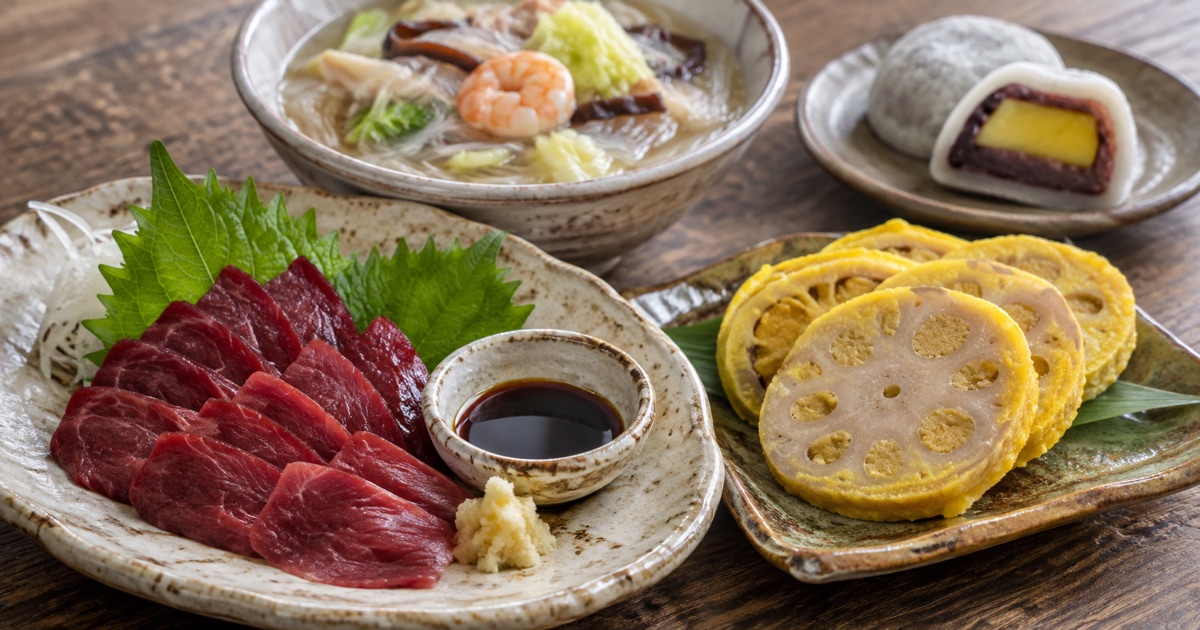
The most distinctive foods to eat in Kumamoto are basashi (raw horse meat), taipien (a seafood and glass-noodle soup), karashi renkon (mustard-stuffed lotus root) and ikinari dango (a steamed sweet potato and bean-paste dumpling). These dishes reflect the region's long farming history, Kyushu's seafood access, and a local taste for bold, slightly spicy flavors that set Kumamoto apart from other parts of Japan.
Kumamoto Prefecture, located in central Kyushu, is known for hearty, rustic food rather than delicate kaiseki-style cuisine. Many of its specialties grew out of samurai-era cooking traditions and postwar comfort food, and they are still widely eaten today in izakaya, set-meal restaurants, and home kitchens. Below is a practical guide to what to look for, how each dish is eaten, and what first-time visitors should know before ordering.
Basashi: Kumamoto's Most Famous Dish
Basashi (馬刺し) is raw horse meat, thinly sliced and served sashimi-style with soy sauce, grated ginger, and sometimes garlic. Kumamoto is one of Japan's best-known regions for horse meat, and basashi appears on menus at izakaya, specialty restaurants, and even in supermarkets as a packaged product.
The meat is lean, slightly sweet, and usually served chilled on a bed of shredded cabbage or shiso leaves. Common cuts include regular lean basashi, a fattier marbled version called koujou or toro basashi, and seared versions (aburi basashi) for those who prefer something between raw and cooked.
How to eat it: Dip a slice in the soy sauce provided, often mixed with ginger or garlic at the table. It's typically ordered as a shared appetizer rather than a main dish. If you are unsure about raw meat, ask whether a seared or cooked version is available.
A common mistake first-time visitors make is assuming basashi is only for adventurous eaters — it is a mainstream, everyday food for locals, served at family restaurants and casual bars alike, not just specialty shops.
Taipien: A Noodle Soup with Chinese Roots
Taipien (太平燕) is a clear, light broth soup built around harusame (glass noodles) instead of wheat noodles, usually topped with shrimp, squid, pork, boiled egg, and vegetables like cabbage and wood ear mushroom. It was introduced by Chinese residents in Kumamoto in the early 20th century and has since become a local comfort food, particularly popular as a school lunch item and home-cooked dish throughout the prefecture.
The broth is typically seasoned with a mild, slightly tangy flavor, sometimes with a background of vinegar or sesame oil, and it's lighter than tonkotsu-based ramen. Because the noodles are glass noodles rather than wheat, taipien is a useful option for visitors avoiding wheat, though sauces and broths can still contain soy sauce or other wheat-based seasonings, so it's not guaranteed gluten-free.
How to eat it: Taipien is eaten with a spoon and chopsticks, much like other Chinese-style soups in Japan. It's commonly ordered as a light lunch or part of a set meal.
Karashi Renkon: Mustard-Stuffed Lotus Root
Karashi renkon (からし蓮根) is sliced lotus root stuffed with a mixture of miso and Japanese hot mustard (karashi), then coated in a turmeric-tinted batter and deep-fried. The result is a crunchy, slightly spicy snack with a distinctive yellow color, often served in thick cross-section slices so you can see the hole pattern of the lotus root.

This dish is said to date back to the Edo period, reportedly created as a nutritious food for a Kumamoto feudal lord recovering from illness, using lotus root grown in the moats of Kumamoto Castle. Today it's sold as a souvenir item, bar snack, and side dish at many restaurants in the prefecture.
How to eat it: It's usually sliced and served cold or at room temperature, eaten by hand or with chopsticks as a shareable side. The mustard filling can be quite sharp, so take a small bite first if you're sensitive to strong mustard flavor.
Ikinari Dango: A Simple Sweet Potato Snack
Ikinari dango (いきなり団子) is a steamed dumpling made of a thick dough wrapped around a slice of sweet potato and a small portion of sweet red bean paste (anko). It's a humble, home-style sweet traditionally made with whatever ingredients were on hand — the name roughly translates to "suddenly dumpling," reflecting its origin as a quick, no-fuss treat.
It's commonly sold at markets, roadside stations (michi no eki), and sweet shops across Kumamoto, often wrapped individually and sold warm. Unlike many Japanese sweets that rely on delicate presentation, ikinari dango is meant to be simple and filling.
How to eat it: It's eaten by hand, usually while still warm, as a snack rather than a formal dessert. It contains wheat flour and red bean (often no other major allergens), but check labels if you have specific concerns.
Other Regional Foods Worth Trying
- Dago-jiru — a thick vegetable and flat wheat-noodle soup similar to hoto, found more in rural areas.
- Higo beef (Kumamoto wagyu) — a regional beef brand, sometimes served as steak, yakiniku, or in set meals.
- Kumamoto ramen — a tonkotsu-based ramen distinct from Hakata-style, often with garlic oil (mayu) added for a deeper aroma.
Practical Tips for Trying Kumamoto Food
Most of these dishes are available at izakaya, local diners (shokudo), and department store basement food halls (depachika) rather than at single specialty restaurants, so you don't need a reservation for most of them. If you're visiting Kumamoto City, central areas near Kumamoto Station and the castle district tend to have the widest range of restaurants offering these specialties on one menu, often as part of a local-food set course.
Because basashi and karashi renkon are less common outside Kyushu, it's worth trying them while in the region rather than assuming you'll find them elsewhere in Japan. Portion sizes at izakaya are often smaller and meant for sharing, so ordering two or three different regional dishes alongside rice or noodles is a good way to sample widely without overordering.
For general information on regional travel and seasonal food events, the Japan National Tourism Organization is a reliable starting point. Readers interested in nutritional details of specific ingredients can also refer to the MEXT Food Composition Database for reference values.
A Final Note on Allergens and Caution
As with any regional cuisine, always ask staff about ingredients if you have allergies — shellfish, wheat, soy, and egg appear frequently across these dishes, particularly in taipien and ramen broths. Menu translations are becoming more common in Kumamoto, but smaller local shokudo may only have Japanese-language menus, so pointing at a dish name or using a translation app can help confirm what you're ordering.
FAQ
- Q. Is basashi (horse sashimi) safe to eat?
- A. It is a long-established regional dish regulated like other raw seafood and meat in Japan, served fresh and thinly sliced at restaurants that handle it properly. As with any raw dish, those with specific health concerns should ask staff about preparation or choose a cooked alternative.
- Q. What is taipien and does it contain allergens?
- A. Taipien is a clear, slightly tangy noodle soup made with glass noodles (harusame), seafood, pork and vegetables, originally based on a Chinese dish adapted in Kumamoto. It typically contains shellfish, pork and egg, so check with staff if you have allergies.
- Q. Can vegetarians find something to eat in Kumamoto?
- A. It takes some effort, as many signature dishes center on meat or seafood, but karashi renkon (mustard-stuffed lotus root) is often vegetarian-friendly, and side dishes like pickles, tofu and vegetable tempura are usually available. Always confirm ingredients with staff, since dashi stock often contains fish.
Cite or share this article
Copy the link below. If you quote this article, please link to this page as the source.