What to Eat in Shibuya: Essential Dishes and Food Guide
Key takeaways
- Shibuya offers essential Japanese staples including rich ramen, quick sushi, savoury pancakes, and crispy tonkatsu.
- Department store basements (depachika) provide diverse ready-to-eat options without restaurant reservation hassles.
- Ordering via digital tablets and ticket vending machines makes dining accessible even without reading Japanese.
When deciding what to eat in Shibuya (渋谷), focus on quintessential Japanese comfort dishes like tonkotsu ramen, conveyor-belt sushi, crispy tonkatsu pork cutlets, and savoury okonomiyaki pancakes. Shibuya stands as Tokyo’s youth and commercial epicentre, offering everything from fast-paced ticket-machine noodle counters to subterranean gourmet food halls.
Navigating the neighbourhood's dense culinary landscape can feel overwhelming during a first trip. Understanding the primary dish categories, ordering systems, and etiquette will help you dine confidently across the district.
Slurping Noodles: Ramen, Udon, and Soba
Noodle dining in Shibuya represents fast, casual Tokyo sustenance at its finest. Diners generally eat quickly and leave immediately, making noodle shops ideal for solo visitors or pairs seeking an efficient meal between sightseeing stops.
Tonkotsu and Shoyu Ramen
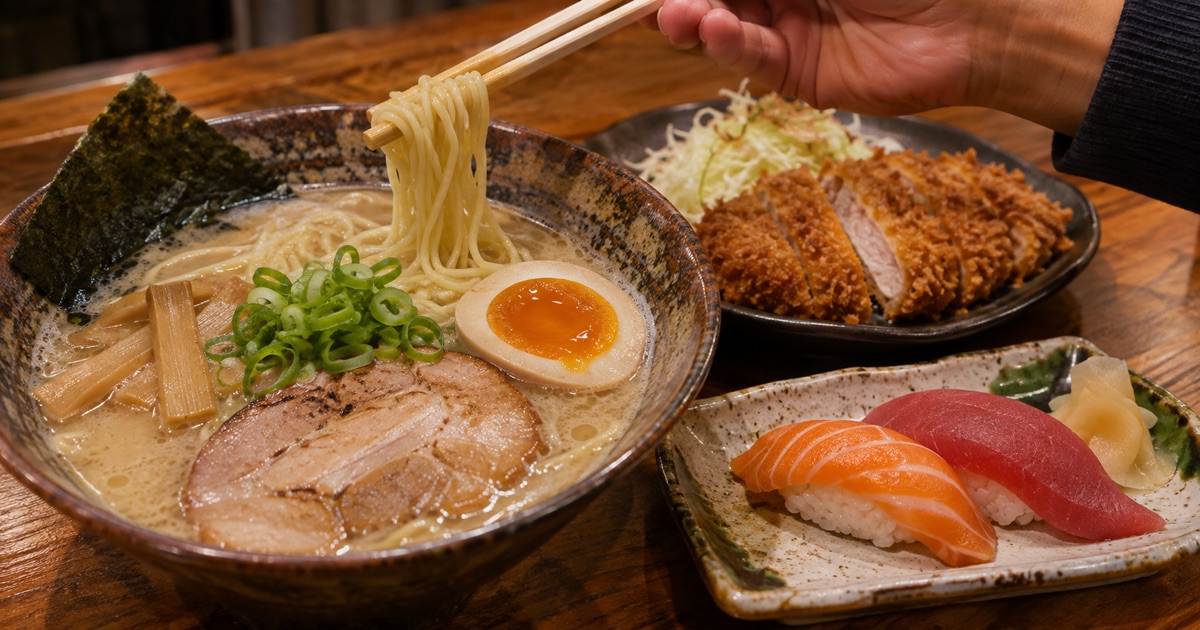
Ramen (ラーメン) consists of Chinese-style wheat noodles served in an intensely flavourful broth, finished with toppings like braised pork belly (chashu / チャーシュー), soft-boiled marinated eggs (ajitsuke tamago / 味付け玉子), bamboo shoots (menma / メンマ), and seaweed (nori / 海苔).
In Shibuya, you will readily encounter rich, milky pork bone broths (tonkotsu / 豚骨) as well as clear, savoury soy sauce broths (shoyu / 醤油). Broths typically simmer for hours to extract gelatin and umami.
- How to eat: Lean over the bowl, lift a small portion of noodles with your chopsticks, and slurp them briskly into your mouth along with a little air. Slurping cools the piping-hot noodles and aerates the broth, heightening the aroma.
- Common allergens: Wheat (gluten), soy, eggs, and pork. Some broths also incorporate ground sesame or peanut paste.
Dipping Noodles: Tsukemen
Tsukemen (つけ麺) separates the noodles and the soup. Chefs rinse thick, chewy wheat noodles in cold water after boiling to give them a springy bite, serving them beside an ultra-concentrated, lukewarm dipping broth often built on pork bone and dried bonito flakes (katsuobushi / 鰹節).
Dip a single mouthful of noodles into the sauce, coat them thoroughly, and eat immediately. When finished with the noodles, you can ask staff for soup-wari (スープ割り), an unsalted dashi broth poured into your remaining bowl to dilute it into a drinkable soup.
Traditional Soba and Udon
For lighter fare, buckwheat noodles (soba / 蕎麦) and thick wheat noodles (udon / うどん) provide clean, dashi-forward comfort. Served either chilled on a bamboo mat (zaru / ざる) with a soy-mirin dipping sauce, or floating in steaming broth with tempura, these dishes digest quickly and suit a lighter lunch.
- Common allergens: Buckwheat is a severe allergen present in soba shops; cross-contamination risks exist if a shop serves both udon and soba boiled in the same vats.
Casual Rice Dishes and Meat
Rice forms the core of traditional eating, and Shibuya excels at modern, protein-heavy variations that satisfy hearty appetites.
Golden Tonkatsu
Tonkatsu (とんかつ) is a thick-cut pork loin (rosu / ロース) or tenderloin (hire / ヒレ) dredged in flour, dipped in beaten egg, coated in coarse, airy panko breadcrumbs, and deep-fried to a crisp golden hue. It is routinely served as part of a set meal (teishoku / 定食) with white rice, miso soup, pickles, and a mountain of shredded raw cabbage.
- How to eat: Drizzle thick, Worcestershire-based tonkatsu sauce over the meat, or dab a bit of spicy yellow mustard (karashi / からし) on the cut edge. Many diners eat the shredded cabbage with sesame dressing alongside the pork to balance the richness.
- Allergens: Wheat, egg, and soy.
Conveyor-Belt Sushi
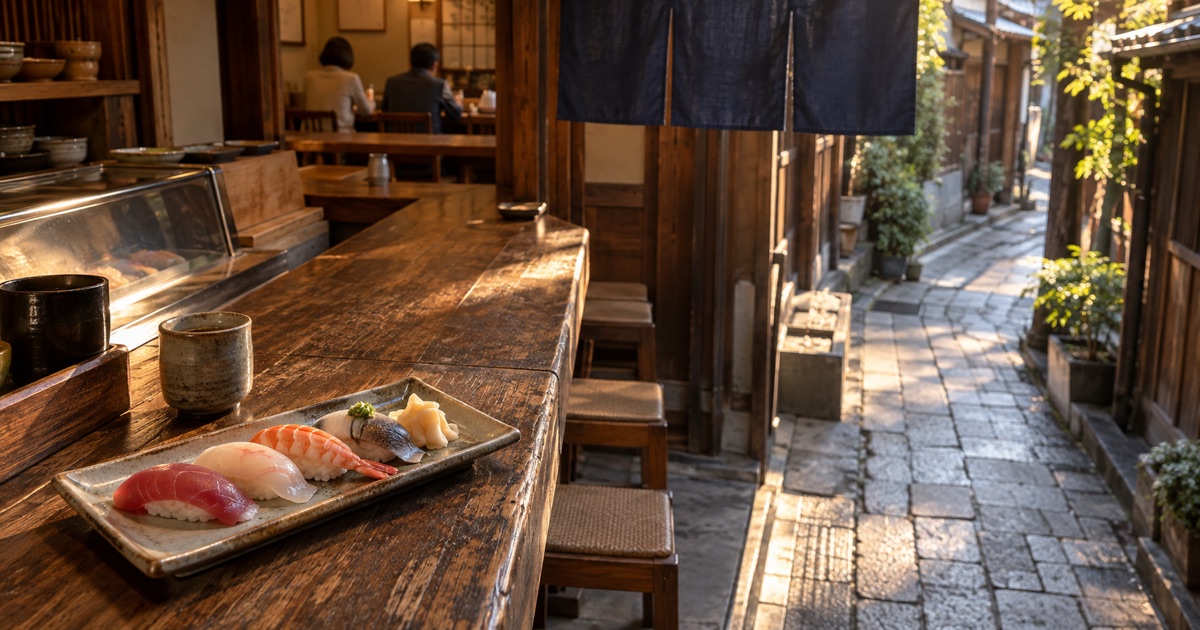
Conveyor-belt sushi (kaitenzushi / 回転寿司) makes raw fish dining approachable and budget-friendly. Diners sit at counters or booths while plates loaded with nigiri (hand-pressed rice pillows with raw seafood) and maki (rolled sushi) travel past on tracks, or arrive directly via miniature express delivery trays after ordering on a tablet.
- How to eat: Dip the fish side, not the rice side, lightly into your soy sauce dish (shoyu-zara / 醤油皿) so the rice grain does not absorb too much liquid and disintegrate. Use pickled ginger (gari / ガリ) between plates to refresh your palate.
- Cost guide: Plates commonly range from around 130 to 600 JPY each depending on the fish cut; confirm current prices on the restaurant's menu board.
- Allergens: Finfish, crustaceans, molluscs, and soy sauce.
Sizzling Okonomiyaki and Monjayaki
Okonomiyaki (お好み焼き) is a thick, savoury pancake containing shredded cabbage, batter, pork slices, and squid, cooked directly on an iron griddle (teppan / 鉄板). Once flipped and cooked through, you brush it with sweet-savoury brown sauce, squeeze Japanese mayonnaise across the top, and sprinkle it with dried green seaweed (aonori / 青のり) and dancing bonito flakes.
In Tokyo, you will also encounter monjayaki (もんじゃ焼き), a local griddle dish with a runny, liquid batter. You chop and sear the ingredients, form them into a circular dam on the griddle, pour the batter into the centre, and scrape it off the metal surface in tiny mouthfuls using a miniature flat spatula (hagashi / はがし).
We are working to carry Japanese craft and everyday culture beyond Japan, by building Japan Towns with local partners.
Read the Japan Town plan →Sweets and Snacks in Shibuya
Beyond savoury meals, Shibuya serves as a hub for innovative desserts and grab-and-go treats popular with local youths and tourists alike.
Japanese Soufflé Pancakes
Famous for their jiggly, cloud-like texture, these pancakes use whipped egg-white meringues folded gently into batter and cooked slowly under steam covers. They arrive stacked high, often topped with whipped cream, seasonal fruit, butter, and maple syrup. They deflate quickly, so eat them immediately upon serving.
Street Treats: Taiyaki and Crêpes
Taiyaki (たい焼き) are fish-shaped waffle cakes baked in double-sided iron moulds, stuffed traditionally with sweet red adzuki bean paste (anko / 餡子), vanilla custard, or chocolate. Japanese street crêpes, heavily associated with neighbouring Harajuku, fold thin pancakes into portable paper cones loaded with sliced strawberries, whipped cream, and soft cheesecake slices.
For broader culinary context, review background materials provided by the Japan National Tourism Organization or the food classification guides maintained by the Ministry of Agriculture, Forestry and Fisheries.
Navigating Shibuya Dining: Tips for First-Timers
Dining in Shibuya moves briskly. Keeping a few practical habits in mind helps prevent missteps:
- Ordering via Vending Machine (Kenbaiky): Casual ramen, soba, and katsu establishments place a ticket machine near the doorway. Insert your cash or transit IC card (such as Suica or Pasmo), select your dish button, take your printed ticket, and hand it to the counter chef. Many machines feature photo buttons or an English language toggle in the upper corner.
- Navigating Depachika: The subterranean levels of major department stores connected to Shibuya Station contain sprawling food halls known as depachika (デパ地下). They sell bento boxes, skewered yakitori chicken, fresh sushi, and intricate pastries. You pay at the register and carry your food out, as department stores generally lack seating in these retail food areas.
- Cash and Mobile Payments: While cashless kiosks and credit cards are widely accepted across newer retail hubs in Shibuya, smaller heritage counters and ticket machines frequently accept cash coins and 1,000-yen notes only. Always carry roughly 3,000 to 5,000 JPY in cash when exploring backstreet eateries.
- Tipping Etiquette: Do not leave tips on the table or counter. Exceptional service is built into the pricing structure, and leaving extra cash behind causes confusion, as staff will chase you down the street to return forgotten money.
- Operating Hours: Lunch services usually run from roughly 11:30 to 14:30, after which independent restaurants frequently close until dinner service starts around 17:30. Department store dining floors usually stay open continuously without an afternoon break, making them reliable options for off-peak dining. Always check the official website of the specific facility for exact current schedules.
FAQ
- Q. What should a first-time visitor eat in Shibuya?
- A. Tonkotsu ramen, belt-conveyor sushi, tonkatsu cutlets, and Japanese soufflé pancakes offer an accessible introduction to local dining.
- Q. How do you order food in Shibuya if you do not speak Japanese?
- A. Many casual venues use electronic ticket vending machines or multilingual touchscreens with photos, allowing you to pay and order without speaking.
- Q. What allergens are commonly found in Shibuya's popular foods?
- A. Soy, wheat (gluten), sesame, shellfish, eggs, and pork are ubiquitous across ramen broths, frying batters, and dipping sauces.
Cite or share this article
Copy the link below. If you quote this article, please link to this page as the source.