Nara Food Guide: Iconic Dishes and What to Eat in Nara
Key takeaways
- Nara's cuisine features ancient heritage foods like kakinoha-zushi, miwa somen, and chagayu tea porridge.
- Most iconic local dishes are found within walking distance of Kintetsu-Nara and JR Nara Stations.
- Always check allergen labels or ask staff, as soy sauce, wheat, and fish dashi are widely used across dishes.
Nara food is defined by centuries of history as Japan's ancient capital, featuring rustic heritage specialties like persimmon-leaf sushi (kakinoha-zushi), delicate miwa somen wheat noodles, and roasted green tea porridge (chagayu). These regional dishes highlight local agricultural traditions, fermentation methods, and the Buddhist culinary influences that shaped early Japanese cooking.
Whether visiting Nara Park (奈良公園) for a day trip or staying overnight, exploring the local food culture gives you a direct taste of the Yamato region's culinary roots.
The Pillars of Nara Cuisine
Nara served as the imperial capital in the 8th century, long before Kyoto or Tokyo. Because the region is landlocked and surrounded by mountains, historical cooks relied on clever preservation techniques, fermented seasonings, and temple-influenced vegetarian preparations. Today, these ancient staples remain central to everyday dining throughout the prefecture.
Kakinoha-Zushi: Persimmon Leaf Sushi
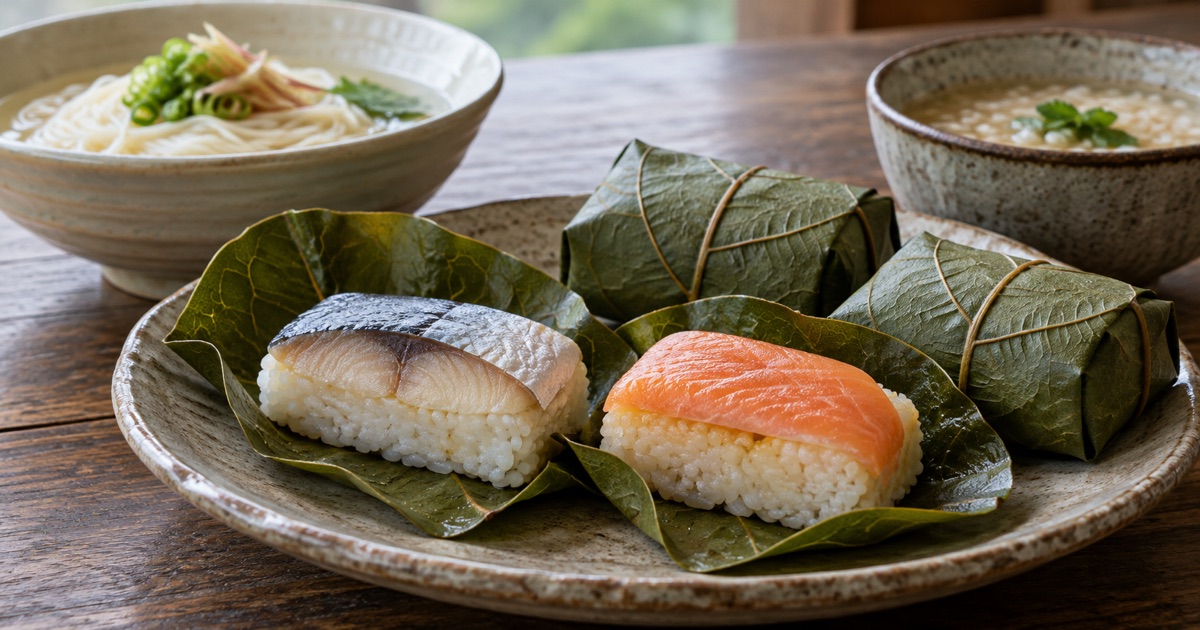
Kakinoha-zushi (柿の葉寿司) is Nara’s most famous culinary specialty. It consists of bite-sized blocks of vinegared sushi rice topped with salted or cured fish—traditionally mackerel (saba, 鯖) or salmon (sake, 鮭)—and tightly wrapped in a wild persimmon leaf.
Historically, coastal fishermen in Wakayama packed fresh mackerel in salt and carried it over mountain trails into landlocked Nara. Local cooks wrapped the fish and rice in persimmon leaves, which naturally contain tannins with antimicrobial properties, keeping the food fresh for days without refrigeration.
The wrapping presses gentle floral, woody aromas into the rice while mellowing the oiliness of the fish.
How to eat it:
- Pick up the parcel by hand.
- Unfold and discard the persimmon leaf completely (do not eat the leaf).
- Eat the pressed sushi in one or two bites. Soy sauce is rarely necessary because the fish is already salted and seasoned.
Miwa Somen: Ultra-Thin Hand-Stretched Noodles
Miwa somen (三輪素麺) originated in the Miwa area of Sakurai City in Nara over 1,200 years ago, making it one of Japan's oldest noodle traditions. These wheat-flour noodles are pulled and stretched by hand until they are thinner than angel hair pasta, then aged in wooden storehouses to improve their texture.
Despite their delicate appearance, well-made miwa somen retain a firm, springy bite (koshi) when boiled.
- Cold style (Hiyashi Somen): Served chilled over ice with a light soy and dashi dipping broth (tsuyu), grated ginger, and chopped scallions.
- Warm style (Nyumen, にゅうめん): Served in a piping-hot, clear dashi broth, often garnished with shiitake mushrooms, greens, or yuzu peel. This preparation originated in Nara and is popular in colder months.
Chagayu: Roasted Green Tea Porridge
Known affectionately to locals as o-bloop or simply chagayu (茶粥), this roasted green tea porridge has been eaten in Nara homes and Buddhist temples for over a millennium.
Unlike heavy Western porridges or thick Chinese congee, Nara chagayu has a light, watery broth. White rice is simmered in freshly brewed bancha or hojicha (roasted green tea) until tender, producing a nutty, toasted fragrance. It is traditionally served alongside salty pickles (tsukemono), stewed seasonal vegetables, or Nara-style preserved vegetables (narazuke).
Narazuke: Traditional Sake-Lees Pickles
Narazuke (奈良漬) are traditional Japanese pickles made by curing gourds, cucumbers, ginger, or melons in sake kasu (the lees left over from brewing sake).
The pickling process takes anywhere from one to three years, with the vegetables being transferred to fresh sake lees multiple times. The finished pickles turn a deep, translucent amber color. They have an intense aroma, a sweet and savory bite, and a noticeable trace of alcohol. Narazuke is commonly served as a palate cleanser alongside rice, green tea, or grilled meats.
Street Food and Snacks Around Nara Park
If you are exploring the temple districts near Todai-ji (東大寺) and Kofuku-ji (興福寺), several regional snacks are easy to enjoy on the go.
Yomogi Mochi: Pounded Mugwort Rice Cakes
Freshly pounded yomogi mochi (蓬餅) is one of the most popular treats near Kintetsu-Nara Station. The mochi dough is infused with wild Japanese mugwort (yomogi), giving it a vibrant dark green color and a herbal, grassy aroma.
The soft, warm rice cake is filled with sweetened red bean paste (anko) and dusted with toasted soybean flour (kinako). Watching artisans pound the steaming dough at high speeds with massive wooden mallets is a common sight along local shopping arcades.
Shika Senbei: Deer Crackers (Not for Humans)
Walking through Nara Park, you will see vendors selling round, tan crackers tied with paper ribbons for roughly 200 yen. These are shika senbei (鹿せんべい), made strictly for feeding the free-roaming wild sika deer. They consist of plain wheat flour and rice bran with no added salt or sugar. While technically safe if swallowed accidentally, they are dry, completely unseasoned, and intended solely for the park's deer population.

We are working to carry Japanese craft and everyday culture beyond Japan, by building Japan Towns with local partners.
Read the Japan Town plan →Regional Hot Pots and Hearty Fare
Beyond quick bites, Nara has several hearty local specialties served in traditional sit-down restaurants.
Asuka Nabe
Originating in the Asuka region of Nara, Asuka nabe (飛鳥鍋) is a warming hot pot dish dating back to the introduction of dairy cows from mainland Asia in the 7th century. Chicken and seasonal vegetables are simmered in a rich, creamy broth made from dashi, milk, and white miso. The combination yields a mild, comforting flavor profile distinct from typical soy- or dashi-based hot pots.
Yamato Beef and Local Pork
Nara produces high-grade domestic wagyu known as Yamato ushi (大和牛), characterized by fine marbling and a clean, tender finish. You will find it served as sukiyaki, shabu-shabu, or grilled over charcoal. The region also produces Yamato pork, valued for its sweet fat and firm texture, frequently featured in local tonkatsu shops and izakaya.
Practical Dining Tips for Visitors
Where to Find Local Food
The highest concentration of restaurants and food stalls is clustered around two main transport hubs:
- Kintetsu-Nara Station (近鉄奈良駅): Steps away from the covered Higashimuki (東向商店街) and Mochiidono shopping arcades, offering mochi stalls, casual noodle spots, and souvenir shops selling boxed kakinoha-zushi.
- JR Nara Station (JR奈良駅): Connects to Sanjo-dori (三条通り), the main avenue leading up toward Nara Park, lined with both traditional eateries and modern cafes.
Getting There
Nara is an easy half-day or full-day culinary excursion from neighboring Kansai cities:
- From Kyoto Station: Direct express trains on the Kintetsu Line or the JR Nara Line take roughly 35 to 50 minutes.
- From Osaka (Namba or Tennoji): Direct trains take roughly 35 to 45 minutes via the Kintetsu Nara Line or JR Yamatoji Line.
Rail passes such as the Japan Rail Pass or regional Kansai passes can often be used on JR routes. For broader regional itineraries, consult resources on the Japan National Tourism Organization website.
Ordering and Etiquette
- Cash is still useful: While major station stores and department stores accept credit cards and IC cards (like Suica or Icoca), smaller traditional sweet shops, tea houses, and street stalls may only take Japanese yen cash.
- Shop closures: Many traditional shops close relatively early, around late afternoon (between 17:00 and 18:00), once tourist traffic leaves Nara Park. For evening dining, plan ahead and verify operating hours in advance.
- Street trash: Public trash bins are rare around Nara Park to prevent deer from eating plastic. Always carry a small plastic bag in your daypack to pack out your skewers, wrappers, and drink containers.
Dietary and Allergen Notes
- Gluten: Somen noodles are made from wheat flour. Most soy-sauce-based dipping broths and simmered dishes also contain wheat.
- Vegetarian and Vegan: Dishes that look meatless (such as nyumen or hot pots) almost universally contain bonito flakes (katsuobushi) or fish powder in the dashi base. Pure shojin ryori (Buddhist temple cuisine) is the safest plant-based option in the area.
- Alcohol: Because narazuke pickles are cured directly in sake lees, they contain residual alcohol and have a sharp, fermented aroma. Those avoiding alcohol should skip this garnish.
For verified nutritional and ingredient data regarding traditional staple foods, refer to the MEXT Food Composition Database.
FAQ
- Q. Do you eat the persimmon leaf on kakinoha-zushi?
- A. No, you peel off and discard the persimmon leaf before eating the sushi inside. The leaf preserves and flavors the pressed fish and rice, but it is too tough and bitter to chew.
- Q. Is Nara food suitable for vegetarians?
- A. Some dishes like yomogi mochi and certain chagayu preparations are plant-based, but most savory broths and noodle dishes rely on fish-based dashi. Always confirm ingredients before ordering.
- Q. How far is Nara from Kyoto or Osaka for a food trip?
- A. Express trains run directly from central Kyoto or Osaka to Nara in roughly 35 to 50 minutes, making Nara an easy culinary day trip.
Cite or share this article
Copy the link below. If you quote this article, please link to this page as the source.