What to Eat in Sapporo Station: Hokkaido Food Guide
Key takeaways
- Top meals inside or connected to Sapporo Station include miso ramen, soup curry, fresh kaisendon, and jingisukan.
- Department store basement food halls (depachika) offer bentos, Hokkaido dairy sweets, and quick takeout meals.
- Most dining floors operate roughly between 11:00 and 22:00, with peak lunch and dinner lines forming during rush hours.
When deciding what to eat in Sapporo Station (札幌駅), focus on Hokkaido's regional culinary staples: rich miso ramen, aromatic soup curry, fresh seafood rice bowls (kaisendon), and grilled mutton (jingisukan). The sprawling complex—encompassing station concourses, connected department stores, and vast underground shopping avenues—functions as one of the premier food hubs in northern Japan, allowing travellers to sample the prefecture's signature dishes without stepping out into winter snow or summer rain.
For a first-time visitor arriving via the JR line from New Chitose Airport (新千歳空港), navigating the sheer volume of choices can feel overwhelming. Understanding the key local dishes, where they are typically clustered, and how to order them makes dining at Sapporo Station straightforward and efficient.
Sapporo Miso Ramen: The Quintessential Station Bowl
Ramen is arguably the most accessible meal inside the Sapporo Station transit hub. While ramen exists across all of Japan, Sapporo is celebrated as the birthplace of miso ramen (miso ramen / 味噌ラーメン).
What Makes It Unique
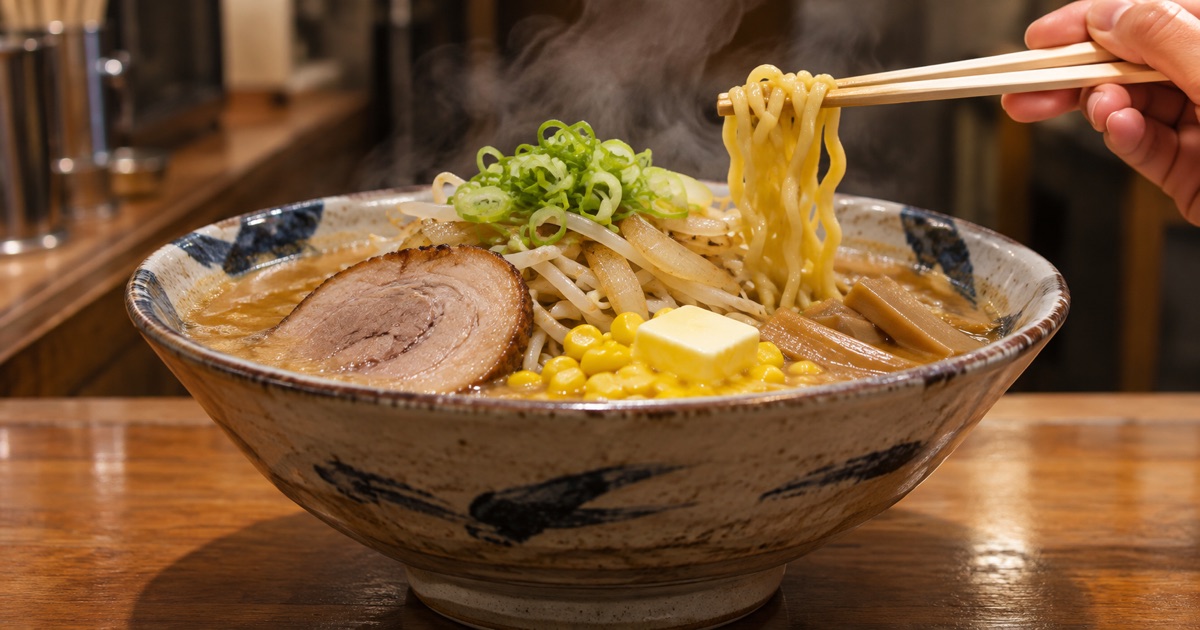
Unlike lighter soy sauce (shoyu) or sea salt (shio) broths common in Honshu, Sapporo miso ramen features a dense, warming soup base. Chefs typically stir-fry minced pork, garlic, bean sprouts, and onions in a flaming wok before adding a rich broth made from pork or chicken bones, finishing it with robust, fermented miso paste. The soup is ladled over thick, yellow, curly noodles with high moisture content, designed to hold up against the piping-hot liquid. A thin layer of rendered lard often floats on top, an intentional culinary design that insulates the soup so it stays hot down to the final spoonful during freezing northern winters.
Toppings usually include:
- Sliced braised pork belly (chashu / チャーシュー)
- Fermented bamboo shoots (menma / メンマ)
- Finely sliced green onions (negi / ネギ)
- Ground pork and wok-charred bean sprouts
Many station-area venues also offer optional tourist favorites, such as sweet corn and a pat of rich Hokkaido butter melted directly into the broth.
How to Order and Eat It
Many ramen shops located in transit corridors use a ticket vending machine (kenbaiki / 券売機) placed near the entrance. Insert your cash or tap an IC card (such as Kitaca or Suica), select your bowl, retrieve your printed ticket and change, and hand the ticket to the counter staff.
Eat the dish while it is steaming hot. It is entirely acceptable—and expected—to slurp the noodles, as taking in air helps cool the hot noodles while releasing the complex aromatics of the soup. Be mindful that ramen contains common allergens including wheat, soy, sesame, and occasionally dairy or shellfish if seafood stock is blended into the base.
Hokkaido Soup Curry: Light Broth with Deep Spices
Originating in Sapporo during the 1970s, soup curry (supu kare / スープカレー) differs dramatically from thick Japanese curry roux. It is an aromatic, medicinal-style spice broth paired with deeply caramelized vegetables and tender meats.
The Anatomy of the Dish
Soup curry draws inspiration from South Asian spices, Chinese herbal medicine traditions, and local Hokkaido produce. The broth is thin, watery, and complex, infused with spices such as cumin, coriander, turmeric, cardamom, and clove.
The dish is instantly recognizable by its presentation:
- Proteins: The classic option is a whole, bone-in chicken leg braised until the meat falls off the bone, though braised pork belly (kakuni) and seafood are also popular.
- Vegetables: Large, chunky vegetables are flash-fried (suage) without batter before being placed in the bowl. This locks in sweetness and vibrant color. Typical vegetables include pumpkin, lotus root, potatoes, carrots, bell peppers, eggplant, and broccoli.
Ordering Steps
Ordering soup curry typically involves three or four distinct choices:
- Choose your base: Select your protein (chicken, pork, vegetable, or seafood) and broth style (standard, coconut-enriched, or shrimp-based).
- Choose your spice level: Menus usually offer a scale from 0 (mild) to 10+ (extremely spicy). First-time visitors should start around level 2 or 3 for moderate warmth.
- Choose your rice portion: Select small (shomori), medium (chumori), or large (omori). Some diners opt to add melted cheese on top of the rice.
To eat, do not dump your entire bowl of rice into the soup. Instead, take a spoonful of rice, dip it into the soup broth to soak up the liquid, and eat it together with a bite of vegetable or tender chicken.
We are working to carry Japanese craft and everyday culture beyond Japan, by building Japan Towns with local partners.
Read the Japan Town plan →Kaisendon: Fresh Northern Seafood Bowls
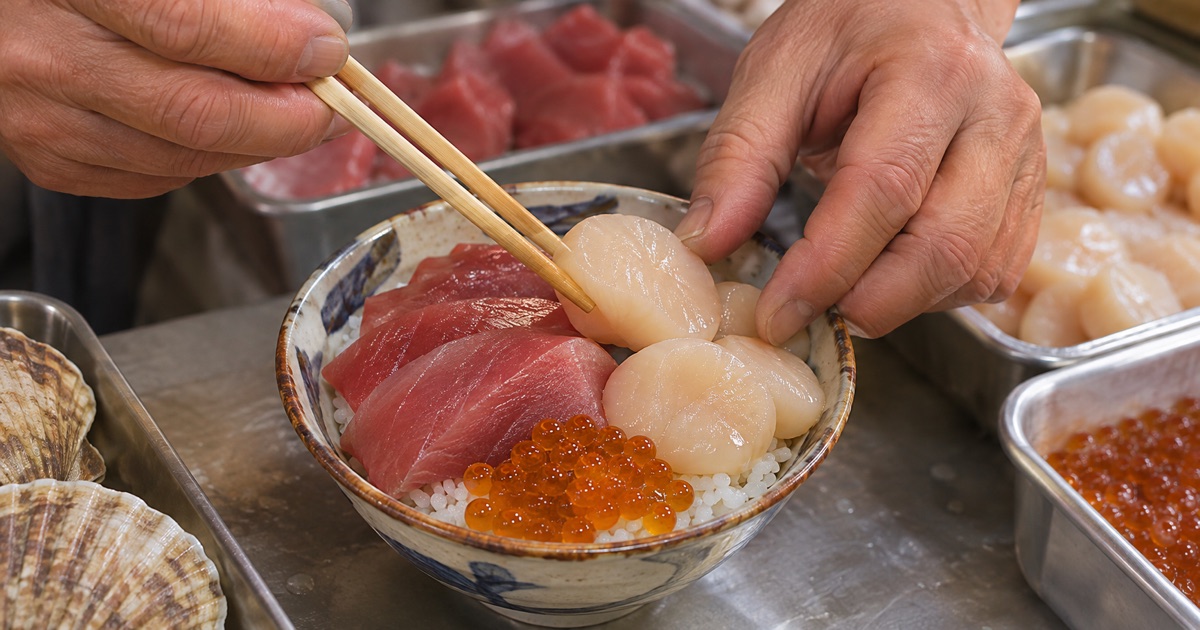
Hokkaido’s cold surrounding waters produce exceptional seafood, and Sapporo Station serves as a central clearing point for morning catches. A seafood bowl (kaisendon / 海鮮丼) provides an efficient way to sample multiple varieties of raw fish and shellfish over seasoned sushi rice.
Key Seasonal Ingredients
- Sea Urchin (Uni / ウニ): Sweet and creamy, free from bitter preservatives when fresh. Peak season runs through summer, though varieties are available year-round.
- Salmon Roe (Ikura / いくら): Cured in soy sauce and sake, offering a pop of briny richness.
- Scallops (Hotate / ホタテ): Plump, tender, and naturally sweet, harvested from coastal bays.
- Crab (Kani / カニ): Featuring horsehair crab (kegani), king crab (tarabagani), or snow crab (zuwaigani).
For official overviews of Japanese regional food cultures and seasonal ingredients, refer to the Ministry of Agriculture, Forestry and Fisheries.
How to Eat Kaisendon Correctly
A common error is pouring soy sauce straight from the bottle all over the bowl, which makes the delicate sushi rice soggy and overpowers mild seafood. Instead, pour a small splash of soy sauce into the small side dish provided, dissolve a dab of wasabi into it, and lightly drizzle small amounts over specific pieces of fish as you eat, or gently dip individual slices before returning them to your rice.
Jingisukan: Sizzling Grilled Mutton
Named after Genghis Khan, jingisukan (ジンギスカン) is Hokkaido's quintessential soul food. It consists of mutton or lamb grilled alongside sliced vegetables on a specialized, convex iron skillet with ridges radiating downward from the center.
The Cooking Process
The dome-shaped grill is heated over charcoal or gas, and a cube of sheep fat is rubbed across the metal to season it. Thick slices of onions, cabbage, and bean sprouts are piled around the lower perimeter of the dome, while sliced lamb is laid across the higher central ridge. As the meat cooks, savory juices and rendered fat run down the sloped metal, seasoning and caramelizing the vegetables below.
The meat is typically eaten dipped into a savory, citrusy soy sauce blended with grated apple, onion, and garlic. It is paired with plain white rice and cold drinks. Note that ventilation systems in casual grill shops work hard, but clothing can absorb the aroma of grilled lamb fat; consider using the plastic bags often provided by establishments to store your outerwear.
Station Hub Layout: Where Dining Options Cluster
Sapporo Station connects to several shopping towers, subterranean malls, and department stores. Dining zones are generally arranged as follows:
- Department Store Upper Floors (Restaurant Floors): Usually located on the 8th to 10th floors of interconnected station retail towers (such as Daimaru or Stellar Place). These feature sit-down establishments serving sushi, jingisukan, tonkatsu, and soup curry. They offer comfortable seating and clear plastic display models (sampuru) out front, making selection easy for non-Japanese speakers.
- Underground Concourse (Chika-gai): The vast subterranean walkways—including avenues heading toward Odori—host faster, commuter-oriented fare, including counter ramen, curry stands, soba noodle shops, and bakery cafes.
- Depachika (Basement Food Halls): Located in the B1 and B2 basements of connected department stores. These spaces sell high-end prepared bentos, fresh sashimi trays, steamed pork buns, and celebrated Hokkaido dairy pastries (such as cheesecakes, butter sandwiches, and soft-serve ice cream). This is an ideal destination for travellers catching a long-distance JR train toward Hakodate or Asahikawa who need a takeaway meal.
For detailed transportation guides and general travel updates, consult the Japan National Tourism Organization.
Practical Tips for Dining at Sapporo Station
- Peak Hours: Lunch rush runs roughly from 11:30 to 13:30, and dinner lines peak between 18:00 and 20:00. Popular ramen and soup curry spots regularly generate 30- to 60-minute queues during these windows. Arrive around 11:00 or mid-afternoon (14:30 to 17:00) to minimize waiting.
- Luggage Management: Narrow noodle counters and bustling grill shops have minimal floor space. Avoid wheeling large suitcases into small dining establishments; utilize the coin lockers located throughout Sapporo Station concourses before queueing for food.
- Operating Hours: Restaurant floors generally open around 11:00 and take last orders around 21:00 to 21:30, closing by 22:00. Basement food halls close earlier, typically around 20:00. Operating schedules fluctuate on public holidays, so check official building directories on the day of your visit.
- Payment: Credit cards, transit IC cards, and mobile payments are widely supported across major station complexes, but keeping several thousand yen in cash remains prudent for independent vending-machine stalls.
FAQ
- Q. What is the most famous food to eat in Sapporo Station?
- A. Sapporo miso ramen is the most iconic option, featuring rich pork broth, thick wavy noodles, stir-fried vegetables, and savory fermented soybean paste.
- Q. Can solo diners easily eat around Sapporo Station?
- A. Yes, ramen counters, curry shops, and standing sushi bars in and around the station concourses cater heavily to solo commuters and travellers.
- Q. Are credit cards and IC cards accepted at Sapporo Station restaurants?
- A. Major credit cards and transit IC cards like Suica or Kitaca are widely accepted across station complex restaurants, though ticket vending machines at small noodle shops occasionally require cash.
Cite or share this article
Copy the link below. If you quote this article, please link to this page as the source.