What to Eat in Yokosuka: A Complete Local Food Guide
Key takeaways
- Yokosuka Navy Curry, Navy Burgers, and Cherry Cheesecake form the city's three signature comfort foods.
- Fresh local seafood, including Miura tuna and local whitebait (shirasu), highlights the coastal side of Yokosuka dining.
- Most specialty dishes feature standard meal sets, making ordering straightforward even without Japanese reading skills.
When deciding what to eat in Yokosuka, the essential dishes to seek out are Yokosuka Navy Curry, the hearty Yokosuka Navy Burger, and Navy Cherry Cheesecake. These historic military-influenced specialties, alongside fresh seafood caught around Tokyo Bay and the Miura Peninsula, define the city's distinctive food culture.
Located in Kanagawa Prefecture, Yokosuka (横須賀) has served as a strategic naval port for well over a century. This military history directly shaped its dining scene, blending Western dining staples with Japanese homestyle cooking. Whether visiting for a day trip from central Tokyo or exploring Kanagawa's coastline, this guide covers what to expect from the city's culinary icons.
The Big Three: Yokosuka's Military Heritage Foods
Yokosuka's official promotional heritage meals originate from navy recipes, recognized under strict preparation guidelines by local commerce groups. Visitors will see these three items prominently featured throughout the central harbor areas.
Yokosuka Navy Curry (Yokosuka Kaigun Kare)
Yokosuka Navy Curry (横須賀海軍カレー) traces its history back to the Meiji period (1868–1912). The Imperial Japanese Navy adopted curry from the British Royal Navy to combat nutritional deficiencies among sailors, thickening it with wheat flour so it would not spill in rough seas.
Traditional Yokosuka Navy Curry follows specific standards based on an authentic 1908 naval cookbook. The sauce is a rich, comforting, mildly spiced roux containing beef or chicken, along with large-cut carrots, onions, and potatoes.
By local tradition, restaurants serve Yokosuka Navy Curry as a balanced set meal:
- A plate of curry and Japanese short-grain white rice
- A fresh side salad dressed with a light vinaigrette
- A small glass of plain cow's milk, intended to aid digestion and balance spice
The spice level is universally approachable, leaning sweet and savory rather than intensely hot. For official travel details and regional heritage overviews, consult the Japan National Tourism Organization.
Yokosuka Navy Burger
In 2008, the Commander of the United States Fleet Activities Yokosuka gifted an authentic American burger recipe to the mayor of Yokosuka to foster friendship between the base and the city. This gave birth to the official Yokosuka Navy Burger (ヨコスカネイビーバーガー).
Unlike many Japanese hamburgers that blend ground pork and beef with breadcrumb binders, the Navy Burger uses a dense, unadorned patty made from 100 percent lean ground beef. Seasoning during cooking is kept to basic salt and pepper.
The burger arrives on a substantial, toasted bun with raw onion slices, crisp lettuce, and thick tomato wedges. Diners are expected to season the burger themselves using table condiments—primarily yellow mustard, ketchup, and mayonnaise—to suit their personal taste. Due to its enormous size, wrapping the burger in paper and pressing down slightly before eating is standard practice.
Yokosuka Cherry Cheesecake
To complement the savory burger, the U.S. Navy later shared a recipe for traditional New York-style cheesecake, known locally as Yokosuka Cherry Cheesecake (チェリーチーズケーキ).
This dessert is notably heavier, denser, and richer than typical Japanese "soufflé" cheesecakes. It features a dense cream cheese filling baked over a crushed graham-cracker or biscuit crust, topped with a tart red cherry compote. The acidity of the fruit cuts through the high-fat cheese, making it a natural finish to a heavy meal.
Local Coastal Flavors: Seafood of the Miura Peninsula
Beyond modern military imports, Yokosuka sits on a peninsula surrounded by Sagami Bay and Tokyo Bay. Traditional Japanese fare in the area centers on coastal bounty and seasonal produce.
Shirasu (Whitebait)
Fresh shirasu (シラス), or young sardine fry, is a regional staple across coastal Kanagawa. Depending on the morning's catch, diners can enjoy it in two forms:
- Kama-age Shirasu (Boiled): Lightly salted and boiled, offering a fluffy, cloud-like texture over hot rice.
- Nama Shirasu (Raw): Translucent and sweet with a tender bite, served over rice with grated ginger and soy sauce. Raw whitebait is highly seasonal and subject to weather and fishing conditions.
Misaki Tuna (Maguro)
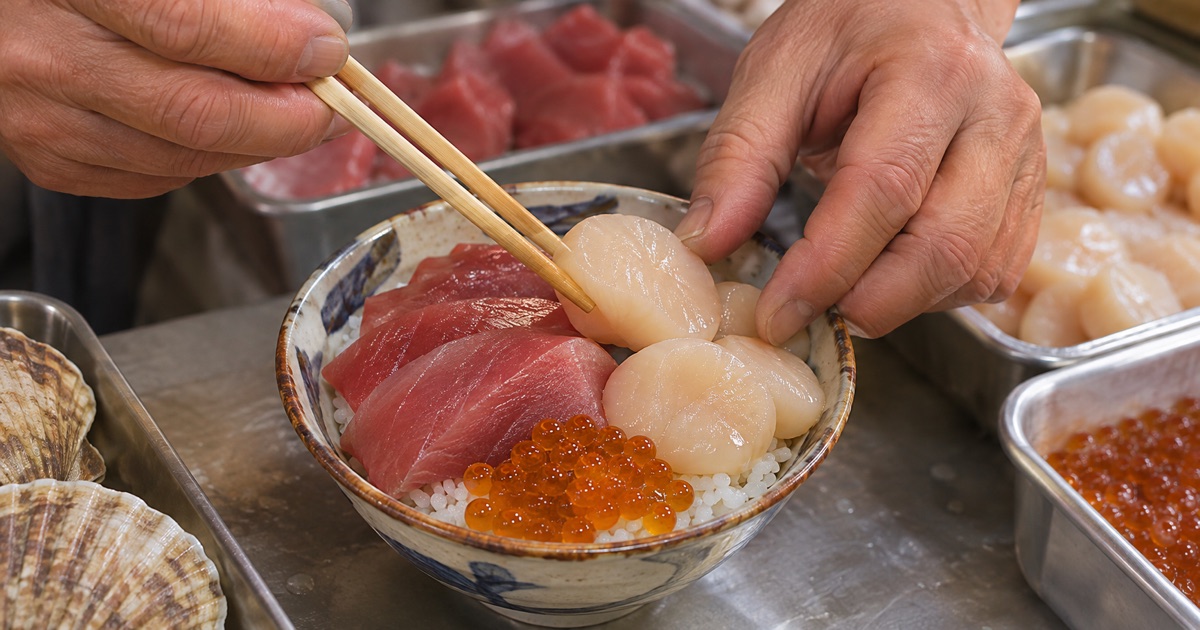
While Misaki Port sits at the southern tip of the neighboring city of Miura, Yokosuka benefits directly from this world-class landing hub for Pacific bluefin and bigeye tuna (マグロ, maguro). Local diners and fish markets feature tuna rice bowls (magurodon) that showcase lean red meat (akami), medium fatty cuts (chutoro), and minced tuna with green onions (negitoro).

We are working to carry Japanese craft and everyday culture beyond Japan, by building Japan Towns with local partners.
Read the Japan Town plan →How to Order and Eat in Yokosuka
Navigating meals in Yokosuka is very accessible, though basic practical awareness ensures a smooth dining experience.
Ordering Without Japanese Reading Skills
Most restaurants serving the signature "Big Three" dishes are clustered around Yokosuka-Chuo Station (横須賀中央駅) on the Keikyu Main Line and JR Yokosuka Station (横須賀駅).
Many establishments feature plastic food displays in front windows or laminated menus with full-color photography. It is entirely acceptable to point to a picture and say "kore o kudasai" (this one, please).
Payment is increasingly modern, though travelers should still carry cash. While major credit cards and IC transport cards (such as Suica or Pasmo) are widely accepted near the bases and large stations, smaller seaside spots often remain cash-only.
Portion Sizes and Sharing
Unlike typical Japanese restaurant portions, which skew modest, Yokosuka Navy Burgers are designed after classic American military mess hall specifications. A standard single burger often weighs upwards of 200 to 300 grams (roughly half a pound) for the meat patty alone, not including thick-cut potato wedges.
If traveling as a pair with lighter appetites, consider splitting one burger and ordering an additional side or beverage, though you should verify that the restaurant does not enforce a strict "one meal per customer" minimum policy.
Practical Travel Information for Diners
Yokosuka makes an easy excursion from Tokyo or Yokohama, but timing and travel habits affect your options.
- Transit Times: Express trains on the Keikyu Main Line take roughly 45 to 50 minutes from Shinagawa Station in Tokyo to Yokosuka-Chuo Station. The JR Yokosuka Line takes approximately 70 minutes from Tokyo Station to JR Yokosuka Station.
- Operating Hours: Lunch generally runs from around 11:00 to 14:30, while dinner service typically spans 17:00 to 21:00. Coastal seafood shops close early if the day's catch sells out. Always check the official website or business listing of your destination for current operating schedules, as hours shift without advance notice.
- Crowds: Establishments serving Navy Curry and Navy Burgers frequently draw heavy domestic tourist lines on weekends and national holidays. Aim to arrive 15 minutes before lunch opening to reduce wait times.
Ingredients, Allergens, and Dietary Notes
Those with dietary preferences or food allergies should note the specific components common to Yokosuka's signature dishes:
- Gluten: Yokosuka Navy Curry relies on a roux made by toasting wheat flour with butter and curry powder. Navy Burgers utilize wheat flour buns.
- Meat & Animal Stocks: Navy Curry almost always contains beef tallow, pork stock, or chicken broth, making it unsuitable for vegetarians or vegans even when vegetable-heavy.
- Dairy: Cow's milk is an explicit requirement of official Navy Curry sets, and butter forms the base of the roux. Cheesecake contains heavy cream and cream cheese.
For comprehensive breakdowns of Japanese agricultural standards and traditional ingredient origins, visit the official site of the Ministry of Agriculture, Forestry and Fisheries.
Summary
Dining in Yokosuka offers an engaging look into Japan's modern naval history. By balancing hearty comfort staples like Navy Curry and Navy Burgers with the delicate freshness of local Tokyo Bay seafood, a day spent eating in this harbor town provides flavors found nowhere else in Japan.
FAQ
- Q. What is the most famous food to eat in Yokosuka?
- A. Yokosuka Navy Curry (Yokosuka Kaigun Kare) is the city's defining dish, celebrated for its historic maritime roots and rich flavor.
- Q. Do Navy Burgers and Navy Curry contain common allergens?
- A. Yes. Both dishes typically contain wheat (gluten), dairy (milk and butter), and soy, with some curries containing beef, chicken, or pork stocks.
- Q. Where do the military food traditions in Yokosuka come from?
- A. They stem from the Imperial Japanese Navy adapting British naval stews in the Meiji era, and post-war culinary exchanges with the United States Navy.
Cite or share this article
Copy the link below. If you quote this article, please link to this page as the source.