Chiyoda Halal Food Guide: Muslim-Friendly Dining
Key takeaways
- Chiyoda offers diverse Muslim-friendly dining near Tokyo Station, Marunouchi, and Akihabara.
- Traditional Japanese seasonings like mirin and soy sauce often contain alcohol, requiring careful checks.
- Vegetarian, seafood, and certified halal eateries provide safe dining alternatives across the ward.
Finding halal food in Chiyoda (千代田区) is straightforward if you understand the basics of Japanese food preparation and know which local hubs cater to Muslim visitors. While standard Japanese cuisine frequently uses mirin (sweet cooking wine) and alcohol-based soy sauces, Chiyoda—home to major travel junctions like Tokyo Station (東京駅) and Akihabara (秋葉原)—features an increasing number of certified halal restaurants, Muslim-friendly eateries, and naturally compliant dishes.
Navigating dietary requirements in Japan requires a basic grasp of local ingredients, common hidden additives, and how to communicate food restrictions without speaking fluent Japanese.
Understanding Japanese Ingredients and Halal Considerations
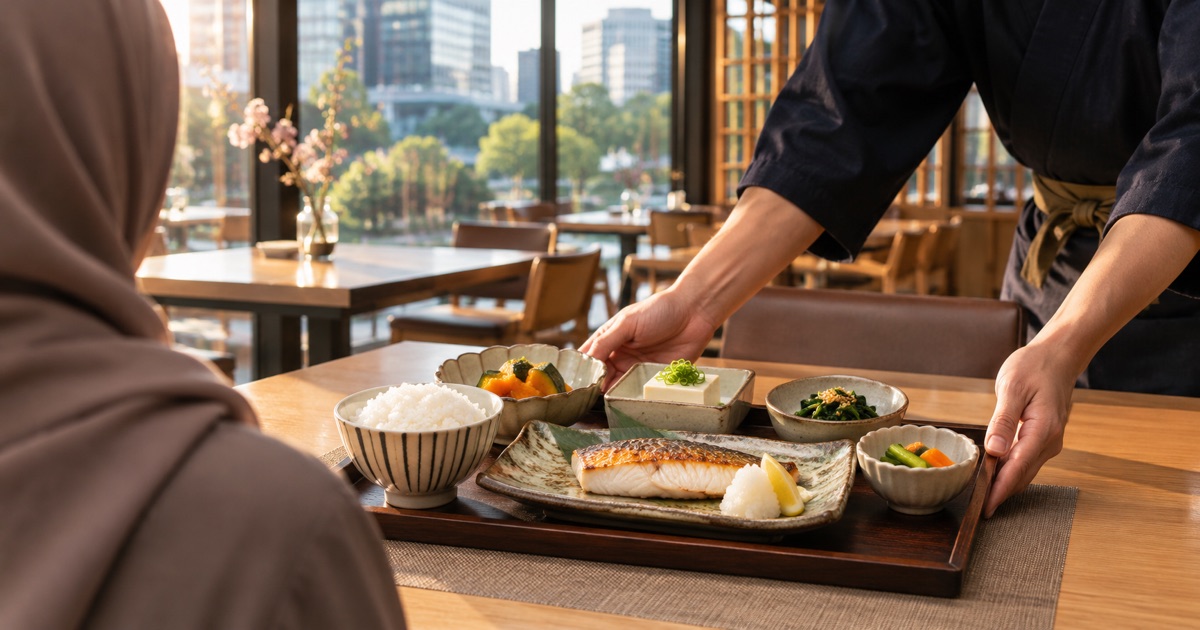
Traditional washoku (和食, Japanese cuisine) emphasizes fresh seafood, seasonal vegetables, and rice. While these core ingredients are permissible, common seasonings and preparation methods can introduce non-halal elements.
The Challenge of Traditional Seasonings
Japanese cooking relies heavily on a foundational flavor profile known as sa-shi-su-se-so (sugar, salt, vinegar, soy sauce, and miso). Among these and related pantry items, three specific ingredients pose challenges for halal dining:
- Mirin (みりん): A sweet rice wine containing roughly 14% alcohol, commonly used to glaze fish, season broths, and tenderize meat.
- Ryorishu (料理酒): Cooking sake containing salt and around 13–14% alcohol, used to eliminate gamey odors from meats and seafood.
- Shoyu (醤油 / Soy sauce): Naturally brewed soy sauce can develop trace amounts of alcohol (typically 1–2%) during fermentation, though non-alcoholic or certified halal soy sauces exist.
Animal By-Products and Broths
Another critical aspect involves soup stocks (dashi, 出汁). Traditional dashi uses dried kelp (kombu, 昆布) or bonito flakes (katsuobushi, 鰹節), both of which are derived from plant or seafood sources. However, many modern kitchens supplement their broths with commercially manufactured granules or bouillons that contain chicken extract, pork fat (lard, ラード), or meat-derived emulsifiers and gelatin.
To review foundational Japanese agricultural practices and standard food guidelines, travelers can consult the Ministry of Agriculture, Forestry and Fisheries.
Navigating Food Options in Chiyoda
Chiyoda is the political and historical heart of Tokyo, encompassing the Imperial Palace, high-end commercial districts, and major transit corridors. Travelers arriving via Narita or Haneda airports often transit through Chiyoda's rail hubs, making it a primary destination for dining.
Tokyo Station and Marunouchi
Tokyo Station is one of Japan's busiest railway hubs, connecting numerous JR lines, the Tokyo Metro, and the Shinkansen high-speed rail network. The surrounding Marunouchi (丸の内) and Otemachi (大手町) business districts cater to an international clientele. Within the station basements and adjoining shopping complexes, diners can locate:
- Halal-Certified Ramen: Ramen shops using dedicated kitchens, poultry- or seafood-based broths, and alcohol-free seasonings.
- Seafood and Sushi Counters: Simple sushi (nigirizushi, 握り寿司) and sashimi sets, where diners can request to omit sweet mirin-brushed glazes (nikiri shoyu).
- Indian and Middle Eastern Restaurants: Fully certified halal establishments providing curry, naan, and grilled meats, frequently found in multi-story commercial towers.
Akihabara and Kanda
Located in the northeastern section of Chiyoda, Akihabara and neighboring Kanda (神田) offer casual dining tailored to shoppers and tech tourists. Several kebab shops, halal ramen spots, and curry houses operate around the JR Akihabara Station electric town and central exits. Because these establishments serve a high volume of foreign visitors, many feature multilingual menus displaying official halal certification marks.
Travel planning resources and general neighborhood overviews are maintained by the Japan National Tourism Organization.
We are working to carry Japanese craft and everyday culture beyond Japan, by building Japan Towns with local partners.
Read the Japan Town plan →Muslim-Friendly Japanese Dishes to Look For
If you are dining in a general restaurant in Chiyoda that lacks formal halal certification, choosing specific dishes can reduce the risk of non-permissible ingredients. Always verify preparation methods with staff before placing an order.
Seafood-Based Dishes
Seafood is a cornerstone of the Japanese diet. Simple preparations present fewer hidden ingredients:
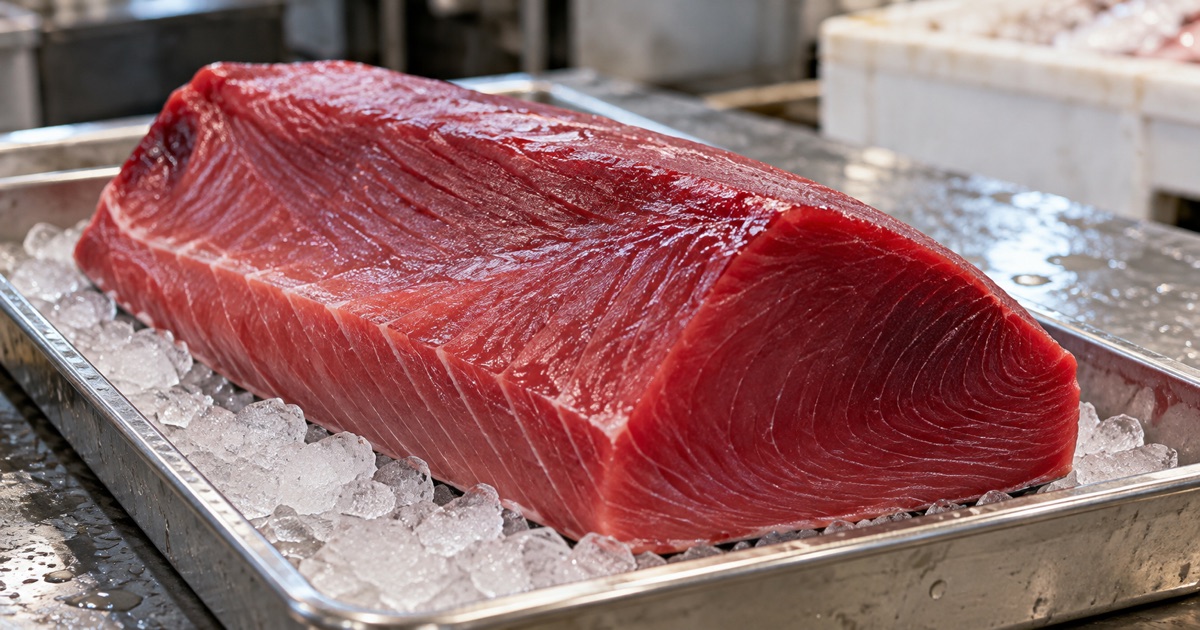
- Sashimi (刺身): Sliced raw fish served without marinades. Ensure you use certified halal soy sauce if strict about trace fermentation alcohol.
- Kaisendon (海鮮丼): A bowl of steamed rice topped with fresh raw seafood. Ask for plain white rice (hakumai, 白米) instead of seasoned sushi rice (sumeshi, 酢飯), as sushi rice occasionally includes mirin alongside rice vinegar and sugar.
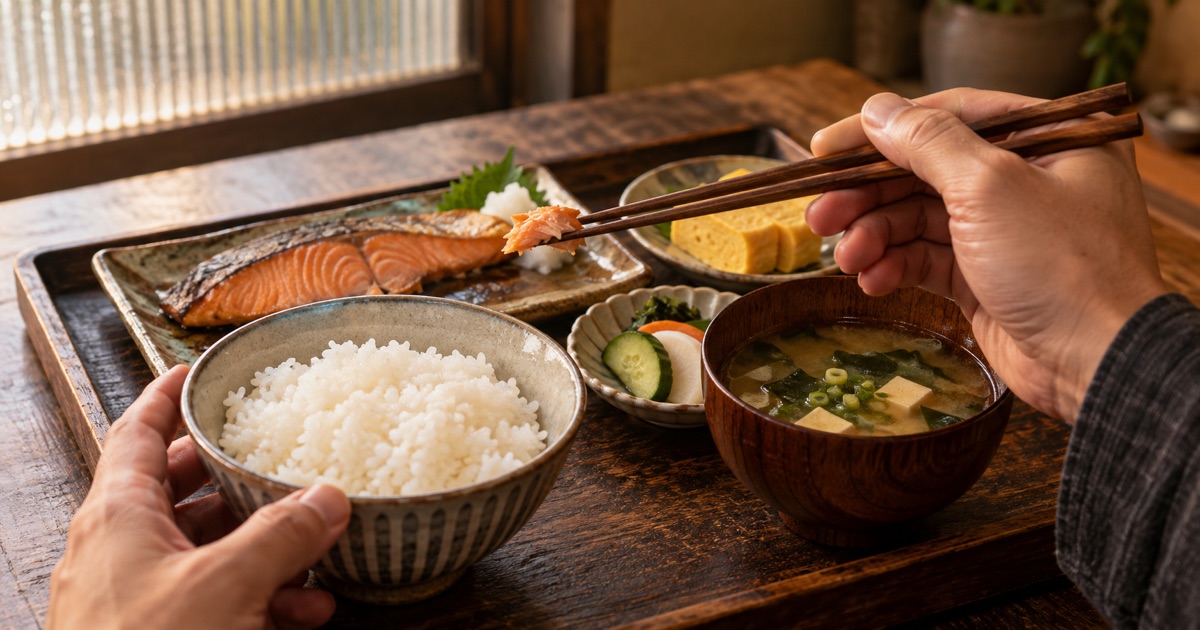
- Shioyaki (塩焼き): Fish grilled plainly with salt, such as salmon (sake, 鮭) or mackerel (saba, 鯖). Confirm that no cooking sake was sprayed on the fish prior to grilling.
Vegetarian and Tofu Specialties
Plant-based dishes provide accessible alternatives, though broths must be verified:
- Yudofu (湯豆腐): Tofu simmered in pure water with a piece of kombu kelp. It is typically served with a dipping sauce; confirm the sauce does not contain bonito or alcohol.
- Shojin Ryori (精進料理): Traditional Buddhist vegetarian cuisine prepared without meat, fish, or pungent roots (like garlic and onions). This style uses natural plant dashi, though small amounts of naturally brewed soy sauce or traditional mirin may still appear in historical recipes unless requested otherwise.
- Zaru Soba (ざる蕎麦) or Zaru Udon (ざるうどん): Chilled buckwheat or wheat noodles. While the noodles themselves are made from buckwheat flour, wheat flour, and water, the dipping sauce (tsuyu, つゆ) almost always contains mirin, soy sauce, and bonito dashi. Some travelers opt to eat the noodles with salt or bring their own certified dipping sauce.
Common Allergens and Ingredient Cross-Contamination
When dining at non-certified venues, cross-contamination is a vital factor to consider. Many Japanese kitchens have compact cooking areas where utensils, deep fryers, and grills are shared across various dishes.
- Tempura (天ぷら): While vegetable and prawn tempura consist of permissible ingredients, the frying oil may also be used for pork cutlets (tonkatsu, とんかつ) or chicken.
- Allergens: Japanese food labeling laws require packaging to declare specific allergens such as buckwheat (soba, そば), wheat (komugi, 小麦), egg (tamago, 卵), dairy (nyuseihin, 乳製品), peanut (rakkasei, 落花生), shrimp (ebi, えび), and crab (kani, かに). Soybeans are recommended for labeling but not always mandatory on small restaurant menus.
Practical Steps for Ordering in Chiyoda
To ensure a smooth dining experience without language barriers, follow these practical steps when visiting eateries in Chiyoda:
1. Prepare a Dietary Card: Carry a printed or digital dietary explanation written in Japanese. It should clearly state:
- "I cannot consume pork or any pork-derived ingredients (gelatin, lard, soup bases)" (豚肉、豚肉エキス、ラード、ゼラチンは食べられません).
- "I cannot consume alcohol or cooking sake/mirin" (アルコール、酒、みりんは使わないでください).
- Review Menus in Advance: Many train station malls and department store restaurant floors publish tenant lists online. Search for terms like "Muslim-friendly" or "halal menu."
- Confirm Cooking Tools: If strict about cross-contamination, politely ask whether meat grills, knives, and cutting boards are shared.
- Inspect Convenience Store Labels: For quick meals on the go, convenience stores in Chiyoda sell plain salted rice balls (shio musubi, 塩むすび), boiled eggs, and fresh fruits. Use photo translation apps to check ingredient lists on packaged onigiri, as even tuna-mayonnaise fillings frequently contain alcohol-preserved seasonings or pork-derived emulsifiers.
Prices for halal-certified meals in Chiyoda generally range from roughly 1,000 to 2,500 yen for casual noodles and curry sets, while specialized multi-course meals or halal wagyu beef can range from 5,000 to over 15,000 yen. Operating hours, menu availability, and certification statuses are subject to change, so checking official venue websites before traveling is strongly advised.
FAQ
- Q. Is traditional Japanese food in Chiyoda generally halal?
- A. Standard Japanese food is rarely halal-certified by default because cooking staples like mirin (sweet rice wine) and regular soy sauce naturally contain alcohol.
- Q. How can Muslim travelers verify if a dish contains pork or alcohol?
- A. Travelers can show a dietary card written in Japanese specifying restrictions against pork (butaniku) and alcohol (osake, mirin) before ordering.
- Q. Which neighborhoods in Chiyoda have the most Muslim-friendly food options?
- A. Major transit and commercial hubs such as Tokyo Station, Marunouchi, Otemachi, and Akihabara feature the highest concentration of halal and Muslim-friendly eateries.
Cite or share this article
Copy the link below. If you quote this article, please link to this page as the source.