Fukuoka Food Specialties: What and How to Eat
Key takeaways
- Fukuoka is famous for tonkotsu ramen, spicy mentaiko, motsunabe hot pot, and outdoor yatai food stalls.
- Most specialty meals cost around 800 to 3,000 yen per person, though prices vary by dining style.
- Cash is essential for street stalls, and visitors should watch for common allergens like pork, sesame, and soy.
Fukuoka food specialties center on rich broths, fresh coastal seafood, and communal hot pots, with Hakata tonkotsu ramen and motsunabe standing out as the city's signature dishes. Located on the northern coast of Kyushu, Fukuoka offers a distinct food culture shaped by hearty street stalls, bold seasonings, and an emphasis on quick, satisfying meals.
Whether exploring the neon-lit food stalls along the river or stepping into a neighborhood diner, navigating local specialties without speaking Japanese is straightforward once you know how the dishes work, how to order them, and what ingredients to expect.
Hakata Tonkotsu Ramen: The Flagship Noodle
Hakata ramen (博多ラーメン) is recognized worldwide for its milky, rich broth made by boiling pork bones over high heat for hours. Unlike the curly, yellow noodles common in Tokyo or Sapporo, authentic Hakata ramen uses ultra-thin, straight white wheat noodles.
How to Order Your Noodles
When ordering Hakata ramen, servers typically ask how you want your noodles cooked. You can choose your firmness level using simple Japanese terms:
- Futsu (普通) – Normal
- Katame (固め) – Firm
- Barikata (バリカタ) – Very firm
- Harigane (ハリガネ) – Wire-firm (very quick boil)
Most locals choose katame or barikata, as the thin noodles soften quickly in the steaming broth.
The Noodle Refill System (Kaedama)
Because thin noodles become soggy if served in large portions, shops serve modest portions and offer kaedama (替え玉)—a noodle refill.
To use this system:
- Eat your noodles, but leave plenty of soup in your bowl. If you drink all the broth, you cannot enjoy a refill.
- When you have two or three bites left, call out "Kaedama" to the staff.
- State your desired noodle firmness again (for example, "Barikata, kudasai").
- A fresh bundle of hot noodles will be dropped into your existing bowl.
- Add extra ramen sauce (often provided in a squeeze bottle on the counter), white sesame seeds, or pickled ginger (beni shoga) to refresh the flavors.
A bowl of ramen generally costs around 700 to 1,000 yen, with a kaedama costing roughly 100 to 200 yen. Be aware that the broth relies heavily on pork, soy, and garlic, making it unsuitable for vegetarians or those with allium sensitivities.
Motsunabe: The Communal Offal Hot Pot
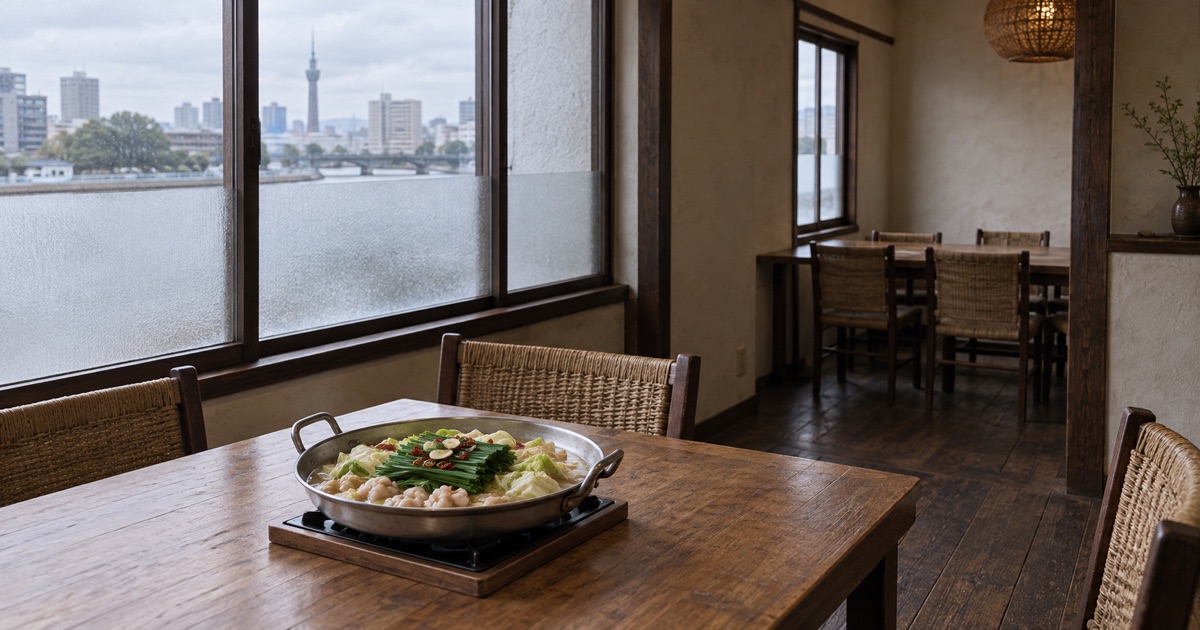
Motsunabe (もつ鍋) is a savory hot pot dish featuring tender beef or pork offal (typically small intestines), cabbage, garlic chives (nira), sliced garlic, and red chili peppers. It is eaten throughout the year, especially during cold evenings.
The Broth Bases
Motsunabe comes in three primary soup styles:
- Shoyu (Soy Sauce): The most traditional Fukuoka style, offering a clean, savory taste that balances the richness of the offal.
- Miso: A richer, sweeter broth that thickens as the vegetables break down.
- Shio (Salt): A lighter, clear broth that showcases the freshness of the ingredients.
Dining Etiquette and Champon Finish
Motsunabe is cooked directly at your table on an induction burner or gas stove. Allow the cabbage and chives to soften and sink into the broth before taking portions with the provided ladle.
Once the meat and vegetables are finished, do not let the server take the pot away. Order champon noodles (ちゃんぽん麺), thick wheat noodles that absorb the concentrated broth, serving as the traditional closing course (shime).
Motsunabe is typically ordered for a minimum of two people, with prices ranging roughly from 1,500 to 2,500 yen per person.
We are working to carry Japanese craft and everyday culture beyond Japan, by building Japan Towns with local partners.
Read the Japan Town plan →Mizutaki: Delicate Chicken Hot Pot
If you prefer milder flavors, mizutaki (水炊き) is Hakata’s elegant alternative to motsunabe. This specialty features bone-in chicken simmered in a cloudy chicken stock until deeply savory.
Eating mizutaki follows a specific sequence:
- The Broth: The server or diner ladles a small cup of seasoned broth to drink first, often with a pinch of salt and spring onions.
- The Chicken: The simmered chicken pieces are eaten dipped in tart citrus ponzu sauce.
- Vegetables and Meatballs: Seasonal greens, tofu, shiitake mushrooms, and chicken meatballs (tsukune) are added to the pot.
- Zosui (Rice Porridge): At the end, cooked rice and beaten egg are stirred into the remaining soup to create a comforting porridge.
Mizutaki meals generally cost around 3,000 to 6,000 yen per person depending on the dining establishment.
Mentaiko: Spicy Cured Pollack Roe
Karashi mentaiko (辛子明太子) is pollack roe marinated in chili pepper, sake, mirin, and kelp. It has a briny, spicy, umami-rich flavor and a delicate grain texture.
In Fukuoka, you will encounter mentaiko in many forms:
- Raw or lightly seared (aburi) served over plain white steamed rice
- Stuffed inside grilled chicken wings (tebasaki mentaiko)
- Mixed with butter and tossed with pasta
- Baked into fresh baguettes at local bakeries
Mentaiko contains seafood and soy. For detailed nutritional breakdowns of roe and regional staples, you can consult official resources like the MEXT Food Composition Database.
Hitokuchi Gyoza: Bite-Sized Dumplings
Unlike the larger potstickers found elsewhere in Japan, Fukuoka’s hitokuchi gyoza (一口餃子) are tiny, crisp, one-bite dumplings.
Stuffed with minced pork, cabbage, and garlic, they are pan-fried in large iron skillets until the bottoms are dark gold and crunchy. Because of their petite size, a single order often consists of 10 to 15 pieces per person. They are served with soy dipping sauce, vinegar, and a dab of yuzu kosho (柚子胡椒), a fragrant paste made from spicy green chilies and aromatic yuzu citrus peel.
Yatai: Experiencing Fukuoka's Open-Air Street Stalls
Fukuoka is famous for its yatai (屋台)—small, wheeled wooden street stalls that seat around 8 to 10 customers. Clustered mainly in areas like Nakasu (中洲), Tenjin (天神), and Nagahama (長浜), they set up in the evening and serve ramen, skewers (yakitori), oden, and beer.
Essential Yatai Etiquette for Beginners
- Bring Cash: Almost no yatai take international cards or mobile app payments. Keep 1,000-yen notes and 100-yen coins handy.
- One Drink, One Dish Minimum: Space is strictly limited. Every person taking a seat is expected to order at least one beverage and one food item.
- Watch Your Bags: Stalls have very little storage space. Keep backpacks small, or hold them on your lap.
- Do Not Linger: Once you have finished your food and drinks, pay promptly so waiting patrons can sit down.
- Weather Dependent: Yatai typically close during typhoons, heavy rain, or high winds.
For practical transit schedules and local travel guidelines, visit the Japan National Tourism Organization.
Quick Reference: Ordering and Dietary Needs
When dining in Fukuoka, keep these tips in mind to navigate menus effortlessly:
| Dish | Main Ingredients | Key Allergens |
|---|---|---|
| Hakata Tonkotsu Ramen | Pork bone soup, wheat noodles, pork belly | Wheat, Pork, Soy, Sesame |
| Motsunabe | Beef/pork offal, cabbage, garlic chives, broth | Soy, Wheat, Garlic |
| Mizutaki | Chicken, bone broth, vegetables, ponzu | Wheat, Soy (in sauce) |
| Karashi Mentaiko | Pollack roe, chili, sake, kelp | Fish, Soy |
| Hitokuchi Gyoza | Minced pork, garlic, wheat wrappers | Wheat, Pork, Soy, Sesame |
Most casual dining spots in Hakata utilize ticket vending machines (kenbaiki) at the entrance. Insert your cash first, press the button showing your chosen dish, and hand the printed paper slip to the staff.
Fukuoka's dining scene is lively, casual, and focused on warmth and hospitality. By knowing how to customize your ramen noodles and how to navigate street-side dining, you can comfortably enjoy the best local dishes the city has to offer.
FAQ
- Q. What is the single most famous food to try in Fukuoka?
- A. Hakata tonkotsu ramen (博多豚骨ラーメン), known for its cloudy pork-bone broth and thin, firm noodles, is the most famous dish.
- Q. How do you order noodle firmness for Hakata ramen?
- A. Staff will ask your preference; standard options include futsu (normal), katame (firm), or barikata (very firm).
- Q. Do outdoor yatai stalls accept credit cards?
- A. Most yatai operate strictly with cash, so carry small bills and coins before taking a seat.
Cite or share this article
Copy the link below. If you quote this article, please link to this page as the source.