Hiroshima Food Market Guide: What to Eat and How to Visit
Key takeaways
- Hiroshima food markets feature regional specialties like grilled oysters, layered okonomiyaki, and fresh Seto Inland Sea fish.
- Traditional wholesale markets cater to early-morning commercial trade, while bustling arcades host food stalls from mid-morning.
- Carrying cash and eating food near the stall where purchased are standard practices across Hiroshima food markets.
Hiroshima food markets offer visitors direct access to the rich culinary traditions of the Seto Inland Sea, including fresh Pacific oysters, layered okonomiyaki, and locally caught seasonal seafood. For first-time travelers, navigating these lively morning markets, wholesale districts, and downtown market arcades is straightforward once you understand local food styles, ordering customs, and market etiquette.
Understanding what to expect before visiting ensures a smooth experience, especially for visitors who do not speak or read Japanese.
Understanding Hiroshima Food Market Culture
Food markets in Hiroshima (広島) reflect a coastal geography surrounded by calm ocean bays and mountainous terrain. The Seto Inland Sea (瀬戸内海) provides calm waters ideal for aquaculture, making Hiroshima the leading oyster-producing prefecture in Japan.
Historically, Hiroshima's food distribution split into two distinct styles: large wholesale seafood and produce markets, and central shopping arcades (shotengai, 商店街) lined with street-food counters, fishmongers, and specialty grocers. Wholesale operations focus on trade logistics in early morning hours, whereas market alleys and pedestrian arcades cater to casual daytime visitors seeking prepared regional foods.
Travelers can research broader regional food policies and seasonal harvest details through the Ministry of Agriculture, Forestry and Fisheries.
Iconic Regional Dishes to Eat at Hiroshima Markets
Hiroshima market stalls specialize in regional items cooked quickly over open grills, teppan iron plates, and simmering steam baskets.
Hiroshima-Style Okonomiyaki
Unlike the mixed-batter style found in Osaka, Hiroshima-style okonomiyaki (広島風お好み焼き) is carefully layered rather than stirred together:
- Batter Base: A thin, crêpe-like circle of wheat flour batter is ladled onto a hot flat-top iron griddle (teppan, 鉄板).
- Cabbage Mountain: A generous mound of shredded green cabbage and bean sprouts (moyashi, もやし) goes directly on top.
- Pork Belly: Thin strips of pork belly (butabara, 豚バラ) are placed across the vegetables.
- The Flip: The cook flips the entire assembly so the pork crisps while the cabbage steams down tenderly underneath.
- Noodles: Boiled yakisoba noodles (or occasionally udon) are fried separately on the griddle with a dash of savory sauce.
- Egg Layer: A whole egg is cracked, broken into a round shape, and cooked flat.
- Assembly and Dressing: The vegetable and pork stack is placed onto the noodles, moved onto the fried egg, inverted right-side up, and finished with a sweet brown savory sauce, dried seaweed powder (aonori, 青のり), and optional white pepper.
Stall cooks serve this piping hot. Customers traditionally cut into the dish with a small metal spatula (hera, ヘラ) and eat bite-sized portions directly from the plate or iron counter.
Seto Inland Sea Oysters
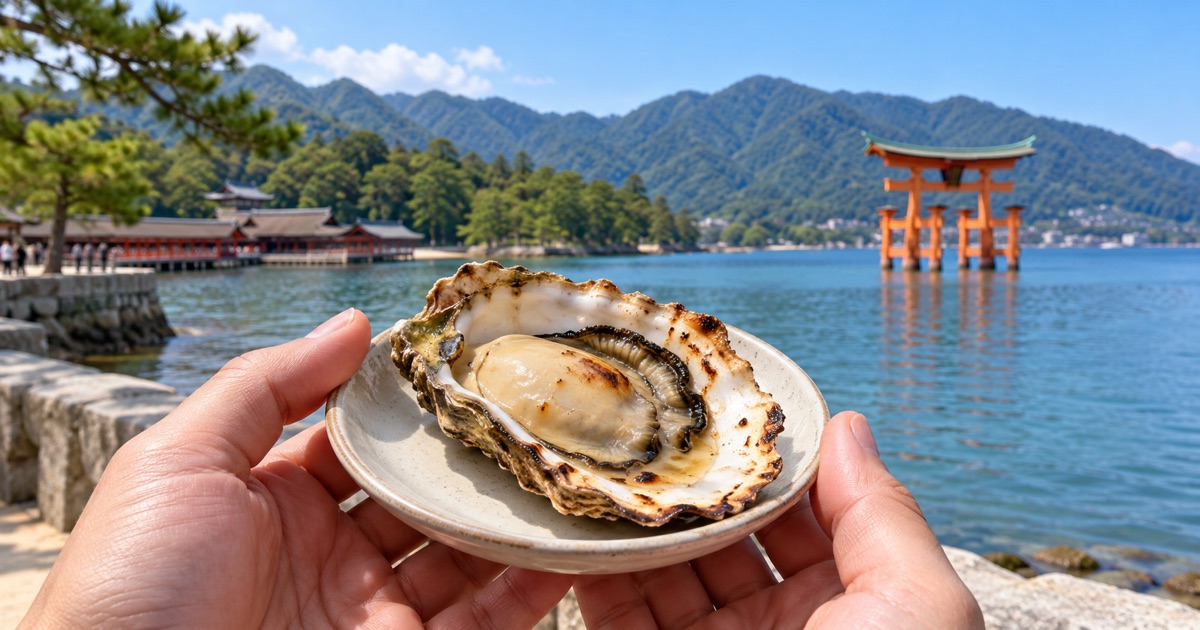
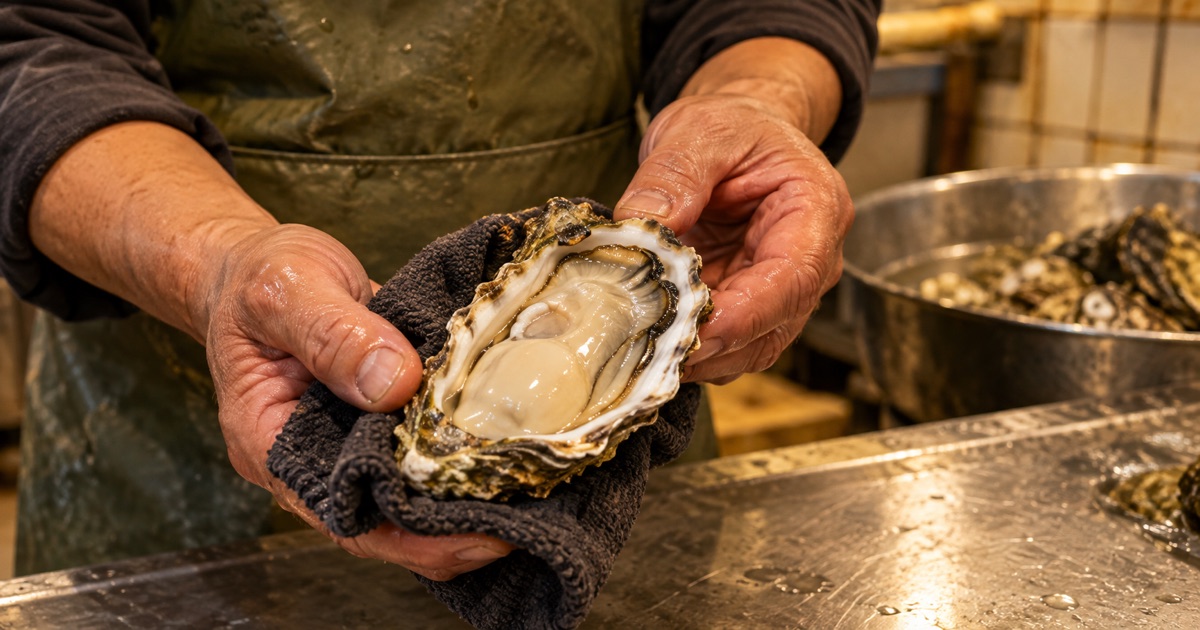
Oysters (kaki, 牡蠣) are sold fresh, shucked, or cooked at market seafood stalls. Hiroshima oysters feature plump meat, deep cups, and a balance of briny and mineral notes. Market vendors generally serve them in three formats:
- Grilled (Yaki-gaki, 焼き牡蠣): Cooked directly in their rough shells over charcoal or gas flames until bubbling, often finished with a splash of soy sauce or citrusy ponzu.
- Deep-Fried (Kaki Furai, 牡蠣フライ): Coated in fine panko breadcrumbs and fried golden-brown, served with shredded cabbage and tartar sauce.
- Steamed (Mushi-gaki, 蒸し牡蠣): Steamed in large batches inside metal cans or lidded steamers, retaining natural ocean sweetness.
Anago (Saltwater Eel)
Saltwater eel (anago, 穴子) from local bays offers a lighter, softer texture than freshwater river eel (unagi, 鰻). Markets sell grilled anago fillets brushed with a glossy, sweet-soy glaze (tare, タレ), served over steamed white rice as anago meshi (あなごめし) or skewered for quick eating.
Momiji Manju
While widely known as a souvenir sweet, market stalls often bake momiji manju (もみじ饅頭)—maple-leaf-shaped sponge cakes—fresh on-site. Visitors can buy them warm straight off cast-iron molds. Traditional fillings include sweet azuki red bean paste (anko, 餡子), though modern market stalls also offer custard cream, chocolate, and deep-fried variations on skewers (age-momiji, 揚げもみじ).
We are working to carry Japanese craft and everyday culture beyond Japan, by building Japan Towns with local partners.
Read the Japan Town plan →Step-by-Step Guide for First-Time Market Visitors
Navigating a food market without reading Japanese characters requires basic observational awareness and standard market routines.
Step 1: Arrive During the Ideal Time Window
Wholesale market trade happens between early morning and sunrise, during which forklifts and handcarts take priority. For public market stalls and food arcades, plan to arrive around mid-morning (roughly 10:00 to 11:30 AM) to avoid lunchtime rushes while securing freshly prepared morning batches. Many street-food stalls sell out of signature daily seafood cuts by early afternoon.
Step 2: Spot Ordering Systems
Most market vendors rely on three common purchasing methods:
- Display Finger-Pointing: Prepared items sit behind glass display cases. Simply point to the item and use fingers to indicate the quantity you wish to buy.
- Ticket Vending Machines (Kenbaiki, 券売機): Positioned outside noodle or quick-bite stalls. Insert cash first, press the button showing the dish or photo, take the paper ticket, and hand it to the stall attendant.
- Counter Queue: Line up behind marked tapes on the pavement. Avoid blocking walkways or adjacent stall fronts while waiting.
Step 3: Handle Payments Smoothly
Cash remains the most dependable payment method in traditional markets. Carry 1,000-yen banknotes and 100-yen coins. Place paper money and coins onto the small money tray (tsurisen-torei, 釣り銭トレイ) set on the counter rather than handing bills directly to the vendor's fingers. Digital payments and IC cards are becoming more common, but smaller independent vendors may operate cash-only tills.
Common Mistakes and Market Etiquette
Following standard Japanese customs keeps markets safe, clean, and welcoming for everyone.
Do Not Walk While Eating
Known as arukikui (歩き食い), walking through crowded streets while holding hot skewers, bowls, or drippy sauces is considered poor manners. It risks staining other pedestrians' clothes. Instead, eat food:
- In the small standing or seated space provided by the vendor.
- Immediately beside the stall counter where you purchased the item.
- At designated market rest tables.
Manage Trash Responsibly
Public trash cans are uncommon on Japanese streets. Almost every food stall maintains its own small collection bin specifically for waste generated by its customers. Return wooden skewers, sauce-stained paper trays, and plastic cups to the precise stall where you bought your meal. If you take food away from the stall area, expect to carry the empty packaging back to your hotel room.
Ask Before Taking Photos
Market vendors are working professionals handling high heat, raw ingredients, and sharp knives. Avoid leaning across prep surfaces to take close-up photos. Always ask permission with a quick phrase like "Shashin ii desu ka?" (May I take a photo?) before photographing stall owners or fresh seafood displays.
Allergens and Dietary Considerations
Hiroshima market foods make heavy use of seafood, soy, and wheat. Keep these core ingredients in mind:
- Shellfish: Oyster stalls handle mollusks constantly, and shared fryers may cross-contact fried oysters with other fried skewers.
- Gluten / Wheat: Hiroshima-style okonomiyaki relies on a wheat-flour base and wheat yakisoba noodles; standard sweet okonomiyaki brown sauce and eel glazes contain wheat-brewed soy sauce.
- Fish Broth (Dashi, 出汁): Clear broths, noodle sauces, and batter mixtures frequently incorporate dried bonito flakes (katsuobushi, 鰹節) or small dried sardines (niboshi, 煮干し).
- Pork: Layered okonomiyaki traditionally includes pork belly strips; notify vendors in advance if you require a meat-free version (butaniku nashi, 豚肉なし).
For verified nutrient compositions of Japanese raw seafood and agricultural products, refer to official nutrient data published by the Japanese government via the Japan National Tourism Organization guide resources.
Transit and Logistics
Hiroshima's primary transportation hub is Hiroshima Station (広島駅). From the station, the city's streetcar network, operated by the Hiroshima Electric Railway (known locally as the Hiroden, 広電), provides direct access to central commercial districts, downtown covered arcades, and harbor transit hubs:
- Central Downtown Arcades: Take streetcar lines 1, 2, or 6 from Hiroshima Station to Hatchobori (八丁堀) or Hondori (本通) stops, roughly a 10- to 15-minute ride.
- Miyajimaguchi Port Area: For coastal oyster shacks and waterside seafood stalls near the ferry access, take streetcar Line 2 or the JR Sanyo Line train to Miyajimaguchi Station (宮島口駅), roughly 30 minutes from the city center.
Stall operating schedules, market event calendars, and holiday closures fluctuate across seasons; travelers should check current local listings or official municipal announcements before traveling. Carry sufficient yen, keep your camera discreet, and enjoy discovering Hiroshima's rich regional culinary culture one fresh dish at a time.
FAQ
- Q. What is the main food market in Hiroshima?
- A. The Hiroshima City Central Wholesale Market handles wholesale trade, while downtown covered shopping arcades like Hondori function as vibrant, walk-in street food hubs.
- Q. Do food stalls in Hiroshima markets accept credit cards?
- A. Many smaller vendor stalls, street kiosks, and older stalls accept only cash, so visitors should carry 1,000-yen notes and 100-yen coins.
- Q. Can visitors eat while walking around Japanese food markets?
- A. Walking while eating is considered impolite; standard etiquette is to consume food in designated stall seating or directly beside the counter where purchased.
Cite or share this article
Copy the link below. If you quote this article, please link to this page as the source.