Kitakyushu Food Specialties: Local Dishes and How to Eat Them
Key takeaways
- Kitakyushu's distinct specialties include Mojiko baked curry, Kokura-style yaki udon, and pungent nuka-炊き fish stews.
- Major dining hubs cluster around Kokura Station and the Mojiko port district, both easily reached by local train lines.
- Dishes frequently contain wheat, soy, dairy, pork, or shellfish, so travelers with dietary restrictions should check ahead.
Kitakyushu food specialties are defined by the city's rich history as an industrial powerhouse, international trade port, and coastal transit hub in northern Fukuoka Prefecture. From sizzling baked curry served in European-influenced port districts to iron-plate fried noodles created during post-war ingredient shortages, the local cuisine offers rich, hearty flavors deeply tied to specific neighborhoods.
Whether you step off the Sanyo Shinkansen (山陽新幹線) at Kokura Station (小倉駅) or take a short local train ride to Mojiko (門司港), you will find distinctive dishes that differ significantly from those in neighboring Fukuoka City. This guide covers the essential Kitakyushu food specialties, their origins, how to order and eat them, and practical tips for visitors navigating local menus.
Mojiko Yaki Curry: The Port Town's Oven-Baked Classic
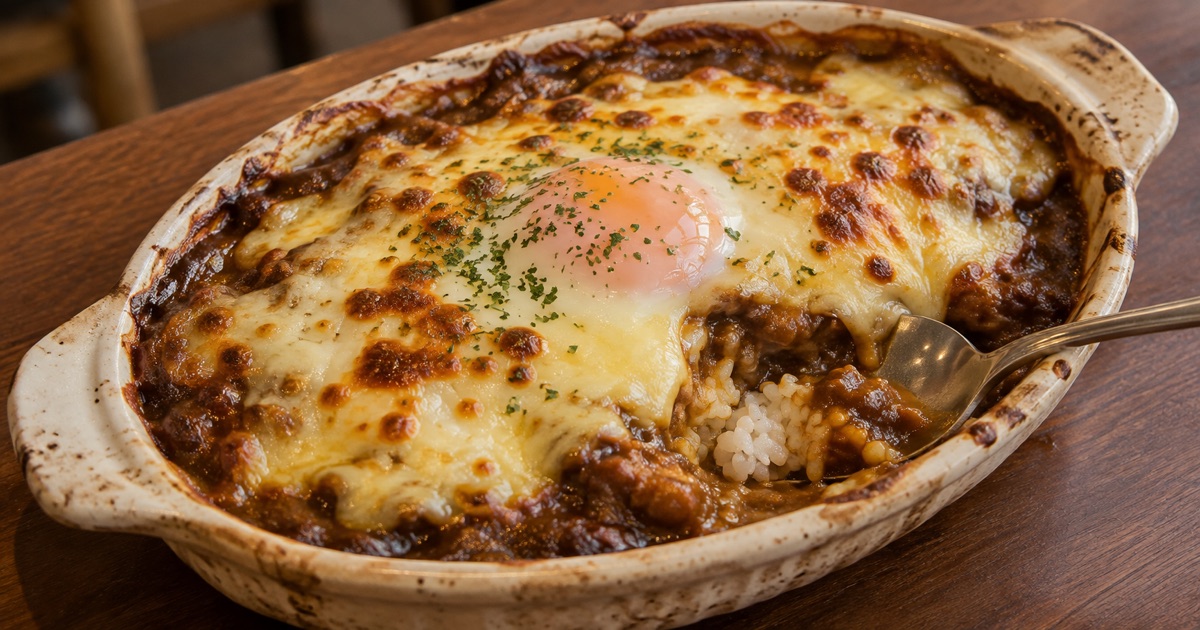
Yaki curry (焼きカレー), or baked curry, originated in the Mojiko port district during the mid-20th century. During the Meiji and Taisho periods, Mojiko served as a primary international shipping gateway, welcoming Western culture, European architecture, and imported foodstuffs. Legend holds that a local cafe cook baked leftover curry rice with cheese and an egg in an oven, creating an instant comfort classic.
What Is in the Dish?
The dish begins with a bed of steamed white rice inside a heatproof ceramic gratin dish. Chefs ladle a rich, European-style Japanese curry roux (typically beef- or vegetable-based) over the rice. A raw or soft-cooked egg sits in the center, completely blanketed by a generous layer of shredded melting cheese. The entire dish goes under an oven broiler or salamander until the cheese bubbles, crisps along the edges, and forms golden-brown spots. Some kitchens add seafood such as squid or shrimp, while others include slices of sausage or grilled vegetables.
How to Eat Yaki Curry
- Handle with care: The ceramic baking dish comes to your table straight from the oven and remains extremely hot. Never touch the sides of the bowl directly; use the provided napkins or wood-platter handles.
- Break the egg yolk: Use your spoon to pierce the egg hidden under the melted cheese. Mix the runny yolk directly into the hot curry and rice immediately around it. The egg tempers the spice of the curry and adds a rich, velvety texture.
- Eat from the edge inward: The outer edges cool down faster than the molten core. Take spoonfuls containing rice, sauce, and melted cheese together.
- Allergens and notes: Yaki curry contains wheat (in the curry roux), dairy (cheese and butter), and egg. Variations may also include shellfish or pork.
Kokura Yaki Udon: Born on Post-War Iron Griddles
While stir-fried noodles appear across Japan, Kitakyushu's Kokura district claims the origin of yaki udon (焼きうどん). Shortly after World War II, a diner in Kokura faced a shortage of Chinese-style wheat noodles (soba noodles used for yakisoba). The shopkeeper substituted dried udon noodles, boiling them and frying them on a flat teppan (鉄板) iron griddle with Worcestershire-style sauce.
Distinctive Features of Kokura Yaki Udon
Unlike standard fried noodles found at street festivals, authentic Kokura yaki udon maintains specific regional traits:
- Dry noodles boiled to order: Many traditional shops prefer dry, flat udon noodles rather than soft, pre-boiled noodles, giving the dish a firm bite (koshi).
- Crisp vegetables: Shredded local cabbage and onions are flash-fried alongside thin strips of pork belly.
- Savory brown sauce: The seasoning blends Japanese Worcestershire sauce, soy sauce, and sometimes a dash of sake or fruit puree. It should coat the noodles lightly without leaving a watery puddle on the plate.
- Garnish: A flurry of dried bonito shavings (katsuobushi) and ground green seaweed (aonori) tops the noodles, dancing from the rising steam. Pickled red ginger (beni shoga) rests on the side to cleanse the palate.
How to Order and Eat
You will typically order this dish at small counter-style diners, izakaya, or okonomiyaki joints. At counter seats, the cook prepares it directly in front of you on the griddle and slides it onto a plate or serves it directly on an iron platter. Use your chopsticks to mix the bonito flakes into the noodles. Add a sprinkle of white pepper or seven-spice chili blend (shichimi togarashi) if you prefer a sharper kick.

We are working to carry Japanese craft and everyday culture beyond Japan, by building Japan Towns with local partners.
Read the Japan Town plan →Kokura Nukadaki: Fermented Rice-Bran Fish Stew
For an intensely traditional flavor found almost exclusively in Kitakyushu, seek out nukadaki (ぬか炊き), sometimes called jinda-ni (じんだ煮). Kokura has a centuries-old tradition dating back to the Edo period of stewing oily fish in seasoned rice bran bed (nukadoko, 糠床).
The Ingredients and Process
Home cooks and market stalls place sardines (iwashi) or mackerel (saba) into a pot with soy sauce, mirin, sake, sugar, and chili peppers. Crucially, they stir in matured nuka—the fermented rice bran normally used to pickle household vegetables. The natural lactic acid bacteria, yeast, and enzymes in the aged bran eliminate the strong fishy odor and soften the fish bones until they become completely edible. The resulting sauce is thick, dark, and deeply savory with a balanced sweet, salty, and tangy profile.
How to Experience Nukadaki
- At public markets: Stalls inside historical markets, such as Kokura's Tanga Market (旦過市場), display wide trays of simmering mackerel and sardine fillets. You can purchase them as take-away side dishes (okazu) or eat them inside casual dining areas.
- Pairing: Nukadaki has an assertive taste and pairs best with plain steamed white rice or dry Japanese sake.
- Eating the bones: Do not worry about picking out the thin rib or center bones; long, gentle simmering in the acidic bran breaks them down until they melt easily when chewed.
Yahata Gyoza: Iron-Plate Dumplings
The Yahata (八幡) district developed as a steel-mill powerhouse in the early 1900s. The long, grueling shifts of factory workers gave rise to hearty, stamina-building foods packed with garlic, pork, and cabbage.
Key Characteristics
Yahata gyoza (八幡ぎょうざ) are traditionally fried and served in a round, sizzling cast-iron skillet (tetsunabe). This heavy pan keeps the dumplings hot until the last bite.
- The skin: The skins are noticeably thicker than those on standard pan-fried gyoza, allowing them to crisp to a golden crunch on the bottom while retaining a chewy texture on top.
- The dipping sauce: While standard gyoza sauce combines soy sauce and vinegar, Yahata locals often add yuzu kosho (柚子胡椒), a spicy green paste made from ground chili peppers, yuzu citrus peel, and salt.
Practical Tips for Dining in Kitakyushu
Navigating local dining spots is straightforward if you know where to look and what to expect.
Where to Find Kitakyushu Specialties
- Around Kokura Station: The pedestrian shopping arcades surrounding the station feature numerous casual noodle bars, yaki udon specialists, and izakaya serving local fish dishes. Kokura Station itself serves the Sanyo Shinkansen and local JR lines.
- Mojiko Retro Area: Located roughly 15 minutes by local JR train from Kokura Station on the Kagoshima Main Line (鹿児島本線), the Mojiko Retro district features dozens of dedicated yaki curry restaurants.
Ordering and Etiquette
- Ticket machines: Many casual noodle and curry shops use an automated ticket machine (shokkenki, 食券機) at the entrance. Insert your cash or IC transit card, press the button for your dish, and hand the printed ticket to the staff.
- Cash is still useful: While major shopping centers accept credit cards, smaller traditional market stalls and old-school diners often accept only Japanese yen cash.
- Menu indicators: English menus are common in tourist areas like Mojiko Retro, but market stalls in Kokura may only display Japanese signage. Look for the characters for yaki curry (焼きカレー), yaki udon (焼きうどん), or nukadaki (ぬか炊き).
For nationwide travel planning and transit information, consult official resources like the Japan National Tourism Organization. For comprehensive reference on raw ingredients and traditional preparations across Japanese prefectures, visit the Ministry of Agriculture, Forestry and Fisheries.
Allergen and Dietary Considerations
Travelers with specific dietary needs should take note:
- Gluten: Almost all sauces (soy sauce, Worcestershire, brown curry base) and noodles contain wheat flour.
- Dairy: Yaki curry contains milk-based cheeses and butter.
- Vegetarian/Vegan: Traditional broths (dashi), curry sauces, and griddle seasonings almost universally include pork fat, dried fish flakes, or beef tallow. Communicating strict vegetarian requirements can be difficult in smaller local establishments, so planning ahead is recommended.
FAQ
- Q. What is the most famous food in Kitakyushu?
- A. Yaki curry (baked curry) from the Mojiko port area and Kokura-style yaki udon are the two most widely recognized dishes.
- Q. How do you eat Mojiko baked curry?
- A. Eat it with a spoon straight from the hot gratin dish, breaking the soft egg into the curry and melted cheese to balance the heat.
- Q. Are Kitakyushu specialties vegetarian-friendly?
- A. Most dishes rely heavily on beef-fat curry roux, pork slices, fish broths, or fermented seafood pastes, making vegetarian options rare.
Cite or share this article
Copy the link below. If you quote this article, please link to this page as the source.