What to Eat in Kagoshima City: Local Dishes and Specialties
Key takeaways
- Kagoshima City is renowned for Kurobuta Berkshire pork served as tonkatsu, shabu-shabu, or braised kakuni.
- Local seafood highlights include deep-fried Satsuma-age fish cakes and fresh Kibinago silver-stripe round herring.
- Signature noodle and dessert staples feature mild tonkotsu-based Kagoshima ramen and fruit-topped Shirokuma shaved ice.
When deciding what to eat in Kagoshima City, prioritize Kagoshima Kurobuta pork, freshly fried Satsuma-age fish cakes, and sweet Shirokuma shaved ice. Kagoshima City sits on the southern tip of Kyushu beneath the active volcano Sakurajima (桜島), offering a regional food culture shaped by volcanic soil, warm ocean currents, and centuries of distinct culinary development.
This guide outlines the essential dishes, primary ingredients, dining customs, and practical tips for visitors exploring Kagoshima City for the first time without Japanese language skills. For broader background on the country's agricultural heritage, consult the Ministry of Agriculture, Forestry and Fisheries.
1. Kagoshima Kurobuta (Black Pork Specialties)
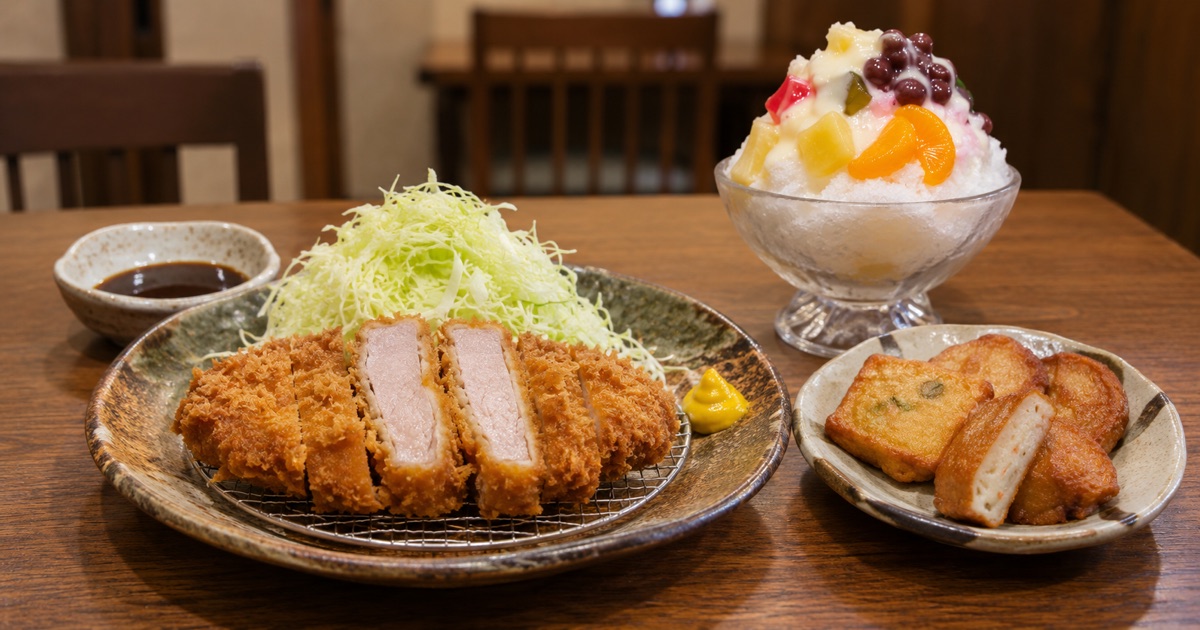
Kagoshima Kurobuta (鹿児島黒豚) is purebred Berkshire pork raised on a diet that traditionally incorporates local sweet potatoes (satsumaimo, さつまいも). This feed profile contributes to tender meat fibers, clean white fat, and a distinct natural sweetness. Kurobuta is the defining culinary trademark of Kagoshima City.
Kurobuta Tonkatsu (Deep-Fried Cutlet)
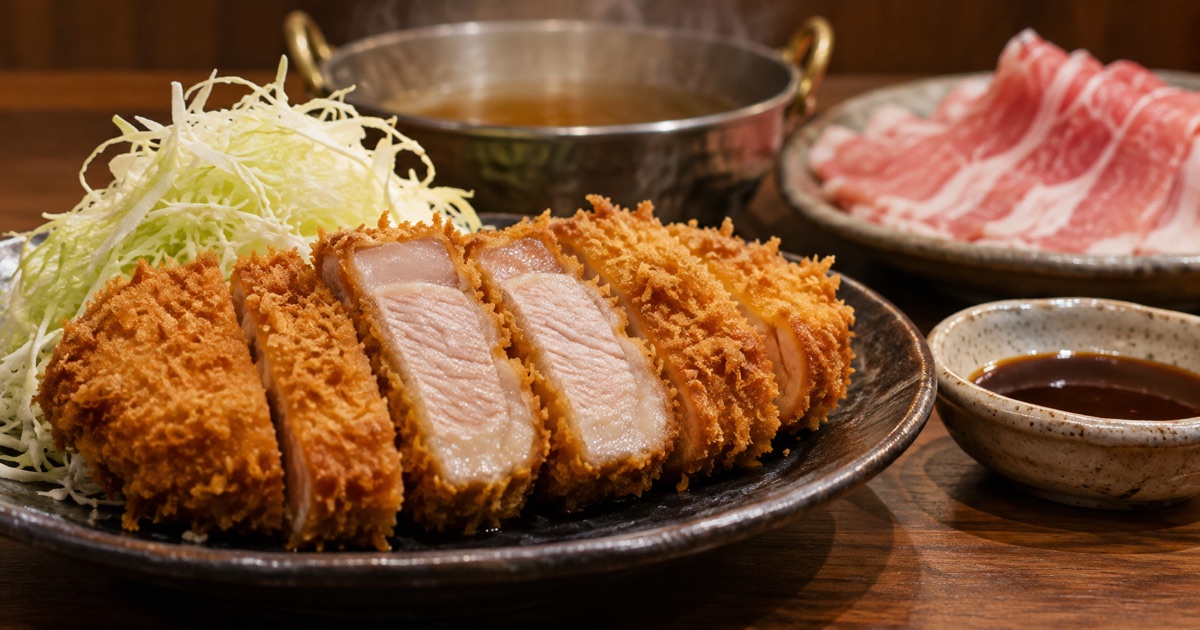
Kurobuta Tonkatsu (黒豚とんかつ) consists of thick-cut pork loin (rosu, ロース) or tenderloin (hire, ヒレ) coated in light panko breadcrumbs and deep-fried to a crisp golden brown.
- How it is served: A standard set meal (teishoku, 定食) includes a bowl of steamed white rice, shredded raw cabbage, miso soup, and pickled vegetables.
- How to eat it: Drizzle the savory brown tonkatsu sauce directly over the meat, or pour it into a small side dish for dipping. Some establishments provide small bowls of whole sesame seeds that you grind with a wooden pestle before adding the sauce. A dab of hot yellow mustard (karashi, からし) placed on the edge of the cutlet cuts through the richness.
Kurobuta Shabu-Shabu (Hot Pot)
Kurobuta Shabu-Shabu (黒豚しゃぶしゃぶ) features paper-thin slices of raw pork swirled gently in boiling broth until cooked through. Unlike beef shabu-shabu in central Japan, Kagoshima shabu-shabu emphasizes high-grade pork.
- How to eat it: Pick up a single slice with your chopsticks and swish it through the hot dashi broth for 5 to 10 seconds until no pink remains. Dip the cooked meat into a light citrus ponzu sauce or a savory dipping broth flavored with thin scallions before eating.
Kurobuta Kakuni (Braised Pork Belly)
Kurobuta Kakuni (黒豚角煮) is skin-on pork belly simmered slowly with soy sauce, local brown sugar, mirin, and shochu (distilled liquor). The low, steady cooking renders out excess grease, leaving the meat tender enough to separate with chopsticks. It often appears as an appetizer in local taverns (izakaya, 居酒屋) or atop bowls of rice.
2. Seafood and Local Coastal Delicacies
Surrounded by Kinko Bay (錦江湾) and open Pacific currents, Kagoshima City offers unique seafood preparations rarely encountered in northern Japan.
Satsuma-age (Fried Fish Cakes)
Satsuma-age (さつま揚げ), referred to locally as tsuke-age (つけ揚げ), is minced white fish paste blended with sake, sugar, and salt, shaped into discs or cylinders and deep-fried in oil.
- Varieties: Plain cakes are common, but many include finely chopped burdock root (gobo), carrots, wood-ear mushrooms, or cheese.
- How to eat it: While pre-packaged versions are sold as souvenirs at Kagoshima-Chuo Station (鹿児島中央駅), the best way to enjoy Satsuma-age is freshly fried and warm from neighborhood specialty stalls. Eat them plain by hand, or dip them lightly in soy sauce with grated ginger.
Kibinago (Silver-Stripe Round Herring)
Kibinago (きびなご) is a delicate, small silver-stripe fish harvested in the waters off Kagoshima.
- Kibinago Sashimi: Chefs arrange raw, hand-filleted kibinago in a circular pattern on the plate resembling a chrysanthemum flower. Because the fish is fragile, it must be exceptionally fresh.
- How to eat it: Dip the raw fish into sweet brown vinegar-miso sauce (sumiso, 酢味噌) rather than standard soy sauce. Kibinago is also served lightly salted and grilled on skewers or deep-fried as tempura.
We are working to carry Japanese craft and everyday culture beyond Japan, by building Japan Towns with local partners.
Read the Japan Town plan →3. Kagoshima Ramen
Kagoshima Ramen (鹿児島ラーメン) stands apart from the rich, milky tonkotsu broths found in Fukuoka or Kumamoto.
- Broth Profile: Kagoshima's broth blends simmered pork bones with chicken stock, dried bonito flakes, and aromatic vegetables. This results in a lighter, semitransparent soup with a mild, comforting finish.
- Noodles: Noodles here are generally white, soft, and medium-thick, rather than the firm, ultra-thin noodles common to northern Kyushu.
- Table Custom: When you sit down at a traditional ramen shop in Kagoshima City, the staff will usually serve a small plate of pickled daikon radish (tsukemono, 漬物) along with cold tea or water free of charge. Eat the crunchy pickles while waiting for your bowl to arrive.
4. Sweets and Desserts
Subtropical summers and a long history of sugar production have shaped Kagoshima's casual dessert scene.
Shirokuma (Polar Bear Shaved Ice)
Shirokuma (白熊, literally "white bear") is a towering mountain of finely shaved ice doused in sweet condensed milk and topped with colorful canned fruits (mikan oranges, cherries, pineapples), sweet red beans (azuki), and soft jelly candies.
- Origins: The name originated because the arrangement of dark fruits and beans atop the white milk ice historically resembled a bear's face when viewed from above.
- Portion warning: Full-sized orders are substantial and easily shared between two people. Many cafes offer a "baby size" (koba, 小サイズ) suited for solo diners.
Karukan
Karukan (軽羹) is a traditional steamed cake made from grated Japanese mountain yam (yamaimo), non-glutinous rice flour, and sugar. It possesses an airy, slightly chewy, sponge-like texture. It is sold either as plain white bars or as Karukan Manju, which contains a center of sweet red bean paste.
5. Practical Dining Advice for Visitors
Navigating Menus Without Japanese
Major dining hubs in Kagoshima City—such as Tenmonkan (天文館) and the dining concourses inside Kagoshima-Chuo Station (such as Amu Plaza)—frequently feature plastic food replicas in exterior display cases or provide picture menus.
- Ordering via Vending Machine: In many casual ramen shops, buy an eating ticket (shokken, 食券) at a machine near the door. Insert your cash first, press the button showing your desired dish, collect the ticket and change, and hand the ticket to the counter staff.
- Payment: While train stations accept IC transit cards and major credit cards, traditional izakaya and smaller neighborhood noodle counters often accept cash only. Carry Japanese yen notes and coins when dining outside major commercial centers.
- Dining Hours: Lunch service typically runs from roughly 11:30 to 14:00, while dinner begins around 17:30 or 18:00. Many independent shops close between lunch and dinner, and some shut on Sundays or Mondays. Always verify operational hours directly with venues beforehand, as schedules change.
Navigating Around Kagoshima City
Getting between the major culinary areas is straightforward via the Kagoshima City Tram (Kagoshima Shiden, 鹿児島市電).
- A flat fare applies per ride regardless of distance (roughly 170 yen; fares are subject to change).
- The tram links Kagoshima-Chuo Station to the historic Tenmonkan shopping and dining district in roughly 10 minutes.
- Board through the middle doors and exit through the front door next to the driver, dropping exact change or tapping a compatible contactless IC card into the reader.
For broader national route planning and regional travel details, refer to the Japan National Tourism Organization.
Food Allergies and Dietary Notes
- Soy and Wheat: The vast majority of Kagoshima's savory broths, tonkatsu dipping sauces, and marinades contain soy sauce and wheat.
- Pork: Because pork stock is the primary culinary base of the prefecture, diners observing halal, kosher, or vegetarian diets should clarify ingredients carefully before ordering soups, braises, or stir-fries.
- Seafood/Fish Paste: Satsuma-age contains fish and occasionally egg white as a binding agent. For specific nutritional profiles of raw and cooked Japanese commodities, you can look up official entries in the MEXT Food Composition Database.
FAQ
- Q. What is the most famous food to eat in Kagoshima City?
- A. Kagoshima Kurobuta (black pork) is the most famous culinary specialty, celebrated for its tender texture and served as tonkatsu or shabu-shabu.
- Q. How do you order Kagoshima ramen if you do not speak Japanese?
- A. Many ramen shops use ticket vending machines outside or near the entrance with picture buttons, or provide simple bilingual menu sheets.
- Q. Are there common allergens in traditional Kagoshima cuisine?
- A. Yes. Common allergens include pork, fish, soy, wheat (in ramen noodles and soy sauce broths), egg, and dairy (in Shirokuma shaved ice).
Cite or share this article
Copy the link below. If you quote this article, please link to this page as the source.