Nara Food Specialty Guide: What to Eat in Japan's Ancient Capital
Key takeaways
- Nara's signature specialty is kakinoha-zushi, bite-sized pressed sushi wrapped in persimmon leaves using cured fish.
- Local staples reflect ancient history, featuring fermented foods like narazuke pickles and chagayu green tea rice porridge.
- Most regional specialties are available within walking distance of Kintetsu-Nara and JR Nara stations.
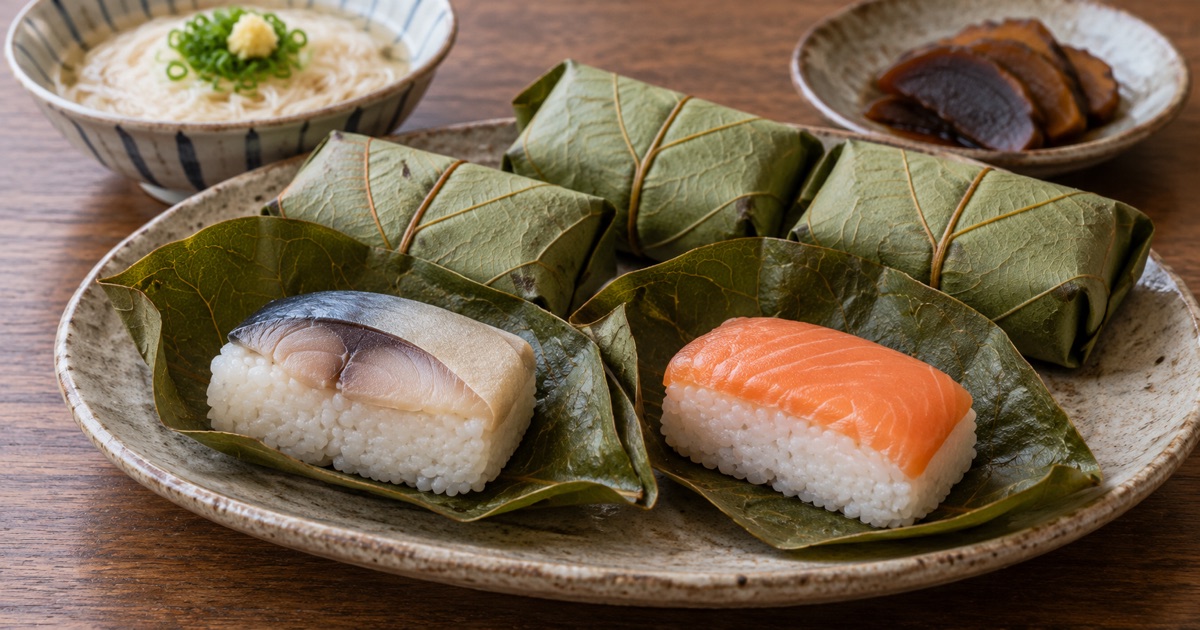
The definitive Nara food specialty is kakinoha-zushi (柿の葉寿司), a traditional pressed sushi made with cured fish wrapped tightly in persimmon leaves. Alongside this iconic sushi, Nara's food culture is defined by ancient preservation techniques, delicate wheat noodles, and historic temple-influenced staples like Miwa somen (三輪素麺), narazuke (奈良漬) pickles, and chagayu (茶粥) tea porridge.
As Japan’s first permanent imperial capital in the eighth century, Nara developed food preservation methods designed to transport seafood inland and sustain Buddhist monastic communities. For visitors traveling from Kyoto or Osaka, exploring these regional dishes provides direct insight into the foundation of classical Japanese cooking.
Kakinoha-Zushi: Persimmon Leaf Sushi
Kakinoha-zushi is Nara's most recognizable culinary export. Historically, fresh seafood was salted and transported over mountain trails from coastal regions like Wakayama. To preserve the fish along the journey, locals pressed slices of cured mackerel onto seasoned vinegared rice and wrapped each block in a persimmon leaf (kaki no ha), which naturally contains tannins that resist bacterial growth.
How It Is Made and Flavors
While salted mackerel (saba) is the most traditional topping, modern varieties frequently feature salted or smoked salmon (sake), sea bream (tai), or boiled eel (unagi). The fish and sushi rice are pressed into rectangular wooden molds, cut into neat bite-sized pieces, and wrapped individually in leaves. The leaf imparts a subtle, herbal aroma to the rice while keeping the fish moist.
How to Eat Kakinoha-Zushi
- Unwrap the leaf: Hold the wrapped sushi block in your hand and gently unfold the persimmon leaf.
- Discard the leaf: Do not eat the persimmon leaf. It is strictly a wrapping used for preservation and aroma; the texture is fibrous and tough.
- Eat as is: The fish is already seasoned with salt and vinegar. You do not need to dip it in soy sauce, though a light dab is acceptable if you prefer extra saltiness.
- No refrigeration needed immediately: Traditionally prepared kakinoha-zushi is designed to be kept at cool room temperature. Putting it in a refrigerator can cause the rice grains to harden and dry out.
Miwa Somen: Ultra-Thin Wheat Noodles
Originating in the Miwa area of Sakurai City in Nara Prefecture, Miwa somen is considered the ancestor of Japanese wheat noodles, dating back over 1,200 years. These noodles are hand-stretched using small amounts of vegetable oil until they become thread-thin, then dried in the winter air.
Cold and Warm Variations
- Hiyashi Somen (冷やし素麺): Served chilled during warm months, often floating in ice water or arranged over bamboo trays. Diners pick up a bite-sized clump of noodles with chopsticks and dip it into a cup of chilled tsuyu (a soy sauce, dashi, and mirin broth). Common condiments added to the dipping broth include grated ginger, finely sliced scallions, and myoga (Japanese ginger).
- Nyumen (煮麺): During colder months, the thin noodles are served in a hot, clear dashi broth. This preparation, known as nyumen, is gentle on the stomach and often garnished with seasonal mushrooms, fish cakes, or leafy greens.
When eating somen, avoid leaving the noodles submerged in the dipping sauce for too long, as they absorb liquid quickly and can become overly salty.
We are working to carry Japanese craft and everyday culture beyond Japan, by building Japan Towns with local partners.
Read the Japan Town plan →Narazuke: Sake Lees Pickles
Narazuke refers to vegetables pickled in sake kasu (the solid lees left behind after sake brewing). The pickling process is exceptionally long, often taking anywhere from one to several years, with the vegetables transferred to fresh batches of sake lees multiple times.
Characteristics and Common Vegetables
- Main vegetables: White melon (shirouri), cucumber (kyuri), watermelon rind, and ginger.
- Appearance and taste: The final pickle is deep brown, translucent, and crunchy. The flavor profile is complex: intensely savory, sweet, and distinctly alcoholic, with a strong fermented aroma.
- How to enjoy it: Narazuke is served in thin slices as an accompaniment to plain white rice, as a palate cleanser alongside green tea, or paired with rich cheeses.
Note for travelers: Because narazuke is made with unheated sake lees, the finished pickles retain a measurable amount of alcohol (often around 3% to 5%). Those who avoid alcohol for dietary, personal, or religious reasons should skip this specialty.
Chagayu: Roasted Green Tea Rice Porridge
Chagayu, affectionately called o-kayu or o-boke by locals, is a simple porridge made by simmering rice in roasted green tea (hojicha) rather than plain water. Originally consumed by Buddhist monks at temples like Todai-ji (東大寺) as early as the Nara period, it later became an everyday breakfast dish for farming households across the region.
Texture and Serving Style
Unlike thick Chinese congee, Nara-style chagayu has a light, watery broth with soft, separated rice grains. The roasted green tea lends a nutty fragrance and a pale amber hue to the dish.
Chagayu is typically served warm in winter and chilled in summer. It is paired with simple, salty condiments that cut through the earthy tea flavor:
- Umeboshi (pickled sour plums)
- Slices of narazuke
- Kinzanji miso or salted kelp (shio-kombu)
Asuka Nabe: Historic Milk Broth Hot Pot
In the southern region of the Nara Basin around Asuka, visitors can try Asuka nabe (飛鳥鍋). Historical records indicate that dairy production was introduced to the imperial court from mainland Asia during the Asuka period. This culinary heritage survives in a savory hot pot featuring chicken, seasonal root vegetables, and mushrooms cooked in a broth made from milk, chicken dashi, and white miso.
The milk mellows the saltiness of the miso, creating a mild, creamy broth without being excessively heavy. The dish is typically simmered at the table on a portable gas burner.
Yamato Vegetables: Heritage Produce
Nara’s agricultural tradition includes a recognized group of heritage crops known as Yamato yasai (大和野菜). Cultivated in the fertile plains and cooler highlands of the prefecture, these vegetables appear prominently in local multi-course dining (kaiseki) and vegetarian temple cuisine (shojin ryori).
Common varieties include:
- Yamato mana (大和真菜): A leafy green brassica related to turnip greens, often blanched with sesame or simmered with fried tofu.
- Yamato marunasu (大和丸なす): A round, glossy eggplant with dense flesh that holds its shape well when grilled or fried.
- Miwa chilies (味間とうがらし): A mild, sweet variety of green pepper grilled whole.
Practical Tips for Dining in Nara
To explore regional cuisine smoothly, keep the following practical factors in mind:
Navigating Locations and Transit
- Central Nara: The pedestrian shopping streets (shotengai) between Kintetsu-Nara Station (近鉄奈良駅) and JR Nara Station (奈良駅), including Higashimuki and Sanjo-dori, contain numerous casual eateries, noodle shops, and bento counters selling kakinoha-zushi.
- Travel times: Nara is easily reached from Osaka-Namba Station (approx. 40 minutes via the Kintetsu Nara Line) or Kyoto Station (approx. 45–50 minutes via the JR Nara Line or Kintetsu Kyoto Line).
- Official travel planning: For regional maps and cultural event listings, consult the Japan National Tourism Organization.
Ordering and Dietary Notes
- Allergens: Wheat is prevalent in somen, soy sauces, and miso. Fish and seafood are key ingredients in kakinoha-zushi and the dashi used across nearly all savory soups. For general reference on Japanese food components, refer to the Ministry of Agriculture, Forestry and Fisheries.
- Business hours: Many traditional sit-down restaurants in Nara close earlier than those in neighboring Osaka, often concluding dinner service around 19:30 to 20:30. Always check the official website of specific venues before traveling.
- Takeaway options: Individual boxes of kakinoha-zushi are designed for travel. They make convenient, mess-free lunches to enjoy on scenic train rides or in outdoor park areas. Always pack out any trash you carry into parklands to protect local deer.
FAQ
- Q. Do you eat the persimmon leaf on kakinoha-zushi?
- A. No, you peel off and discard the persimmon leaf (kakinoha) before eating the pressed sushi inside with your hands or chopsticks.
- Q. What allergens are commonly found in Nara food specialties?
- A. Common allergens include fish (mackerel and salmon in sushi), wheat (somen noodles and soy sauce), and soybeans (miso and seasonings).
- Q. Is narazuke safe for people who avoid alcohol?
- A. Narazuke pickles are cured in sake lees and retain a notable residual alcohol content, so those avoiding alcohol should exercise caution.
Cite or share this article
Copy the link below. If you quote this article, please link to this page as the source.