What to Eat in Aomori: Best Local Foods and Dishes
Key takeaways
- Aomori's top foods include DIY seafood bowls (Nokkedon), miso curry milk ramen, and senbei jiru cracker hot pot.
- Local specialties highlight fresh Tsugaru Strait seafood, regional apples, garlic, and hearty home-style stews.
- Learn how to order local dishes easily without reading Japanese, including ordering tickets and allergen notes.
When deciding what to eat in Aomori, prioritize fresh Tsugaru Strait seafood bowls, heart-warming regional stews like senbei jiru, and distinctive noodle specialties like miso curry milk ramen. Located at the northern tip of Japan's main island of Honshu, Aomori Prefecture blends rich maritime resources with cold-climate comfort food developed to sustain locals through heavy winter snowfalls.
Whether you arrive at Shin-Aomori Station (新青森駅) via the Shinkansen bullet train from Tokyo (roughly 3 to 3.5 hours) or travel into central Aomori Station (青森駅), you will find an approachable food culture shaped by the sea, mountain orchards, and traditional preservation methods.
The Iconic Seafood Bowl: Nokkedon (のっけ丼)
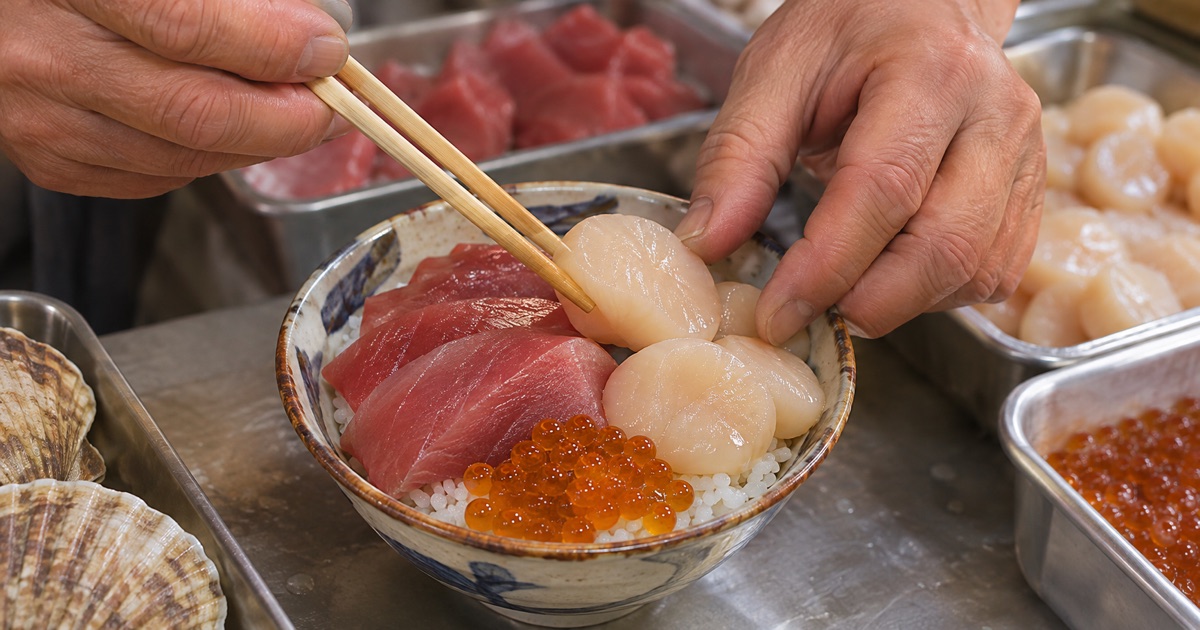
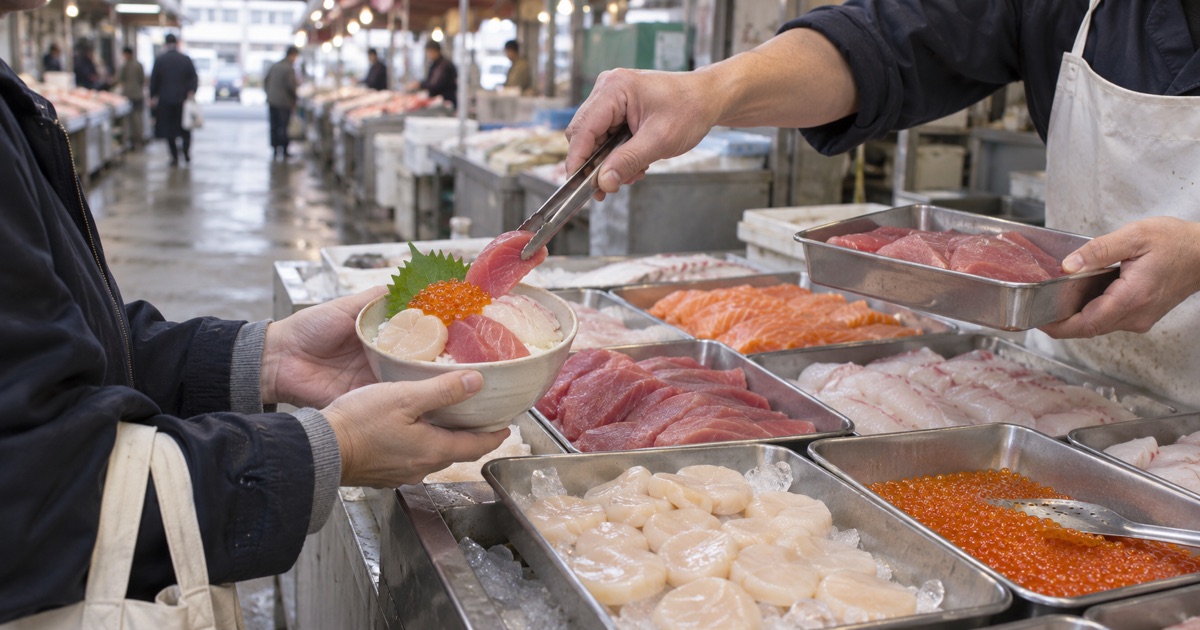
If you eat only one meal in central Aomori City, make it Nokkedon (のっけ丼). Unlike standard kaisen-don (海鮮丼, mixed seafood rice bowl), which comes with a predetermined chef's selection, Nokkedon is an interactive, build-your-own seafood bowl served inside local fish markets near Aomori Station.
How to Order Nokkedon Without Japanese
The ordering process relies on pre-paid paper ticket booklets rather than verbal communication, making it simple for first-time visitors:
- Buy a Ticket Sheet: Walk to the information desk at the market entrance. You can purchase a ticket sheet containing 5 to 10 tear-off tickets (prices generally range around 1,000 to 2,200 yen, depending on sheet size and market rates).
- Get Your Rice: Take your ticket sheet to the designated rice counter. Hand over one or two tickets to receive a bowl of plain steamed rice (gohan, ご飯).
- Walk the Aisles: Stroll past vendor stalls displaying fresh raw seafood arranged on small trays. Each tray has a sign indicating the ticket cost (typically 1 to 3 tickets per item).
- Point and Top: Point to the seafood you want. The vendor tears off the required tickets and uses tongs to place the fish directly onto your bowl of rice.
- Add Soup and Sides: You can trade your final tickets for pickled ginger, local pickles, or hot miso soup with local clams (shijimi, 蜆).
- Dine in the Market: Carry your completed bowl to the shared seating tables inside the market. Soy sauce, wasabi, and green tea are available at the tables.
Common seasonal toppings include scallops (hotate, ホタテ), salmon roe (ikura, イクラ), sea urchin (uni, ウニ), squid (ika, イカ), and bluefin tuna (maguro, マグロ). For fresh seafood standards across Japan, see the official overview by the Ministry of Agriculture, Forestry and Fisheries.
Aomori Miso Curry Milk Ramen (味噌カレー牛乳ラーメン)
This dish may sound like an unusual combination, but miso curry milk ramen has been a beloved staple in Aomori for decades. Created as an experiment by local high school students in the 1970s, it has evolved into one of the city's signature comfort foods.
What It Tastes Like
The broth starts with a robust pork and chicken stock seasoned with red miso paste and mild Japanese curry powder. Whole milk is stirred in just before serving, followed by a slice of melting butter placed directly on top.
The milk and butter round off the sharp spices of the curry and cut the saltiness of the miso. The result is a smooth, velvety soup coating thick, wavy yellow noodles. Typical toppings include tender bamboo shoots (menma, メンマ), boiled bean sprouts, roast pork (chashu, チャーシュー), and wakame seaweed.
Allergen note: This dish contains gluten/wheat, dairy (milk, butter), and soy. It cannot easily be modified for dairy-free or gluten-free diets.

We are working to carry Japanese craft and everyday culture beyond Japan, by building Japan Towns with local partners.
Read the Japan Town plan →Traditional Hearty Stews: Senbei Jiru and Kaiyaki Miso
Aomori's cold winters produced ingenious home cooking dishes designed to preserve ingredients and warm family homes.
Senbei Jiru (せんべい汁)
Originating in the Hachinohe (八戸) region in southeastern Aomori, senbei jiru is a clear, soy-sauce-based chicken or pork hot pot. What makes it unique is the inclusion of nanbu senbei (南部せんべい)—sturdy crackers made from wheat flour and salt.
Instead of softening into mush, these crackers are broken into chunks and simmered in the boiling broth for several minutes. They absorb the savory stock while maintaining a firm, chewy texture similar to al dente Italian pasta. The soup is packed with burdock root (gobo), Japanese leeks, carrots, and wild mushrooms.
Kaiyaki Miso (貝焼き味噌)
Kaiyaki miso is a traditional Tsugaru specialty. A large scallop shell serves directly as the cooking pan over a small tabletop flame. Inside the shell, a mixture of dashi broth, miso paste, sliced scallops, and beaten egg simmers gently until the egg reaches a soft, custardy consistency. It is served steaming hot, meant to be scooped directly over plain white rice.
Premium Local Ingredients to Look For
When browsing menus in Aomori's izakaya (casual dining taverns) and markets, look for these celebrated regional ingredients:
Tsugaru Apples (青森りんご)
Aomori produces more than half of Japan's domestic apple crop. The fruit is prized for its balance of crisp firmness, fragrance, and sweetness. You will find fresh apples sold by variety—such as Fuji, Tsugaru, and Orin—at station kiosks and fruit stands. Beyond fresh fruit, local bakeries throughout Aomori and Hirosaki (弘前) feature warm apple pies, dried apple slices, and locally brewed sparkling apple ciders.
Mutsu Bay Scallops (陸奥湾ホタテ)
Mutsu Bay features calm, nutrient-rich waters fed by snowmelt from surrounding mountains. Scallops raised here are known across Japan for their natural sweetness and delicate, melting texture. You can eat them raw as sashimi, grilled over charcoal with a dab of butter and soy sauce, or deep-fried as crispy hotate-furai (ホタテフライ).
Oma Tuna (大間マグロ)
Caught via traditional single-line hook fishing in the rough Tsugaru Strait, tuna landed at the port of Oma (大間) is considered among the most prestigious bluefin tuna in the world. Oma tuna is celebrated for its clean, iron-rich lean meat (akami) and marbling (otoro). While premium cuts command high prices at sushi counters, finding small servings of Oma tuna on a local sashimi platter is a memorable culinary experience.
Aomori White Garlic (青森にんにく)
Aomori is Japan's dominant garlic-producing region, particularly known for its sweet, mild "Fukuchi White" variety. Local eateries frequently serve whole fried garlic cloves, garlic-infused ramen oils, and black fermented garlic, which develops a sweet, balsamic-like flavor profile.
Practical Tips for Dining in Aomori
- Cash is Essential in Markets: While modern shopping centers around Shin-Aomori Station accept international credit cards and IC transit cards (like Suica or Pasmo), traditional fish stalls and ticket booths in local markets often accept cash only. Keep small denominations (1,000 yen bills and 100/500 yen coins) on hand.
- Language Barriers: Outside of major transit hubs, English menus can be limited. Using a real-time translation app on your smartphone to scan wall-mounted Japanese menus is highly recommended.
- Lunch vs. Dinner Hours: Traditional markets and Nokkedon venues open early in the morning (roughly 7:00 or 8:00 AM) and close by early to mid-afternoon (around 2:00 to 3:00 PM). Do not plan to visit fish markets for dinner. Conversely, izakaya serving kaiyaki miso and local sake open primarily from around 5:00 PM onward. Hours vary, so check official visitor centers or destination sites like the Japan National Tourism Organization before your trip.
- Seasonality: Visit in autumn (September to November) for the peak apple harvest and fresh salmon/roe, or during winter (December to February) to enjoy rich, comforting hot pots and fatty seasonal fish at their absolute peak.
FAQ
- Q. What is the most famous food to eat in Aomori?
- A. Nokkedon (custom seafood rice bowl) and Tsugaru apples are the most famous items, alongside regional dishes like miso curry milk ramen.
- Q. How does ordering Nokkedon work for non-Japanese speakers?
- A. You purchase a strip of meal tickets at the market entrance, exchange a ticket for plain rice, and browse market stalls to trade remaining tickets for seafood toppings.
- Q. What allergens are common in Aomori specialty dishes?
- A. Soy, wheat (gluten), crustaceans, and mollusks are common in stews and seafood bowls. Miso curry milk ramen contains dairy, wheat, and soy.
Cite or share this article
Copy the link below. If you quote this article, please link to this page as the source.