What to Eat in Koyasan: Essential Buddhist Vegetarian Food
Key takeaways
- Shojin ryori is the core culinary tradition in Koyasan, prepared without meat, fish, garlic, or onions.
- Goma-dofu and freeze-dried koya-dofu are mountain specialties with distinct textures and deep local history.
- Day-trippers should plan meals early, as mountain dining options close earlier than in major lowland cities.
When visiting Mount Koya (高野山, Koyasan), the essential food to eat is shojin ryori (精進料理), the traditional multi-course vegetarian cuisine developed by Buddhist monks. Alongside these complete temple meals, visitors should taste local specialties such as smooth sesame tofu (goma-dofu, ごま豆腐), porous dried tofu (koya-dofu, 高野豆腐), and regional bean-paste sweets.
Perched in the mountains of Wakayama Prefecture, Koyasan has functioned as an active monastic center for over twelve centuries. Because Shingon Buddhism prohibits the taking of sentient life, culinary traditions here evolved under strict constraints: no meat, no fish, and no pungent root vegetables from the allium family (such as garlic, onions, scallions, chives, and leeks). Instead, cooks rely on seasonal wild plants, soy products, seaweed, and subtle seasonings to create nourishing, complex dishes.
Whether staying overnight at a temple lodging (shukubo, 宿坊) or visiting on a day trip, knowing what dishes to expect will help you navigate temple menus with ease.
Shojin Ryori: Monastic Temple Cuisine
Shojin ryori is not merely vegetarian sustenance; it is a discipline grounded in the principle of balance. A standard meal follows the rule of five: incorporating five flavors (sweet, sour, salty, bitter, and umami), five colors (white, black, red, yellow, and green), and five preparation methods (raw, simmered, steamed, fried, and grilled).
Key Components of a Shojin Meal
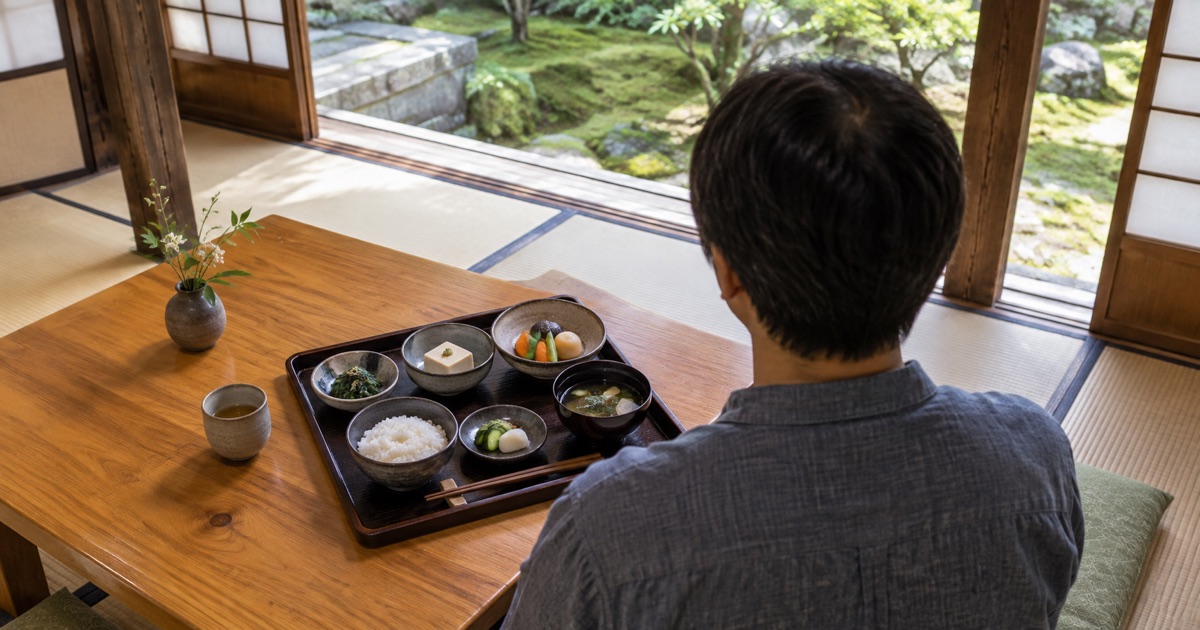
When served a shojin ryori set, dishes arrive on small lacquered trays, each item presented in its own ceramic or lacquer bowl:
- Rice (Gohan, ご飯): Typically plain steamed white rice, sometimes blended with barley, millet, or seasonal additions like chestnuts (kuri) in autumn.
- Soup (Shiru, 汁): Frequently a mild miso soup made with kelp (kombu, 昆布) stock instead of the standard bonito fish flakes (katsuobushi).
- Simmered Dishes (Nimono, 煮物): Seasonal root vegetables like lotus root (renkon), taro (satoimo), and bamboo shoots simmered slowly in soy sauce, mirin, and kombu dashi.
- Fried Dishes (Agemono, 揚げ物): Vegetable tempura featuring shiitake mushrooms, seasonal greens, pumpkin, or sweet potato, fried in light vegetable oil without egg batter.
- Pickled Vegetables (Tsukemono, 漬物): Crisp, salted daikon radish or seasonal greens that cleanse the palate between courses.
For more details on national guidelines regarding plant-based agricultural products, consult the Ministry of Agriculture, Forestry and Fisheries.
How to Eat a Monastic Meal
Temple dining emphasizes mindfulness and minimal waste.
- Observe silence or quiet conversation: Shukubo dining rooms often encourage guests to focus on the sensory profile and craftsmanship of the meal.
- Handle the bowls properly: Lift small rice and soup bowls with one or both hands toward your chest rather than bending your head down to the table.
- Pace the courses: Move clockwise or alternate between the rice, soup, and small side dishes to appreciate contrasting textures and temperatures.
- Finish every grain: Leaving uneaten food goes against the monastic ethos of gratitude for the ingredients and the labor involved.
Standout Local Specialties
While shojin ryori combines many items into an elaborate spread, several individual preparations are native to Koyasan's mountain climate.
Goma-dofu (Sesame Tofu)
Despite its name, goma-dofu contains no soy beans or coagulants. Monks make it by grinding white sesame seeds into an exceptionally smooth paste, combining it with mountain spring water and wild arrowroot starch (kudzu, 葛粉), and stirring the mixture over low heat for an extended period.
The resulting block has a glossy, custard-like texture and a rich, nutty flavor. It is commonly served cold or at room temperature, garnished with a dab of freshly grated wasabi and a drizzle of light soy sauce. Sweet varieties paired with brown sugar syrup (kuromitsu) are also served as tea accompaniments.
Koya-dofu (Freeze-Dried Tofu)
Invented centuries ago when monks left fresh tofu outside in sub-zero winter temperatures, koya-dofu is an ingenious preservation method. Freezing draws out the moisture and alters the protein structure; once dried, the tofu becomes light, sponge-like, and shelf-stable.
When reconstituted in hot dashi broth, koya-dofu absorbs the surrounding liquid completely. Biting into a piece releases a warm burst of seasoned stock. It has a firmer, more chewy texture than fresh silken or firm tofu and often appears in Koyasan simmered dishes alongside mountain carrots and snow peas.
Konnyaku (Konjac Jelly)
Made from the corm of the konjac plant, this gelatinous ingredient is prized for its chewy bite. In Koyasan, handmade konnyaku often appears thinly sliced like raw fish sashimi (konnyaku sashimi), served chilled over ice with vinegared miso dipping sauce (sumiso).
We are working to carry Japanese craft and everyday culture beyond Japan, by building Japan Towns with local partners.
Read the Japan Town plan →Regional Sweets and Snacks
Walking between the temples and the Okunoin (奥の院) cemetery requires sustained energy. Koyasan offers several traditional confections (wagashi) historically crafted for pilgrims:
- Koya-maki (高野巻): Steamed rice cakes wrapped in fragrant leaves, offering a subtle floral sweetness.
- Yaki-mochi (焼き餅): Flattened, lightly toasted rice cakes filled with sweet red bean paste (anko). They are often sold warm, featuring either plain white mochi or mugwort-infused (yomogi) green mochi, which carries an earthy herbal note.
- Miroku-ishi (みろく石): A small, baked bean cake molded into the shape of a sacred stone located at Okunoin. It has a crumbly outer crust and a dense, sweet bean paste filling.
Practical Advice for First-Time Visitors
Eating in a mountain town involves different logistics than dining in metropolitan areas like Osaka or Kyoto.
Timing and Availability
- Day-trip dining: Most standalone restaurants and tea houses in the central town area operate roughly from late morning to mid-afternoon (often closing around 16:00 or 17:00). If you arrive without a temple lodging reservation, plan your main meal around midday.
- Temple lodging meal times: If staying at a shukubo, dinner is typically served at a fixed time—often between 17:30 and 18:00—followed by an early breakfast the next morning around 07:00 or 07:30. Arriving late may result in forfeiting your dinner, as monk kitchens run on rigid daily schedules.
Dietary Requirements and Allergens
While shojin ryori is inherently free of meat, fish, poultry, and seafood, visitors with specific dietary needs should keep several points in mind:
- Gluten: Soy sauce (shoyu) containing wheat is used extensively in broths and glazes. Wheat gluten (fu, 麩) is also a frequent meat substitute.
- Soy: Tofu, miso, edamame, and soy sauce are central protein sources across nearly every dish.
- Sesame: Present in goma-dofu, dressings, and garnishes.
- Allergies: Monasteries prepare set menus in batches; making customized allergen adjustments at short notice is rarely possible. Inform lodgings of serious allergies well in advance of arrival.
Travel and Payment Essentials
- Cash is essential: While larger ticket counters accept electronic payments, small sweet shops, independent noodle counters, and temple halls in Koyasan frequently take cash only. Carry sufficient Japanese yen banknotes and coins.
- Access logistics: Koyasan is reached via the Nankai Koya Line from Namba Station in Osaka, transferring to a cable car at Gokurakubashi Station (極楽橋駅), followed by a short bus ride into the town center. Total transit takes approximately two to two-and-a-half hours. For route details, consult the Japan National Tourism Organization.
- Cold weather dining: Koyasan sits roughly 800 meters above sea level and is noticeably colder than lowland Kansai. In late autumn and winter, seek out hot udon or soba featuring koya-dofu to stay warm during your exploration.
FAQ
- Q. Can strict vegans eat traditional shojin ryori in Koyasan?
- A. Most shojin ryori in Koyasan uses plant-only ingredients, but check whether honey or refined sugar is present.
- Q. Is goma-dofu made from real soy tofu?
- A. No, traditional goma-dofu contains no soybeans; it is made from ground sesame paste, water, and kuzu starch.
- Q. Do restaurants in Koyasan accept credit cards?
- A. Many smaller shops and temple dining halls prefer cash, so carry enough Japanese yen for food and transport.
Cite or share this article
Copy the link below. If you quote this article, please link to this page as the source.