What to Eat in Shinjuku at Night: A Food Guide
Key takeaways
- Shinjuku offers diverse night dining, including yakitori skewers, hearty ramen bowls, and casual izakaya small plates.
- Ordering is manageable without Japanese by understanding ticket vending machines, seating charges, and basic seasoning words.
- Carry 1,000-yen notes and coins, as many traditional night counters in Tokyo prefer or require cash payments.
When deciding what to eat in Shinjuku at night, the top choices are charcoal-grilled chicken skewers (yakitori), rich bowls of late-night noodles like ramen and tsukemen, and casual pub dishes shared over drinks at an izakaya. From bustling station alleys to lively entertainment quarters, Shinjuku (新宿) provides an enormous density of nighttime dining options that cater to evening commuters, late-night workers, and international travelers alike.
Navigating this energetic district without reading Japanese can feel intimidating at first glance. However, understanding standard dish types, ordering mechanics, and basic night-dining customs makes eating in Shinjuku straightforward and satisfying. For broad travel resources on visiting Tokyo, consult the Japan National Tourism Organization.
Grilled Skewers: Yakitori and Motsuyaki
Charcoal-grilled skewers are the cornerstone of evening dining across Shinjuku, especially in the narrow pedestrian alleys west and north of the main railway station.
What the Dishes Are
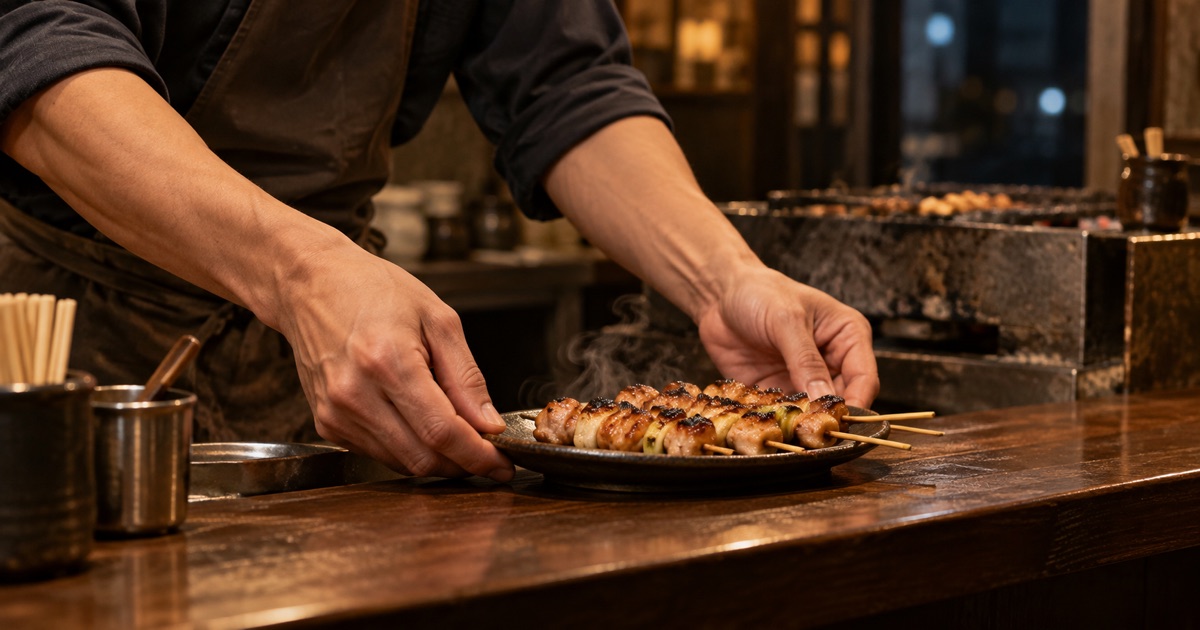
Yakitori (焼き鳥) consists of bite-sized cuts of chicken threaded onto bamboo skewers and grilled over hot coals. Common cuts include chicken thigh with scallions (negima / ねぎま), chicken meatballs (tsukune / つくね), skin (kawa / かわ), and tender breast meat with wasabi (sasami / ささみ).
In adjacent stalls, you will also see motsuyaki (もつ焼き), which refers to grilled pork or beef offal, such as liver, heart, and intestines. These skewers offer a firmer texture and a deep, savory flavor prized by locals pairing food with alcoholic or non-alcoholic beverages.
How to Order and Eat Them
Skewers are typically ordered a few sticks at a time rather than all at once. The chef or server will almost always ask for your seasoning preference:
- Tare (タレ): A sweet and savory soy-based glaze brushed onto the meat during grilling.
- Shio (塩): Plain sea salt sprinkled over the meat, highlighting the natural flavor of the cut.
Skewers are served fresh off the grill. Eat the meat directly from the wooden stick, or use chopsticks to pull the morsels off if sharing. Most counter tables provide a tall bamboo cup where you place discarded wooden skewers when finished.
Allergen note: The sweet glaze (tare) contains soy sauce and wheat. Skewers seasoned with shio (salt) generally avoid wheat, though cross-contamination on shared charcoal grills can occur.
Late-Night Noodles: Ramen and Tsukemen
Ramen counters in Shinjuku operate late into the night, serving patrons seeking a warming meal after sightseeing or evening social outings.
Common Broth Varieties
- Tonkotsu (豚骨): A thick, creamy pork-bone broth simmered for multiple hours to extract rich gelatin and minerals.
- Shoyu (醤油): A clear, aromatic broth flavored with regional soy sauce blends, often built on a chicken, pork, or dried fish base.
- Tsukemen (つけ麺): Cold or room-temperature noodles served on a separate plate, designed to be dipped into an intensely concentrated, piping-hot dipping bowl.
Detailed nutritional data for different meat broths and grain noodles can be reviewed via the MEXT Food Composition Database.
The Ticket Machine Process
Many night ramen shops rely on an automated ticket vending machine (kenbaiki / 券売機) stationed at the entrance:
- Insert cash first: Push bills into the slot and drop coins into the tray before pressing any dish buttons. The buttons will illuminate once sufficient funds are entered.
- Select your bowl: Standard buttons correspond to base noodle dishes. Larger buttons typically represent the shop's house specialty, often loaded with extra sliced pork (chashu / チャーシュー) and soft-boiled eggs (ajitsuke tamago / 味付け玉子).
- Collect your ticket and change: Retrieve the printed paper ticket and your coin/bill change.
- Hand the ticket to staff: Sit at an open counter stool and slide the ticket onto the upper ledge. The cook may ask for your noodle firmness preference (katame for firm, futsu for standard).
Slurping noodles is polite and functional: it aerates the hot soup, rapidly cooling the broth while releasing aromatic flavors.
We are working to carry Japanese craft and everyday culture beyond Japan, by building Japan Towns with local partners.
Read the Japan Town plan →Izakaya Small Plates: The Japanese Tavern Experience
An izakaya (居酒屋) is a casual evening drinking tavern that serves a wide variety of small, shareable plates designed to accompany beverages.
Classic Dishes to Try
- Karaage (唐揚げ): Boneless chicken marinated in soy sauce, ginger, and garlic, coated in potato starch, and deep-fried to a crisp texture.
- Edamame (枝豆): Boiled and salted young soybeans served in their pods. Push the beans out of the pod directly into your mouth with your teeth; do not eat the fibrous outer pod.
- Tamagoyaki (卵焼き): A rolled, layered omelet lightly seasoned with dashi broth, soy sauce, and sugar.
- Sashimi (刺身): Slices of raw seasonal fish served chilled with wasabi and soy sauce.
Understanding Otoshi (The Seating Dish)
When you sit down at an izakaya at night, the staff will often place a small, unrequested dish in front of you—such as pickled vegetables, simmered beef tendon, or potato salad. This dish is called otoshi (お通し) or tsukidashi (突き出し).
It is not a promotional freebie; it functions as an automatic seating fee and cover charge, usually ranging from 300 to 700 yen per person. It is standard dining protocol across Japanese evening establishments and cannot typically be declined.
Comfort Cooking: Oden and Kushikatsu
During cooler evenings, Shinjuku offers warming, rustic cooking styles suited for quick counter dining.
Oden (Simmered Hot Pot)
Oden (おでん) features various items stewed gently in a light, dashi-infused broth. You can select items individually from a simmering metal vat:
- Daikon (大根): Thick rounds of white radish that absorb the dashi broth until tender.
- Tamago (卵): Hard-boiled eggs that have taken on the savory color and depth of the broth.
- Chikuwa (ちくわ) and Hanpen (はんぺん): Steamed or fried fish cakes with varied textures ranging from chewy to airy.
Oden is typically eaten with a smear of pungent Japanese yellow mustard (karashi / からし) dabbed onto the side of the small serving bowl.
Kushikatsu (Deep-Fried Skewers)
Originally hailing from western Japan, kushikatsu (串かつ)—deep-fried, panko-breaded meat and vegetable skewers—is widely available around Shinjuku's entertainment streets. Diners dip the crunchy skewers into a tangy, Worcestershire-style dipping sauce.
If eating from a communal sauce vat, observe the strict hygiene rule: dip only once before taking a bite. Never submerge a half-eaten skewer back into communal sauce. Use raw cabbage leaves provided at the table to scoop extra sauce onto your plate if needed.
Practical Tips for Dining in Shinjuku at Night
Travel Times and Station Exits
Shinjuku Station is officially the busiest transit hub in the world, served by JR lines, the Tokyo Metro, the Toei Subway, and private rail networks. To reach your evening meal without losing your bearings:
- West Exit: Takes roughly 3 minutes on foot to reach the dense yakitori alleys of Omoide Yokocho (思い出横丁).
- East Exit: Takes roughly 5 minutes on foot to enter the illuminated dining and entertainment streets of Kabukicho (歌舞伎町).
- South Exit: Connects in roughly 4 minutes to modern dining terraces and high-rise commercial food floors.
Essential Items to Bring
- Cash (1,000-yen notes and 100-yen coins): While modern izakaya chains accept credit cards and IC transit cards (like Suica and Pasmo), small ramen bars and alleyway grill counters often accept cash only. Ticket machines rarely take 5,000-yen or 10,000-yen notes.
- Pocket tissues or wet wipes: Some traditional hole-in-the-wall shops do not provide cloth hand towels (oshibori).
- A digital translation app: Helpful for interpreting handwritten seasonal wall menus (tefuda).
Common Mistakes to Avoid
- Tipping: There is no tipping culture in Japan. Leaving cash on a counter or table will result in staff chasing you down the street to return forgotten money.
- Street wandering with food: While walking and eating is acceptable in specific festival settings, eating hot ramen or grilled skewers while walking through Shinjuku station corridors or busy sidewalks is generally frowned upon. Finish your meal inside the establishment or at the counter area provided.
- Assuming hours are static: Operating times, last orders (last order / ラストオーダー), and weekly closures vary widely between family-run counters and modern chains. Check the venue's official website or storefront signage on the day of your visit to confirm current operating schedules.
FAQ
- Q. What should I order at a Shinjuku yakitori stall if I do not speak Japanese?
- A. You can order skewered chicken thigh (negima) or meatballs (tsukune) seasoned with savory soy glaze (tare) or simple salt (shio).
- Q. Why did an izakaya serve me a small dish I did not order?
- A. This dish is called otoshi, a mandatory small appetizer that serves as a seating cover charge at most evening drinking establishments.
- Q. How do late-night ramen ticket machines work?
- A. Insert your cash first, press the button showing your chosen ramen, collect your change, and hand the printed paper ticket to the chef.
Cite or share this article
Copy the link below. If you quote this article, please link to this page as the source.