Arashiyama Food Street: A First-Timer's Guide to Eating Well
Key takeaways
- The main food street runs near Togetsukyo Bridge and along the lane toward Tenryu-ji Temple, walkable in 20-30 minutes.
- Popular snacks include matcha soft serve, yatsuhashi, tofu-based skewers, and roasted sweet potato; most stalls are cash-friendly but card use is spreading.
- Eating while walking is tolerated on this stand-food street, but finish before entering temples, trains, or quieter residential lanes.
What Is the Arashiyama Food Street?
The Arashiyama food street is not one official named street but a nickname for the cluster of food stalls, sweet shops, and small eateries along the main pedestrian route near Togetsukyo Bridge (渡月橋) and the lane leading toward Tenryu-ji Temple (天龍寺). For first-time visitors, this stretch is the easiest place in Arashiyama (嵐山) to try matcha sweets, tofu dishes, and grab-and-go snacks while sightseeing.
Arashiyama sits in western Kyoto, roughly 15-25 minutes by train from central Kyoto depending on the line you use, including the JR Sagano Line, the Hankyu Arashiyama Line, and the Randen (Keifuku) tram. Most visitors arrive, cross the bridge area, then walk the food street before or after visiting the famous Bamboo Grove (竹林の道) or nearby temples.
How to Find and Walk the Street
Getting There
From Kyoto Station, the JR Sagano Line to Saga-Arashiyama Station (嵯峨嵐山駅) takes around 15-20 minutes and is usually the most convenient option for first-time visitors. Alternatively, the Hankyu line via transfer, or the Randen tram from central Kyoto, also reach the area, though routes and transfer points vary, so checking a transit app on the day is wise since timetables can change.
Once you arrive, the walk to the food street and Togetsukyo Bridge from Saga-Arashiyama Station takes roughly 10-15 minutes on foot. Signage in English is common, and the crowds heading the same direction make it hard to get lost.
What the Street Looks Like
Unlike a single indoor market, this is an open-air strip of independent stalls, dessert counters, and casual eateries lining both sides of the road. Expect narrow sidewalks, seasonal decorations, and, especially during cherry blossom and autumn foliage seasons, significant crowds. Early morning (soon after the area wakes up) tends to be noticeably calmer than midday.

We are working to carry Japanese craft and everyday culture beyond Japan, by building Japan Towns with local partners.
Read the Japan Town plan →What to Eat on Arashiyama Food Street
Matcha-Based Sweets
Kyoto is strongly associated with matcha, and Arashiyama's food street reflects that with matcha soft-serve ice cream, matcha parfaits, and matcha-flavored baked goods sold from stall windows. These are usually eaten standing or while walking, served in cups or cones designed for mobility.
Yatsuhashi
Yatsuhashi is a classic Kyoto confection made from glutinous rice flour, sugar, and cinnamon, sold either baked and crisp or raw and soft with a filling such as sweet red bean paste. It is one of the most common souvenir sweets in the area, and many shops offer small samples so visitors can taste before buying a boxed set.
Tofu and Yuba Dishes
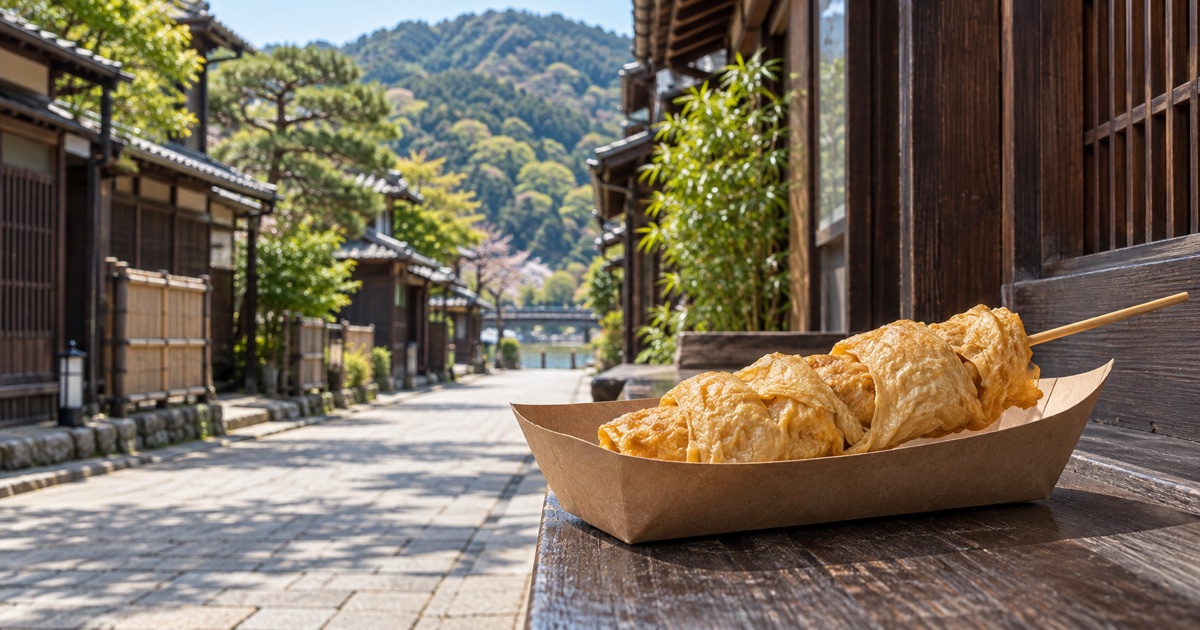
Western Kyoto, including Arashiyama, is historically known for tofu-making using local water. Along the food street, you may find skewered grilled tofu, tofu doughnuts, or small servings of yuba (the skin that forms on simmered soy milk), often lightly seasoned with soy sauce or salt. These dishes are a gentler, savory contrast to the sweet options nearby.
Seasonal and Roasted Snacks
In cooler months, roasted sweet potato (yaki-imo) and chestnut-based sweets appear more frequently. In warmer months, cold drinks, shaved ice, and fruit-based treats are more common. Because stalls rotate stock with the seasons, what is available in spring may differ from autumn, so treat any specific snack as something to confirm on the day rather than guaranteed.
Pickles and Savory Bites
Kyoto-style pickles (Kyo-tsukemono) are sold in small packs at several shops along the route, often as a lighter, non-sweet option. Some stalls also sell croquettes, dumplings, or skewered items that make for an easy snack between temple visits.
How to Eat on the Street: Etiquette and Practical Tips
Walking and Eating
Eating while walking is broadly accepted on this street because it functions as a casual food lane, unlike many residential Kyoto streets where walking and eating is discouraged. Even so, it is considerate to:
- Finish your snack before entering temple grounds, shops, or quieter side streets.
- Use the small trash bins near stalls rather than carrying wrappers far, since public bins are limited in Japan generally.
- Avoid eating directly in front of a stall's entrance if other customers are trying to order.
Payment
Cash remains useful throughout Kyoto's smaller food stalls, including Arashiyama, though contactless and card payments are increasingly accepted at larger shops. Carrying some yen in coins and small notes avoids delays, especially at stalls with short queues and quick turnover.
Common Mistakes First-Timers Make
- Arriving at midday during peak cherry blossom or autumn foliage season and expecting a quiet stroll; crowds can be heavy.
- Assuming every stall takes cards; smaller stands may be cash-only.
- Filling up on sweets before trying savory tofu dishes, which are easy to miss if you are already full.
- Not checking whether a specific stall or seasonal item is still being sold that day, since offerings change with season and supply.
Allergens and Dietary Notes
Many sweets on the street contain wheat, soy, and dairy (in matcha soft serve), while tofu and yuba dishes are soy-based by nature. Those with soy, wheat, or dairy allergies should ask staff or check ingredient labels where available, since recipes and preparation can vary stall to stall. For general nutrition information on ingredients like tofu, soy products, and rice-based sweets, see this site's nutrition pages, and for official nutrient data you can consult the MEXT Food Composition Database.
Planning Your Visit
Arashiyama is usually combined with a half-day or full-day itinerary that includes the Bamboo Grove, Tenryu-ji Temple, and sometimes the Sagano Scenic Railway. Budgeting 2-3 hours for walking, snacking, and photos along the food street and surrounding area is reasonable for most first-time visitors, though exact timing depends on crowd levels and personal pace.
Because opening hours, stall availability, and prices change with season and circumstance, it is worth checking current conditions before your trip through general travel resources such as the Japan National Tourism Organization, which provides updated seasonal and regional travel information for visitors to Japan.
FAQ
- Q. Where exactly is the Arashiyama food street?
- A. It generally refers to the pedestrian lane and streets near Togetsukyo Bridge (渡月橋) and the approach toward Tenryu-ji Temple, where many stalls and small eateries cluster together.
- Q. Is Arashiyama food street expensive?
- A. Most street snacks are affordable, roughly a few hundred yen each, though sit-down tofu or kaiseki-style meals cost more; always check posted prices since they change.
- Q. Can I eat while walking around Arashiyama?
- A. Yes, casual walking-and-eating is common on the main food street, but it is considerate to finish food before entering temple grounds, shops, or quieter residential areas.
Cite or share this article
Copy the link below. If you quote this article, please link to this page as the source.