Food in Chiyoda City: What to Eat and Food Culture Guide
Key takeaways
- Chiyoda City hosts diverse food styles, ranging from quick station noodles to traditional multi-course dining.
- Major transit hubs like Tokyo Station offer easy access to regional specialties from across Japan.
- Knowing ordering steps and etiquette makes navigating office-district lunch spots smooth for non-Japanese speakers.
Food in Chiyoda City reflects the heart of Tokyo, blending quick commuter meals, historic comfort food, and refined national specialties. As the administrative and transit core of the capital, Chiyoda offers everything from hurried lunch-counter dishes designed for busy workers to regional classics brought in from across Japan.
Whether stepping off a bullet train at Tokyo Station (東京駅) or exploring neighborhoods like Marunouchi (丸の内), Kanda (神田), or Otemachi (大手町), visitors encounter a broad cross-section of Japanese culinary traditions. This guide outlines the prominent dishes of the area, how they are eaten, and practical steps for navigating local dining without Japanese language skills.
Iconic Food Styles in Chiyoda City
Because Chiyoda City functions as both the seat of national government and Tokyo’s central transportation hub, its food landscape features dishes tailored to fast-paced workers alongside culinary styles with deep local history.
Japanese Curry Rice (Kare Raisu)
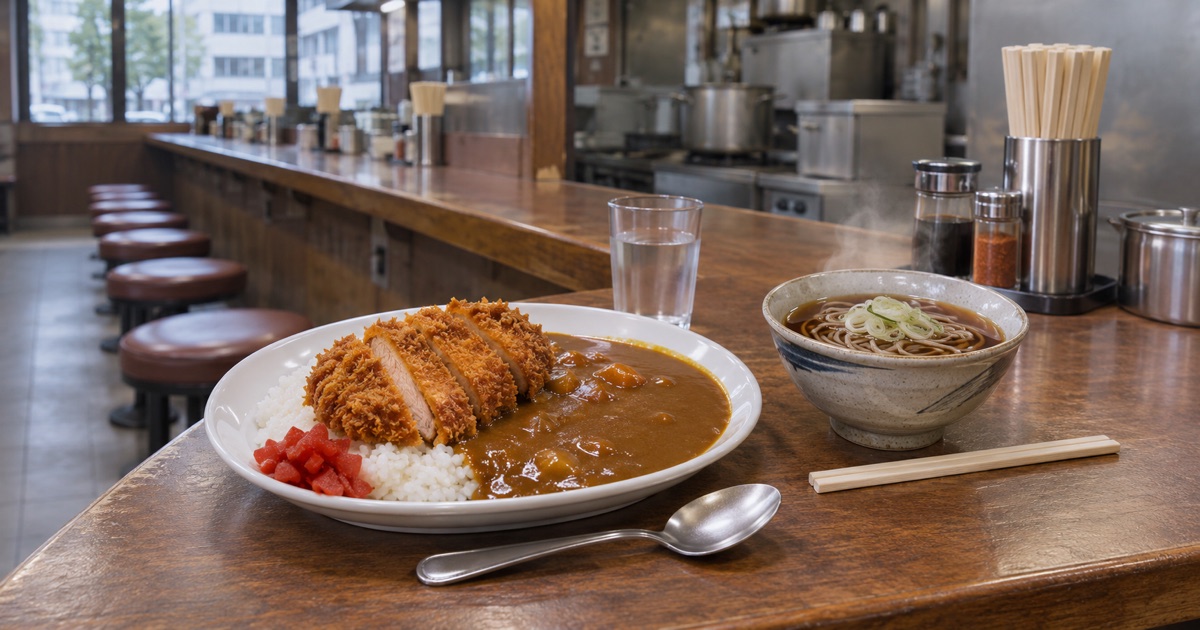
Japanese curry (カレーライス, kare raisu) has an exceptionally strong association with the Kanda area within Chiyoda City. Unlike thin, spicy South Asian curries, Japanese curry features a thick, glossy roux flavored with spices, fruit purees, and rich meat or vegetable stocks. The sauce is spooned alongside Japanese short-grain rice, often accompanied by fukujinzuke (福神漬), a sweet and crunchy relish of pickled vegetables, or rakkyo (らっきょう), pickled scallion bulbs.
A popular local variation is katsu kare (カツカレー), where a freshly fried, breaded pork cutlet sits atop the rice before being draped in curry sauce. The contrasting textures of the crisp panko crust and the savory sauce make this a staple of local lunch counters.
Quick Soba and Udon Noodles
Buckwheat noodles (soba, 蕎麦) have nourished Tokyo locals since the Edo period. Around Chiyoda's bustling business districts and transit hubs, you will find both traditional sit-down soba houses and standing noodle bars (tachi-gui soba, 立ち食いそば).
Soba is typically served in two ways:
- Cold (Mori or Zaru Soba): Chilled noodles served on a bamboo grate accompanied by a concentrated dipping sauce (tsuyu), green onions, and wasabi.
- Hot (Kake Soba): Noodles served directly in a deep bowl of steaming broth made from dashi stock, soy sauce, and sweet rice wine (mirin). Toppings can include tempura crisps (tanuki), sweet fried tofu (kitsune), or raw egg (tsukimi).
High-End Washoku and Kaiseki
In the quieter corners near the Imperial Palace and upscale office towers, multi-course dining (kaiseki, 会席料理) flourishes. These meals emphasize seasonality (shun), artistic presentation, and delicate cooking techniques that highlight the natural flavors of vegetables, seafood, and broth. Courses follow a set structure, starting with small appetizers (sakizuke), followed by sashimi, simmered items (nimono), grilled proteins (yakimono), and concluding with rice, miso soup, and pickles.
Regional Bento (Ekiben)
Tokyo Station, located squarely in Chiyoda, is the premier place in Japan to experience ekiben (駅弁)—pre-packaged meals created for train journeys. These lunch boxes showcase seasonal and regional foods from prefectures all over Japan, such as Sendai beef tongue, Toyama trout sushi, or Hokkaido seafood. They are eaten cold or at room temperature, designed so the rice remains tender and flavorful without reheating.
How to Order and Eat at Casual Chiyoda Eateries
Many popular dining spots in Chiyoda are designed for high efficiency. Following a few practical steps ensures a seamless experience even without Japanese language skills.
Using the Ticket Vending Machine (Kenbaiki)
In fast-casual noodle shops and curry diners, ordering happens via a ticket machine (券売機, kenbaiki) positioned near the front entrance:
- Insert Payment: Insert Japanese yen (coins or notes) or tap a transit IC card (such as Suica or Pasmo).
- Select Your Meal: Press the button for your chosen dish. Many modern machines have an "English" button on the screen; older mechanical machines may rely on buttons with small Japanese text or photo displays above the machine.
- Take Your Ticket and Change: Retrieve the printed paper ticket and your change.
- Hand to Staff: Take an open seat or counter space and hand the ticket to the kitchen staff. For noodle dishes, staff may ask a simple question: "Soba or udon?" Simply answer with your preferred noodle type.
Counter Etiquette and Speed
During the peak lunch rush—roughly 11:30 to 13:30 on weekdays—thousands of office workers flood local restaurants.
- Keep Moving: Decide your order quickly if there is a queue behind you.
- Seat Yourself or Wait to Be Directed: Smaller counters will point to a specific stool.
- Water is Self-Service: In most budget eateries, glasses and water pitchers are set along the counter.
- Return Your Tray: When finished, place your empty bowl and cup on the raised ledge of the counter or return them to a designated dish return shelf (sagen-jo, 下げ膳所), and say "Gochisousama deshita" ("Thank you for the meal") as you exit.
We are working to carry Japanese craft and everyday culture beyond Japan, by building Japan Towns with local partners.
Read the Japan Town plan →Ingredients, Flavors, and Dietary Notes
Understanding common ingredients helps when planning meals, especially for those with specific dietary restrictions.
- The Foundation (Dashi): Most soups, dipping sauces, and simmered dishes rely on dashi (出汁), a savory stock made primarily from dried bonito flakes (katsuobushi) and kelp (konbu). Because dashi contains fish products, dishes that appear vegetarian often are not strictly plant-based.
- Common Allergens: Soy (daizu) and wheat (komugi) are present in almost all savory dishes via soy sauce (shoyu). Soba noodles are made of buckwheat, a potent allergen in Japan; those with buckwheat allergies should avoid traditional soba shops due to cross-contamination risks. Eggs and pork are widely used in breading, curries, and ramen broths.
- For detailed nutritional breakdowns of fundamental Japanese ingredients, refer to the MEXT Food Composition Database managed by the Ministry of Education, Culture, Sports, Science and Technology.
Practical Tips for Travelers in Chiyoda
To make the most of dining around Chiyoda, keep these ground rules in mind:
- Payment Methods: While major commercial complexes in Marunouchi and inside Tokyo Station accept credit cards, smartphones, and transit IC cards, small noodle shops and underground curry counters frequently accept only cash (yen) or IC cards. Carry small bills (1,000 yen notes) and coins.
- Peak Hours: Weekday lunch hours (roughly 11:45 to 13:00) see long queues of office workers. Visiting slightly early (around 11:15) or after 13:30 ensures shorter wait times and a more relaxed meal.
- Navigating Vast Stations: The underground networks around Tokyo, Otemachi, and Hibiya stations are enormous. Restaurant zones exist both inside the ticket gates (ekinaka) and outside (ekisoto). If a dining area is inside the gates, you must hold a valid train ticket or IC tap to access it.
- Official Visitor Resources: For broader guidance on regional Tokyo travel and etiquette, consult the Japan National Tourism Organization.
Dining in Chiyoda City provides a direct window into Japanese food culture, bridging centuries-old buckwheat traditions with the modern, lightning-fast dining routines of contemporary Tokyo.
FAQ
- Q. What types of food are famous in Chiyoda City?
- A. Chiyoda is known for Japanese-style curry, quick soba noodles around major commuter hubs, high-end kaiseki, and regional bento boxes sold at Tokyo Station.
- Q. How do travelers order food at quick-service eateries in Chiyoda?
- A. Many casual ramen and curry spots use ticket vending machines (kenbaiki) near the entrance, where diners purchase tickets with cash or IC cards before taking a seat.
- Q. Are vegetarian or allergy-friendly options easy to find?
- A. Clear labeling is increasing, but traditional broths often contain fish flakes (katsuobushi) or soy. Carrying written dietary cards in Japanese helps clarify ingredients.
Cite or share this article
Copy the link below. If you quote this article, please link to this page as the source.