Kitakyushu Food Guide: Iconic Dishes and How to Eat Them
Key takeaways
- Kitakyushu offers distinct regional foods including baked curry (yaki curry), stir-fried udon (yaki udon), and fresh local seafood.
- Most specialty dishes are casual, comfort foods served in retro port areas and local shopping arcades across the city.
- Ordering is simple with ticket machines or English menus, but watch for common allergens like wheat, dairy, and shellfish.
Kitakyushu food is defined by hearty, cross-cultural comfort dishes and vibrant seaside culinary traditions shaped by the city’s history as an industrial hub and international trading port. From baked curry gratin in the historic port district to iron-griddled noodles in working-class neighborhoods, the local cuisine offers an accessible, distinct flavor profile within the northern tip of Fukuoka Prefecture.
For travelers journeying through northern Kyushu, understanding what to eat, how each dish is composed, and how to navigate local dining customs ensures a seamless culinary experience.
The Pillars of Kitakyushu Cuisine
Kitakyushu (北九州) sits at a strategic junction facing the Kanmon Strait (関門海峡), linking the main island of Honshu with Kyushu. Because of its maritime trade and heavy industrial background, the city developed a food culture that values fast, nourishing, and flavorful meals.
Rather than high-end banquet dining, Kitakyushu excels in what Japanese diners call b-kyu gurume (B-grade gourmet)—unpretentious, deeply satisfying regional specialties beloved by locals.
Yaki Curry (Baked Curry)
Yaki curry (焼きカレー) is Kitakyushu's most internationally recognized culinary invention, originating in the port district of Mojiko (門司港). In the mid-twentieth century, Mojiko was a thriving international port where Western culinary techniques blended with Japanese domestic cooking.
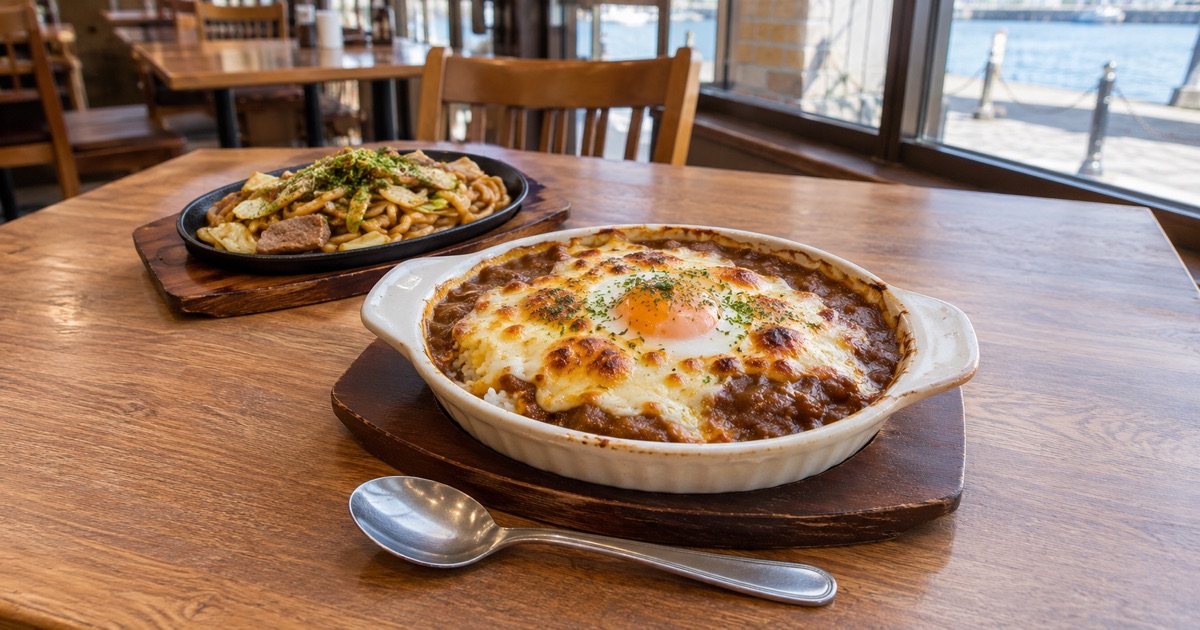
The dish consists of steamed white Japanese rice topped with a rich European-style beef or vegetable curry roux, an uncooked egg, and a generous layer of melting cheese. The entire dish is assembled in an ovenproof ceramic baking dish and placed under a high-heat salamander or inside an oven until the cheese bubbles, browns, and forms a savory crust.
- How it tastes: The richness of the melted cheese mellows the spices of the curry, while the baked egg provides a creamy texture once punctured and stirred into the hot rice.
- Common variations: Some kitchens add toppings before baking, such as local seafood (squid, shrimp, or fugu), sausages, or grilled seasonal vegetables.
- Allergens: Wheat (in the curry roux), dairy (milk and cheese), and eggs.
Yaki Udon (Stir-Fried Udon)
While yaki udon (焼きうどん) is eaten across Japan today, Kitakyushu’s Kokura (小倉) area is widely recognized as its birthplace. Following the food shortages of the immediate post-World War II era, soba noodles used for yakisoba were scarce, prompting local cooks to substitute shelf-stable dried udon noodles onto the iron griddle (teppan).
Unlike regular boiled udon served in a dashi broth, yaki udon is stir-fried at high heat with thinly sliced pork belly, sweet cabbage, onions, and bean sprouts. It is seasoned with Worcestershire-style savory brown sauce, soy sauce, or sake, and garnished with dried bonito flakes (katsuobushi) and pickled red ginger (beni shoga).
- How it tastes: Savory, slightly sweet, smoky, and chewy. The high-heat sear gives the thick wheat noodles a slightly crisp exterior while maintaining a tender core.
- Regional note: Kitakyushu yaki udon traditionally uses dried noodles (kanmen) boiled just before frying, which yield a firmer bite compared to the pre-cooked soft noodles often used elsewhere.
- Allergens: Wheat, soy, and pork.
Kanmon Strait Seafood and Fugu
Kitakyushu borders the Kanmon Strait, where fast-moving ocean currents produce firm, muscular fish and seafood.
- Fugu (Blowfish / Pufferfish): Because Kitakyushu faces Shimonoseki across the narrow strait, local markets feature exceptionally fresh blowfish, locally referred to in western Japan as fuku (meaning good fortune). It is served as paper-thin sashimi (tessa), deep-fried (karaage), or simmered in a hot pot (tecchiri).
- Kitakyushu Awa (Abalone) and Octopus: The strong water currents give local octopus and shellfish a distinctively firm, sweet texture.
Travelers looking for official guidelines on regional specialty products can consult the Ministry of Agriculture, Forestry and Fisheries.
Regional Styles Across the Wards
Kitakyushu is a sprawling municipality formed by the merger of five distinct cities, and its food reflects these sub-regions:
Mojiko Port
Mojiko is the undisputed center for yaki curry. The area retains red-brick Western-style architecture from the late nineteenth and early twentieth centuries. Dining here usually takes place in retro cafes, restored warehouse spaces, and family-run diners.
Kokura
Kokura is the commercial heart of Kitakyushu, anchored by Kokura Station (小倉駅). It is the center for street-level casual dining, including yaki udon, gyoza, and bustling market culture. The shopping arcades around the station house long-standing stalls where cooking happens directly in front of diners on counter griddles.
Wakamatsu and Yahata
Yahata (八幡) is an industrial steel district known for hearty portions, particularly iron-skillet gyoza (tetsunabe gyoza). Wakamatsu (若松), positioned along the sea, is celebrated for coastal produce, including sweet winter cabbage and coastal tomato varieties.

We are working to carry Japanese craft and everyday culture beyond Japan, by building Japan Towns with local partners.
Read the Japan Town plan →How to Order and Eat Kitakyushu Specialties
Dining in Kitakyushu is generally straightforward, but first-time visitors who do not speak or read Japanese will benefit from understanding the practical workflow of local restaurants.
Step 1: Navigating the Door and Ticket Machines
In many casual yaki udon and curry shops, ordering is handled via a ticket vending machine (shokkenki) located directly inside the entrance.
- Insert cash (notes and coins; cards are not accepted at all older machines).
- Press the button corresponding to your dish. Major buttons often feature plastic food models, pictures, or English subtext.
- Hand the printed ticket to the kitchen staff when seated.
Step 2: Eating Yaki Curry
When your yaki curry arrives, the ceramic bowl will be searingly hot.
- Do not touch the baking dish directly.
- Use your spoon to gently break the baked crust around the edges.
- Dig toward the center to break open the soft egg yolk, letting it mix into the spicy curry and rice below.
- Allow each bite to cool slightly; the melted cheese retains heat for a long time.
Step 3: Enjoying Iron-Griddled Specialties
If you order yaki udon or skillet gyoza at a counter seat, the cook will often place the dish directly onto an integrated heated griddle or in a sizzling cast-iron pan in front of you.
- Eat directly from the pan or transfer small portions to a side dish (torizara) using chopsticks.
- Add condiments to taste: ground white pepper, chili flakes (ichimi), or a dash of local soy sauce.
Essential Practical Advice for Visitors
Travel Times and Transport
Kitakyushu is easily accessed from Fukuoka City (Hakata Station).
- Shinkansen (Sanyo Shinkansen): Hakata Station (博多駅) to Kokura Station takes roughly 15 to 20 minutes. Note that JR Kyushu rail passes do not cover the Shinkansen between Hakata and Kokura because that line is operated by JR West; regular JR local/express trains or separate tickets must be used.
- Local / Limited Express: The Sonic Limited Express connects Hakata to Kokura in roughly 45 to 50 minutes.
- Reaching Mojiko: From Kokura Station, board the JR Kagoshima Main Line local train to Mojiko Station (門司港駅), which takes around 15 minutes.
For nationwide transport planning and rail networks, visit the Japan National Tourism Organization.
What to Bring
- Cash (Yen): While newer establishments and train station complexes accept credit cards and IC transit cards, traditional neighborhood noodle shops and retro cafes in Mojiko frequently remain cash-only.
- Handkerchief or Small Towel: Many casual diners provide only a small moist towelette (oshibori), so carrying a personal hand towel is practical.
- Allergy Information Sheet: If you have severe wheat, shellfish, or dairy allergies, carry a printed card in Japanese explaining your dietary restrictions, as English-language allergen menus are rare outside of chain hotels.
Common Mistakes to Avoid
- Assuming all Fukuoka food is Hakata food: Visitors often mistake Kitakyushu’s dining scene for Hakata’s tonkotsu ramen culture. While tonkotsu ramen is available, Kitakyushu locals pride themselves on their own distinct noodles (yaki udon) and Western-influenced baked curry.
- Arriving during midday closures: Many casual noodle and curry eateries operate on split shifts, opening for lunch around 11:30 to 14:30 and closing until dinner service begins around 17:30. Always check individual venue hours before making a dedicated trip.
- Burning your mouth on yaki curry: Because the dish is broiled with a cheese seal, steam remains trapped inside the rice. Take careful, shallow spoonfuls initially.
Kitakyushu’s food culture offers an accessible, warming, and deeply regional culinary chapter within western Japan—one built on local history, maritime trading heritage, and hearty community flavors.
FAQ
- Q. What is the most famous dish to try in Kitakyushu?
- A. Yaki curry (baked curry) from the Mojiko port area is the city's signature specialty, featuring rice, curry, cheese, and an egg baked in an oven.
- Q. Is yaki udon different in Kitakyushu compared to other parts of Japan?
- A. Kitakyushu is considered the birthplace of yaki udon, traditionally prepared with dried noodles, pork, cabbage, and a savory sauce grilled on an iron teppan.
- Q. How do travelers with food allergies manage dining in Kitakyushu?
- A. Major Kitakyushu specialties contain common allergens like wheat (noodles, curry roux), dairy (cheese on curry), and soy sauce; carrying a written allergy card in Japanese is recommended.
Cite or share this article
Copy the link below. If you quote this article, please link to this page as the source.