Koyasan Shojin Ryori: What Spanish Travelers Should Know Before Visiting
Key takeaways
- Shojin ryori is Buddhist vegetarian cuisine with no meat, fish, or strong-smelling vegetables like garlic and onion.
- Most visitors eat it as part of a shukubo (temple lodging) stay, with dinner and breakfast included in the room rate.
- Koyasan is reached by train and a short cable car ride from Osaka, roughly 1.5 to 2 hours depending on the route.
What Food Is Koyasan Known For?
Koyasan (高野山) is known for shojin ryori (精進料理), the traditional vegetarian cuisine developed by Buddhist monks and served today mainly at the temple lodgings (shukubo, 宿坊) scattered across this mountain town in Wakayama Prefecture. For travelers coming from Spain or anywhere else, the short answer is: you will not find restaurants serving jamón or seafood tapas here — the food experience centers on quiet, plant-based meals eaten as part of an overnight stay at a temple.
This guide explains what shojin ryori actually is, how meals work during a temple stay, how to get to Koyasan, and what to watch out for if you are visiting for the first time.
What Is Shojin Ryori, Exactly?
Shojin ryori is rooted in Buddhist dietary precepts that avoid taking animal life, so the cuisine contains no meat, fish, or seafood. It also traditionally excludes what are called the "five pungent vegetables" — garlic, onion, scallion, chive, and a few related alliums — because strong flavors and smells are believed to disturb meditation and spiritual focus. This makes shojin ryori quite different from everyday Japanese home cooking, which often relies on garlic or bonito-based dashi.
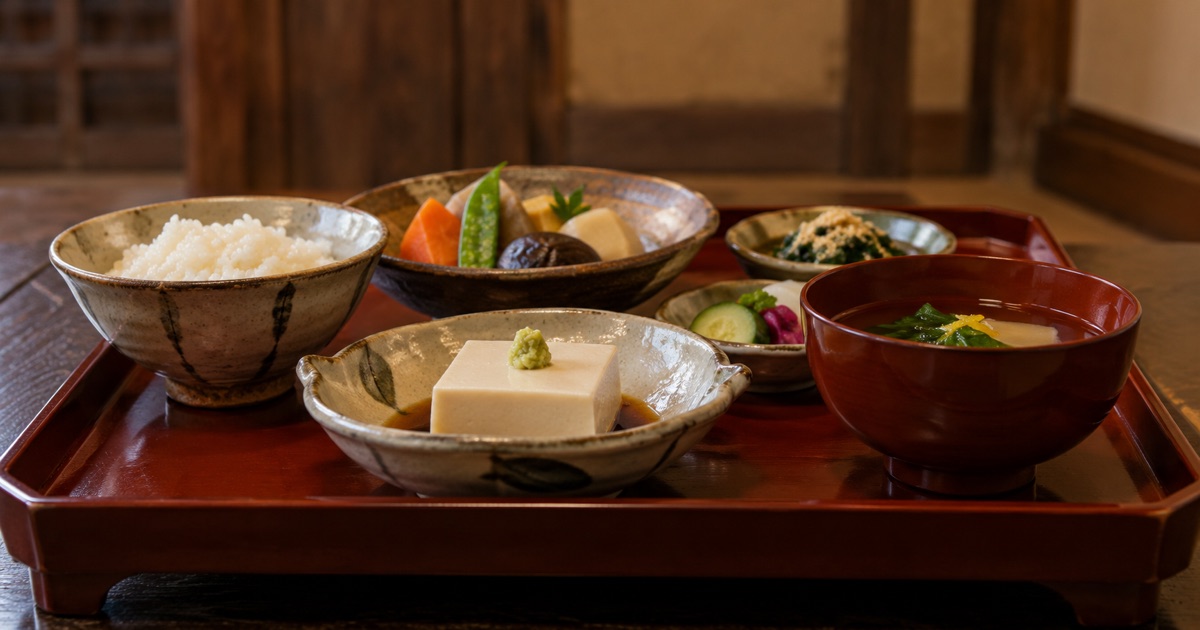
Instead, the cuisine builds flavor from ingredients like tofu, yuba (tofu skin), konnyaku, seasonal vegetables, wild mountain plants (sansai), seaweed, and fermented items such as miso and soy sauce. A typical meal might include:
- Goma-dofu (ごま豆腐): a silky sesame-based tofu, often considered a signature dish of Koyasan
- Simmered vegetables (nimono) in a light soy-based broth
- Pickled vegetables (tsukemono)
- Rice, usually plain steamed rice
- Clear or miso-based soup
- Small fried or vinegared vegetable dishes
Presentation matters as much as taste. Dishes are usually served in small individual lacquered or ceramic bowls, arranged on a tray, reflecting the Buddhist idea of mindful, modest eating rather than indulgence.
How Do You Actually Eat Shojin Ryori in Koyasan?
Almost all visitors experience shojin ryori by staying overnight at a shukubo, a temple that offers lodging to travelers and pilgrims. Dinner and breakfast are typically included in the room rate, so you do not usually order food à la carte or visit a separate restaurant.
A few practical points:
- Meal times are fixed. Dinner is usually served in the early evening and breakfast early in the morning, often before 8am, sometimes tied to the temple's morning prayer service. Times vary by temple, so confirm with your accommodation after booking.
- Meals are served in your room or a communal dining hall, depending on the temple's style.
- Portions are fixed-course style, similar to a kaiseki meal, rather than a buffet or menu with choices.
- Alcohol may or may not be offered; some temples sell a small amount of sake or beer, others do not serve alcohol at all.
If you have dietary restrictions, allergies, or expect a vegan (not just vegetarian) meal, contact the temple in advance, since preparation styles can vary slightly from one shukubo to another.
Common Mistakes First-Time Visitors Make
- Expecting restaurant-style flexibility. Shojin ryori at a temple lodging is a set menu decided by the kitchen that day; you generally cannot substitute dishes.
- Arriving late for dinner. Temples run on a schedule tied to evening prayers and quiet hours, so arriving after the posted check-in window may mean missing your meal entirely.
- Assuming all dishes are vegan. While shojin ryori has no meat or fish, some preparations may use dashi stock that could include non-vegan elements depending on the temple, so it is worth asking directly if this matters to you.
- Not booking far enough ahead, especially around weekends, Japanese holidays, and autumn foliage season, when shukubo rooms fill up quickly.
How to Get to Koyasan
Koyasan is most commonly reached from Osaka using the Nankai Electric Railway line to Gokurakubashi Station (極楽橋駅), followed by a short cable car (funicular) ride up the mountain to Koyasan Station. From there, local buses connect to the temple area. The full journey from central Osaka takes roughly 1.5 to 2 hours, depending on the train type and connections.
Some travelers combine this with the Nankai Koyasan World Heritage Ticket or similar discount passes that bundle train, cable car, and local bus fares — check current pass options and prices on Nankai's official site, since offerings and prices change. For broader trip planning, the Japan National Tourism Organization also has general travel information for the Koyasan area.
Bring warm clothing if visiting outside summer, as Koyasan sits at a higher elevation than Osaka and can be noticeably cooler, especially in the morning and evening.

We are working to carry Japanese craft and everyday culture beyond Japan, by building Japan Towns with local partners.
Read the Japan Town plan →What to Bring and Expect During a Temple Stay
- Comfortable, easy-to-remove shoes, since temple floors often require you to take off your shoes.
- Modest, quiet behavior, as shukubo are active religious sites, not just hotels.
- Cash, as some smaller temple lodgings may not accept credit cards for incidental purchases.
- Patience with early mornings, since many shukubo offer an optional (sometimes included) morning prayer service before breakfast.
A Note on Allergens and Nutrition
Shojin ryori relies heavily on soy products (tofu, miso, soy sauce) and sesame (as in goma-dofu), both common allergens. Wheat appears in items like fu (wheat gluten) and some noodle dishes. If you have food allergies, it's best to inform the temple when booking rather than on arrival, since substitutions may be limited. For general nutritional information on ingredients like tofu, miso, and soy-based foods, the MEXT Food Composition Database provides reference data, and readers can also check this site's nutrition pages for more on individual Japanese ingredients.
Final Tips for Visitors From Spain
Because shojin ryori is unlike typical Spanish cuisine in both ingredients and philosophy — no meat, no strong aromatics, small delicate portions — it helps to arrive with an open mind rather than expecting a hearty Western-style dinner. Treat the meal as part of the cultural experience of staying in a working Buddhist temple, not simply as a food stop. Booking a shukubo well in advance, confirming meal times, and asking about allergens beforehand will make the experience smoother and let you focus on what makes Koyasan's food culture distinctive: simplicity, seasonality, and centuries of Buddhist tradition.
FAQ
- Q. Is Koyasan food vegan?
- A. Shojin ryori is traditionally vegetarian and avoids animal products, but some dishes may contain dashi or seasonings that vary by temple, so confirm with your lodging if you need strictly vegan meals.
- Q. Do I need to book shojin ryori in advance?
- A. Yes, meals are almost always included in a temple lodging reservation, and walk-in dining options are limited, so book your stay ahead of time through the temple's official contact or a travel agent.
- Q. Does shojin ryori contain common allergens?
- A. Many dishes use soy-based ingredients like tofu and miso, along with sesame and wheat (in items such as fu), so travelers with soy, sesame, or gluten allergies should ask staff before eating.
Cite or share this article
Copy the link below. If you quote this article, please link to this page as the source.