Nagasaki Food Market Guide: Dishes and Street Eats
Key takeaways
- Nagasaki food markets feature regional street fare like kakuni manju, fresh coastal sashimi, and Chinese-influenced snacks.
- Carry cash, learn basic counter ordering phrases, and dispose of trash at the stall where you made your purchase.
- Most arcades and market stalls cluster around the central tram network, accessible from JR Nagasaki Station.
Nagasaki food market districts offer some of Japan's most distinctive regional street foods and market dining, blending fresh East China Sea seafood with historic Chinese and Western culinary influences. Visitors exploring traditional market streets and shopping arcades can sample iconic dishes like braised pork belly buns, fried minced fish cakes, and seasonal coastal sashimi right at market counters.
For first-time visitors seeking an authentic Nagasaki food market experience, navigating these vibrant arcades is straightforward with the right preparation. This guide outlines the key dishes to sample, practical ordering steps, essential etiquette, and how to reach the city's lively food hubs without reading Japanese.
Iconic Foods to Eat at a Nagasaki Food Market
Because of Nagasaki’s historical role as Japan's open trading port during centuries of national isolation, the local cuisine (Nagasaki ryori / 長崎料理) features bold, savory profiles found nowhere else in Japan. Food markets and arcade stalls display these cross-cultural classics side by side.
Kakuni Manju (角煮まんじゅう)
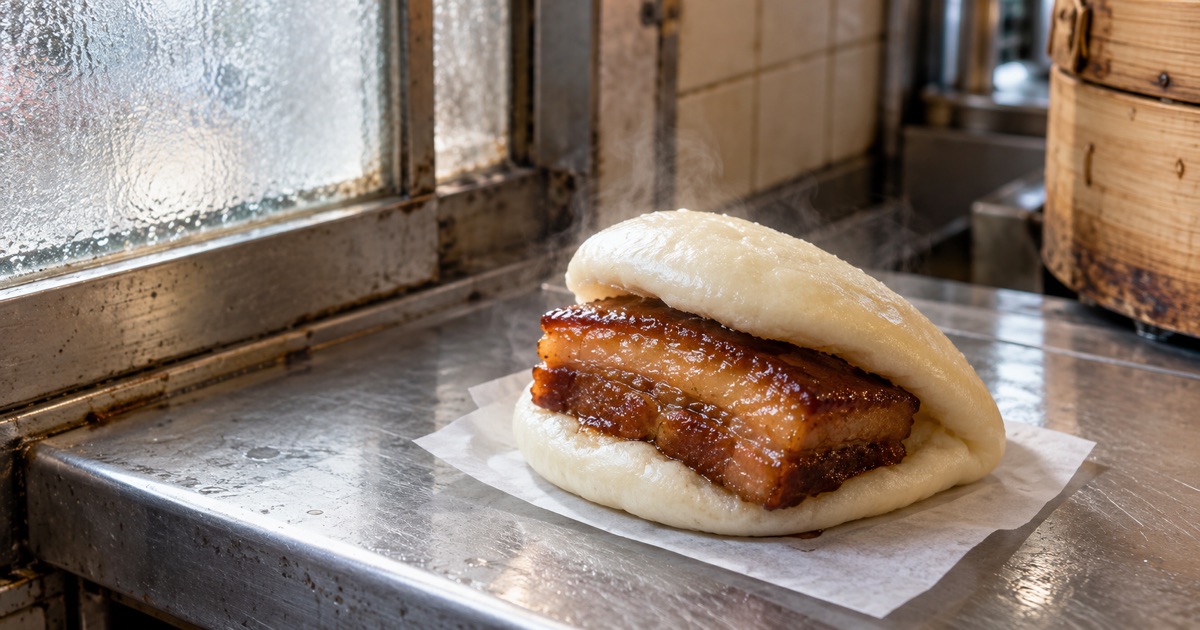
Kakuni manju is one of the most recognizable market snacks in Nagasaki. It consists of a tender slab of pork belly simmered slowly in soy sauce, mirin, and sugar, tucked inside a fluffy, folded, steamed white wheat bun.
- Flavor and texture: The bun is pillowy and slightly sweet, while the pork belly melts effortlessly, releasing rich, savory juices.
- How to eat: Vendors serve these hot from bamboo steamers, wrapped in wax paper. Eat it immediately while warm. Be mindful of dripping sauce.
- Allergen note: Contains wheat, pork, and soy.
Kamaboko and Age-kamaboko (かまぼこ / 揚げかまぼこ)
As a major fishing port, Nagasaki produces extraordinary amounts of minced fish cake (kamaboko). In local markets, you will frequently see age-kamaboko (deep-fried fish paste), locally known as tempura or tsukedage.
- Varieties: Vendors mix white fish surimi with minced burdock root (gobo), squid, cheese, or red pickled ginger before frying until golden brown.
- How to eat: Stalls sell them fresh from the fryer on wooden skewers or in small paper envelopes. They make an ideal grab-and-go morning or afternoon bite.
- Allergen note: Contains fish; may contain egg white, wheat, or dairy depending on the mix-in.
Hatoshi (ハトシ)
Originating from Cantonese cooking and adapted into Nagasaki's banquet cuisine (shippoku ryori / 卓袱料理), hatoshi has evolved into a popular street and market snack.
- What it is: A savory paste made of minced shrimp, fish, and onion sandwiched between thin slices of white bread, then deep-fried until shatteringly crisp.
- How to eat: Vendors slice it into finger-sized rectangles or triangles. It is eaten by hand, sometimes seasoned with a light dusting of salt or white pepper.
- Allergen note: Contains crustacean shellfish (shrimp), wheat, and fish.
Fresh Coastal Seafood and Kaisen-don (海鮮丼)
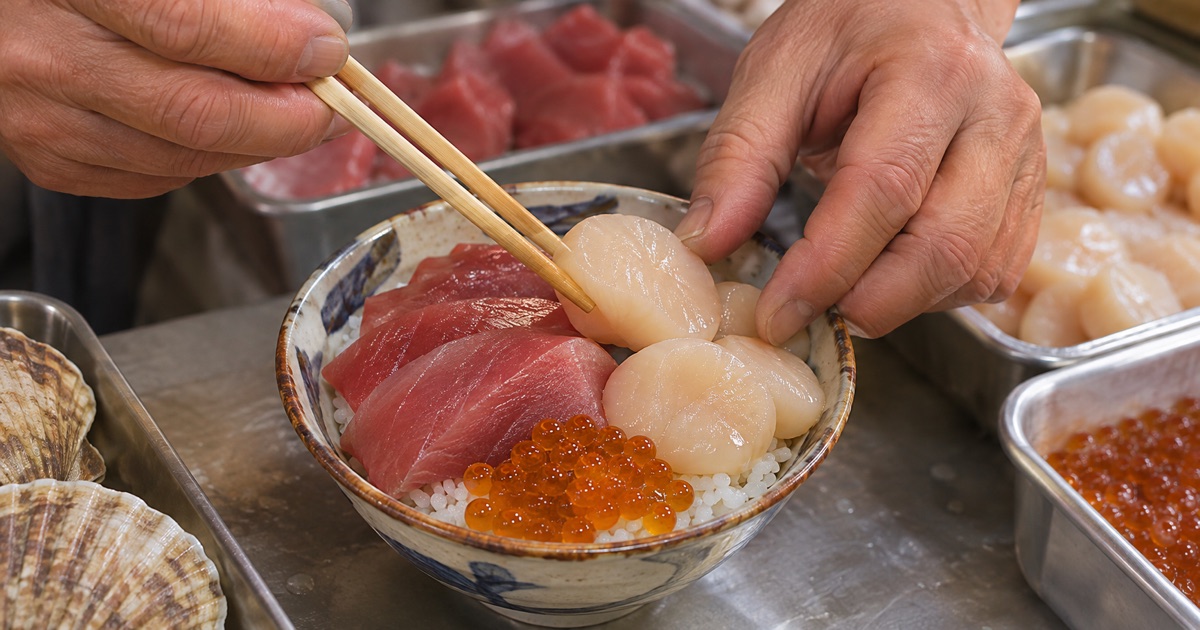
Morning markets near the harbor showcase catches straight from the East China Sea and Goto Islands. Stalls often feature counters where visitors can order bowls of rice topped with raw fish (kaisen-don) or small plates of sliced sashimi.
- Top market catches: Look for buri (yellowtail), tai (sea bream), kue (longtooth grouper in cooler months), and local horse mackerel (aji). Nagasaki is famously one of Japan's top landing spots for high-quality horse mackerel.
- How to eat: Drizzle a small amount of soy sauce mixed with wasabi over your sashimi bowl, or dip individual slices from a platter. Do not pour large quantities of soy sauce into raw fish containers.
Castella Cake Pieces (カステラ)
While traditionally sold in formal gift boxes, market arcades and neighborhood confectionery shops often sell individual slices or snack packs of castella, the rich sponge cake brought to Nagasaki by Portuguese traders in the sixteenth century.
- Characteristics: Made with simple ingredients—eggs, flour, sugar, and mizuame starch syrup—traditional Nagasaki castella is famous for coarse sugar granules (zarame) crunching at the bottom crust.
- Allergen note: Contains eggs and wheat.
Where to Find Market-Style Food in Nagasaki
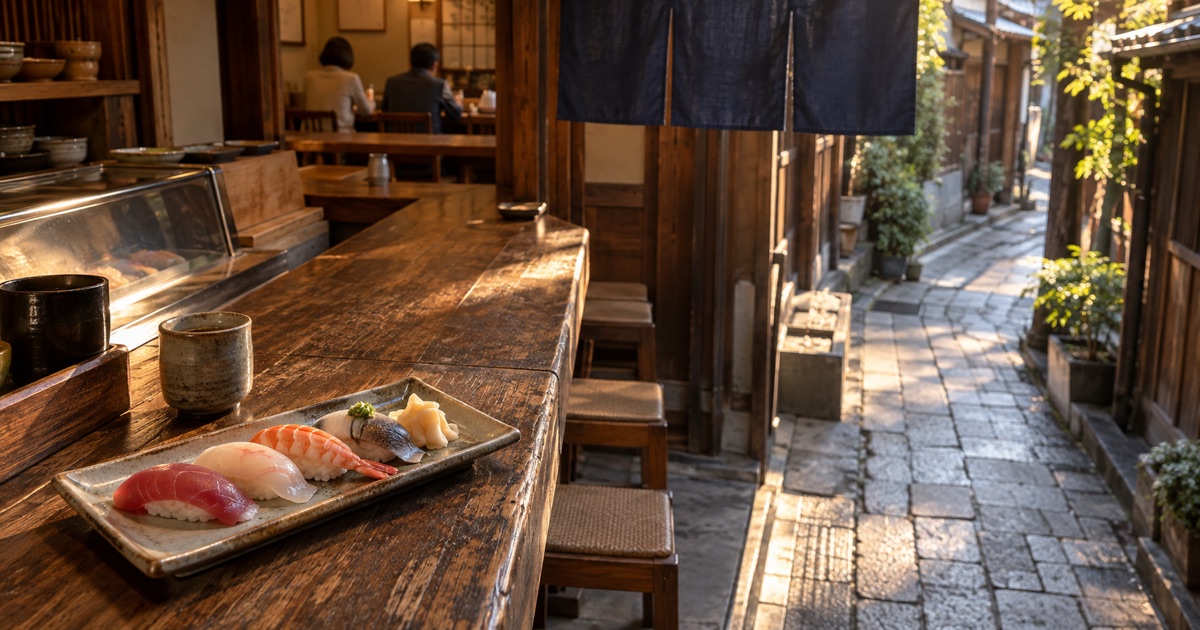
Nagasaki’s food shopping centers differ slightly from the vast wholesale layouts of Tokyo or Osaka. In Nagasaki, the best food market experiences take place across covered arcades (shotengai / 商店街), dedicated culinary enclaves, and port-side retail spaces.
- Hamanmachi Arcade (浜町アーケード): The city's primary retail artery, packed with grocers, fresh food counters, sweet shops, and kamaboko fryers. It is sheltered, clean, and pedestrian-only.
- Shinchi Chinatown (長崎新地中華街): Just a short walk from Hamanmachi, this historic quarter features dozens of walk-up windows selling steamed buns, hatoshi, and sesame sweets.
- Nagasaki Port Area: Stalls and casual eateries near the ferry terminals and waterfront parks offer seasonal seafood counters and fried snacks.
For wider regional information about seasonal festivals and culinary events, refer to the Japan National Tourism Organization and the local tourism department.

We are working to carry Japanese craft and everyday culture beyond Japan, by building Japan Towns with local partners.
Read the Japan Town plan →How to Get There and Navigate the City
Nagasaki is compact and very accessible by public transit.
- Arrival: If arriving via the Nishi Kyushu Shinkansen (bullet train) or regional JR trains, you will exit at JR Nagasaki Station (長崎駅).
- Local Transit: The easiest way to reach market hubs is the Nagasaki Electric Tramway (長崎電気軌道). From the station, board the tram toward Shinchi Chinatown (新地中華街) or Hamanmachi (浜町). The ride takes roughly 10 to 15 minutes.
- Fares: Tram rides charge a flat fee of around 140 yen for adults (fares are subject to change). You can tap major Japanese transit IC cards (such as Suica or Pasmo) upon boarding and exiting, or pay with exact cash into the driver's fare box.
Ordering Steps for Non-Japanese Speakers
Market dining is simple even if you speak no Japanese. Follow this basic sequence:
- Approach the counter: Wait until the vendor finishes with the customer ahead of you.
- Indicate your choice: Point to the item in the display case or on the picture menu.
- Specify the quantity: Use your fingers or say hitotsu (one / ひとつ) or futatsu (two / ふたつ).
- Heating request: For fried cakes or buns, the vendor may ask if you want it heated or eaten now. If you want to eat right away, say ima tabemasu (I will eat now / 今食べます).
- Pay and collect: Pay using cash unless an IC card reader or credit card terminal is clearly visible on the counter.
Market Etiquette and Practical Tips
Following basic Japanese dining customs keeps markets pleasant for everyone and prevents misunderstandings.
- Do not walk while eating (aruki-kui / 歩き食い): Eating while walking down crowded market streets is considered bad manners because you risk bumping into others or dropping greasy crumbs. Instead, stand next to the stall where you purchased the item, finish eating, and return the wrapper.
- Manage your trash: Public trash bins are rare throughout Japan. Vendors almost always keep a small bin beside their counter specifically for their own customers. Hand your used paper tray or skewer back to the staff with a quick gochisosama deshita ("thank you for the meal").
- Carry paper money and coins: While convenience stores accept cards, small market stands selling 200-yen fish cakes operate almost entirely on cash. Keep a selection of 100-yen coins and 1,000-yen notes ready.
- Confirm business hours beforehand: Hours vary significantly between stalls. Morning fish counters may open around 7:00 or 8:00 AM and sell out by midday, while arcade snack stalls often operate from roughly 10:00 AM until early evening. Schedules fluctuate based on weather and fishing catches, so always check official local municipal pages or market listings before planning your route.
For verified nutritional compositions of common Japanese staple ingredients, including seasonal fish and soy products, consult the Ministry of Agriculture, Forestry and Fisheries.
FAQ
- Q. Do food market stalls in Nagasaki accept credit cards or IC cards?
- A. Many traditional market stalls and small food counters accept only cash, though some modern shops take transit IC cards or credit cards.
- Q. How do you eat street food respectfully around Nagasaki markets?
- A. Eat near the stall where you bought your food rather than walking down the street, and return any skewers or wrappers to the vendor's bin.
- Q. Are vegetarian dishes easy to find at a Nagasaki food market?
- A. Vegetarian options are limited because most savory broths and fillings contain pork, chicken, dashi fish stock, or dried shrimp.
Cite or share this article
Copy the link below. If you quote this article, please link to this page as the source.