Shinjuku Food Street Guide: Omoide Yokocho and Beyond
Key takeaways
- Shinjuku's famous alleys like Omoide Yokocho specialize in casual fare like yakitori, motsuyaki, and local draft beer.
- Seating charges (otoushi) and mandatory drink orders are standard practices in these narrow izakaya alleyways.
- Many alley stalls operate on cash-only systems, so carry small yen notes and coins when dining.
A Shinjuku food street refers to the dense networks of atmospheric, narrow alleyways near Shinjuku Station—most notably Omoide Yokocho (思い出横丁) and Golden Gai (新宿ゴールデン街)—where tiny open-front stalls and counters serve classic Japanese casual pub food. Visiting these historic lanes offers immediate access to iconic dishes like charcoal-grilled chicken skewers (yakitori), simmered beef sinew (nikomi), and hearty bowls of noodles.
Navigating these intimate food corridors requires an understanding of the specific dishes served, the ordering process, and the unwritten customs of Japanese counter dining. For overseas visitors, a walk through these lively districts provides a deep look into Tokyo’s post-war culinary culture.
Key Dining Districts in Shinjuku
Shinjuku Station (新宿駅) is the busiest railway junction in the world, served by JR lines, the Tokyo Metro, the Toei Subway, and private railways such as Odakyu and Keio. The surrounding food alleys are situated within a few minutes' walk of various station exits.
Omoide Yokocho (West Exit)
Located roughly a three-minute walk from the JR Shinjuku West Exit, Omoide Yokocho—often translated as "Memory Lane"—is the quintessential Shinjuku food street. This tightly packed grid of pedestrian alleys features dozens of tiny stalls, many seating fewer than ten patrons on small wooden stools. Countertops face directly toward roaring charcoal grills and steaming cauldrons of broth.
Shinjuku Golden Gai (East Exit)
Situated approximately eight to ten minutes on foot from the East Exit of Shinjuku Station, Golden Gai consists of six narrow passageways packed with over two hundred miniature bars and casual eateries. While primarily an evening drinking quarter, select spots focus on regional snacks, bar bites, and late-night noodle bowls.
Classic Foods Served in Shinjuku Alleys
The menus found along a Shinjuku food street reflect the post-war street food heritage of Tokyo. Focus is placed on savory, protein-rich items designed to complement drinks like Japanese draft beer (nama biiru), highballs, and shochu.
Yakitori (Grilled Chicken Skewers)
Yakitori (焼き鳥) forms the backbone of Omoide Yokocho's culinary identity. Skewers feature bite-sized cuts of chicken grilled over white-hot binchotan charcoal. Standard offerings include:
- Negima (ねぎま): Alternating cuts of chicken thigh and sweet Japanese leek.
- Tsukune (つくね): Minced chicken meatballs, often bound with egg and herbs.
- Momo (もも): Tender, juicy chicken thigh meat.
- Kawa (皮): Chicken skin, cooked until crisp on the exterior and rich underneath.
- Hatsu (ハツ): Chicken hearts, valued for their firm, clean texture.
When ordering yakitori, staff will ask for your seasoning preference: tare (タレ, a sweet-savory soy sauce glaze) or shio (塩, clean sea salt).
Motsuyaki (Grilled Pork Offal)
Closely related to yakitori, motsuyaki (もつ焼き) features various cuts of pork and organ meats. These skewers carry deep, smoky flavors and robust textures:
- Shiro (シロ): Pork intestine, traditionally braised before hitting the charcoal grill to balance chewiness and tenderness.
- Reba (レバー): Pork liver, served lightly seared to retain richness.
- Kashira (カシラ): Pork temple or jowl meat, marbled with rich fat.
Motsu Nikomi (Simmered Stew)
Nikomi (煮込み) is a slow-cooked comfort food staple seen in large vats at alley entrances. It consists of beef or pork tripe, daikon radish, konjac (yam cake), and carrots stewed for hours in a broth seasoned with red miso or soy sauce. The stew arrives in small bowls topped with fresh sliced scallions, often spiced at the table with shichimi togarashi (seven-spice chili powder).
Ramen and Soba
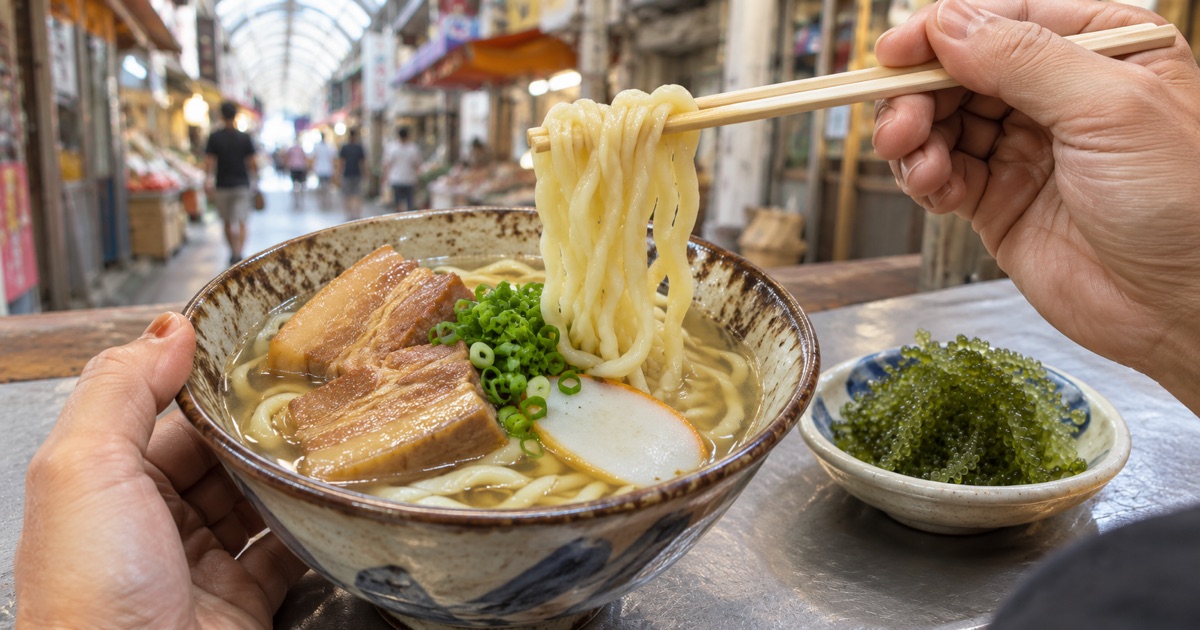
Throughout the alleyways and surrounding streets, standalone noodle bars offer hot meals served in minutes. Soba (buckwheat noodles) and udon (wheat noodles) in dark, bonito-scented dashi broth serve daytime commuters, while rich ramen broths—ranging from soy sauce-based Tokyo ramen to thick tonkotsu (pork bone)—cater to evening diners.

We are working to carry Japanese craft and everyday culture beyond Japan, by building Japan Towns with local partners.
Read the Japan Town plan →How to Order and Dine Step-by-Step
Alley dining follows a distinct rhythm due to extreme spatial constraints. Here is how to navigate a meal seamlessly:
- Assessing Availability: Peek inside an open doorway. If seats are open, hold up fingers to indicate party size (solo diners and pairs have an easier time finding space; groups of four or more will struggle to sit together).
- Taking Your Seat: Squeeze into your seat and store coats and bags either under your stool, on tiny overhead racks, or on wall hooks behind you. Keep floor aisles completely clear.
- Ordering Drinks First: In Japanese casual dining, it is customary to order your beverage first. Say "Nama biiru" (draft beer), "Hai-booru" (whisky highball), or ask for water ("O-mizu").
- Receiving the Otoushi: Your drink will often arrive with a tiny, unprompted dish such as pickled vegetables, potato salad, or simmered beans. This is otoushi (お通し), an established cover charge system in Japanese drinking establishments.
- Ordering Food: Order food in small batches of two or three items per person. Because kitchen spaces are minuscule, food is prepared freshly to order. Specify your seasoning ("Tare" or "Shio") when choosing skewers.
- Settling the Bill: When finished, make an "X" with your index fingers or say "O-kaikei kudasai" (check, please). Payment is handled at the counter.
What to Bring and Common Mistakes
What to Carry
- Japanese Yen: Many legacy stalls in Omoide Yokocho do not accept credit cards or IC transit cards. Carry bills in denominations of 1,000 or 5,000 yen, along with coins. Staff may have difficulty making change for 10,000-yen notes during peak hours.
- Pocket Tissues and Wet Wipes: Stalls supply basic paper napkins, but compact wet wipes (oshibori) can be helpful for skewered foods.
- Compact Bags: Large luggage, backpacks, and strollers cannot fit inside these venues. Store large items in station coin lockers before entering the alleyways.
Mistakes to Avoid
- Lingering After Eating: Counter seats turn over rapidly. Once drinks and plates are empty, lingering to chat prevents other guests from dining and reduces stall turnover.
- Bringing Outside Food or Drink: Consuming store-bought drinks, snacks, or takeout from an adjacent stall is strictly prohibited.
- Ignoring Seat Minimums: Many stalls enforce a policy where each seated customer must order at least one beverage and a minimum number of food skewers.
- Taking Photos of Other Diners: While photographing your own food is generally acceptable, photographing inside kitchens, kitchen staff, or fellow diners violates local privacy norms. Respect all posted signs regarding photography.
Dietary and Allergen Information
Street and alley dining in Japan presents challenges for those with specific dietary restrictions:
- Soy and Wheat: Soy sauce (shoyu) and wheat are fundamental ingredients in tare glazes, nikomi broths, and ramen soups. Diners avoiding gluten or soy should opt for skewers seasoned exclusively with salt (shio), though cross-contact on shared grills will occur.
- Bonito and Dashi: Seafood extract, particularly skipjack tuna (katsuobushi), is present in almost all simmering liquids, sauces, and noodle broths. Purely vegetarian dishes are uncommon in these traditional meat-focused alleys.
- Offal and Cuts: Skewer menus prominently feature organ meats. If you prefer standard chicken breast or thigh, learn the terms momo (thigh) and sasami (tenderloin) to avoid unexpected offal.
For comprehensive details on official Japanese food classifications, refer to the Ministry of Agriculture, Forestry and Fisheries. For nationwide travel planning resources and transit overviews, check the Japan National Tourism Organization.
Operating Hours and General Costs
Operating times in the Shinjuku food alleys vary widely by individual owner:
- Lunch (Roughly 11:30 AM to 2:00 PM): Only a small fraction of shops—primarily noodle counters and select lunch stalls—open during these hours.
- Evening (Roughly 5:00 PM to 11:30 PM): The peak window for the alleyways. Lanterns ignite, smoke fills the narrow streets, and the full range of yakitori and izakaya menus becomes available.
- Estimated Costs: Skewers generally range from 150 to 350 yen each. Seating charges (otoushi) typically run between 300 and 600 yen per person. A casual meal with two drinks and several skewers will roughly cost between 2,000 and 4,000 yen per person.
Because individual stall hours, holiday closings, and house rules change regularly, check the official portals or storefront placards directly when arriving on site.
FAQ
- Q. What is the most famous Shinjuku food street?
- A. Omoide Yokocho (Memory Lane), located just outside the West Exit of JR Shinjuku Station, is the most famous alleyway, known for skewered meats and small counter bars.
- Q. Do food street stalls in Shinjuku take credit cards?
- A. Many stalls and tiny counters in historic alleys operate strictly with cash, though modern establishments nearby accept cards or IC transit cards.
- Q. Is there an entrance fee or cover charge at these food stalls?
- A. Most traditional counter bars charge a nominal seating fee called "otoushi," which comes with a small automatic appetizer and is added to the final bill.
Cite or share this article
Copy the link below. If you quote this article, please link to this page as the source.