What to Eat in Fukuoka: Hakata Ramen, Mentaiko & More
Key takeaways
- Hakata ramen's thin noodles can be ordered extra firm (bari-kata) and refilled with kaedama for a small extra charge.
- Mentaiko (spicy cod roe) is Fukuoka's signature ingredient, eaten plain with rice or as a topping on pasta and rice balls.
- Yatai food stalls cluster around Tenjin and Nakasu, operate mainly in the evening, and typically take cash only.
What to Eat in Fukuoka
The dishes most worth trying in Fukuoka are Hakata ramen, mentaiko (spicy cod roe), motsunabe (offal hot pot), and the varied small plates served at the city's open-air yatai food stalls. These foods reflect Fukuoka's position as a port city with strong ties to Korea and the rest of Kyushu, which shaped a food culture built around quick, hearty, and umami-rich dishes.
Fukuoka, on the northern coast of Kyushu, is easily reached from Tokyo or Osaka via the Tokaido-Sanyo Shinkansen, arriving at Hakata Station. The city's food scene is concentrated in a few walkable areas, which makes it manageable even for a short visit.
Hakata Ramen: The City's Signature Bowl
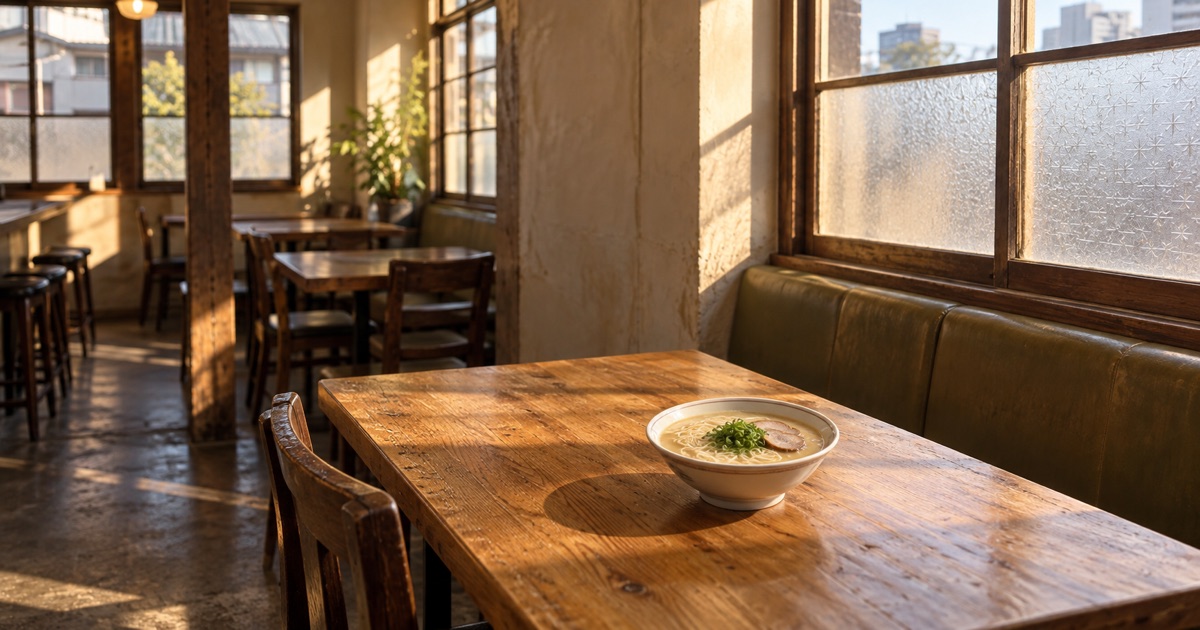
Hakata ramen is a tonkotsu (pork bone) ramen style that originated in Fukuoka's Hakata district. The broth is simmered for hours until it turns cloudy white and rich, with a distinctly savory, slightly fatty aroma. The noodles are thin, straight, and cooked firm, a texture that pairs well with the dense broth.
A few things are useful to know before ordering:
- Noodle firmness: Many shops let you choose how firm the noodles are, from very soft to extra firm (bari-kata) or even raw-ish (nama or bari-bari). If you're unsure, standard firmness is a safe default.
- Kaedama (替え玉): This is a refill of noodles only, added to your remaining broth once you've finished the first serving. It usually costs a small amount extra and is a Hakata ramen tradition rather than something unique to one shop.
- Toppings: Common additions include chashu (braised pork), pickled ginger (beni shoga), sesame, and spicy mustard greens (karashi takana). These are often available at a self-service condiment station.
- Ticket machines: Many ramen shops use vending-style ticket machines at the entrance. If the machine is only in Japanese, look for photos on the buttons or ask staff for help; most are used to assisting visitors.
One common mistake is ordering a kaedama after the broth has already run low or gone cold — it's best requested while there's still enough hot broth left to enjoy with the fresh noodles.
We are working to carry Japanese craft and everyday culture beyond Japan, by building Japan Towns with local partners.
Read the Japan Town plan →Mentaiko: Fukuoka's Signature Ingredient
Mentaiko (明太子) is the seasoned, cured roe of pollock, marinated in a mix of chili pepper, salt, and other seasonings. It's closely associated with Fukuoka, where it became popular after being adapted from a Korean-style preparation. The texture is soft and slightly grainy, and the flavor is salty with a mild chili warmth rather than sharp heat.
Mentaiko is eaten in several ways:
- Plain, alongside a bowl of steamed rice, often for breakfast
- Wrapped in a rice ball (onigiri)
- As a sauce for pasta (mentaiko pasta), a popular Japanese-Italian fusion dish
- Grilled slightly, which mellows the flavor and firms up the texture
Because mentaiko is a seafood roe product, it's worth noting for allergy purposes that it falls under the fish/seafood category, and some preparations may contain added ingredients like butter or mayonnaise, which matters for those avoiding dairy or egg-based sauces.
Motsunabe: A Hot Pot Built Around Offal
Motsunabe (もつ鍋) is a hot pot dish centered on beef or pork offal, usually intestine, simmered with cabbage, garlic chives (nira), garlic, and a broth that's typically either soy-sauce based or miso-based. It became widely popular in Fukuoka and is now considered one of the city's defining dishes.
The offal is simmered until tender, and the dish is usually shared from a communal pot at the table, making it a popular choice for group dining. A common way to finish the meal is to add noodles or rice to the remaining broth at the end, similar to how other Japanese hot pots are often concluded. If you're unfamiliar with offal, motsunabe is a relatively approachable entry point, since the broth and vegetables balance the richness.
Yatai: Open-Air Food Stalls
Yatai (屋台) are small, mobile food stalls that set up in the evening and are a distinctive part of Fukuoka's food culture, particularly around the Tenjin and Nakasu areas. Seating is limited, usually a counter with a handful of stools, and the atmosphere is casual and social.
Typical yatai menus include ramen, yakitori (grilled skewers), tempura, oden (simmered items in broth), and grilled gyoza. Portions tend to be small, so it's common to order a few different dishes across the course of an evening rather than one large meal.
A few practical points for first-time visitors:
- Yatai generally operate in the evening and late into the night; they are not a daytime option.
- Cash is the standard payment method; don't assume cards or e-money will be accepted.
- Stalls can be weather-dependent and may close during rain or strong wind, and some pause operations seasonally, so availability isn't guaranteed on any given night.
- Seating is limited, so waiting briefly or sharing a counter with other diners is normal.
Other Fukuoka Specialties Worth Knowing
- Gyoza: Fukuoka has its own style of pan-fried gyoza, often smaller and thinner-skinned than those found elsewhere, served in small portions that are easy to order several of.
- Goma saba: Mackerel marinated in soy sauce and topped with sesame seeds, typically served raw (sashimi-style). Since this is a raw fish dish, those avoiding raw seafood should ask before ordering.
- Udon: Fukuoka is also known for a softer-textured udon than the firmer styles found in other regions, often served simply in a light broth.
Planning Your Food Stops
Hakata Station and the Tenjin district are the two main hubs for food in central Fukuoka, both well connected by subway. Because many of these dishes — ramen, yatai food, gyoza — are built around quick, casual eating, it's realistic to try several different items across a single day without needing long sit-down meals.
For general travel planning, including transport passes and seasonal events in the region, the Japan National Tourism Organization is a reliable official resource. For questions about specific ingredients, such as how mentaiko or offal cuts are categorized nutritionally, the MEXT Food Composition Database provides detailed official data.
As with any destination, opening hours, stall locations, and seasonal availability can change, so it's worth confirming current conditions locally once you arrive rather than relying solely on advance research.
FAQ
- Q. What is the most famous food in Fukuoka?
- A. Hakata ramen, a pork-bone (tonkotsu) broth ramen with thin, firm noodles, is generally considered Fukuoka's signature dish.
- Q. Is mentaiko very spicy?
- A. It has a mild to moderate chili kick rather than intense heat, and the saltiness is usually more noticeable than the spice.
- Q. Do Fukuoka's yatai stalls accept credit cards?
- A. Most yatai are cash-only or have very limited card and e-money support, so carrying enough yen is recommended.
Cite or share this article
Copy the link below. If you quote this article, please link to this page as the source.