What to Eat in Kamakura for Lunch: Top Dishes & Guide
Key takeaways
- Shirasu (whitebait) rice bowls are the signature lunch dish, served raw, boiled, or fried tempura-style.
- Shojin ryori offers a historic Zen Buddhist multi-course plant-based meal, while soba noodles provide a fast alternative.
- Peak lunch crowds run from 11:30 AM to 1:30 PM; carry cash since smaller traditional eateries often do not take cards.
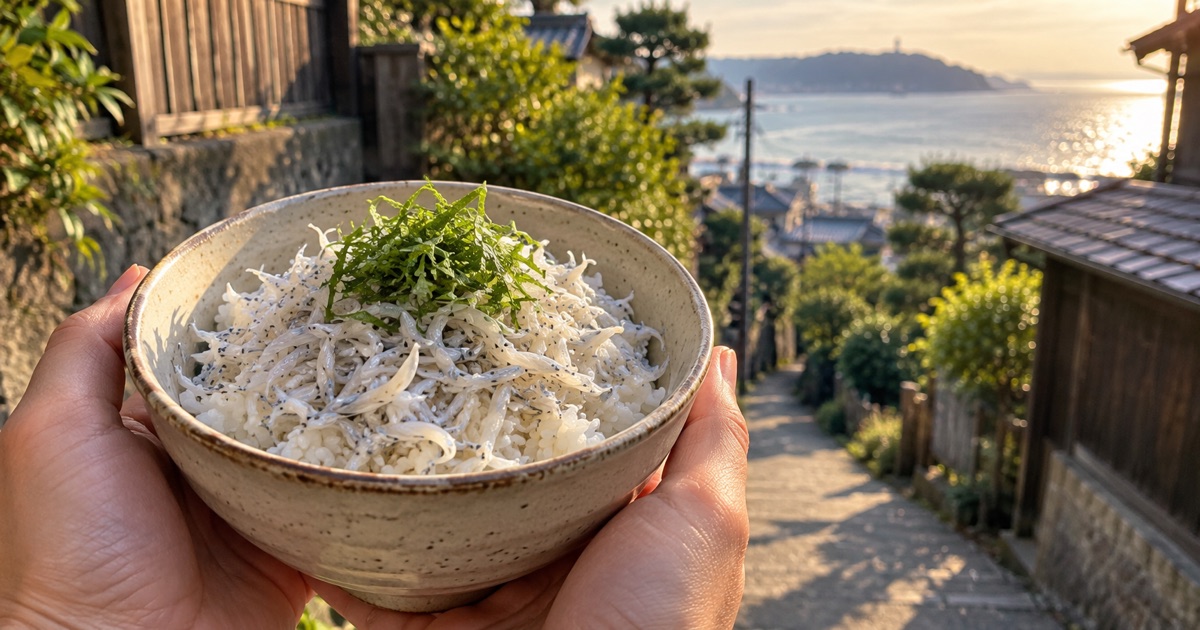
For lunch in Kamakura, the essential dish to eat is shirasu-don (しらす丼), a bowl of hot steamed rice topped with tender juvenile whitebait harvested from neighboring Sagami Bay. Visitors seeking historic plant-based meals should choose shojin ryori (精進料理), the traditional multi-course Zen temple cuisine that flourished throughout Kamakura's medieval period.
Kamakura (鎌倉) sits tucked between wooded hills and the Pacific coastline of Kanagawa Prefecture, just one hour south of Tokyo via the JR Yokosuka Line. Its geographic position yields an agricultural and maritime micro-region known for vibrant coastal catches and unique heirloom vegetables. Choosing the right midday meal depends on your schedule, walking route, and dietary preferences.
Signature Kamakura Lunch Specialties
Shirasu-don (Whitebait Rice Bowls)
Shirasu (しらす) refers to tiny, tender juvenile sardines and anchovies caught off the Enoshima and Shonan coast. In Kamakura, lunch menus feature these fish prepared in three primary styles:
- Kamaage Shirasu (釜揚げしらす): Freshly caught whitebait gently boiled in salted water. They possess a pillowy, cloud-like texture and a delicate, mildly briny taste.
- Nama Shirasu (生しらす): Raw, translucent whitebait served fresh on the day of harvest. Available mainly from spring through late autumn, they offer a slightly firmer bite and a sweet sea flavor. Raw shirasu is unavailable during the winter fishing moratorium or on days when rough seas prevent local boats from sailing.
- Tempura Shirasu (かき揚げしらす): Whitebait mixed with shredded seasonal vegetables and fried into a crisp, golden patty (kakiage).
Most shirasu bowls come garnished with freshly grated ginger, shredded nori seaweed, thinly sliced shiso leaves, and chopped scallions. Pour a modest splash of soy sauce over the bowl right before eating, rather than submerging the fish, to maintain the delicate marine aroma.
Allergen note: Shirasu is a whole fish product and frequently contains microscopic traces of tiny coastal shrimp and crabs from the open harvest nets. Diners with severe crustacean allergies should avoid wild-harvested shirasu.
Shojin Ryori (Zen Buddhist Temple Cuisine)
Kamakura served as the political capital of Japan during the Kamakura shogunate (1185–1333), becoming a major hub for Rinzai Zen Buddhism. From this heritage stems shojin ryori (精進料理), a culinary tradition designed around mindfulness, harmony, and the Buddhist precept of non-harming (ahimsa).
A typical lunch tray contains zero meat, poultry, fish, eggs, dairy, or pungent aromatics such as garlic, onions, and leeks. Chefs craft complex flavors using seasoned kelp stock (kombu dashi), fermented soybeans, sesame paste, and seasonal produce. Typical lunch components include:
- Goma-dofu (胡麻豆腐): A smooth, custard-like block made from ground white sesame seeds, spring water, and wild arrowroot starch (kudzu), topped with freshly grated real wasabi.
- Kenchin-jiru (けんちん汁): A hearty clear soup invented at Kamakura's historic Kencho-ji temple, filled with root vegetables, shiitake mushrooms, and hand-crumbled tofu sautéed in sesame oil before simmering.
- Seasonal Nimono (煮物): Local root vegetables, lotus root, and bamboo shoots simmered slowly in seasoned seaweed broth.
For an official look at Japan's regional food traditions and seasonal produce varieties, visit the Ministry of Agriculture, Forestry and Fisheries.
Soba and Udon Noodles
Soba (buckwheat noodles) and udon (thick wheat flour noodles) remain staple lunchtime favorites near the temples. Buckwheat grows well in hilly soils, giving Kamakura a centuries-old soba culture.
During warm summer visits, look for zaru soba (ざるそば)—chilled buckwheat noodles arranged over a bamboo lattice, served with a concentrated dipping broth (tsuyu), wasabi, and sliced green onions. In cooler months, hot broth bowls loaded with kamaboko (steamed fish cake) and mountain greens (sansai) provide warming sustenance between long temple walks.
Secondary Lunch Options Around the City
If seafood or temple fare does not fit your schedule, several other reliable lunchtime alternatives dot the pedestrian streets:
- Kamakura Yasai Curries: Independent cafes throughout Kamakura feature Japanese-style curry sauce paired with roasted Kamakura yasai (鎌倉野菜), high-flavor heirloom vegetables cultivated in the mineral-rich local soil.
- Eel (Unagi) and Tempura Sets: Traditional set-meal eateries serve charcoal-grilled freshwater eel over rice (unadon) or assorted seafood and vegetable tempura boxes, accompanied by miso soup and Japanese pickles (tsukemono).
- Hase and Yuigahama Cafe Plates: Along the coastline and around Hase Station (長谷駅), small cafes offer lunch platters combining rice, small marinated deli salads, and grilled local proteins.
We are working to carry Japanese craft and everyday culture beyond Japan, by building Japan Towns with local partners.
Read the Japan Town plan →Planning Your Kamakura Lunch: Essential Practicalities
Typical Lunch Costs
Lunch prices vary depending on the preparation style and ingredients:
- Casual noodles (soba, udon): roughly 800 JPY to 1,500 JPY per serving.
- Shirasu-don and seasonal rice bowl sets: around 1,300 JPY to 2,200 JPY.
- Mid-range lunch courses and multi-dish sets: approximately 2,000 JPY to 3,500 JPY.
- Formal multi-course shojin ryori: roughly 3,500 JPY to 7,000 JPY, often requiring advance booking.
Prices and seasonal menus change throughout the year; verify current pricing on venue websites or exterior display boards before entering.
Timing and Peak Lunch Hours
Standard lunch hours run from around 11:00 AM to 2:30 PM. The heaviest crowds concentrate between 11:45 AM and 1:30 PM. Popular eateries along Komachi-dori (小町通り) near Kamakura Station and around Hase-dera (長谷寺) often run ticket waiting lists. To minimize lines, arrive right at opening time (roughly 11:00 AM to 11:30 AM) or defer your meal slightly until after 1:45 PM.
Be aware that many traditional kitchens close their lunch service promptly once their daily batches of fresh broth, rice, or morning-caught shirasu sell out.
Navigating Menus Without Japanese
Many lunch spots display realistic wax food replicas in outdoor glass showcases or display plastic-laminated picture menus at the entrance. When ordering:
- Stage one, seating, involves waiting at the door until staff seat you; do not walk straight to an empty table.
- Stage two, ordering, often happens with a bilingual picture menu. Pointing to your selection while saying "Kore o kudasai" (This one, please) works cleanly across all establishments.
- Stage three, payment, occurs at the cash register near the front door upon leaving, rather than at your dining table.
Practical Lunch Day Checklist
Mandatory Requirements
- Japanese Yen in Cash: While large cafes accept international credit cards and IC transit cards (like Suica and Pasmo), many small soba shops, shirasu specialists, and temple-gate dining rooms accept cash only.
- Walking-Friendly Schedule: Plan your lunch around your rail route—either near Kamakura Station (鎌倉駅) or along the Enoshima Electric Railway (Enoden / 江ノ電) stops like Hase Station (長谷駅) or Gokurakuji Station (極楽寺駅). Check broad travel connections via the Japan National Tourism Organization.
Optional Preparations
- Advance Reservations: Recommended if you intend to book a multi-dish Zen Buddhist meal inside a temple sub-precinct.
- Translation Application: A smartphone camera translation tool helps read daily specials posted on wooden wall plaques.
- Hand Towels: While dining spots provide a damp paper or cloth towel (oshibori), carrying your own handkerchief is useful when exploring street areas between meals.
Common Dining Mistakes to Avoid in Kamakura
- Eating While Walking Down Busy Streets: Local ordinances along retail thoroughfares like Komachi-dori strongly discourage walking while eating street snacks to avoid collisions, sauce stains on fellow travelers, and litter problems. Consume treats directly in front of the counter where purchased.
- Ignoring the Black Kites (Tobi): If you take a takeout lunch box down to Yuigahama Beach or sit in an open park, watch the sky. Kamakura's wild black kites (tobi) regularly swoop down from behind unsuspecting visitors to snatch food straight out of their hands. Keep an umbrella overhead or eat indoors.
- Assuming Raw Shirasu Is Always Available: Nama shirasu depends entirely on ocean weather and daily catch volumes. If local boats cannot harvest due to high waves, restaurants serve high-quality boiled (kamaage) shirasu instead.
- Expecting Custom Ingredient Substitutions: Traditional Japanese kitchens design set meals as cohesive units. Asking a kitchen to swap ingredients or remove components from dashi broths is often impossible in busy casual restaurants. If you have strict restrictions, select dedicated vegetarian or allergen-labeled venues in advance.
FAQ
- Q. What is the most famous lunch dish in Kamakura?
- A. Shirasu-don (しらす丼), a rice bowl topped with tiny young whitebait caught in nearby Sagami Bay, is the city's most iconic lunch specialty.
- Q. Can vegetarians and vegans find lunch options in Kamakura?
- A. Yes, Kamakura is famous for shojin ryori (精進料理), traditional Buddhist vegetarian cuisine, along with temple-style soba and vegetable curries.
- Q. How much does an average lunch cost in Kamakura?
- A. Casual lunches such as soba or shirasu-don range around 1,000 JPY to 2,000 JPY, while multi-course shojin ryori costs roughly 3,000 JPY to 6,000 JPY.
Cite or share this article
Copy the link below. If you quote this article, please link to this page as the source.