What to Eat in Yokohama Chinatown: Top Street Foods & Dishes
Key takeaways
- Top foods include pan-fried soup dumplings, oversized steamed meat buns, and local noodle bowls like sanmamen.
- Street-food etiquette requires eating in designated stall areas rather than walking while eating.
- Cash in small yen denominations is essential, as many takeout stalls and counter vendors do not take cards.
When deciding what to eat in Yokohama Chinatown (Yokohama Chukagai, 横浜中華街), prioritize pan-fried soup dumplings, jumbo steamed pork buns, and regional noodle dishes like sanmamen. As Japan's largest Chinatown, this historic portside enclave offers an incredible fusion of traditional Chinese cuisine adapted specifically to Japanese palates over more than 160 years.
Whether you plan to graze through takeout windows or sit down for a multi-course banquet, understanding the culinary specialties of this district will help you navigate its hundreds of eateries with confidence.
Iconic Street Foods and Handheld Snacks
The pedestrian alleys of Yokohama Chinatown are lined with takeout windows serving hot, freshly steamed or fried specialties. These items make up the core of the area's daytime dining culture.
Pan-Fried Soup Dumplings (Yaki-Shoronpo / 焼き小籠包)
Unlike standard steamed soup dumplings, yaki-shoronpo feature a thicker wheat flour dough wrapper with a heavily browned, crunchy base. Inside rests a seasoned pork meatball suspended in rich, boiling-hot gelatinized broth that melts during cooking.
How to eat without burning yourself:
- Do not bite directly into the center of a whole dumpling; the pressurized soup inside will squirt out and can cause severe burns.
- Place the dumpling flat on your paper tray or small spoon.
- Nibble a small pinhole into the top of the wrapper to let steam vent.
- Sip the savory broth through the hole.
- Add a dash of black vinegar or chili oil, then eat the rest of the meat filling and crispy crust.
Allergen notes: Contains gluten (wheat), soy, and sesame. Some versions contain shellfish extracts.
Steamed Meat Buns (Chukaman / 中華まん)
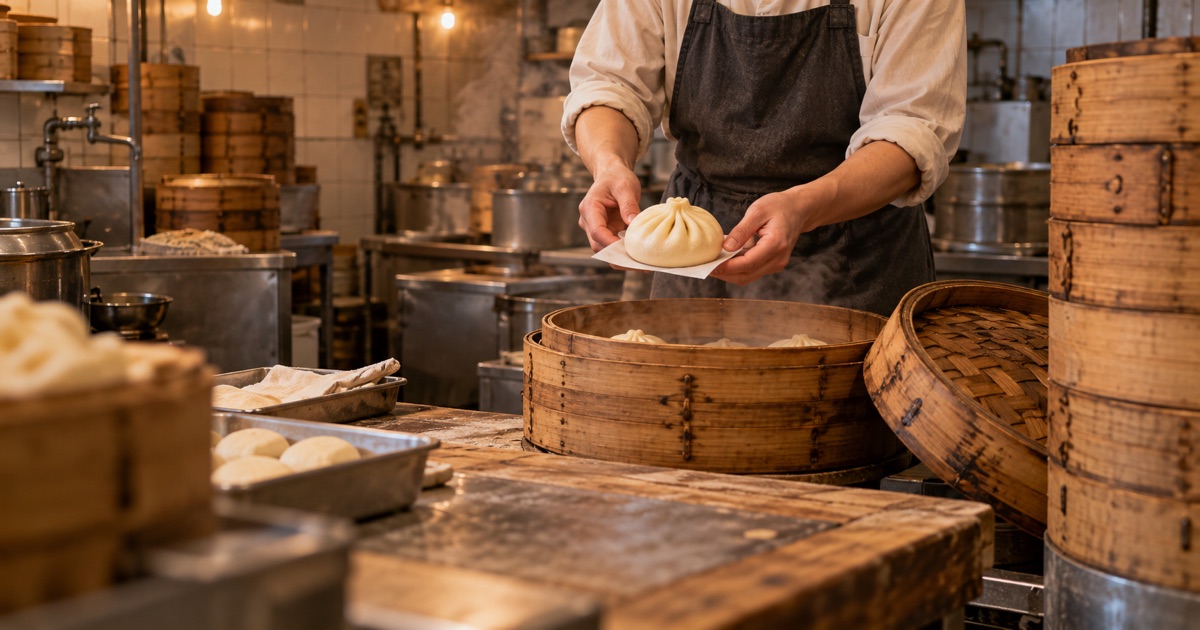
Yokohama Chinatown is famous for oversized steamed buns, often measuring the size of a softball. The classic pork bun (nikuman, 肉まん) features a fluffy, slightly sweet yeast dough filled with coarsely chopped pork, bamboo shoots, shiitake mushrooms, and green onions. Other popular variations include:
- Anman (あんまん): Filled with smooth, sweet red bean paste, frequently scented with black sesame paste or lard.
- Kakuni-man (角煮まん): Steamed, taco-shaped lotus-leaf buns folded around a thick slab of braised, melt-in-the-mouth pork belly.
- Seafood Buns (Kaisen-man, 海鮮まん): Stuffed with shrimp, squid, scallops, and ginger.
Sesame Balls (Jian Dui / Goma Dango / ごま団子)
Crisp on the outside and chewy inside, these spheres of glutinous rice flour are filled with sweet red bean or lotus seed paste, rolled heavily in white sesame seeds, and deep-fried until golden and puffed. They are served warm or at room temperature.
Crispy Taiwanese Fried Chicken (Dajiapi / 大鶏排)
Reflecting the district's diverse regional styles, flattened, butterfly-cut chicken cutlets coated in sweet potato starch and dusted with five-spice powder (wuxiangfen) have become a staple street item. These cutlets are often larger than an adult's hand and fried to order, giving them an exceptionally crunchy shell and aromatic pepper profile.
Classic Sit-Down Dishes and Yokohama Specialties
While snacking at street counters is popular, Yokohama Chinatown's historic restaurants showcase refined Cantonese, Shanghainese, Sichuan, and Japanese-Chinese culinary traditions.
Sanmamen (サンマー麺)
Sanmamen is a ramen style native to the Kanagawa prefecture port district. It consists of thin, springy wheat noodles in a light, soy-sauce-based chicken broth, crowned with a piping-hot stir-fry of bean sprouts, cabbage, sliced pork, wood ear mushrooms, and carrots bound together in a thick potato-starch gravy (ankake). The glossy sauce keeps the noodles intensely hot from the first bite to the last, making it a beloved comfort dish in cooler weather.
Shumai (焼売)
Steamed open-topped pork dumplings wrapped in thin wheat skins have a distinct history in Yokohama. Local recipes often combine minced pork shoulder with dried scallops (kaibashira) and sweet onions, producing a denser, sweeter flavor profile than classic Hong Kong dim sum styles. They are typically eaten dipped in hot mustard (karashi) and soy sauce.
Sichuan Mapo Tofu (麻婆豆腐)
For diners who enjoy spicy food, the district is home to many Sichuan-style dining rooms that specialize in authentic mapo tofu. Unlike milder Japanese supermarket versions, authentic Chinatown preparations use generous amounts of fermented broad bean chili paste (pixian doubanjiang), whole dried chilies, and ground Sichuan peppercorns (huajiao), delivering both fiery heat (la) and tingling numbness (ma). It is traditionally eaten spooned over plain white rice.
We are working to carry Japanese craft and everyday culture beyond Japan, by building Japan Towns with local partners.
Read the Japan Town plan →Traditional Sweets and Refreshments
After savory and rich meals, visitors balance their palates with light, cooling desserts sold at both walk-up kiosks and dedicated tea salons:
- Almond Tofu (Annin Dofu / 杏仁豆腐): A smooth, jelly-like dessert made from apricot kernel milk, sweetened water, and agar or gelatin, often garnished with a single goji berry. It has a delicate, floral fragrance.
- Egg Tarts (Dan Tat / エッグタルト): Individual pastry cups with a rich, baked egg-custard center. You will find both the flaky, layered puff-pastry style (Macau/Portuguese style) and the crumbly shortcrust style (Hong Kong style).
- Chinese Tea (Chugoku-cha / 中国茶): Specialist tea houses offer loose-leaf oolong, jasmine, and pu-erh teas brewed using traditional gongfu tea sets, where tea leaves are steeped repeatedly across multiple tiny infusions.
For detailed nutritional breakdowns of fundamental cooking staples, visit the MEXT Food Composition Database.
Important Etiquette: Street Food Rules in Chinatown
Eating in Japan comes with specific social expectations that apply directly to Yokohama Chinatown:
- Do not walk while eating (Aruki-gui, 歩き食い): Alleys are crowded, and bumping into other pedestrians while holding wooden skewers or hot soup dumplings leads to burns and ruined clothing. Stand to the side of the storefront where you bought the item, or use the small indoor standing counter provided by the shop.
- Dispose of trash at the source: Public trash bins on street corners are almost non-existent in Japan. Every food stall maintains dedicated trash receptacles for its own customers. Finish your food near the stall and return your wrappers, skewers, and cups to that specific vendor's bin.
- Bring wet wipes and cash: Many finger foods are sticky or oily. Packing small pocket packs of wet wipes (oshibori) and tissue paper is highly recommended. Additionally, while sit-down restaurants generally accept credit cards, many small street-food kiosks only accept cash in Japanese Yen (JPY) or local IC cards. Carry small bills and coins.
How to Get There and Plan Your Visit
Yokohama Chinatown is located south of central Tokyo and is straightforward to reach using the greater Tokyo rail network.
- Via Minatomirai Line: Take the Minatomirai Line directly to Motomachi-Chukagai Station (元町・中華街駅). Exit 1, 2, or 3 leads directly toward the Chukagai gates within a 1- to 2-minute walk. Through-services from Shibuya on the Tokyu Toyoko Line reach this station in roughly 35 to 45 minutes on limited express trains.
- Via JR Line: Take the JR Negishi Line (connected to the Keihin-Tohoku Line) to Ishikawacho Station (石川町駅). The Chinatown Chukagai entrance gate is roughly a 5- to 7-minute walk from the North Exit (Chukagai Exit).
Operating hours vary significantly by business. Many street stalls begin serving food around late morning (roughly 10:00 to 11:00 AM) and wind down by mid-evening (around 8:00 to 9:00 PM), while larger sit-down banquet halls may stay open later. Hours and scheduled rest days change without warning, so check official business channels before making special trips.
For broader regional travel guidelines and transit planning across Kanagawa and Tokyo, consult the Japan National Tourism Organization.
FAQ
- Q. What is the most famous food to eat in Yokohama Chinatown?
- A. Pan-fried soup dumplings (yaki-shoronpo) and oversized steamed pork buns (nikuman) are the district's most iconic snacks. Sit-down diners frequently seek out sanmamen, a regional Yokohama ramen topped with stir-fried meat and vegetables in a thick, savory glaze.
- Q. Can you walk around and eat street food in Yokohama Chinatown?
- A. Eating while walking (aruki-gui) is strongly discouraged to prevent spills, collisions, and litter. Vendors provide small standing spaces or benches nearby. Finish your food at the storefront where you bought it, and return your trash to that shop's bins.
- Q. How do you get to Yokohama Chinatown from central Tokyo?
- A. Take the direct Minatomirai Line to Motomachi-Chukagai Station (around 35 to 45 minutes from Shibuya on express services), or take the JR Negishi Line to Ishikawacho Station. Travel times vary by service type and departure point.
Cite or share this article
Copy the link below. If you quote this article, please link to this page as the source.