What to Eat in Kitakyushu: Local Dishes and Specialties
Key takeaways
- Kitakyushu's signature dishes reflect its history as an industrial hub and port, blending Western and Japanese culinary styles.
- Key local foods include baked curry (yaki curry), Yahata iron-plate gyoza, Kokura beef, and Kanmon Strait seafood.
- Most specialty dishes are available in distinct dining hubs around Kokura, Mojiko, and Yahata stations.
When deciding what to eat in Kitakyushu (北九州), the essential dishes to seek out are baked curry (yaki kare), Yahata-style pan-fried gyoza, Kokura beef, regional chicken broth udon, and freshly caught seafood from the Kanmon Strait. Positioned at the northern tip of Kyushu, Kitakyushu's culinary scene developed as a crossroads where maritime trade, heavy steel industry, and agricultural trade routes converged.
For first-time international visitors who do not speak or read Japanese, navigating local dining can feel daunting. This guide outlines the key dishes that define the city, what makes them unique, how to order and eat them, and practical steps to ensure a smooth dining experience.
The Signature Dishes of Kitakyushu
1. Baked Curry (Yaki Kare / 焼きカレー)
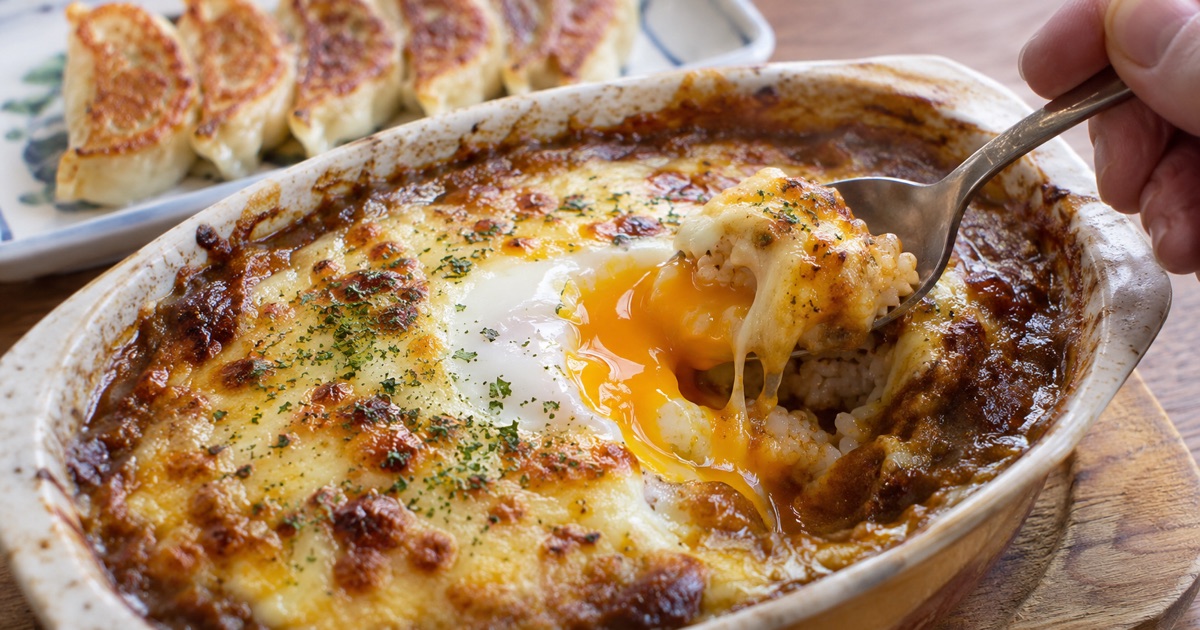
Baked curry is Kitakyushu’s best-known creation, originating in the historic port area of Mojiko (門司港). The dish was conceived in the mid-twentieth century when local Western-style cafes baked leftover curry in an oven with cheese and eggs to create a satisfying gratin.
- What it is: Japanese-style curry sauce and steamed rice placed in a ceramic baking dish, topped with a raw or soft-cooked egg, covered with melting cheese, and baked under high heat until browned and bubbling.
- How to eat it: Dig your spoon straight down through the melted cheese crust into the rice. When you reach the egg hidden under the surface, break the yolk and stir it into the surrounding curry to create a rich, creamy texture.
- Common variations: Toppings often include local seafood (such as pufferfish, squid, or prawns), sliced vegetables, or roasted beef.
- Allergens: Wheat (flour in the curry roux), dairy (cheese), eggs, and soy.
2. Yahata Gyoza (八幡ぎょうざ)
Kitakyushu’s Yahata ward has a long history as a steel manufacturing hub. Workers completing demanding shifts needed high-calorie, fast, hot food, which led to a flourishing gyoza culture.
- What it is: Dumplings filled with minced pork, cabbage, garlic, and chives, fried directly on heavy cast-iron skillets.
- The style: Unlike the delicate dumplings found in some regions, Yahata gyoza are often served sizzling in round cast-iron pans (teppan / 鉄板) to keep them warm until the last bite. The skins are thicker and fried to a crisp, golden bottom, while remaining chewy on top.
- Accompaniments: Rather than standard chili oil (rayu), many Yahata-style gyoza spots serve a citrus-chili paste (yuzukosho / 柚子胡椒) alongside soy sauce and vinegar. Dab a small amount of paste onto the dumpling for a bright, spicy contrast.
- Allergens: Wheat (wrapper), pork, sesame, and soy.
3. Kanmon Seafood and Shimonoseki Strait Fish
The fast-flowing waters of the Kanmon Strait (関門海峡) separate Kitakyushu from Honshu, producing firm-fleshed seafood with high fat content.
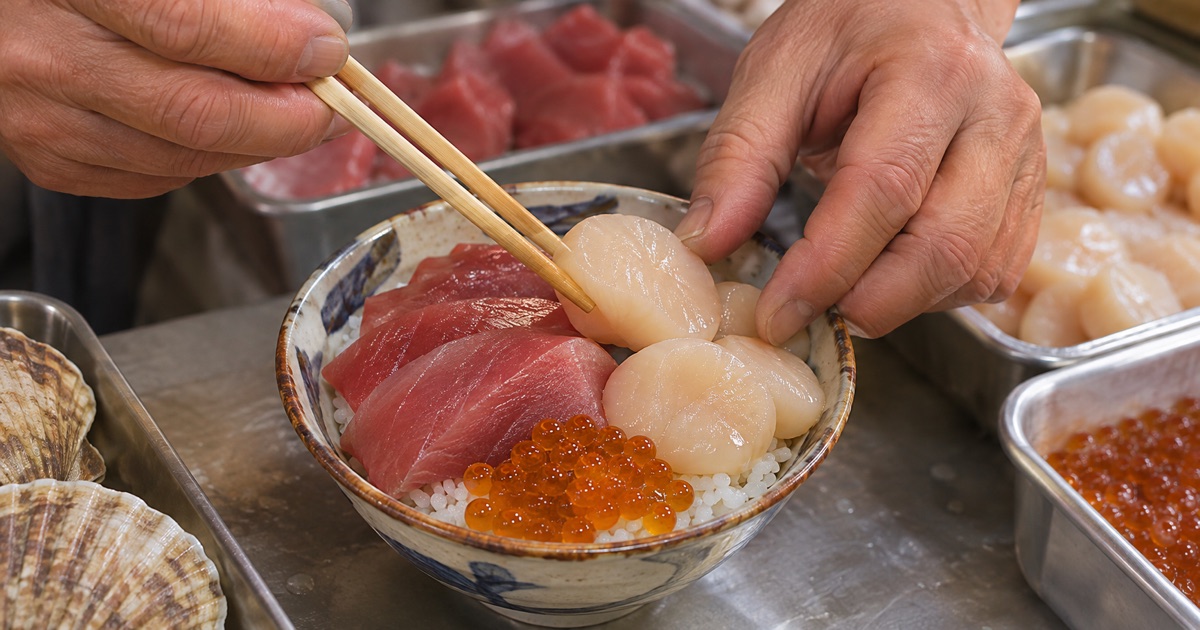
- Kanmon Octopus (Kanmon Tako / 関門海峡たこ): Because the octopus must battle fierce tidal currents, its legs are muscular and firm. It is commonly served lightly boiled and sliced thinly for sashimi, or simmered in sweetened soy sauce.
- Pufferfish (Fugu / 河豚): While Shimonoseki on the opposite side of the strait is famous for fugu, Kitakyushu shares the same fishing grounds. Licensed chefs prepare this delicate white fish as translucent sashimi (tessa), deep-fried pieces (kara-age), or hot pots (tecchiri).
- Allergens: Fish, molluscs, and crustaceans.
4. Kokura Beef (小倉牛)
Kokura beef is a premium brand of Japanese Black (Kuroge Washu) beef raised in the Kokura area under strict quality controls.
- Characteristics: The meat displays dense, fine marbling (sashi) that melts at low temperatures. It offers a sweet, savoury fat profile without feeling greasy.
- How it is served: Typically enjoyed at charcoal-grill (yakiniku) tables or teppanyaki counters. Thinly sliced for dipping into light soy-based tare sauces, or served simply with sea salt and fresh wasabi.
- Nutritional context: For precise macronutrient and fatty acid breakdowns of Japanese Black wagyu cuts, consult the MEXT Food Composition Database.
5. Doki-Doki Udon (どきどきうどん)
Unlike the pale, sardine-stock broths typical of western Japan, Kitakyushu's Doki-Doki udon is deep brown, hearty, and aromatic.
- What it is: Thick wheat udon noodles served in a dark, rich broth made from simmered beef cheek or tendon, flavoured strongly with dark soy sauce and mirin.
- How to eat it: The bowl is topped with tender chunks of stewed beef and a mound of grated fresh ginger. Stir the ginger completely into the dark broth before eating; the sharpness of the ginger cuts through the richness of the stewed meat.
- Ordering note: This dish is traditionally eaten for breakfast or early lunch.
- Allergens: Wheat and soy.
Dining Neighborhoods in Kitakyushu
Kitakyushu is a sprawling city formed by five merged municipalities. Finding the right dish means knowing which neighbourhood specialises in what:
| Area | Key Station | Signature Speciality |
|---|---|---|
| Mojiko (門司港) | Mojiko Station | Baked Curry (Yaki Kare), Port Seafood |
| Kokura (小倉) | Kokura Station | Kokura Beef, Doki-Doki Udon, Stall Dining |
| Yahata (八幡) | Yahata Station / Kurosaki Station | Yahata Gyoza, Iron-Plate Skillet Dishes |
For regional transit schedules, maps, and travel passes covering these areas, consult the official guide on the Japan National Tourism Organization website.

We are working to carry Japanese craft and everyday culture beyond Japan, by building Japan Towns with local partners.
Read the Japan Town plan →Step-by-Step: How to Order and Eat in Kitakyushu
Navigating local eateries without Japanese language skills is straightforward if you follow a few basic steps:
Step 1: Navigating Ticket Vending Machines (Kenbaiki)
Many casual noodle and curry shops use push-button ticket machines near the entrance:
- Insert cash first (1,000-yen notes and 100/500-yen coins are widely accepted; 5,000 and 10,000-yen notes may require smaller bills or an exchange button labeled 両替).
- Look for picture buttons or the top-left button, which usually denotes the house speciality or standard set.
- Press the button, collect your printed ticket slip and change, and hand the ticket to the counter staff.
Step 2: Customising Portions
Standard terminology helps when asked about sizes:
- Oomori (大盛り): Large serving (usually rice or noodles).
- Futsu (普通): Regular serving.
- Kukunashi (少なめ): Smaller serving.
Step 3: Paying at the Table or Counter
In full-service restaurants (such as yaki curry cafes or yakiniku establishments):
- Check for a small clipboard or plastic number tab left at your table. Bring this to the register near the door when you finish.
- Keep cash ready. While electronic payments are increasing, smaller casual shops and traditional gyoza stalls often operate cash-only.
Common Mistakes to Avoid
- Assuming All Shops Open All Day: Many traditional gyoza and udon shops observe mid-afternoon closures between roughly 14:00 and 17:00, or close as soon as their prepared broth or meat runs out. Check operating details in advance rather than relying on standard evening hours.
- Touching Hot Cast-Iron Servings: Yahata gyoza and Mojiko baked curry are served directly in searing-hot iron pans or oven-baked ceramic dishes. Avoid grabbing the dish edges with bare hands; use the wooden base provided underneath.
- Skipping the Condiments: Dishes like Yahata gyoza and Doki-Doki udon are intentionally paired with spicy, acidic, or herbaceous condiments (yuzukosho, grated ginger). Eating them plain misses the flavour balance intended by local cooks.
- Expecting Hakata-Style Ramen Everywhere: While Kitakyushu has excellent ramen shops, assuming the local food culture mirrors Fukuoka City's Hakata district overlooks the distinct industrial and port dishes unique to Kitakyushu. Plan meals to focus on the items developed within this city.
FAQ
- Q. What is the single most famous dish in Kitakyushu?
- A. Baked curry (yaki curry) from the Mojiko port district is widely considered the city's most distinctive local specialty.
- Q. How does Kitakyushu food differ from Hakata food in Fukuoka City?
- A. While Hakata is famous for tonkotsu ramen and hot pots, Kitakyushu features heavy iron-plate gyoza, baked curry, and udon dishes shaped by port and factory culture.
- Q. Can people with dietary restrictions easily eat Kitakyushu's local foods?
- A. Many Kitakyushu dishes contain wheat, soy, shellfish, beef, or pork lard; travellers with allergies should check ingredients before ordering.
Cite or share this article
Copy the link below. If you quote this article, please link to this page as the source.