What to Eat in Nagasaki: Must-Try Regional Specialties
Key takeaways
- Nagasaki's cuisine blends Chinese, Portuguese, and Dutch influences with classic Japanese cooking techniques.
- Noodle lovers should prioritize Champon in rich broth and Sara Udon topped with thick, savory vegetable gravy.
- Dietary notes: Most local broth bases and noodle toppings combine pork with seafood like squid and shrimp.
When deciding what to eat in Nagasaki, prioritize iconic regional dishes like Champon (ちゃんぽん), Sara Udon (皿うどん), braised pork Kakuni Manju (角煮まんじゅう), and Castella sponge cake (カステラ). Thanks to centuries as Japan’s designated gateway for international trade during the Edo period, Nagasaki developed a unique culinary identity shaped by Chinese, Portuguese, and Dutch culinary traditions blended with local Kyushu ingredients.
Understanding the variety of local specialties makes navigating restaurant menus straightforward, even for visitors who do not read Japanese.
Iconic Noodle Dishes: Champon and Sara Udon
Noodles define everyday dining in Nagasaki. Unlike standard Japanese ramen, where noodles are boiled separately and added to soup, Nagasaki’s most celebrated noodle dishes use specialized regional cooking techniques.
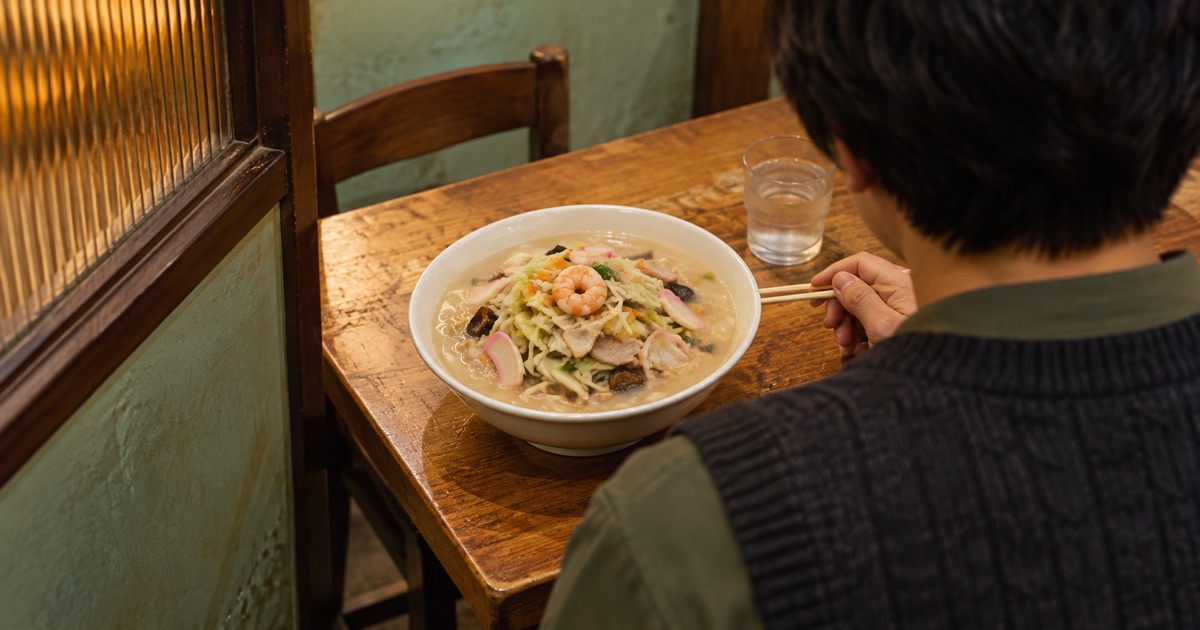
Nagasaki Champon (ちゃんぽん)
Champon is Nagasaki's signature dish, originally created during the Meiji period as a nutritious, affordable meal for Chinese exchange students.
The dish consists of thick, chewy wheat noodles cooked directly in a rich soup alongside a mountain of stir-fried ingredients. The broth is typically a robust emulsion of pork bones (tonkotsu) and chicken bones, producing an opaque, creamy, and savory soup without lingering greasiness.
Key toppings cooked with the broth include:
- Sliced pork belly
- Squid, small prawns, and local shellfish
- Cabbage, bean sprouts, and sliced onions
- Wood ear mushrooms (kikurage)
- Pink and white steamed fish cakes (kamaboko)
Because the noodles cook inside the soup rather than in plain water, they absorb the savory flavors of the meat, seafood, and vegetables. To order, look for the characters ちゃんぽん on restaurant flags and menus.
Sara Udon (皿うどん)
"Sara Udon" translates literally to "plate noodles." Developed as a brothless sibling to Champon, this dish presents stir-fried vegetables, meat, and seafood bound in a glossy, thickened starch gravy (ankake), poured over a wide platter of noodles.
When ordering, diners choose between two distinct noodle styles:
- Thin crispy noodles (pari-pari men / パリパリ麺): Fine wheat noodles deep-fried until crisp and golden. As the hot, starchy topping sits on them, parts soften while other strands remain crunchy.
- Thick soft noodles (futo men / 太麺): Chewy Champon-style noodles toasted on a flat griddle until lightly browned before the sauce is ladled over them.
At local tables, people often season Sara Udon halfway through the meal by drizzling Worcestershire-style sauce (sauce / ソース) or a splash of mild rice vinegar over the plate to cut through the rich gravy.
Hybrid Western-Japanese Cuisine
European traders lived on the artificial island of Dejima in Nagasaki harbor during Japan's period of national isolation (sakoku). This early contact introduced bread, frying techniques, and European confectionery centuries before the rest of the nation adopted them.
Turkish Rice (Toruko Raisu / トルコライス)
Despite its name, Turkish Rice is an authentic Nagasaki creation found primarily in retro diners (kissaten) across the city. The dish is an unapologetic, hearty plate combining three Western-style Japanese favorites:
- A portion of pilaf or ketchup-fried rice
- Spaghetti coated in a tangy tomato-based Napolitan sauce
- A freshly fried pork cutlet (tonkatsu), often drizzled with demi-glace or curry sauce
Small salads frequently share the plate. There is no standard story explaining why it is named after Turkey; theories suggest the multi-component layout represents a bridge between East and West, much like the Eurasian nation.
Kakuni Manju (角煮まんじゅう)
Kakuni Manju is a beloved handheld street snack served hot from bamboo steamers. It consists of a thick slice of buta no kakuni—pork belly slowly simmered in soy sauce, mirin, sake, and sugar until fork-tender—tucked inside a soft, folded white steamed bun.
The bun absorbs the sweet and savory braising liquid, creating a rich contrast between the fluffy dough and the melt-in-the-mouth pork. They are widely available in historic districts and around Chinatown (Shinchi Chukagai).
We are working to carry Japanese craft and everyday culture beyond Japan, by building Japan Towns with local partners.
Read the Japan Town plan →Traditional Banquet Dining: Shippoku Ryori (卓袱料理)
Shippoku Ryori represents Nagasaki's grandest culinary tradition. Developed during the Edo period, it blends Chinese family-style dining, European table etiquette, and Japanese ingredients.
Unlike traditional Japanese kaiseki, where each guest receives an individual tray, Shippoku meals center on a round red-lacquered table (shippoku). Guests sit together as equals, sharing large communal platters using their own chopsticks.
A formal Shippoku banquet typically unfolds in a set sequence:
- Ohire (お鰭): A clear soup containing sea bream fin served to each guest at the very start. The host says, "Please enjoy the fin," signaling that a whole fish was prepared for the gathering and that dining may officially begin.
- Communal platters: A succession of cold appetizers, sashimi, tempura, sweet-simmered dishes, and braised pork belly (kakuni).
- Shiruko (汁粉): A sweet dessert soup made from red beans and rice cakes, served at the conclusion of the banquet.
Shippoku dining is served primarily in historic ryotei (traditional Japanese restaurants). Reservations are generally required well in advance.
Sweet Souvenirs: Castella (カステラ)
Castella is Nagasaki's premier baked confection. Introduced by Portuguese merchants and missionaries in the 16th century under the name Pão de Castela ("bread from Castile"), Japanese confectioners refined the recipe over centuries.
Authentic Castella contains only four primary ingredients: eggs, sugar, flour, and starch syrup (mizuame). Despite its airy, spongy texture, it uses no chemical leavening agents like baking powder; the rise comes entirely from vigorously whipped egg foam.
A hallmark of traditional Nagasaki Castella is the layer of coarse sugar crystals (zarame) embedded in the bottom crust. As the cake rests, some sugar dissolves into the crumb while the rest provides a pleasant crunch against the soft cake.
Castella is sold in long rectangular loaves, pre-sliced into individual portions, making it easy to enjoy without utensils. Specialized shops sell traditional Castella alongside modern variations flavored with matcha, chocolate, or local citrus.
Practical Food Guide for Travelers
Where and How to Eat
Nagasaki's dining clusters are easily reached using the city's network of vintage streetcars. Key dining zones include:
- Nagasaki Chinatown (Shinchi Chukagai): One of Japan's three major Chinatowns, located near the Shinchi Chinatown streetcar stop. Best for Champon, Sara Udon, and steamed buns.
- Hamamachi Arcade (浜町アーケード): A covered shopping street running parallel to the Nakashima River, filled with casual diners, noodle counters, and confectionery shops.
- Nagasaki Station Area: The commercial complexes connected to Nagasaki Station house numerous casual restaurants serving local standards, practical for travelers arriving via the Nishi-Kyushu Shinkansen.
Ordering and Etiquette
Many casual noodle and rice diners in Nagasaki use ticket vending machines (shokkenki) near the entrance:
- Insert cash (1,000-yen notes and coins are standard; some modern machines take IC transportation cards).
- Press the button for your desired dish.
- Hand the printed paper ticket to the staff when seated.
- Water or cold roasted barley tea (mugicha) is usually self-service at small counters.
Most casual establishments accept cash, though electronic payment options have expanded. Keep small bills and 100-yen coins handy for street-side snack stalls.
Common Allergens and Dietary Notes
Travelers with dietary restrictions should note the following common elements in Nagasaki cuisine:
- Pork and Lard: Pork is central to local broths, buns, and toppings. Champon soup almost always contains pork fat.
- Seafood and Shellfish: Squid, shrimp, and fish paste are foundational to Champon and Sara Udon. Even vegetable-heavy toppings usually cook alongside seafood.
- Wheat and Gluten: Wheat noodles, soy sauce seasonings, and Castella cake mean gluten is widespread across local specialties.
- Eggs: Castella relies on high concentrations of whole eggs.
For formal dining like Shippoku Ryori or specialty restaurants, travelers with food allergies should communicate their dietary needs during booking. For detailed official guidance on food safety, nutrition, and regional specialties, refer to resources provided by the Japan National Tourism Organization and the Ministry of Agriculture, Forestry and Fisheries.
FAQ
- Q. Is Nagasaki Champon spicy like Korean jjamppong?
- A. Japanese Champon (ちゃんぽん) is not spicy at all; it features a mild, deeply savory broth made from pork and chicken bones, enriched with stir-fried vegetables and seafood.
- Q. Can vegetarians easily eat Nagasaki street foods like Kakuni Manju?
- A. Finding vegetarian versions can be difficult because Kakuni Manju centers on braised pork belly, and regional dashi broths almost universally incorporate dried fish or meat stocks.
- Q. How does soft-noodle Sara Udon differ from crispy-noodle Sara Udon?
- A. Crispy Sara Udon uses thin noodles deep-fried until brittle, while the soft version features thick noodles lightly charred on a hot griddle before receiving the thick starchy topping.
Cite or share this article
Copy the link below. If you quote this article, please link to this page as the source.