What to Eat in Lake Kawaguchiko
Key takeaways
- Hoto (ほうとう), a thick wheat-noodle hotpot in miso broth, is the signature comfort food of the Fuji Five Lakes area.
- Fujiyoshida udon (吉田のうどん), known for very firm, chewy noodles, is a distinct regional style worth trying separately from hoto.
- Lake Kawaguchiko's lakeside area also offers grilled fish, local wine, and Mt. Fuji-shaped sweets and souvenirs.
When deciding what to eat in Lake Kawaguchiko, the signature dish to try is hoto, a thick wheat-noodle stew simmered with pumpkin and vegetables in a miso broth. Another local specialty is Fujiyoshida udon, known for its firm, chewy noodles. Visitors can also enjoy grilled river fish, local wine, and Mt. Fuji-themed sweets.
あわせて読む:What to Eat in Kawaguchiko: A Guide to Mt. Fuji's Best Food/What to Eat in Naoshima: Island Specialties & Guide/What to Eat in Okinawa: A First-Timer's Guide to Local Dishes
What to Eat in Lake Kawaguchiko
The must-try food at Lake Kawaguchiko is hoto (ほうとう), a thick, flat wheat-noodle stew simmered with pumpkin and vegetables in a miso-based broth. A second local specialty worth seeking out is Fujiyoshida udon (吉田のうどん), known for unusually firm, chewy noodles, which comes from the nearby town of Fujiyoshida at the base of Mt. Fuji.
Both dishes developed in this mountainous region because wheat grew more reliably than rice in the cooler climate around the Fuji Five Lakes (富士五湖). Together with grilled river fish, local wine, and Mt. Fuji-themed sweets, they make up the core of what first-time visitors should try while exploring the Lake Kawaguchiko (河口湖) area.
Hoto: The Signature Dish of the Fuji Area
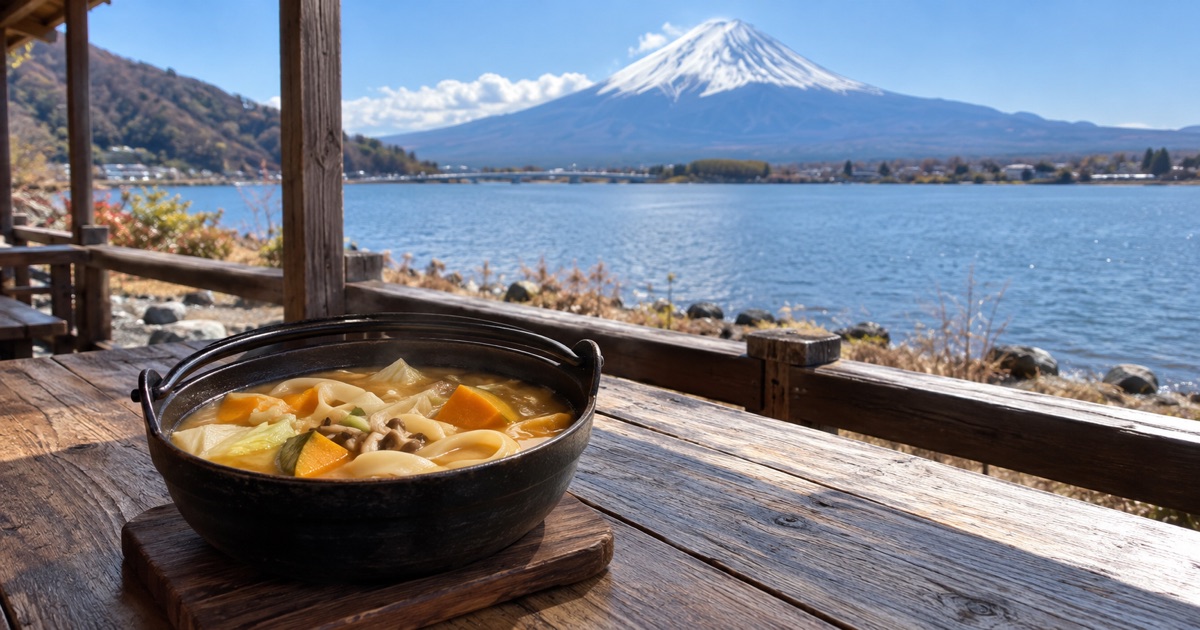
Hoto is a hearty, one-pot dish built around flat, wide wheat noodles similar to pasta ribbons, cooked directly in a miso-flavored broth along with kabocha pumpkin, carrots, mushrooms, and seasonal vegetables. Unlike regular udon, hoto noodles are not boiled separately first; they are added raw to the pot, where their starch thickens the soup as everything cooks together. The result is a stew-like dish that is thicker, softer, and more filling than a typical noodle soup.
It's traditionally served bubbling hot in a cast-iron pot, which keeps it warm for a long time, making it especially popular in the colder months, though it is available year-round. Because it's associated with the Mt. Fuji area, you'll find it described as a regional specialty on tourism pages for Yamanashi Prefecture, where Lake Kawaguchiko is located.
How to eat it: Hoto is usually eaten directly from the pot with chopsticks and a spoon for the broth. There's no strict etiquette beyond normal noodle-eating manners — slurping is completely normal and not considered rude in Japan. Expect a generous, warming portion; it's often eaten as a full meal rather than a side dish.
A common mistake: Visitors sometimes expect hoto to taste like standard miso ramen. The broth is thicker, less salty-sharp, and more vegetable-forward, closer to a stew than a soup.
Fujiyoshida Udon: A Different Regional Noodle
Fujiyoshida udon is a separate specialty from the town of Fujiyoshida, near the base of Mt. Fuji and a short trip from Lake Kawaguchiko. It is known for being unusually firm and chewy, with a noodle texture noticeably denser than typical udon found elsewhere in Japan. The broth is usually a lighter soy- or miso-based soup, often topped with shredded cabbage, horse meat (basashi) in some traditional versions, or other simple toppings depending on the shop.
Locals sometimes describe the texture as "tough" compared to standard udon, and this is considered a feature, not a flaw — part of what makes the regional style distinct. If you want to compare it with hoto, trying both during a visit gives a clear sense of how different wheat-noodle traditions can be, even within neighboring towns.

Allergen note: Both hoto and Fujiyoshida udon contain wheat (gluten) and typically soy, and broths are commonly made with bonito-based dashi, which contains fish. If you have dietary restrictions, confirm ingredients before ordering, as substitutions are not guaranteed.
Grilled Fish and Other Lakeside Specialties
Because Lake Kawaguchiko is one of the Fuji Five Lakes, freshwater fish such as wakasagi (a small smelt-like fish) and other lake fish appear on local menus, often deep-fried as tempura or simply grilled with salt. These dishes are lighter than hoto and make a good side dish or snack while exploring the lakeside area.
The wider Yamanashi region is also one of Japan's notable wine- and fruit-producing areas, so you may see local wine, grape products, and seasonal fruit (such as peaches or grapes, depending on the season) offered alongside meals or as souvenirs. Yamanashi is officially recognized as a major Japanese wine-producing prefecture, and tourism and agriculture information for the region can be checked through sources like the Japan National Tourism Organization.
Mt. Fuji–Themed Sweets and Souvenirs
Around Lake Kawaguchiko, it's common to find Mt. Fuji–shaped sweets, cookies, and local snacks sold as souvenirs, often playing on the mountain's iconic silhouette. These are typically mass-produced regional treats rather than high-end confections, and quality and availability can vary by season and by shop, so treat them as fun souvenirs rather than a must-eat food experience.
Matcha and hoji-cha flavored soft-serve ice cream is also widely available at shops around the lake, offering a simple, refreshing option between meals, especially useful if you're visiting in the warmer months.
Practical Tips for Eating Around Lake Kawaguchiko
- Bring cash as backup. While many places accept cards, smaller local eateries around the lake may still be cash-preferred, so carrying some yen is a safe habit.
- Expect regional pricing. As a tourist area near Mt. Fuji, prices for meals can be somewhat higher than in less touristy parts of Japan; treat any price you see online as a rough guide only, since menus and costs change.
- Seasonal crowds affect wait times. Cherry blossom season, autumn foliage season, and weekends tend to bring more visitors, which can mean longer waits at popular eateries. Opening hours and seasonal closures can also change, so it's worth checking official information before your trip.
- Don't skip the basics. First-time visitors sometimes focus only on photogenic sweets and skip hoto or Fujiyoshida udon entirely — but these noodle dishes are the most locally meaningful food experiences in the area.
Getting to Lake Kawaguchiko
Lake Kawaguchiko is typically reached from Tokyo by direct highway bus (roughly two hours, depending on traffic) or by train via the Fujikyu Railway line, often connecting through Otsuki Station. Travel times can vary with schedules and road conditions, so check current timetables before planning your day, since this article won't list exact departure times that may change.
Final Thoughts
For a first-time visitor, the clearest answer to "what to eat in Lake Kawaguchiko" is hoto and, if you have time to explore nearby Fujiyoshida, the distinctly chewy Fujiyoshida udon. Round out the meal with lake fish, local wine, or a Mt. Fuji–shaped sweet, and you'll have sampled the food culture that makes this part of Yamanashi distinct from the rest of Japan.
FAQ
- Q. Is hoto the same as udon?
- A. No. Hoto noodles are flat, thick and unboiled before going into the pot, giving a softer, starchier texture than standard udon.
- Q. Can vegetarians eat hoto?
- A. Most hoto broth is miso-based but often made with a bonito (fish) dashi stock, so check with staff if you need a vegetarian version, as it is not guaranteed.
- Q. Is Fujiyoshida udon the same as hoto?
- A. No, they are different regional dishes. Fujiyoshida udon uses very firm, chewy noodles in a lighter soy- or miso-based broth, while hoto uses soft, flat noodles in a thick miso stew.
Cite or share this article
Copy the link below. If you quote this article, please link to this page as the source.