What to Eat Near Chiba Station: Local Dishes & Dining
Key takeaways
- Chiba Station hubs feature regional ramen, Boso seafood bowls, and peanut sweets within a 3- to 5-minute walk.
- Most station dining concourses offer multi-language ticket vending machines, English menus, and IC card payment.
- Common local ingredients include soy sauce, peanuts, and seasonal catches like horse mackerel and sardines.
When deciding what to eat near Chiba Station (千葉駅), visitors should focus on regional Chiba specialties such as Boso Peninsula seafood, Chiba-style soy sauce ramen, and confections made with local peanuts. A wide variety of traditional counter restaurants, soba stands, and casual dining floors sit directly inside the station complex and within a 3- to 5-minute walk of its central ticket gates.
Chiba Prefecture serves as an agricultural and maritime powerhouse on Tokyo’s eastern flank. The transit hub of Chiba Station connects major JR lines—including the Sobu and Uchibo lines—bringing together distinct culinary styles from coastal fisheries and inland farms. For travelers navigating the station without reading Japanese, this guide covers what dishes to look for, how to order them, and what ingredients to expect.
Regional Ramen Styles Around Chiba Station
Ramen is one of the most accessible meal choices around major Japanese transit hubs, and Chiba boasts distinct regional styles rarely found elsewhere in Japan.
Takeoka-Style Ramen (竹岡式ラーメン)
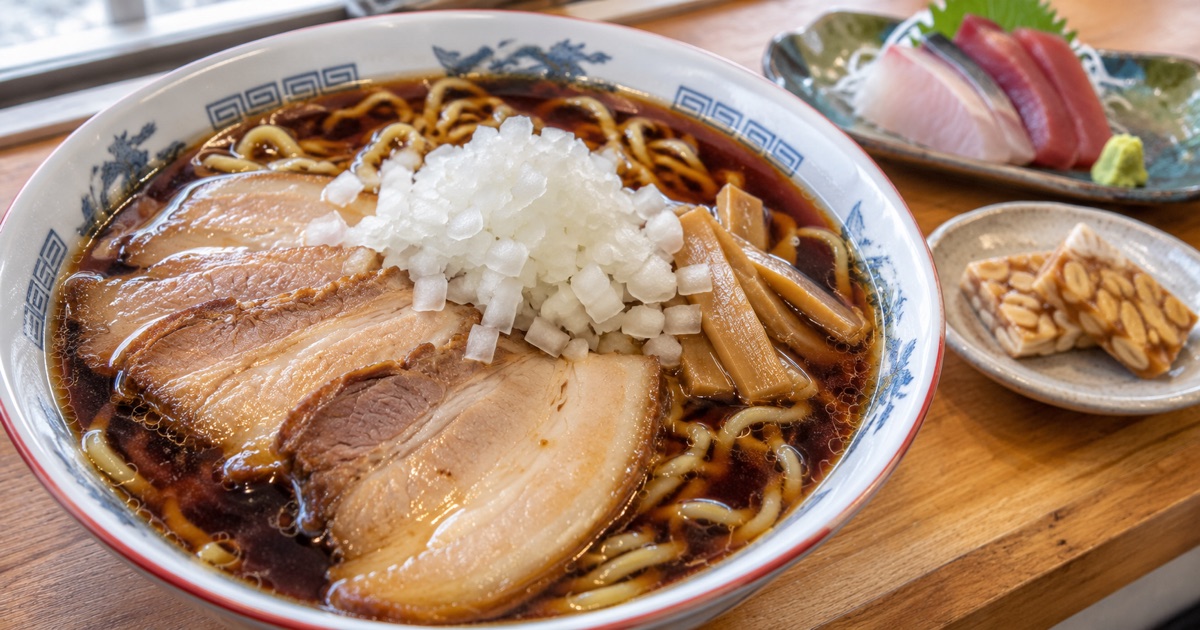
Originating along the coastal town of Futtsu on the Boso Peninsula, Takeoka-style ramen is characterized by a dark, rich soy sauce soup. Unlike standard ramen broth, which simmers pork bones or chicken carcasses for hours, traditional Takeoka broth relies heavily on the rich soy sauce liquid used to braise pork belly (chashu), diluted with hot water.
- The Noodles: Often dried or curly, wavy noodles designed to grip the dark broth.
- The Toppings: Generous slabs of tender pork belly, dried bamboo shoots (menma), and a thick blanket of finely diced raw onions instead of scallions. The sharp, crisp bite of the raw onion cuts the saltiness of the dark shoyu base.
- How to Eat: Mix the raw onions into the piping-hot broth immediately so they soften slightly while retaining their crunch.
Katsuura Spiced Sesame Ramen (勝浦タンタンメン)
Originating as a warming meal for coastal divers and fishermen, Katsuura tantanmen swaps out traditional sesame paste for a fiery red chili oil broth packed with minced pork and tender sautéed onions.
- The Flavor Profile: Fiery, peppery, and rich with natural sweetness from translucent stewed onions.
- Ordering Tip: Look for spice scales at ordering kiosks, usually marked from 1 to 5. If sensitive to capsaicin, select a mild option (chūkara or level 1). Take care when inhaling the broth to prevent coughing from chili fumes.
Fresh Seafood from the Boso Coast
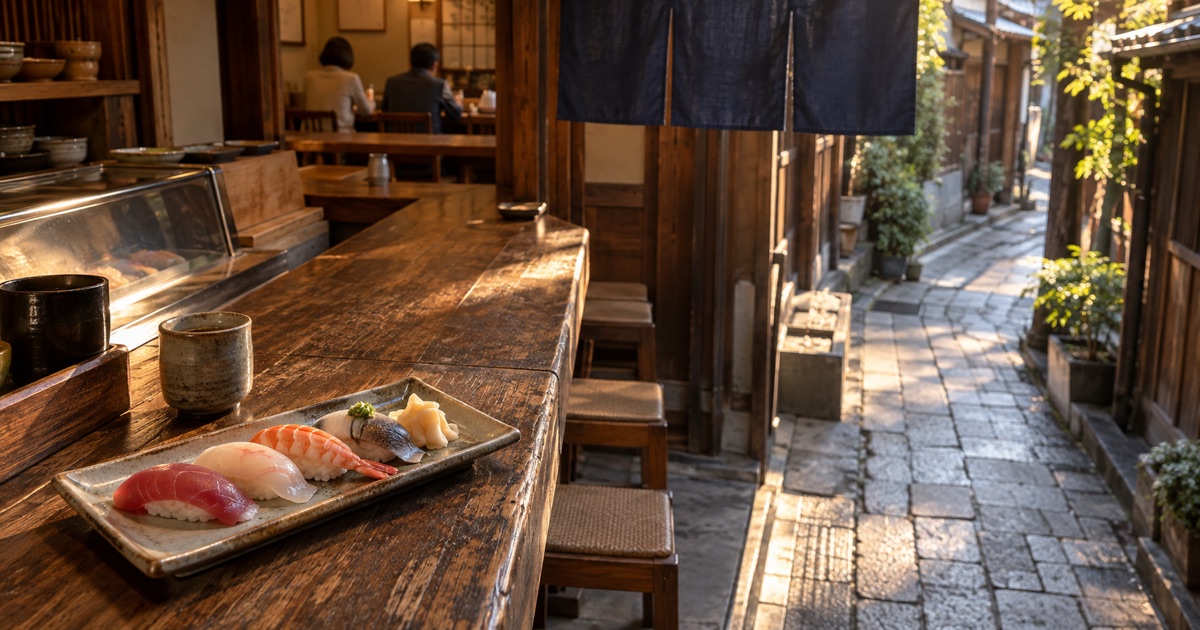
Bordered by the Pacific Ocean and Tokyo Bay, Chiba Prefecture yields abundant fresh fish. Inside and immediately adjacent to Chiba Station, casual sushi bars and standing seafood diners serve the day's ocean harvest.
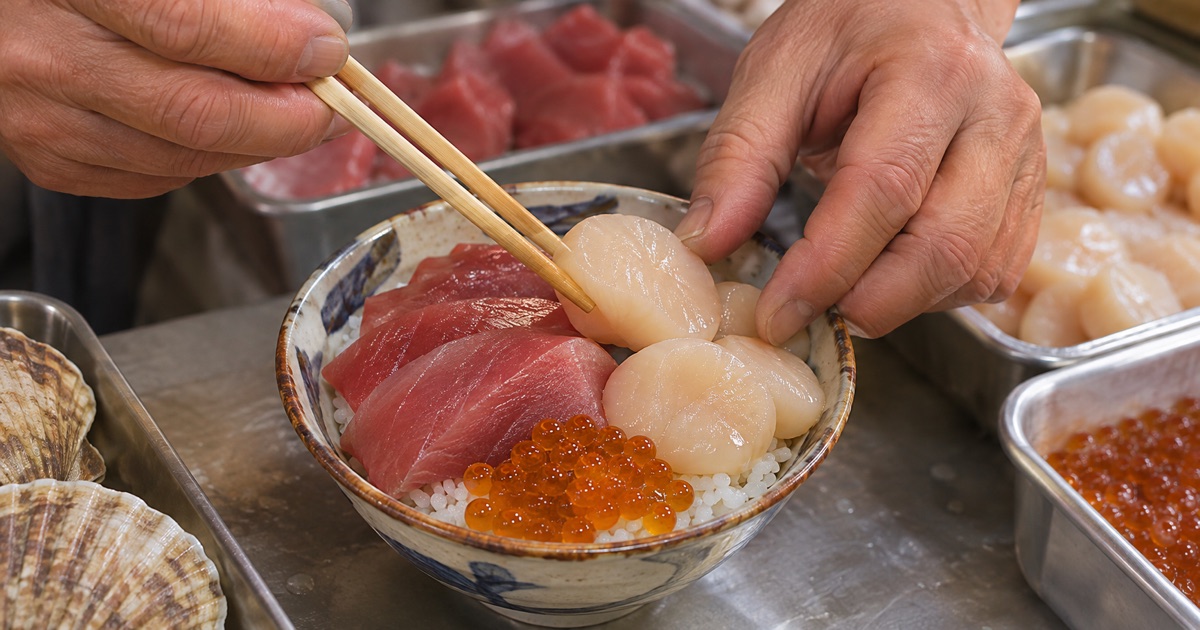
Kaisendon (海鮮丼) and Regional Blue Fish
While tuna and salmon are universally popular, Chiba’s signature seafood focuses on seasonal blue-backed fish (hikari-mono), particularly horse mackerel (aji) and sardine (iwashi).
- Aji no Tataki (アジのたたき): Fresh horse mackerel finely chopped with ginger, scallions, and shiso leaves. It is served atop bowls of vinegared sushi rice or as a standalone dish paired with soy sauce.
- Namerou (なめろう): A traditional Boso fisherman's recipe where raw fish is minced on a cutting board alongside local miso paste, fresh ginger, and green herbs until it forms a cohesive, savory paste.
- Sangayaki (さんが焼き): When namerou is shaped into patties and lightly pan-fried or grilled inside an abalone shell, it becomes sangayaki, making it an ideal option for diners who prefer cooked fish over raw preparations.
To review standard nutritional profiles of Pacific horse mackerel and other raw coastal species, check the MEXT Food Composition Database.
We are working to carry Japanese craft and everyday culture beyond Japan, by building Japan Towns with local partners.
Read the Japan Town plan →Fast Counter Dining: Soba, Udon, and Gyudon
For travelers catching an express train or transferring lines, quick-service counter restaurants line the station concourses. These shops offer filling, hot meals in under 10 minutes.
Ekiben and Standing Soba Counters
Standing noodle shops (tachi-gui soba) operate on the platforms and inside ticket concourses.
- Purchasing a Ticket: Approach the ticket vending machine (shokkenki) located at the entrance. Most modern machines at Chiba Station feature an "English" button in the upper corner.
- Payment: Insert cash or tap your transit card (such as Suica or Pasmo) on the IC reader.
- Placing Your Order: Hand the printed paper ticket to the staff behind the counter. You may be asked: "Soba or udon?" State your preference clearly.
- Condiments and Water: Pour water from the self-serve dispenser. Dried chili pepper flakes (shichimi togarashi) are arranged on the counter for seasoning.
- Bus Your Tray: When finished, return your empty bowl and tray to the return shelf (osageto).
Chiba Specialty Produce and Sweets
Chiba produces the majority of Japan's domestic peanut crop. As a result, the retail alleys and bakeries integrated into the station complex feature confections and savory snacks centered on peanuts and sweet potatoes.
Peanuts (落花生, Rakkasei)
Chiba peanuts are celebrated for their rich oil content and natural sweetness. You will encounter them in several forms near the station:
- Boiled Peanuts (Yude-rakkasei, ゆで落花生): Unlike dry-roasted peanuts, these use freshly harvested raw nuts boiled in salted water until soft and buttery. They are served chilled or warm as a savory snack.
- Peanut Monaka (ぴーなっつ最中): Thin, crisp rice wafers molded into the shape of a peanut shell, filled with smooth red bean paste infused with crushed, candied peanuts.
- Peanut Paste and Spreads: Freshly milled peanut butters sold in bakery sections, available in crunchy or smooth textures.
Sweet Potato Delicacies
The sandy soil of northern Chiba produces prize-winning Japanese sweet potatoes (satsumaimo). Around the station, bakeries and snack kiosks sell baked sweet potatoes (yaki-imo), sweet potato cakes, and candied sweet potato fries (kenpi).
For details on local agricultural customs across Chiba and the Kanto region, visit the official portal of the Ministry of Agriculture, Forestry and Fisheries.
Navigating Menus, Allergens, and Payments
Dining at a busy commuter hub is straightforward if you know how services operate.
Handling Dietary Restrictions and Allergens
Menus in Japan are legally required to display specific major allergens, but cross-contamination can occur in fast-paced station kitchens.
- Peanuts (落花生 / ピーナッツ): A primary allergen across Chiba sweets and regional dressings. Look for the kanji 落花生 or the katakana ピーナッツ.
- Soy and Wheat: Standard in ramen broth, soy sauces, and dashi seasonings.
- Fish Broth (Dashi, 出汁): Almost all clear soups, dipping sauces, and noodle broths use bonito flake (katsuobushi) or kelp (kombu). Purely vegetarian broth is rare at standard station counters.
Payment Methods
Nearly all casual eateries, food halls, and platform stands around Chiba Station accept electronic payments:
- Transit IC Cards: Suica, Pasmo, and nationwide IC cards are the fastest payment method at station ticket machines.
- Credit Cards: Accepted at seated, sit-down restaurants, but smaller counter kiosks may be cash- or IC-card-only.
- Cash: Always carry small notes (1,000 yen bills) and coins, as older ticket vending machines do not accept 5,000 or 10,000 yen denominations.
Peak Dining Hours and Timing
Chiba Station serves tens of thousands of daily commuters. Lunch rush peaks from 12:00 to 13:15, while dinner lines peak from 18:00 to 20:00. If visiting popular noodle spots or sushi counters, arriving slightly outside these windows—such as 11:30 or 14:00—ensures minimal wait times. Opening hours and holiday schedules vary by operator, so check official station building directories when planning late-night meals.
FAQ
- Q. What regional dishes is Chiba known for?
- A. Chiba is famous for Boso seafood bowls, Takeoka-style soy sauce ramen, Katsuura tantanmen, and dishes flavored with local peanuts or miso.
- Q. Can I pay with a Suica or Pasmo transit card at station eateries?
- A. Yes, most counter dining spots, ticket machines, and casual chain eateries inside and connected to Chiba Station accept major transit IC cards.
- Q. Are vegetarian food options readily available near Chiba Station?
- A. Plain soba, vegetable tempura, and peanut sweets are available, but meat- or fish-based dashi broth is standard in most noodle and rice dishes.
Cite or share this article
Copy the link below. If you quote this article, please link to this page as the source.